Texas State Law
Description



Get your form ready online
Our built-in tools help you complete, sign, share, and store your documents in one place.
Make edits, fill in missing information, and update formatting in US Legal Forms—just like you would in MS Word.
Download a copy, print it, send it by email, or mail it via USPS—whatever works best for your next step.
Sign and collect signatures with our SignNow integration. Send to multiple recipients, set reminders, and more. Go Premium to unlock E-Sign.
If this form requires notarization, complete it online through a secure video call—no need to meet a notary in person or wait for an appointment.
We protect your documents and personal data by following strict security and privacy standards.

Make edits, fill in missing information, and update formatting in US Legal Forms—just like you would in MS Word.

Download a copy, print it, send it by email, or mail it via USPS—whatever works best for your next step.

Sign and collect signatures with our SignNow integration. Send to multiple recipients, set reminders, and more. Go Premium to unlock E-Sign.

If this form requires notarization, complete it online through a secure video call—no need to meet a notary in person or wait for an appointment.

We protect your documents and personal data by following strict security and privacy standards.
Looking for another form?








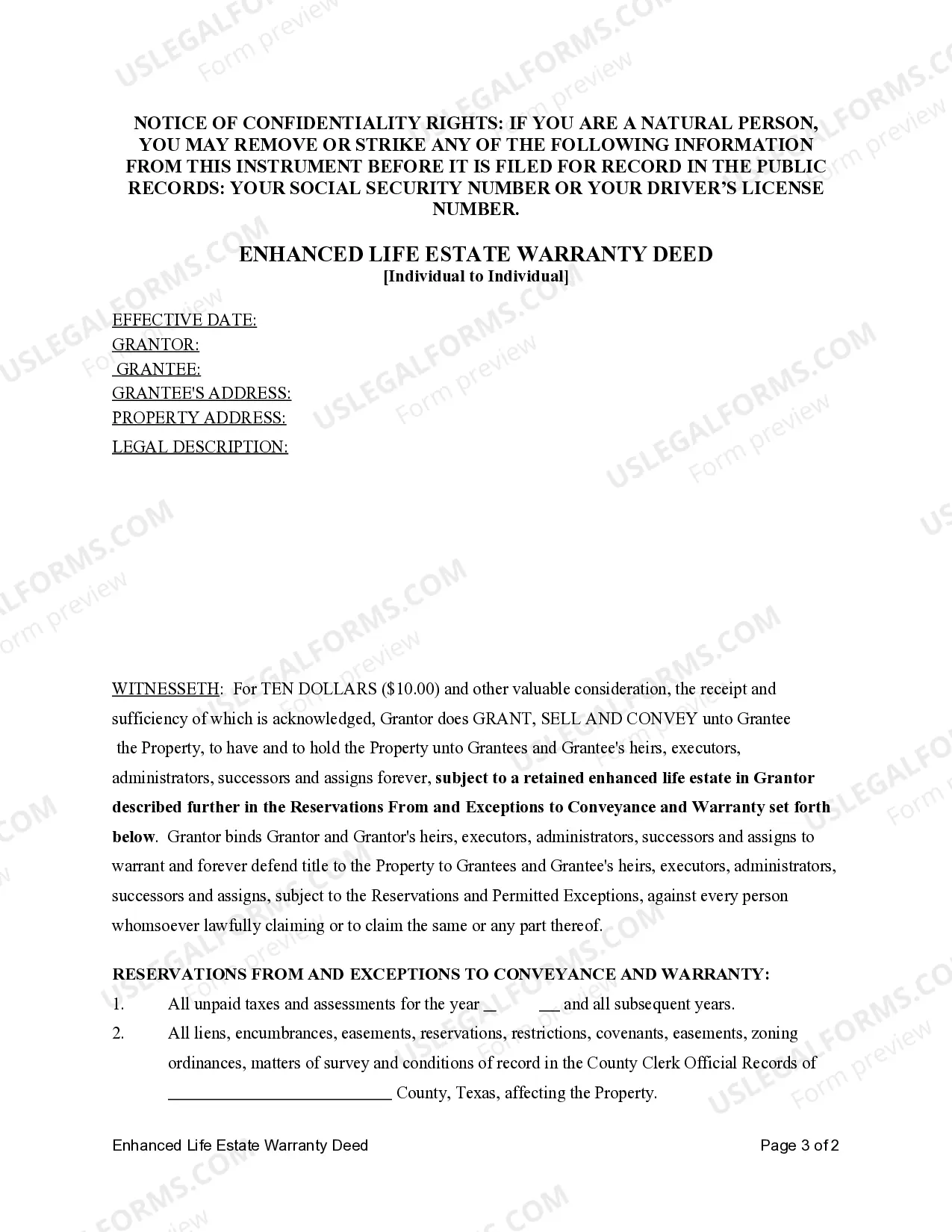
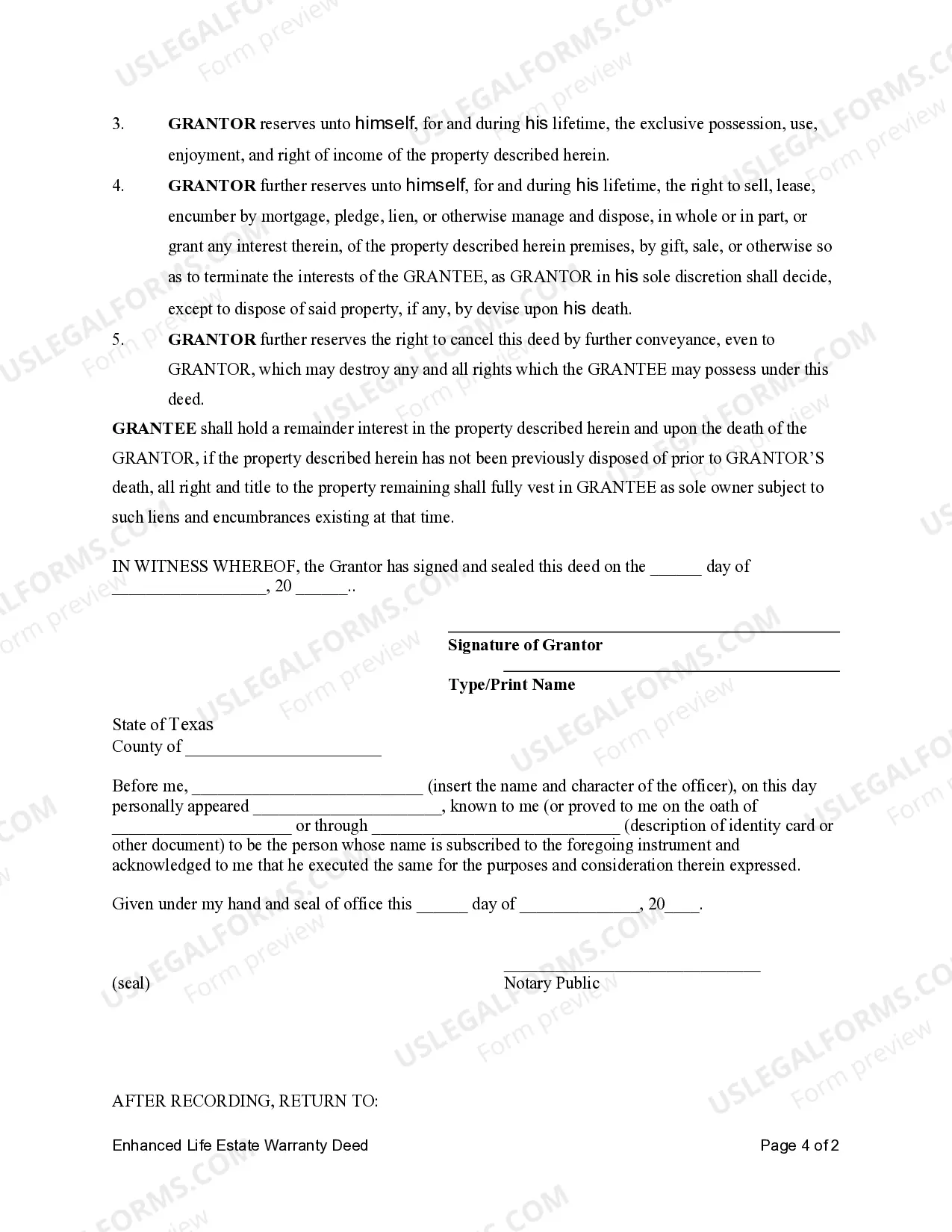
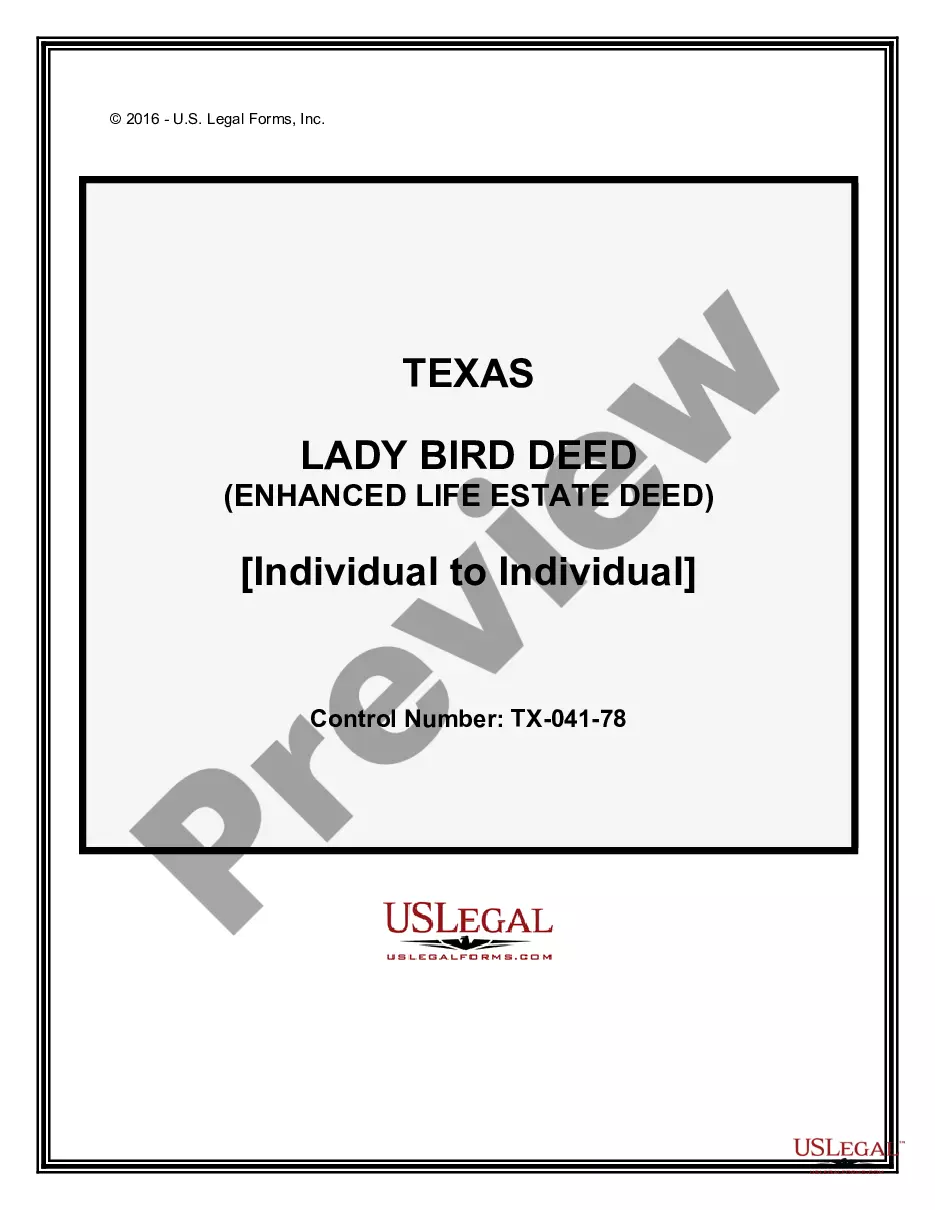
How to fill out Texas Lady Bird Or Enhanced Life Estate Warranty Deed - Individual To Individual?
- Log in to your account if you're a returning user. Ensure your subscription is active; renew it if necessary.
- If you're new to US Legal Forms, start by reviewing the form description in Preview mode to guarantee it meets Texas state law requirements.
- If you need a different document, utilize the Search feature to find a suitable form that aligns with your legal needs.
- Once you've selected the appropriate document, click on the Buy Now button and choose your preferred subscription plan.
- Complete your purchase by entering your credit card details or using PayPal for a seamless transaction.
- Download your chosen document and save it on your device. You can also find it later under the My Forms section of your account.
With US Legal Forms, you gain access to over 85,000 editable legal forms designed to meet various legal requirements efficiently. The platform also connects you with premium experts who can assist in ensuring that your documents are completed correctly.
Empower yourself with the resources of US Legal Forms to confidently navigate Texas state law. Start your journey today and access the legal support you need!
Form popularity
FAQ
To be licensed to practice law in Texas, you must complete a Juris Doctor degree and pass the Texas bar exam. Additionally, you will go through a thorough character and fitness background check. Being well-prepared for these steps will help you navigate the licensing process smoothly under Texas state law.
Getting into Texas Law typically starts with completing an undergraduate degree, preferably with a focus on subjects that enhance your critical thinking skills. After that, you will need to take the Law School Admission Test (LSAT) and apply to a law school within Texas. It’s helpful to familiarize yourself with Texas state law and connect with current law students for advice during this process.
In Texas, you can practice law without attending a traditional law school by completing an alternative route. This involves going through a legal apprenticeship with a licensed attorney. However, this path is less common, and it's still necessary to pass the Texas bar exam and meet all other requirements to practice under Texas state law.
To get licensed to practice law in Texas, you first need to complete your Juris Doctor degree. Then, you must pass the Texas bar exam, which tests your knowledge of Texas state law. After that, you will undergo a character and fitness evaluation before you can officially receive your license.
The Texas Law course, which is usually part of a Juris Doctor program, typically takes three years to complete. This program includes intensive training in various aspects of Texas state law, preparing students to navigate the legal system effectively. While in the program, students also develop practical skills essential for their future careers.
To become a lawyer in Texas, you typically need to complete seven years of education. This includes four years of undergraduate study followed by three years in a law school accredited by the American Bar Association. After completing your education, you must successfully pass the Texas bar exam to practice under Texas state law.
You can sue the State of Texas for certain claims, such as personal injury or property damage caused by government actions, under the Texas Tort Claims Act. However, it is crucial to understand the limits and procedures involved in such lawsuits. For assistance navigating these claims within the framework of Texas state law, platforms like USLegalForms can be invaluable.
Yes, Texas has specific filing requirements that individuals and businesses must adhere to for various applications and records. These requirements ensure compliance with Texas state law and can vary depending on the entity type. It is advisable to consult resources like the Texas Secretary of State’s website or USLegalForms for detailed guidance on your filing needs.
Yes, a person can sue the state they live in, but it requires careful consideration. Lawsuits against the state must comply with specific procedures outlined in Texas state law, which can vary depending on the nature of the claim. Utilizing legal resources, such as USLegalForms, can provide clarity and assist in preparing your claim effectively.
Suing the government can be challenging due to various legal protections in place. You must understand specific regulations, such as the Texas Tort Claims Act, which governs how and when you can file a claim. With an understanding of the process and guidance from platforms like USLegalForms, you can navigate these complexities within Texas state law more effectively.