Texas Property Code Enhanced Life Estate Deed
Description
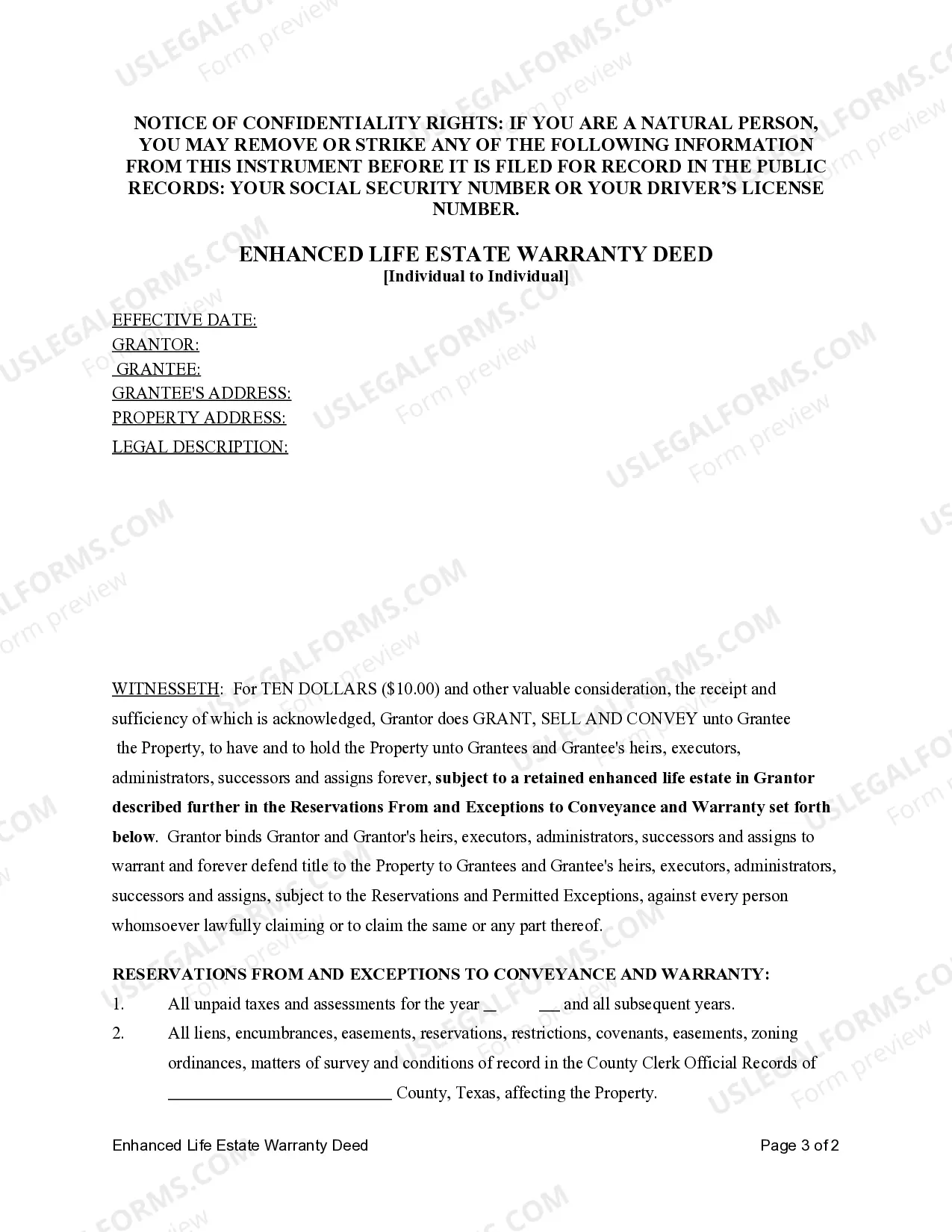
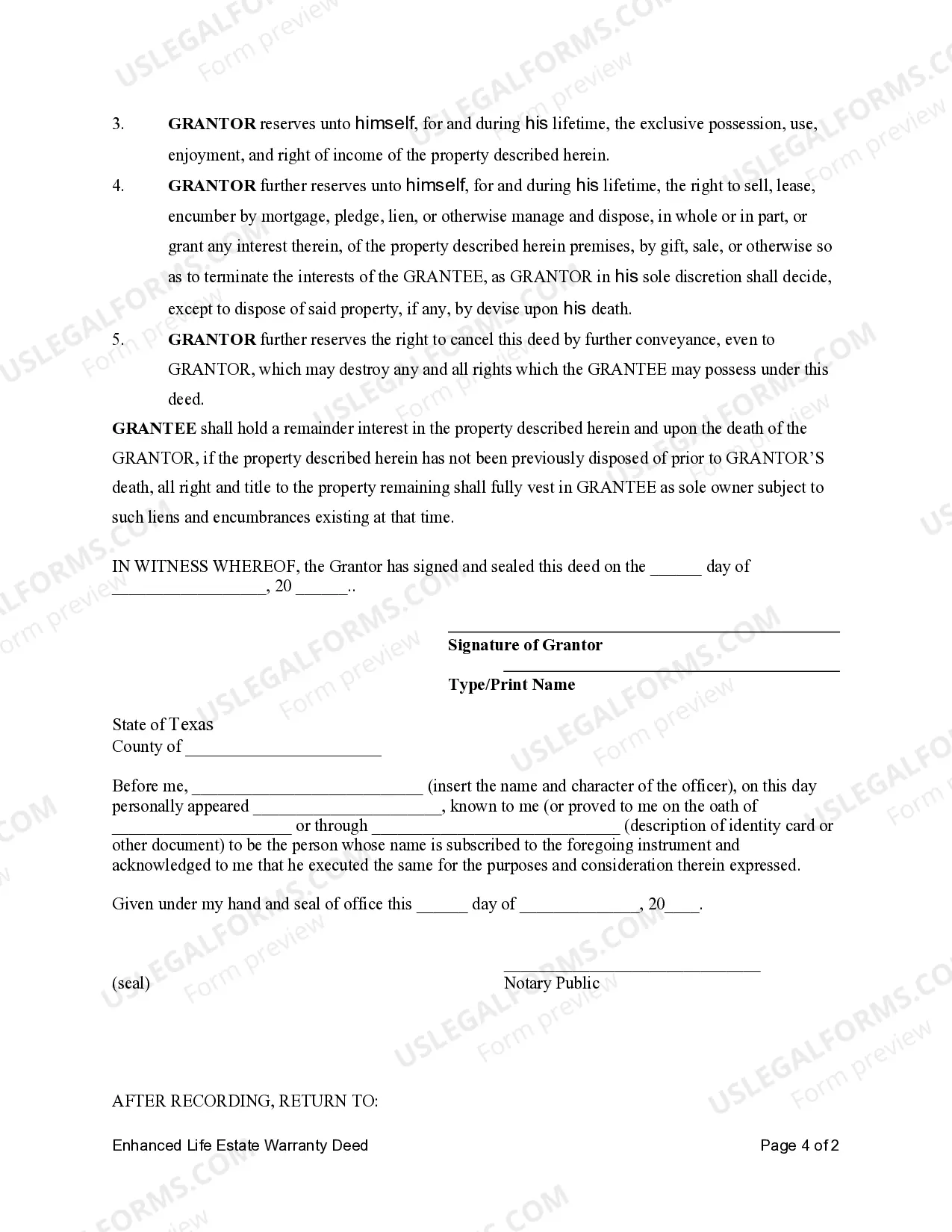
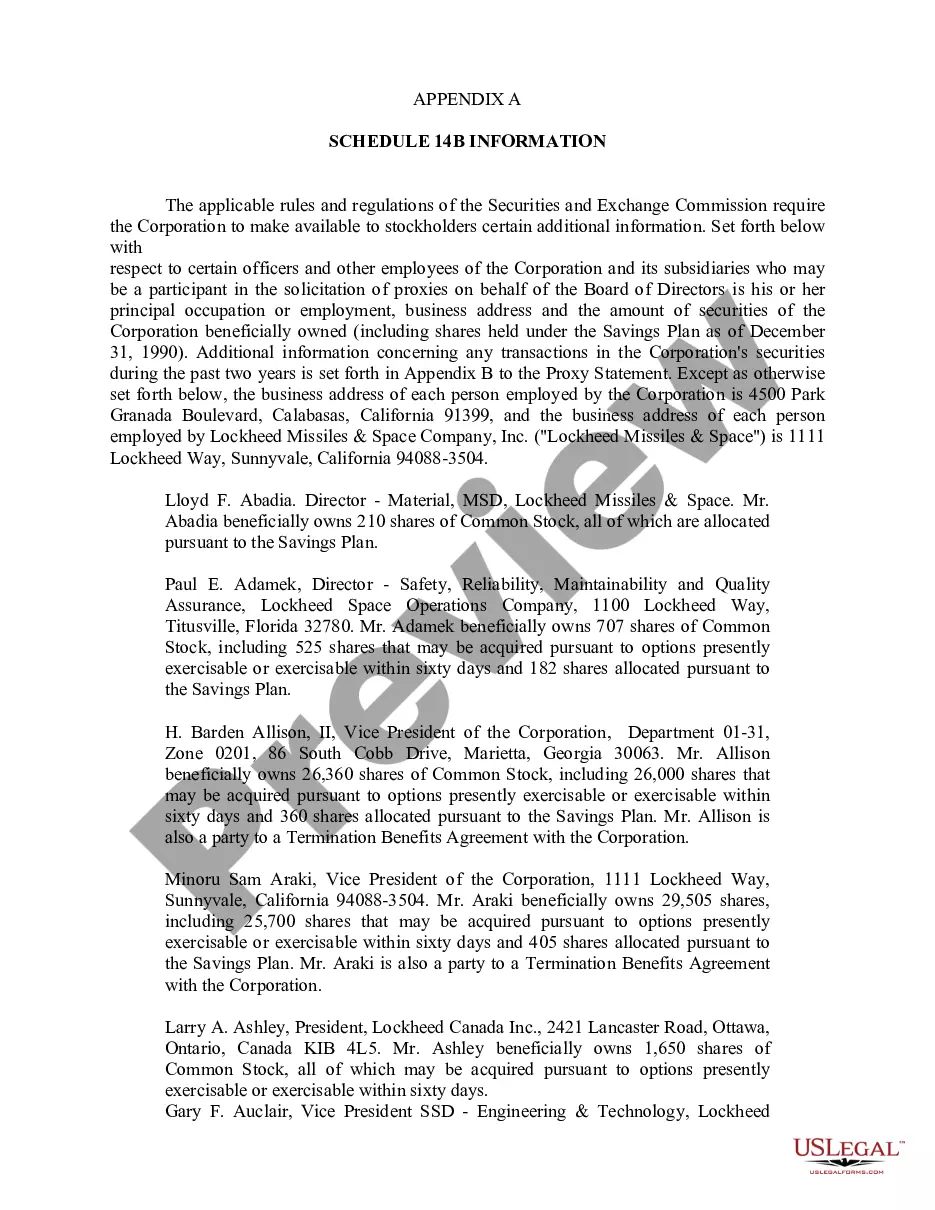


How to fill out Texas Lady Bird Or Enhanced Life Estate Warranty Deed - Individual To Individual?
- Log in to your US Legal Forms account if you're a returning user. Ensure your subscription is active to access your documents.
- If it's your first time, review the form preview and description to verify it meets your local requirements.
- If necessary, use the Search tool to find a more suitable template that aligns with your needs.
- Purchase the document by clicking the Buy Now button and select a subscription plan that fits your needs.
- Complete your payment using credit card or PayPal details to successfully process your purchase.
- Download the completed form to your device. You can access it anytime in the My Documents section of your profile.
Following these steps lets you access the comprehensive form library offered by US Legal Forms, which boasts over 85,000 editable legal documents.
Whether you're an individual or an attorney, US Legal Forms empowers you to file these important legal documents efficiently. Start now to ensure your property transfers smoothly by accessing our premium resources!
Form popularity
FAQ
In the Texas property code, a life estate refers to a legal arrangement that allows an individual to use and benefit from a property for their lifetime. Upon their passing, the property automatically transfers to designated beneficiaries known as remaindermen. The use of a Texas property code enhanced life estate deed simplifies this process, offering clarity and security for property owners and their heirs. Understanding these terms can help you navigate estate planning more effectively.
While a Texas property code enhanced life estate deed provides certain benefits, it also carries disadvantages. One significant drawback is that the original owner retains limited control over the property after the deed is executed; they cannot sell or mortgage the property without the consent of the remainderman. Moreover, if debts arise, creditors may still pursue the property even after the life estate deed is established. It is essential to weigh these factors carefully before proceeding.
The main difference between a life estate deed and an enhanced life estate deed lies in the control and rights afforded to the owner. A traditional life estate deed restricts some rights and may lead to complications after the owner's passing. However, the enhanced life estate deed, defined in the Texas property code, empowers the owner with additional rights and simplifies property transfer upon death, thereby protecting the owner's interests.
The two primary types of life estates are the conventional life estate and the enhanced life estate. A conventional life estate grants the owner usage during their life, but typically with fewer benefits. In contrast, the enhanced life estate, as specified in the Texas property code, offers greater flexibility and protects the owner’s rights while providing for automatic transfer upon death.
Yes, Texas does recognize the enhanced life estate deed, which is detailed in the Texas property code. This type of deed enhances traditional life estate features by allowing the property owner to maintain more rights and control during their lifetime. By choosing this deed, residents can effectively bypass probate and ensure a seamless transition of property to their chosen beneficiaries.
In a life estate in Texas, the property is owned by the life tenant, who retains the right to use the property during their lifetime. Upon the death of the life tenant, ownership automatically transfers to the designated remaindermen. This transfer occurs without going through probate, which simplifies the process and aligns well with the Texas property code enhanced life estate deed.
An enhanced life estate allows the original property owner to retain the right to live on the property while extending the future interest to beneficiaries. This form of ownership, sanctioned under the Texas property code, combines the features of a traditional life estate with additional benefits. It gives the owner more control and can help avoid complications in estate planning.
The best deed to avoid probate is often the enhanced life estate deed, as outlined in the Texas property code. This deed provides you with the ability to live on and use your property during your lifetime, while designating beneficiaries who will automatically receive the property upon your passing. By utilizing this deed, you can ensure a smooth transfer of ownership without the lengthy probate process.
One downside of a life estate is that the life tenant has limited control over the property after their passing, as the remainderman takes over. Additionally, a life estate can complicate the sale or mortgage of the property, as both parties must agree on actions affecting the asset. Understanding these limitations will help you navigate the complexities of a Texas property code enhanced life estate deed, ensuring you make the right decisions for your estate.
An enhanced life estate deed in Texas allows a property owner to manage their estate more effectively while enjoying the benefits of ownership during their lifetime. This deed allows the owner to retain all rights to use the property while automatically transferring ownership to designated heirs upon their death. It's an efficient solution recognized in the Texas property code enhanced life estate deed, providing peace of mind for both the property owner and their heirs.