Texas Estate Individual With Us
Description
Get your form ready online
Our built-in tools help you complete, sign, share, and store your documents in one place.
Make edits, fill in missing information, and update formatting in US Legal Forms—just like you would in MS Word.
Download a copy, print it, send it by email, or mail it via USPS—whatever works best for your next step.
Sign and collect signatures with our SignNow integration. Send to multiple recipients, set reminders, and more. Go Premium to unlock E-Sign.
If this form requires notarization, complete it online through a secure video call—no need to meet a notary in person or wait for an appointment.
We protect your documents and personal data by following strict security and privacy standards.

Make edits, fill in missing information, and update formatting in US Legal Forms—just like you would in MS Word.

Download a copy, print it, send it by email, or mail it via USPS—whatever works best for your next step.

Sign and collect signatures with our SignNow integration. Send to multiple recipients, set reminders, and more. Go Premium to unlock E-Sign.

If this form requires notarization, complete it online through a secure video call—no need to meet a notary in person or wait for an appointment.

We protect your documents and personal data by following strict security and privacy standards.
Looking for another form?







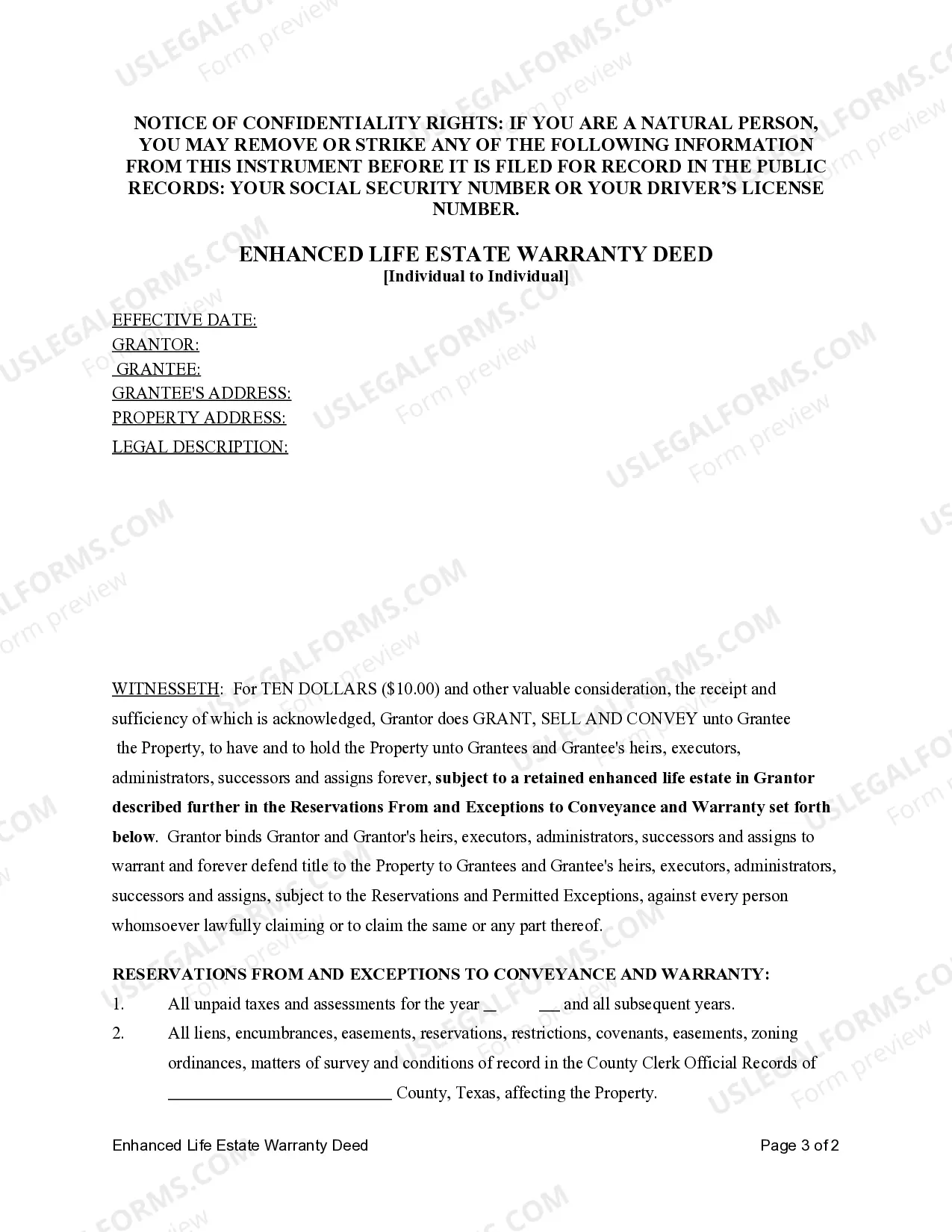
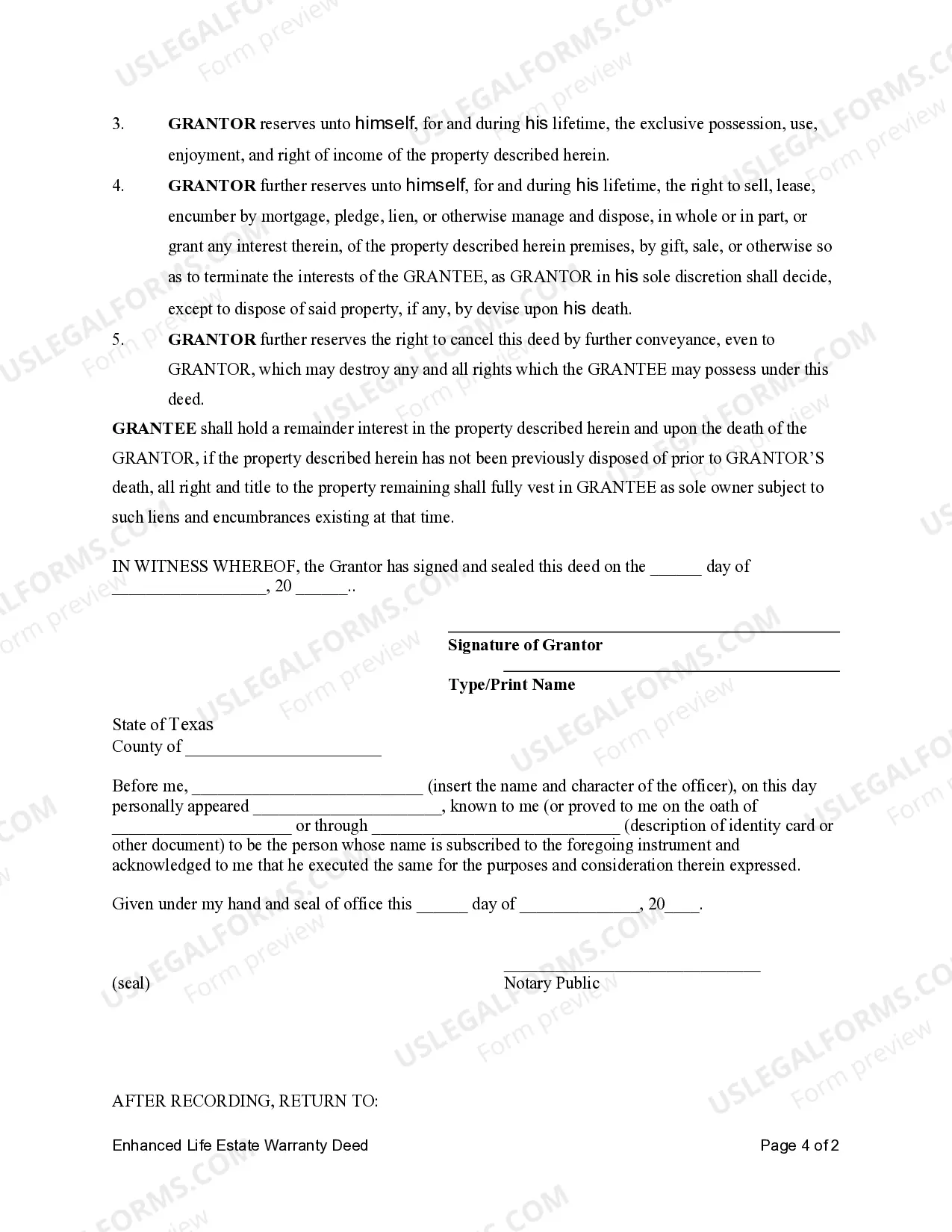
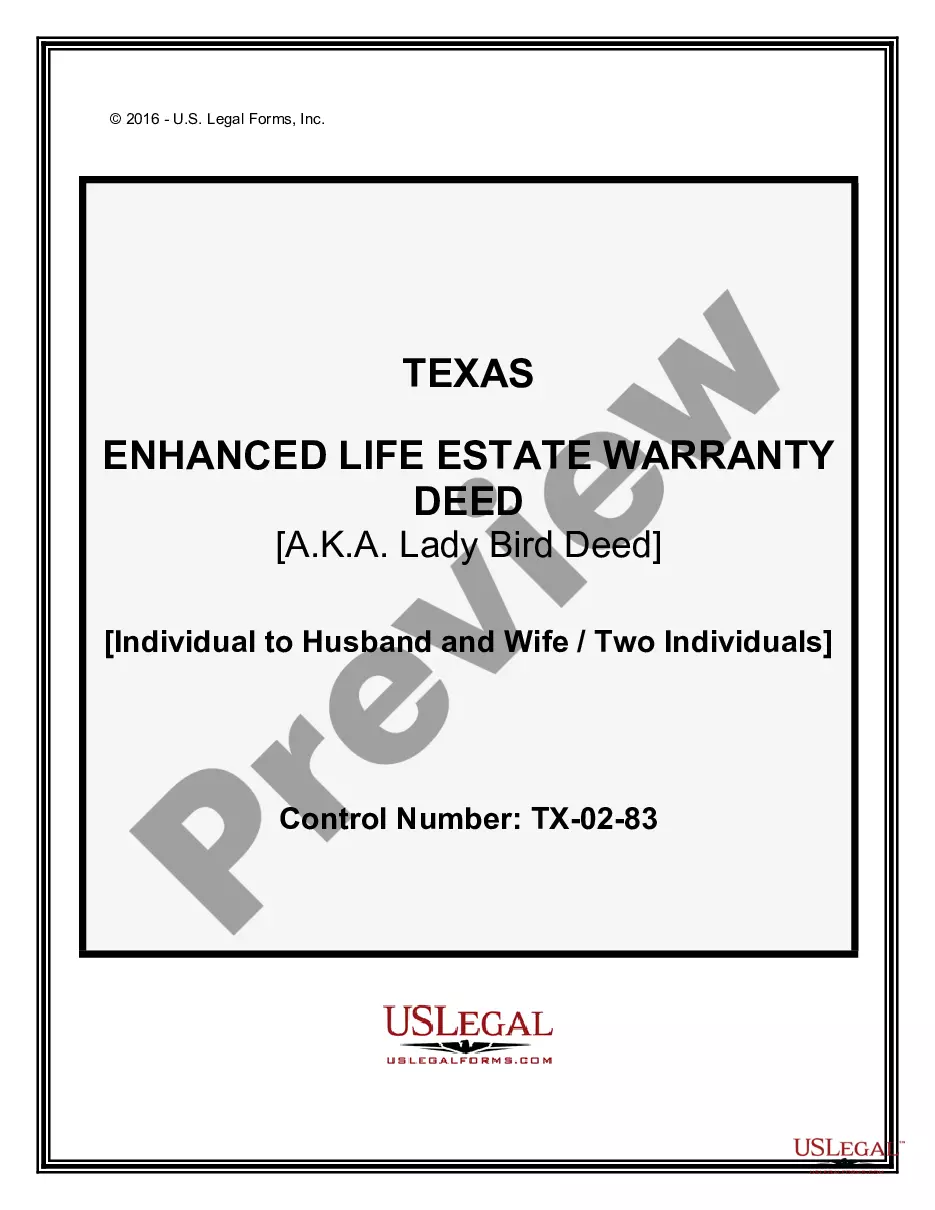
How to fill out Texas Lady Bird Or Enhanced Life Estate Warranty Deed - Individual To Individual?
- Log in to your US Legal Forms account if you're a returning user. Ensure your subscription is active to access the needed documents.
- If you are new to our service, begin by browsing through the extensive form collection. Preview the form descriptions to find one that meets your specific Texas jurisdiction requirements.
- Should you need a different template, utilize the search function to find the exact document that suits your needs.
- Once you've selected your desired form, click on the 'Buy Now' button and choose your preferred subscription plan. Create an account to gain access to our complete library.
- After selecting your subscription, complete your purchase by entering your payment details through credit card or PayPal.
- Once your purchase is confirmed, download your form and save it to your device. You can also access it later via the 'My Forms' section of your profile.
With US Legal Forms, you're empowered to create legal documents effortlessly and confidently. Our vast collection and expert assistance ensure you're making informed decisions.
Start your journey today and experience the convenience of handling legal matters with ease—choose US Legal Forms for all your document needs!
Form popularity
FAQ
An estate generally consists of everything owned by a person at their death, which includes physical assets, financial accounts, and liabilities. For a Texas estate individual with us, this may encompass real estate, personal belongings, debts, and any outstanding taxes. A clear understanding of the estate helps in planning and executing the will properly.
Filling out a small estate affidavit in Texas is straightforward when you work with a Texas estate individual with us. Start by gathering necessary information about the decedent and their assets. You'll need to file this affidavit with the probate court, so ensure that all required details are included to avoid delays.
In Texas, an estate typically must be worth over $75,000 to require formal probate. However, if you are dealing with a Texas estate individual with us that falls below this threshold, you may qualify for simplified probate procedures. Understanding these limits can help streamline the probate process for smaller estates.
In the case of a Texas estate individual with us, a single person’s estate typically passes according to state law if there is no will. This means heirs will inherit the estate as defined by Texas intestacy laws, which prioritize family members. Having a will can simplify this process and clarify your wishes.
Yes, you may probate a Texas estate individual with us without legal representation, although it can be a complicated process. You need to complete the required forms and meet deadlines set by the court. While it's possible to manage on your own, consulting with a lawyer can help avoid mistakes and ensure proper handling of the estate.
Certain assets are not considered part of a Texas estate individual with us. For example, assets held in joint tenancy or those with designated beneficiaries generally pass outside of probate. Also, items owned solely by a spouse or any assets in a trust are typically excluded from the estate.
Assets included in a Texas estate individual with us can range from tangible items like homes and cars to intangible items such as stocks and bonds. Additionally, any life insurance policies or retirement accounts that name beneficiaries will also be part of the estate. Proper inventory of your assets ensures that everything is accounted for during the probate process.
A Texas estate individual with us typically includes all your assets, properties, and debts at the time of your passing. This can encompass real estate, bank accounts, personal belongings, and any investments. Understanding what makes up your estate is crucial for effective planning and management.
To transfer ownership of property after death in Texas, you'll need to follow the specific legal procedures outlined for the estate. This typically involves gathering necessary documents and might require probate if the property was owned solely by the deceased. A Texas estate individual with us can assist you through this process, ensuring proper transfer and compliance with the law.
Not all estates must go through probate in Texas. Some assets can transfer directly to beneficiaries, bypassing probate entirely. Engaging with a Texas estate individual with us can help you understand which of your assets require probate and which do not.