Texas Bird Enhanced For The Environment
Description
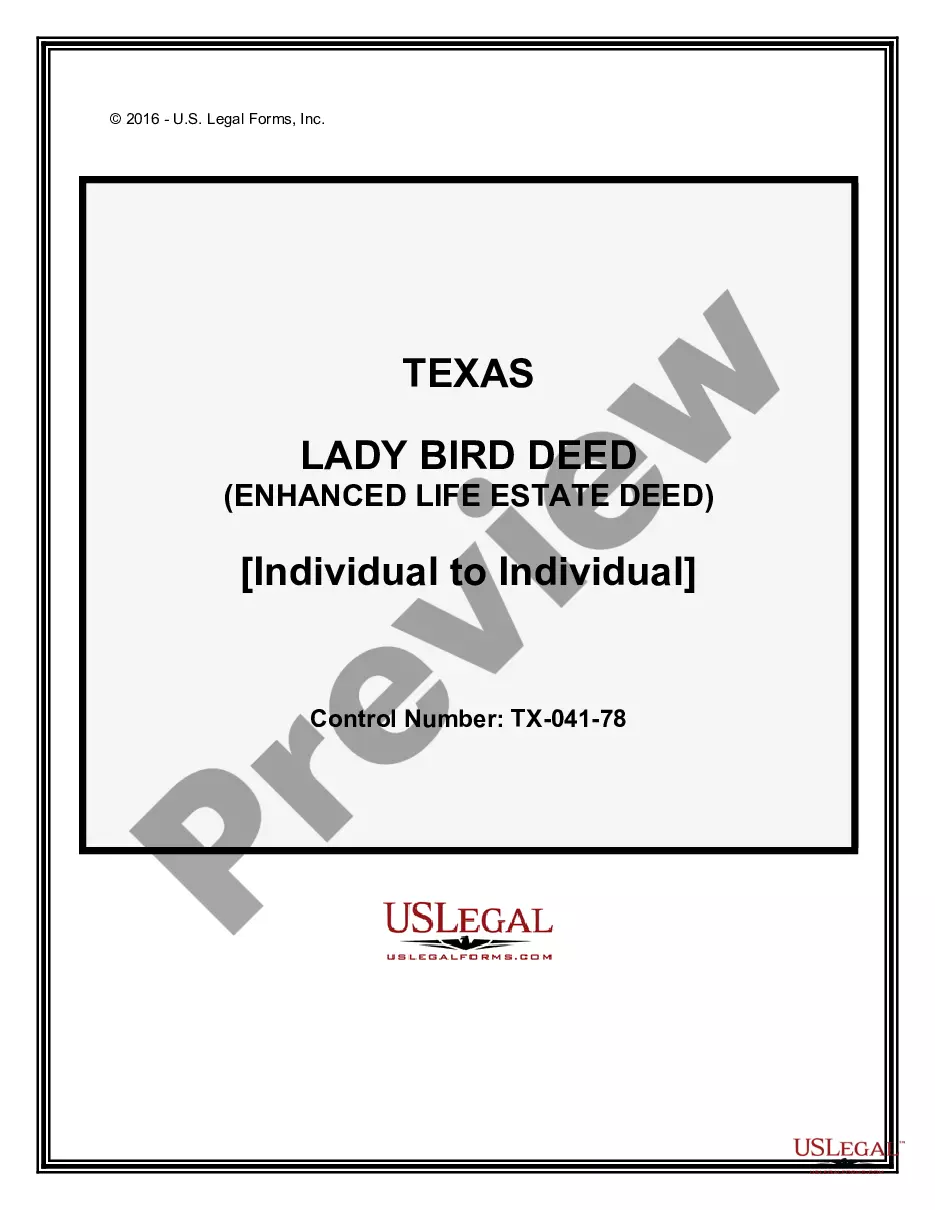
Get your form ready online
Our built-in tools help you complete, sign, share, and store your documents in one place.
Make edits, fill in missing information, and update formatting in US Legal Forms—just like you would in MS Word.
Download a copy, print it, send it by email, or mail it via USPS—whatever works best for your next step.
Sign and collect signatures with our SignNow integration. Send to multiple recipients, set reminders, and more. Go Premium to unlock E-Sign.
If this form requires notarization, complete it online through a secure video call—no need to meet a notary in person or wait for an appointment.
We protect your documents and personal data by following strict security and privacy standards.

Make edits, fill in missing information, and update formatting in US Legal Forms—just like you would in MS Word.

Download a copy, print it, send it by email, or mail it via USPS—whatever works best for your next step.

Sign and collect signatures with our SignNow integration. Send to multiple recipients, set reminders, and more. Go Premium to unlock E-Sign.

If this form requires notarization, complete it online through a secure video call—no need to meet a notary in person or wait for an appointment.

We protect your documents and personal data by following strict security and privacy standards.
Looking for another form?







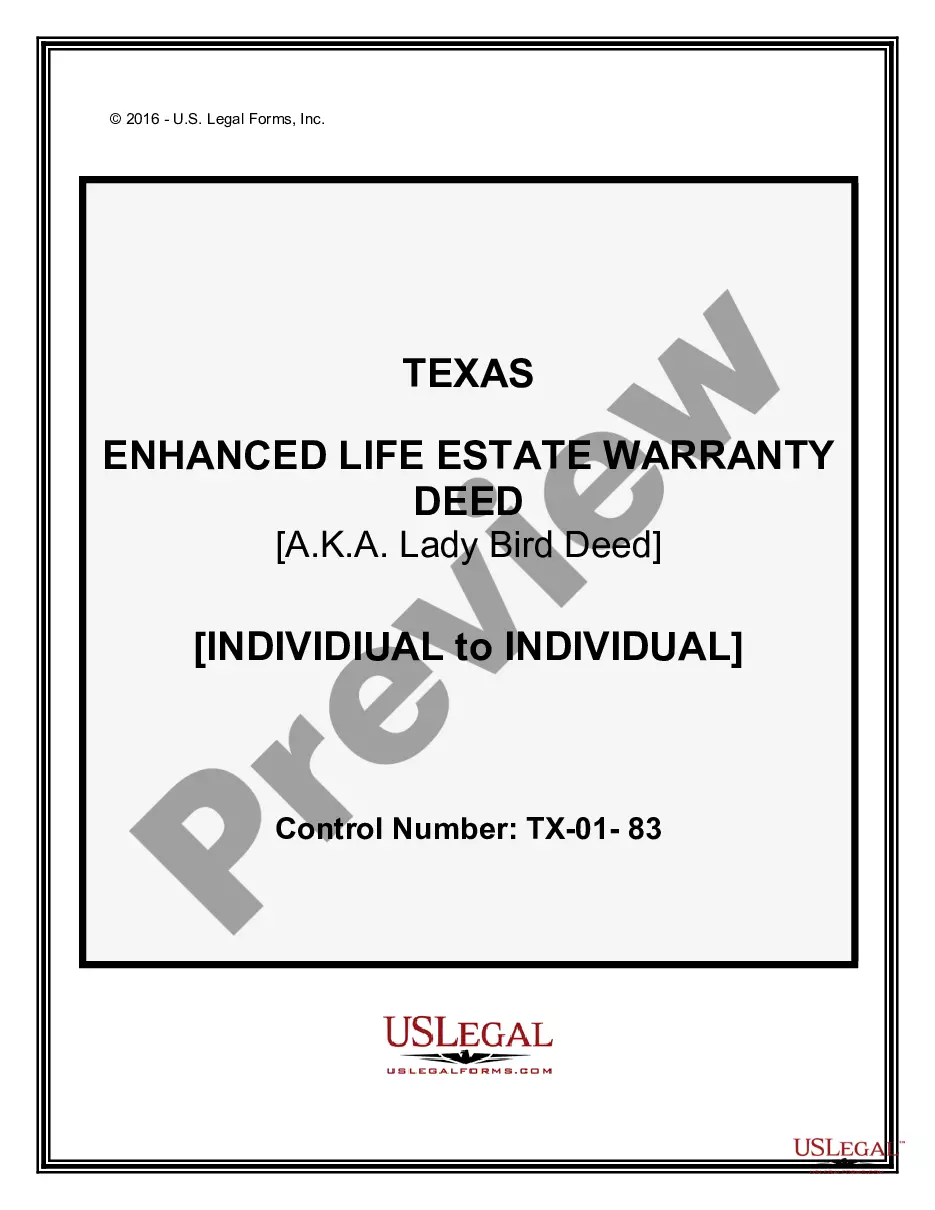
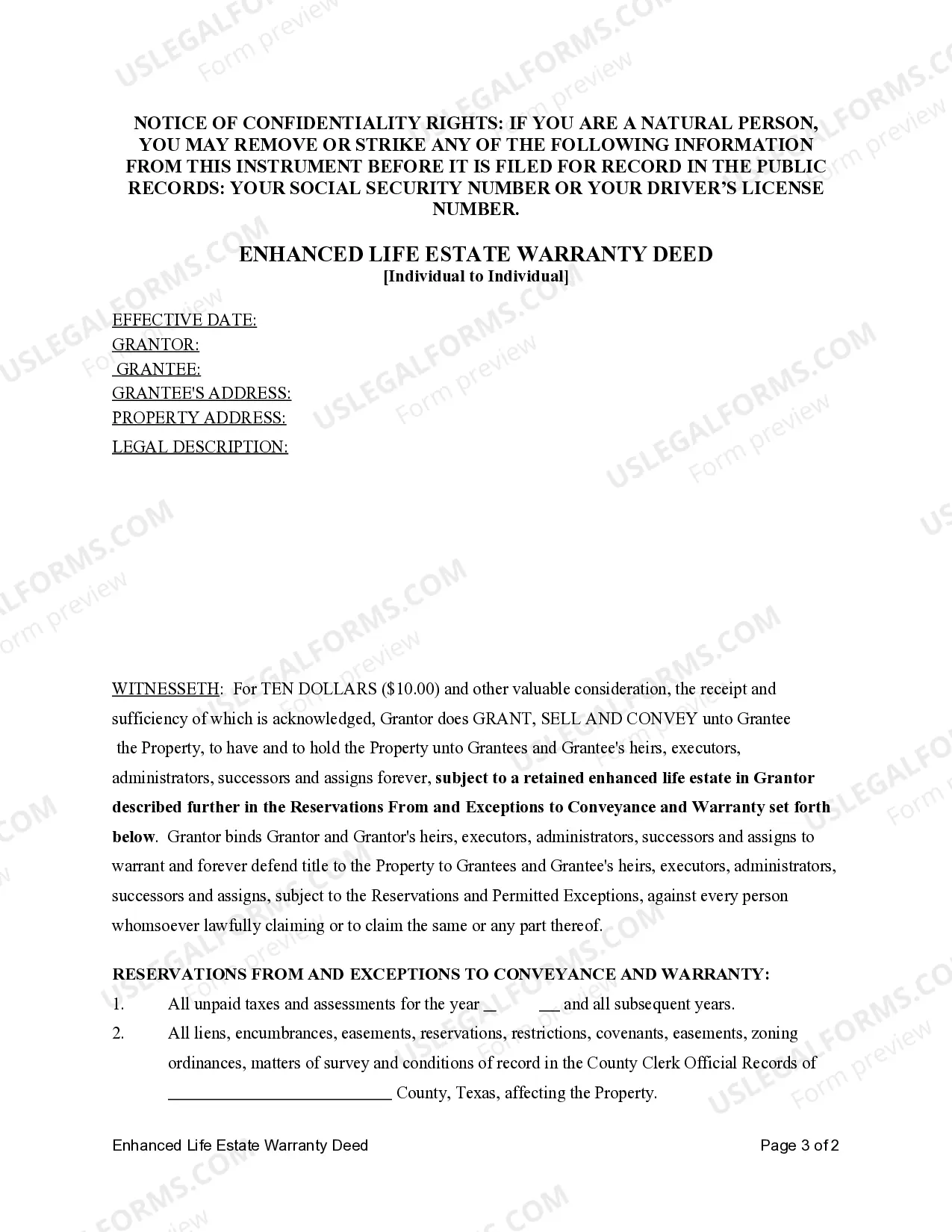
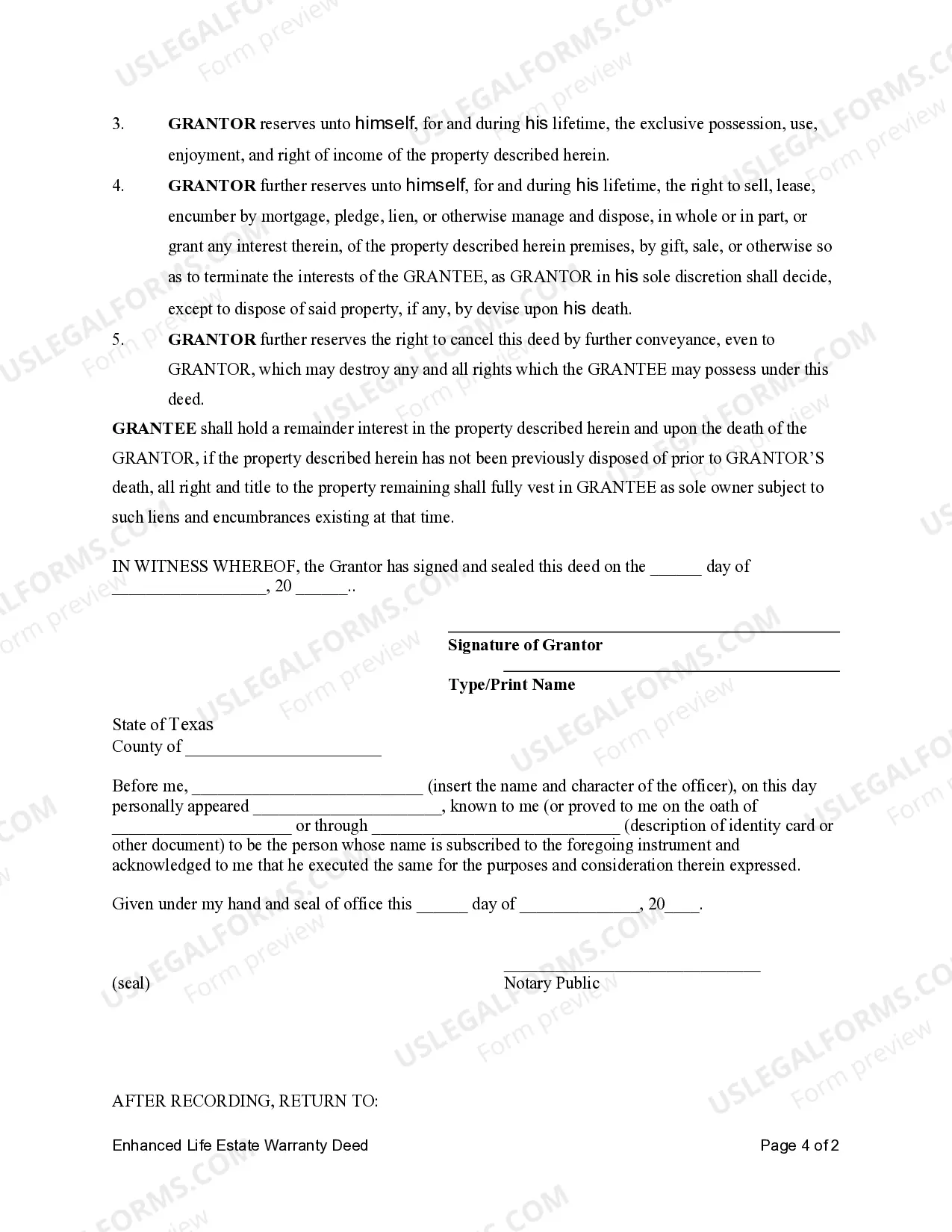
How to fill out Texas Lady Bird Or Enhanced Life Estate Warranty Deed - Individual To Individual?
- If you're a returning user, log in to your US Legal Forms account. Make sure your subscription is active to download any form templates you need.
- Check out the preview and description of the form you believe is suitable for your requirements. Ensure it aligns with your local jurisdiction.
- If your initial choice isn't ideal, use the Search feature to find an alternative document that meets your needs.
- Purchase the selected form by clicking the Buy Now button. Choose your preferred subscription plan for access to the complete library.
- Complete your purchase by entering your payment details or using your PayPal account.
- Once paid, download your form directly to your device and access it anytime through the My Forms section in your account.
By utilizing US Legal Forms, individuals and attorneys alike can produce legally sound documents swiftly. With an unmatched collection of forms available at your fingertips, you'll speed up the process of legal documentation.
Don't hesitate to ensure your legal needs are met swiftly and accurately. Start using US Legal Forms today to access the comprehensive library and expert assistance available!
Form popularity
FAQ
The Migratory Bird Act covers a wide range of bird species that migrate across state lines in North America, including many native to Texas. This legislation protects these birds from hunting and harm during their migration periods. Understanding these regulations is key to preserving the ecosystems and ensuring that Texas birds are enhanced for the environment.
Bird laws in Texas encompass both state and federal regulations designed to protect various species, especially migratory birds. These laws regulate hunting, the destruction of nests, and other related activities. For a comprehensive understanding of these laws and how they relate to your activities, USLegalForms offers valuable resources.
In Texas, destroying a bird's nest is generally illegal, particularly for migratory birds, which are protected by federal law. It's crucial to respect the nesting habits of all birds to maintain biodiversity. For guidance on how to navigate these laws while enhancing the environment, consider consulting USLegalForms.
To effectively manage cowbird populations in Texas, consider non-lethal methods first. This includes creating a suitable environment for native birds that discourage cowbirds from nesting. If you're unsure about the best practices, platforms like USLegalForms can assist you in understanding your options for maintaining a balanced ecosystem.
Yes, you can shoot cowbirds in Texas, but you must follow all relevant regulations. The Texas Parks and Wildlife Department outlines specific hunting seasons and guidelines for this practice. To ensure you're compliant with the law while enhancing the environment, always refer to official resources.
In Texas, the legality of shooting cowbirds depends on various factors, including hunting regulations and the specific circumstances. Cowbirds are classified as a migratory game bird, so it is crucial to consult Texas wildlife regulations. Utilizing resources from platforms like USLegalForms can provide clarity on these laws.
It's important to consider the ecological role of cowbirds before deciding to shoot them. These birds, while often seen as pests, are part of the natural balance in Texas. If you're concerned about protecting other bird species, look into non-lethal alternatives that enhance the environment, such as habitat management.
Texas has several designated Bird Cities, including Austin, Dallas, and San Antonio. These cities are committed to creating sustainable environments that support a Texas bird enhanced for the environment. Each city implements unique initiatives focused on conservation and education to protect local bird populations. Enthusiasts should explore these cities to experience their natural beauty and vibrant birding communities.
Creating a bird sanctuary in Texas involves identifying a suitable area, providing food, water, and shelter for birds, and ensuring the habitat's protection. Engage local residents and organizations to support these efforts, aligning with the concept of a Texas bird enhanced for the environment. You can utilize resources from platforms like USLegalForms to navigate any legal requirements for establishing a sanctuary. Encouraging biodiversity and promoting wildlife-friendly practices is essential for the success of a sanctuary.
To qualify as a Bird City, a community must meet specific environmental criteria that promote bird conservation. This includes creating habitats, providing education, and implementing bird-friendly practices, all contributing to a Texas bird enhanced for the environment. Communities should also engage residents in these efforts to increase awareness and active participation. The criteria focus on sustainable practices that ultimately benefit both birds and people.