Life Estate Deed With Powers
Description

Get your form ready online
Our built-in tools help you complete, sign, share, and store your documents in one place.
Make edits, fill in missing information, and update formatting in US Legal Forms—just like you would in MS Word.
Download a copy, print it, send it by email, or mail it via USPS—whatever works best for your next step.
Sign and collect signatures with our SignNow integration. Send to multiple recipients, set reminders, and more. Go Premium to unlock E-Sign.
If this form requires notarization, complete it online through a secure video call—no need to meet a notary in person or wait for an appointment.
We protect your documents and personal data by following strict security and privacy standards.

Make edits, fill in missing information, and update formatting in US Legal Forms—just like you would in MS Word.

Download a copy, print it, send it by email, or mail it via USPS—whatever works best for your next step.

Sign and collect signatures with our SignNow integration. Send to multiple recipients, set reminders, and more. Go Premium to unlock E-Sign.

If this form requires notarization, complete it online through a secure video call—no need to meet a notary in person or wait for an appointment.

We protect your documents and personal data by following strict security and privacy standards.
Looking for another form?
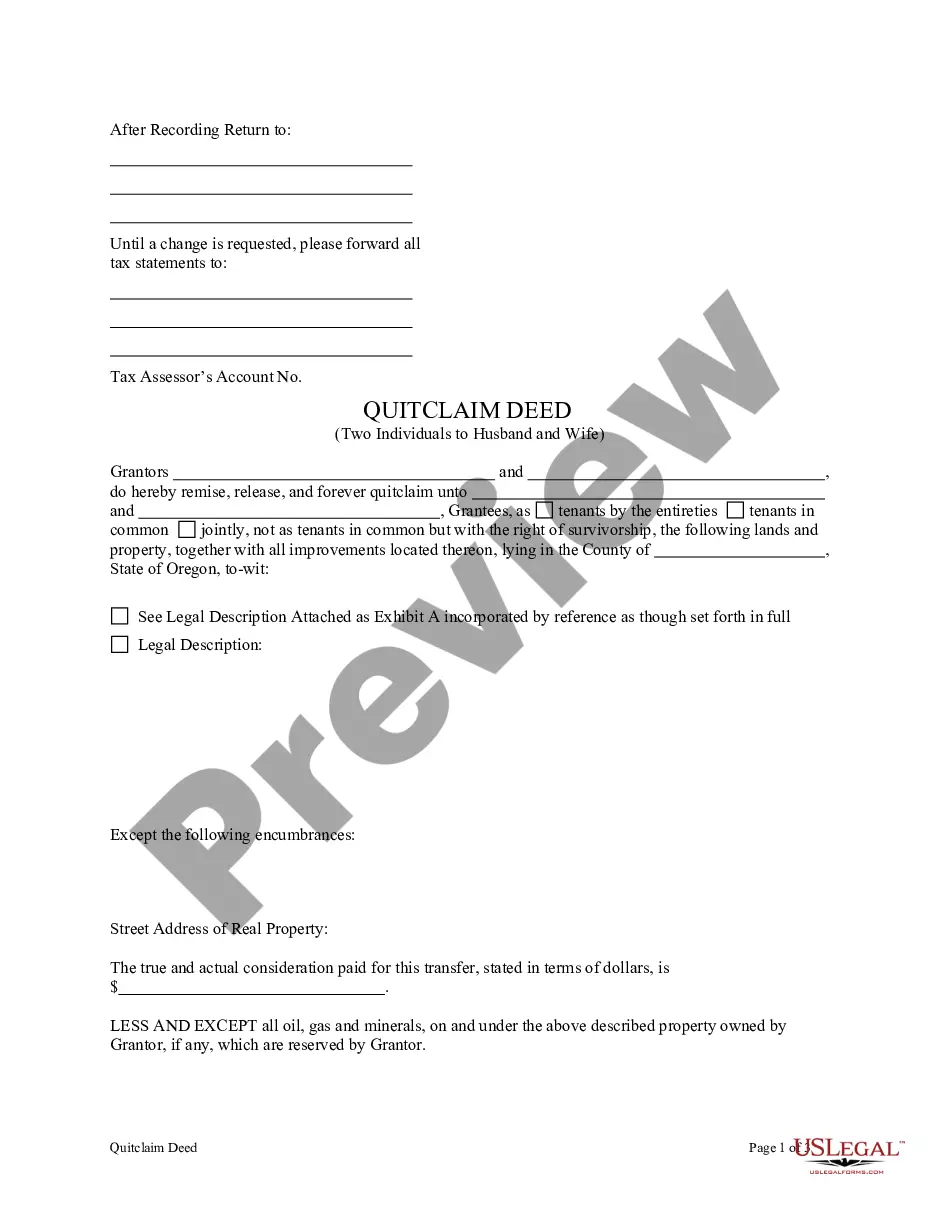
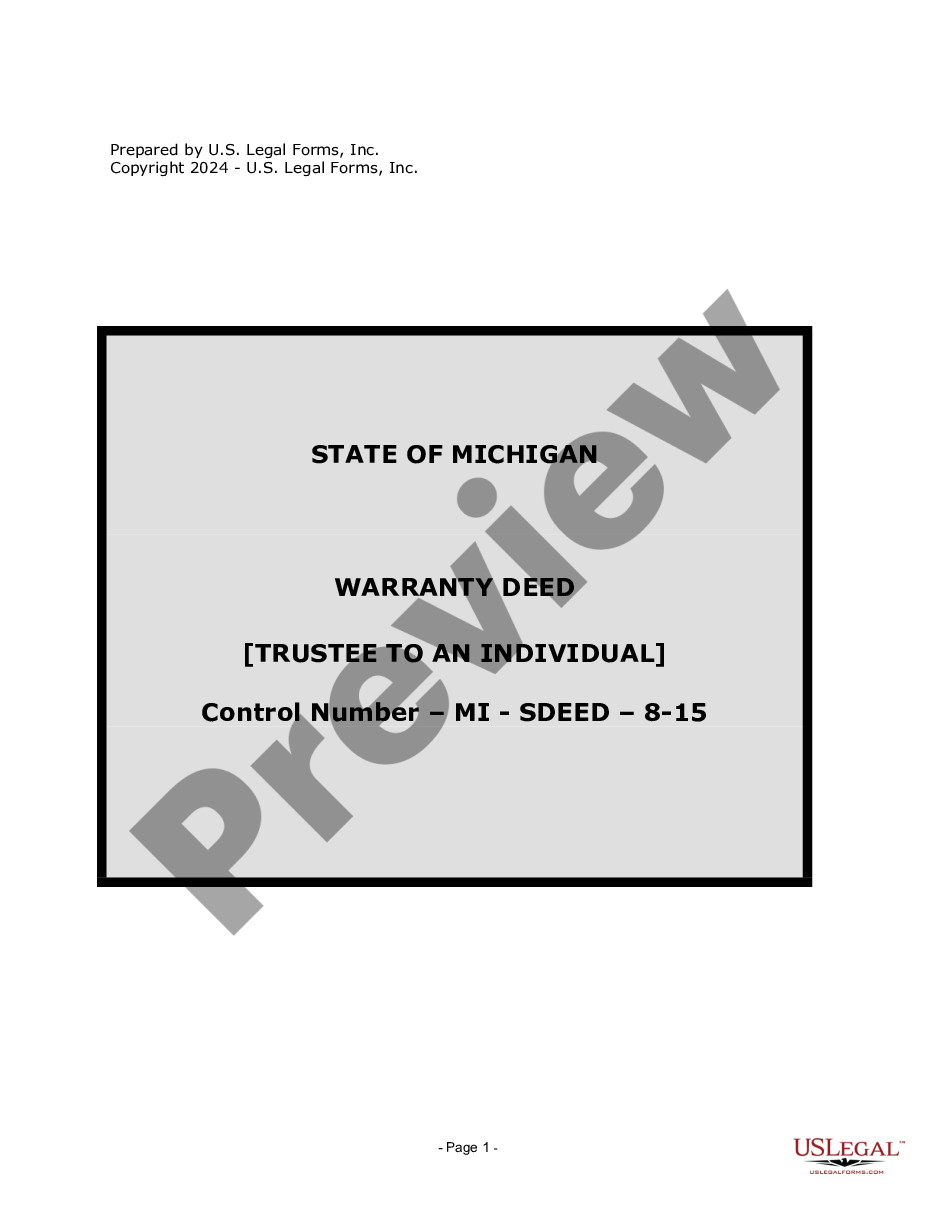
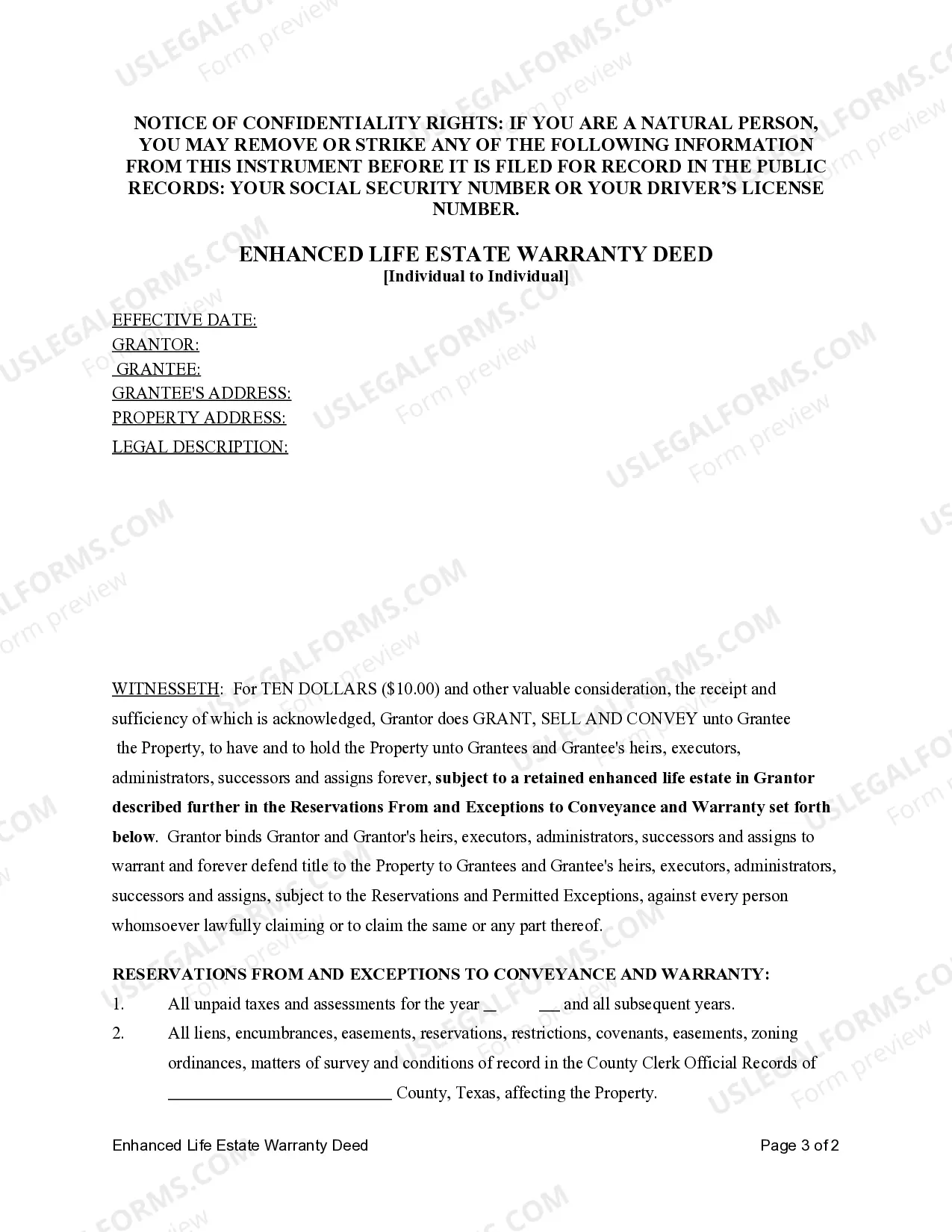
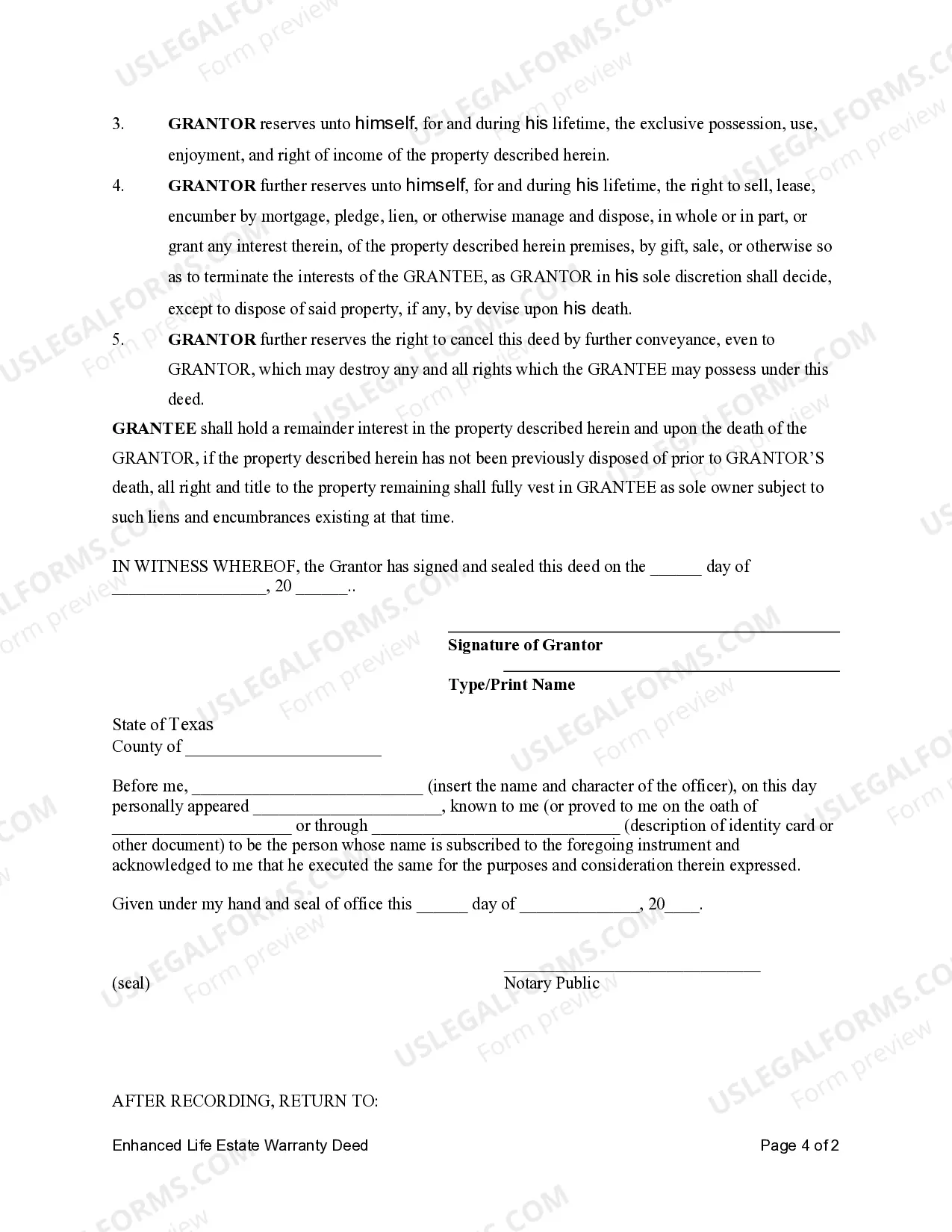
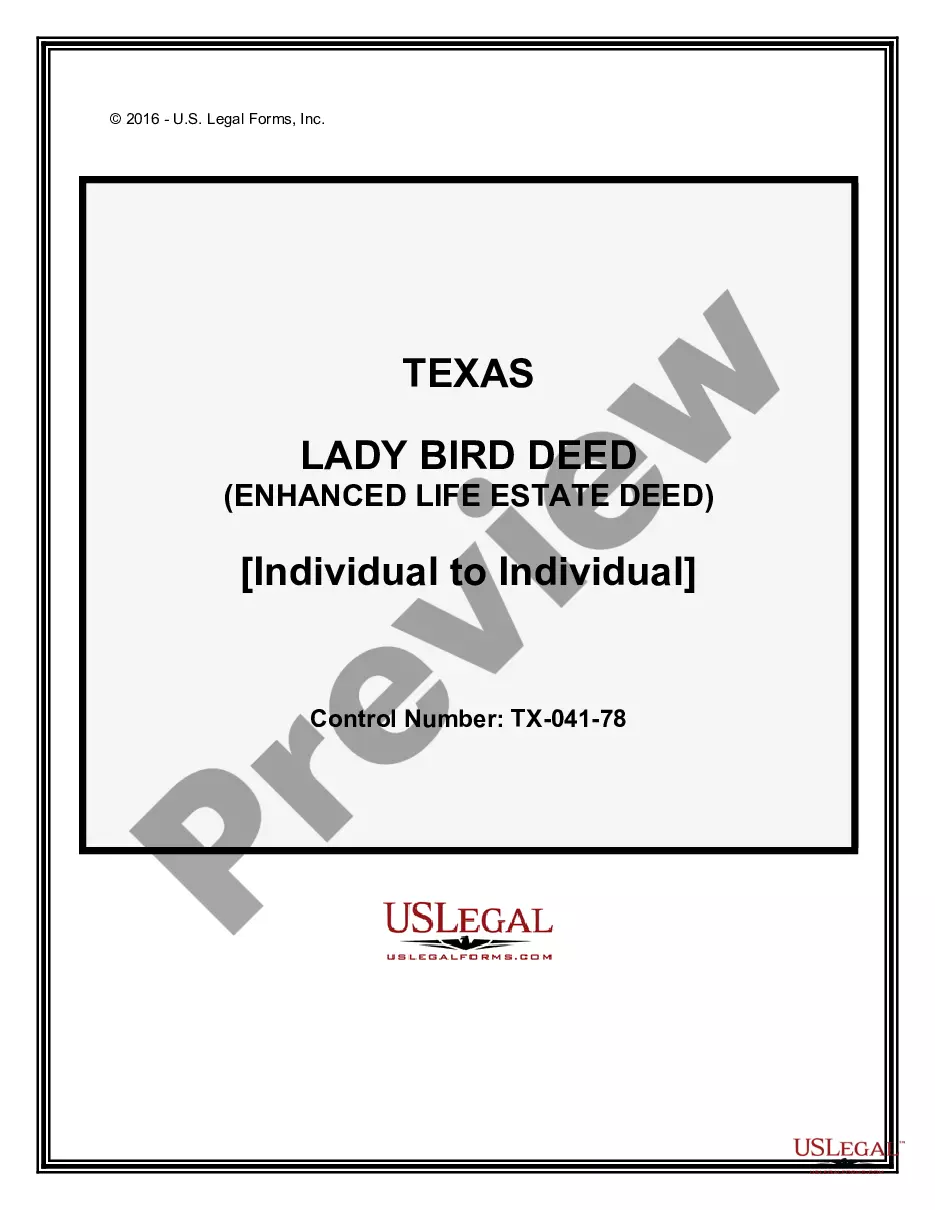
How to fill out Texas Lady Bird Or Enhanced Life Estate Warranty Deed - Individual To Individual?
- Begin by logging into your US Legal Forms account if you're a returning user. Ensure your subscription is active; if not, renew according to your payment plan.
- For first-time users, start by browsing the extensive library. Use the Preview mode to assess the life estate deed with powers template and confirm it meets your local jurisdiction requirements.
- If you find any discrepancies in the selected template, utilize the Search feature to locate a more suitable document.
- Click the Buy Now button for your selected template. Choose your desired subscription plan and register for an account to access the library.
- Proceed with the payment by entering your credit card details or opting for PayPal for a secure transaction.
- Once purchased, download your life estate deed with powers form and save it to your device. You can access it anytime from the My Forms section of your account.
US Legal Forms is designed to empower individuals and attorneys alike by facilitating quick access to a comprehensive library of over 85,000 legal forms. The extensive and easily editable templates ensure that you can find the precise documents necessary for your legal needs.
Experience the ease of creating legally sound documents with US Legal Forms today. Start your journey by visiting their website and make your legal document needs hassle-free.
Form popularity
FAQ
A power of attorney cannot change a living will unless explicitly authorized to do so by the principal. Living wills express a person's wishes regarding medical treatment, making it crucial that these documents remain intact unless legally modified. If you are unsure about the capabilities of a life estate deed with powers in relation to your living will, consulting legal expertise can provide clarity.
A power of attorney generally cannot change the terms of a life estate deed with powers without explicit permission from the life tenant. This restriction maintains the integrity of the original estate planning intentions. If you need to modify a life estate, consider seeking legal advice to navigate the complexities involved.
In most cases, a power of attorney can change the beneficiary of a life insurance policy if the policyholder has granted that specific power. However, it’s essential to review the policy terms and ensure that this action aligns with the individual's estate plan. The control provided by a life estate deed with powers should be clearly outlined to avoid any confusion.
To overturn a life estate, you typically need to obtain the consent of all parties involved, including the life tenant and the remaindermen. This process can involve a formal agreement or court procedures. Understanding the nuances of a life estate deed with powers is crucial, as they provide specific rights that must be acknowledged and addressed properly.
A legal power of attorney cannot make decisions about medical treatment when a person is incapacitated, cannot alter a life estate deed with powers, and cannot make decisions that require personal consent, like marriage or divorce. These limitations ensure that certain fundamental rights remain personal and protected. Therefore, it's essential to understand the boundaries of a power of attorney while planning your estate.
Yes, a life estate deed with powers can be challenged under certain circumstances. Such challenges may arise from disputes among heirs or issues of mental competency at the time the deed was created. If you face this situation, reaching out to a platform like US Legal Forms can help you find the necessary legal resources to navigate the challenge effectively.
Breaking a life estate deed with powers often requires legal intervention. You may need to seek court approval or negotiate with remaindermen, who hold interest beyond your lifetime. Consulting a legal expert familiar with life estates can provide you with strategies for resolving disputes related to your deed.
A life estate deed with powers allows you to manage, improve, and even sell the property during your lifetime. In contrast, a life estate without powers limits your control over the property. This fundamental difference impacts how you can utilize the property while alive, making the deed with powers a more flexible option for estate planning.
A life estate deed with powers typically does not supersede a will. Instead, it operates as a legal instrument that grants rights to property during a person's lifetime. The will governs distribution after death. Therefore, both documents serve different purposes in estate planning.
While a life estate deed with powers can be beneficial, it also has drawbacks to consider. Once the life estate is established, the owner cannot sell or transfer the property without the consent of the remaindermen. Additionally, any debts or liens on the property may complicate matters for the heirs after the original owner's death. Understanding these potential challenges can help individuals make informed decisions about their estate planning.