Enhanced Life Individual For The Elderly
Description
Get your form ready online
Our built-in tools help you complete, sign, share, and store your documents in one place.
Make edits, fill in missing information, and update formatting in US Legal Forms—just like you would in MS Word.
Download a copy, print it, send it by email, or mail it via USPS—whatever works best for your next step.
Sign and collect signatures with our SignNow integration. Send to multiple recipients, set reminders, and more. Go Premium to unlock E-Sign.
If this form requires notarization, complete it online through a secure video call—no need to meet a notary in person or wait for an appointment.
We protect your documents and personal data by following strict security and privacy standards.

Make edits, fill in missing information, and update formatting in US Legal Forms—just like you would in MS Word.

Download a copy, print it, send it by email, or mail it via USPS—whatever works best for your next step.

Sign and collect signatures with our SignNow integration. Send to multiple recipients, set reminders, and more. Go Premium to unlock E-Sign.

If this form requires notarization, complete it online through a secure video call—no need to meet a notary in person or wait for an appointment.

We protect your documents and personal data by following strict security and privacy standards.
Looking for another form?









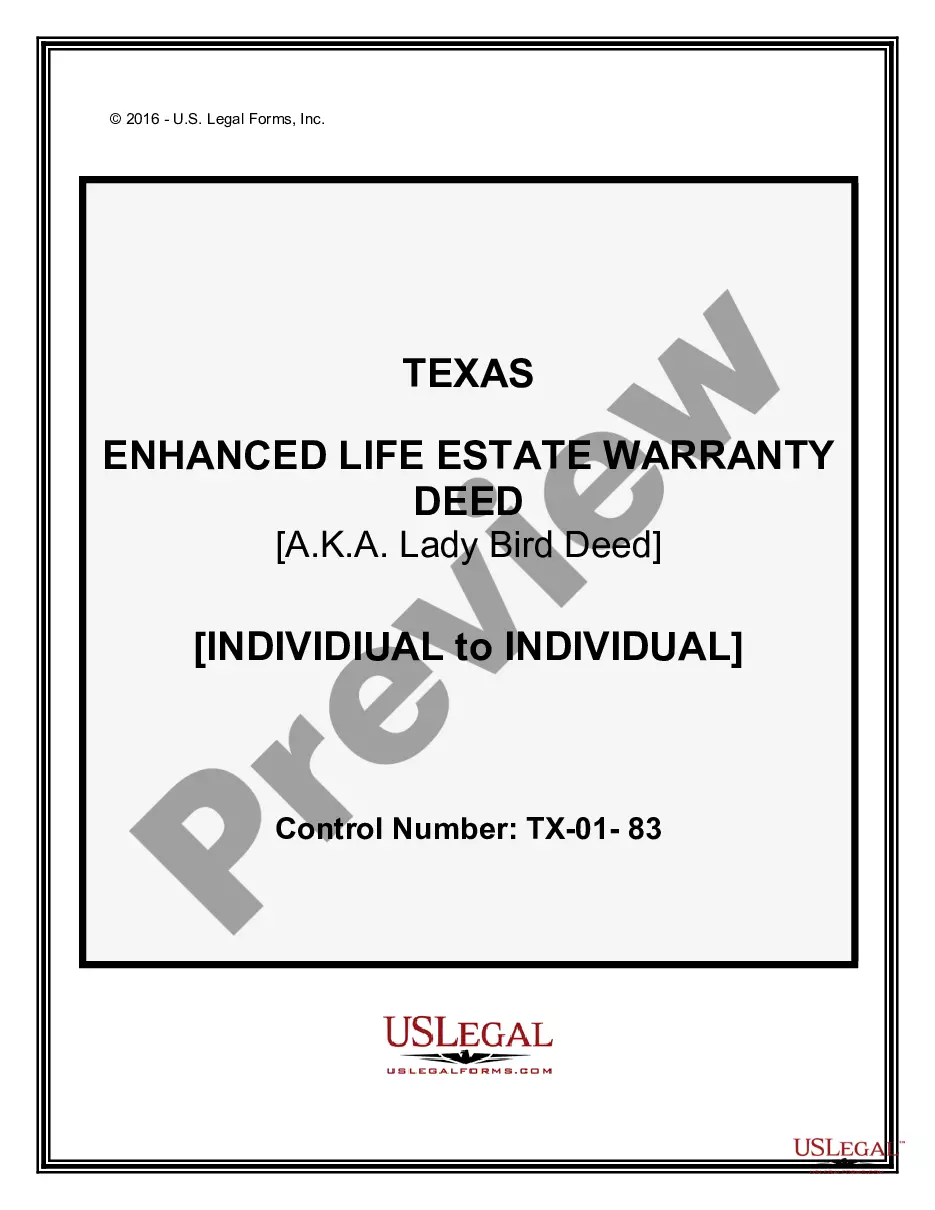
How to fill out Texas Lady Bird Or Enhanced Life Estate Warranty Deed - Individual To Individual?
- Log in to your US Legal Forms account if you are a returning user. Ensure your subscription is active to access all features.
- If you’re new to the platform, explore the extensive online library where you can preview and review form descriptions to find the right document.
- Utilize the search functionality to locate alternative templates if the first choice does not meet your requirements.
- Select your preferred subscription plan and click on the Buy Now button to proceed with registration.
- Complete your purchase by entering your payment details, either through credit card or PayPal.
- Download your selected form and save it for completion. You can always access it later in the My Forms section of your account.
US Legal Forms not only provides a wide variety of legal documents but also connects users with premium experts. This ensures that all forms are filled out accurately and comply with applicable laws.
Ready to simplify your legal document needs? Start using US Legal Forms today for a seamless experience!
Form popularity
FAQ
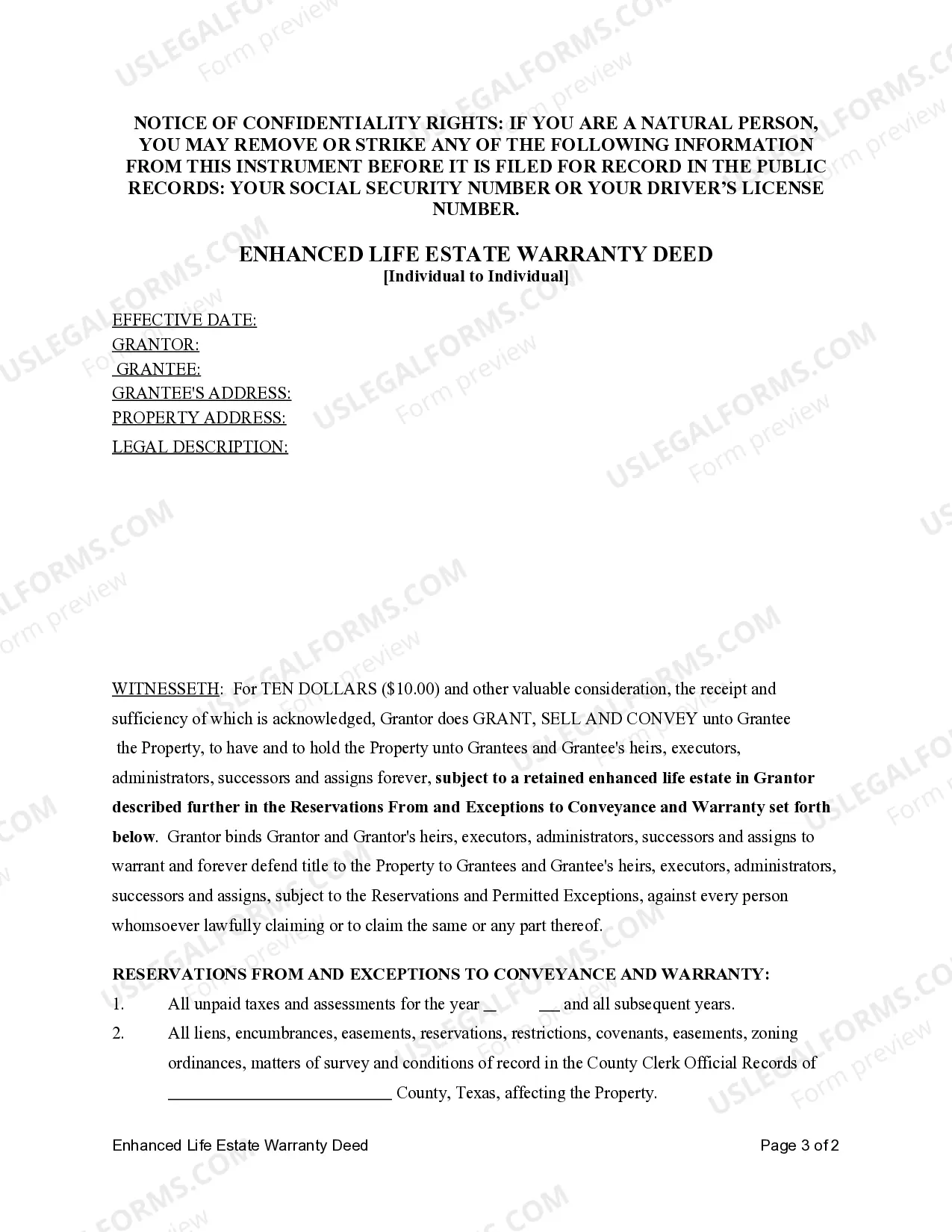
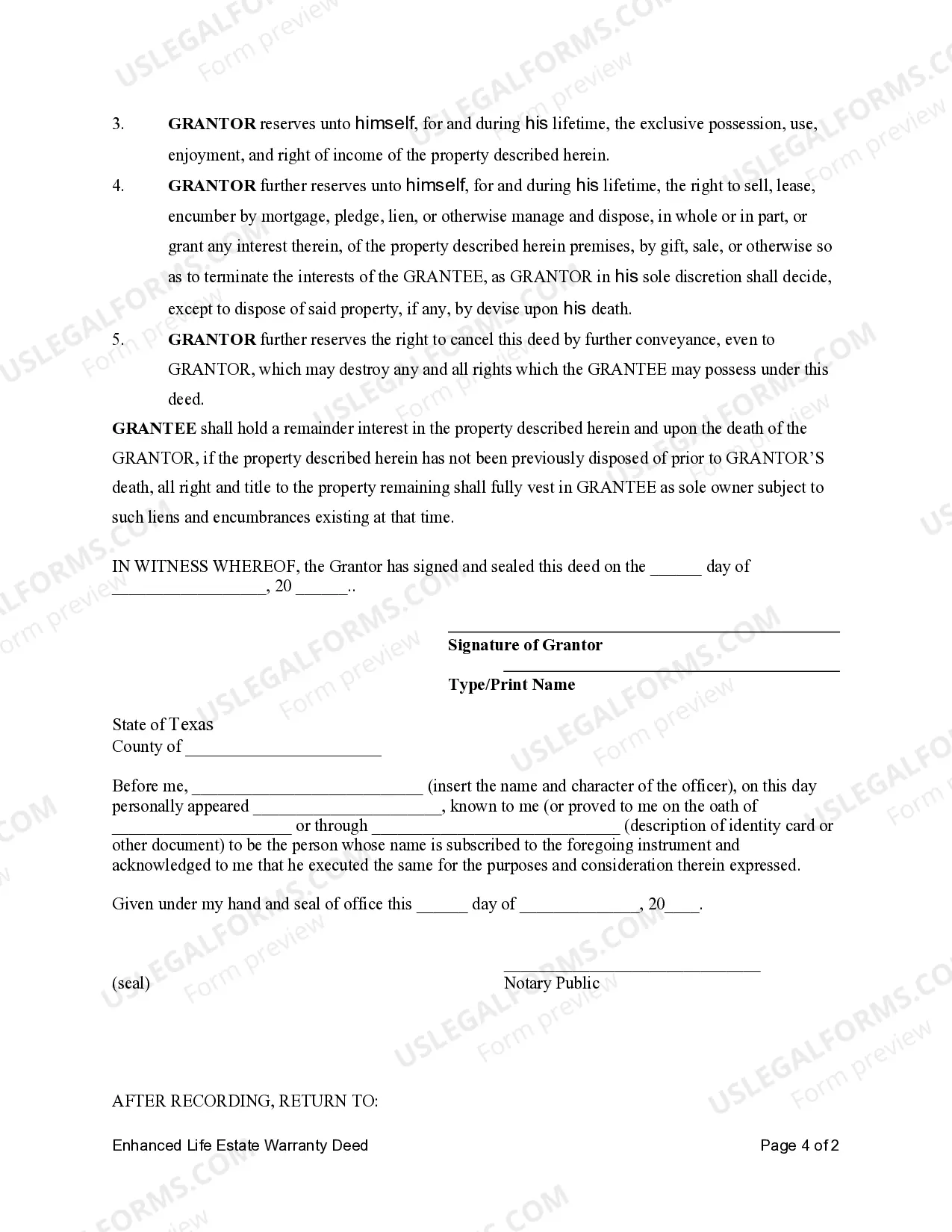
An enhanced life estate is a unique type of deed that allows seniors to retain control over their property during their lifetime while simplifying the transfer to beneficiaries after death. This arrangement can help avoid probate and preserve Medicaid benefits. Additionally, enhanced life estates grant the property owner the ability to sell or mortgage the home without needing the approval of the beneficiaries. For elderly individuals, leveraging an enhanced life individual can significantly streamline estate planning and benefit long-term financial security.
The two main types of life estates are the conventional life estate and the enhanced life estate. In a conventional life estate, the life tenant holds the property until death, then it passes to a designated remainderman. In contrast, an enhanced life estate offers more flexibility and benefits, allowing the life tenant to retain certain rights while ensuring the property transfers automatically to heirs. Both types require careful consideration, especially for senior individuals exploring options for estate planning.
Some disadvantages of a life estate deed include limited control over the property by the life tenant and potential complications with Medicaid eligibility. If the owner passes away, the property automatically transfers to the remainderman, which may not align with the owner's wishes. Furthermore, the life tenant may find it challenging to sell the property without approval from the remainderman. Therefore, understanding these aspects is crucial before choosing an enhanced life individual for the elderly.
To fill out a lady bird deed, start by gathering essential information about the property and the owners. Then, clearly identify the beneficiaries who will receive the property upon your passing. Next, use a reputable service like US Legal Forms to obtain a template specifically designed for lady bird deeds. Finally, sign the document in front of a notary public to ensure it is legally binding.
It is essential to understand how a ladybird deed interacts with Medicaid rules. Typically, properties transferred via a ladybird deed are not counted as assets for Medicaid eligibility during the owner's lifetime, which can help protect your property from being claimed. Yet, this might vary depending on state regulations and the timing of asset transfers. Therefore, consulting with a Medicaid planning expert can provide tailored insights to your situation.
The primary difference between a life estate and an enhanced life estate revolves around the control and rights of the property owner. With a traditional life estate, the owner cannot sell or mortgage the property without the consent of remaindermen, while an enhanced life estate allows for more flexibility. This includes retaining the right to sell or change beneficiaries at any time. Understanding these distinctions is vital for effective estate planning.
A ladybird deed can provide some capital gains tax avoidance benefits. Since the property transfers to the beneficiary at the owner's death, they inherit the property at its current market value, potentially lowering capital gains tax when they sell. However, understanding how this strategy applies to your specific circumstances is essential. Consulting with an expert on tax implications can help clarify any uncertainties.
While the ladybird deed offers benefits, it also has some notable negatives. For instance, the property owner retains control during their lifetime, but this might not provide the necessary protection against long-term care costs in some cases. Moreover, the implications on inheritance and tax responsibilities can be complex. It's advisable to seek professional guidance to navigate these potential pitfalls.
A ladybird deed can have priority over a will when it comes to transferring property after death. This means that if you include a property in a ladybird deed, it typically bypasses the probate process and transfers directly to the designated beneficiary. However, always make sure your will and estate plan are consistent with your overall goals. Consulting with a legal expert can help you coordinate these documents.
Enhanced life estate deeds, or ladybird deeds, are not universally recognized across the United States. Currently, states such as Florida, Michigan, and Texas allow for their use. If you are considering this option, it is crucial to verify if your state recognizes enhanced life estates for the elderly. Consulting with an attorney can clarify the legalities in your area.