Enh Life Est
Description
Get your form ready online
Our built-in tools help you complete, sign, share, and store your documents in one place.
Make edits, fill in missing information, and update formatting in US Legal Forms—just like you would in MS Word.
Download a copy, print it, send it by email, or mail it via USPS—whatever works best for your next step.
Sign and collect signatures with our SignNow integration. Send to multiple recipients, set reminders, and more. Go Premium to unlock E-Sign.
If this form requires notarization, complete it online through a secure video call—no need to meet a notary in person or wait for an appointment.
We protect your documents and personal data by following strict security and privacy standards.

Make edits, fill in missing information, and update formatting in US Legal Forms—just like you would in MS Word.

Download a copy, print it, send it by email, or mail it via USPS—whatever works best for your next step.

Sign and collect signatures with our SignNow integration. Send to multiple recipients, set reminders, and more. Go Premium to unlock E-Sign.

If this form requires notarization, complete it online through a secure video call—no need to meet a notary in person or wait for an appointment.

We protect your documents and personal data by following strict security and privacy standards.
Looking for another form?

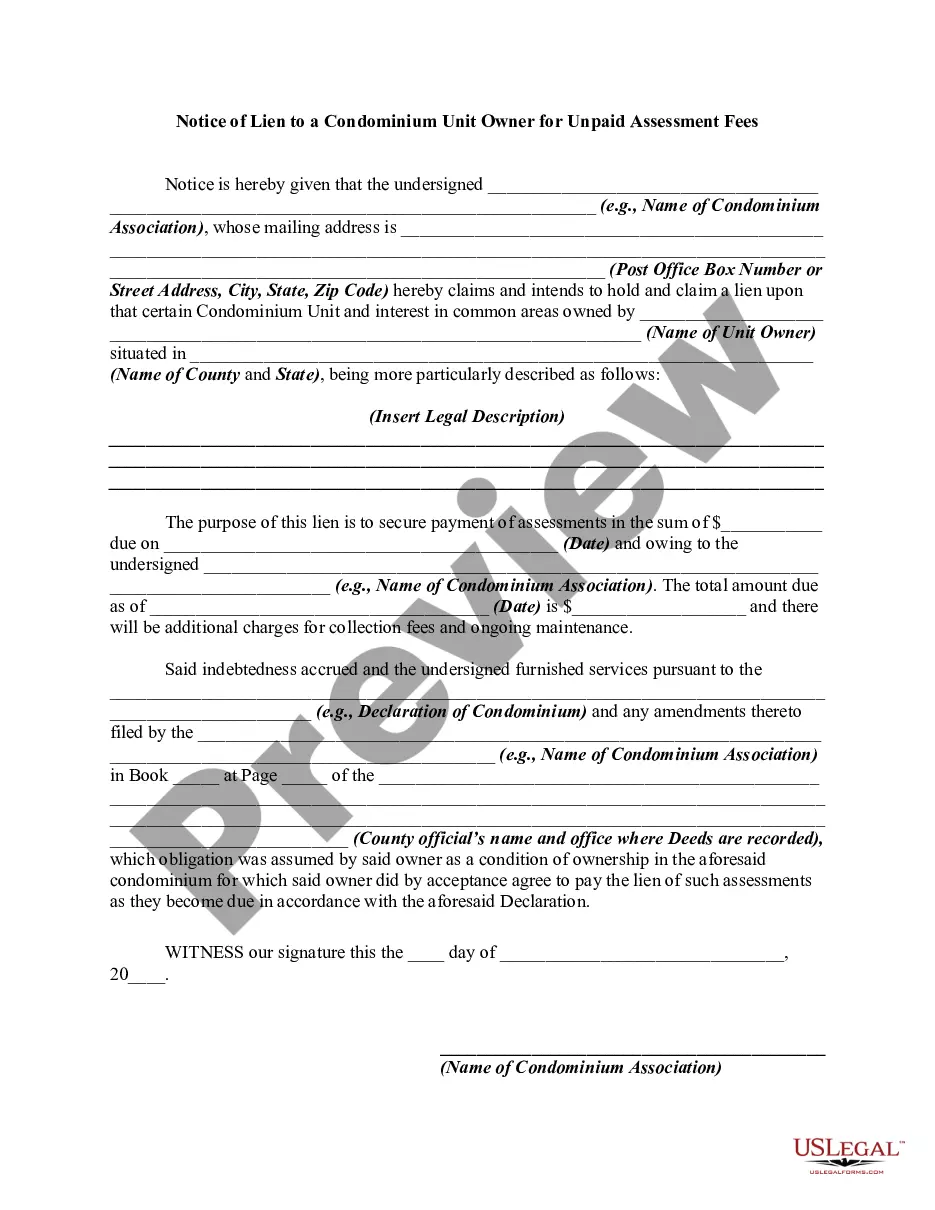







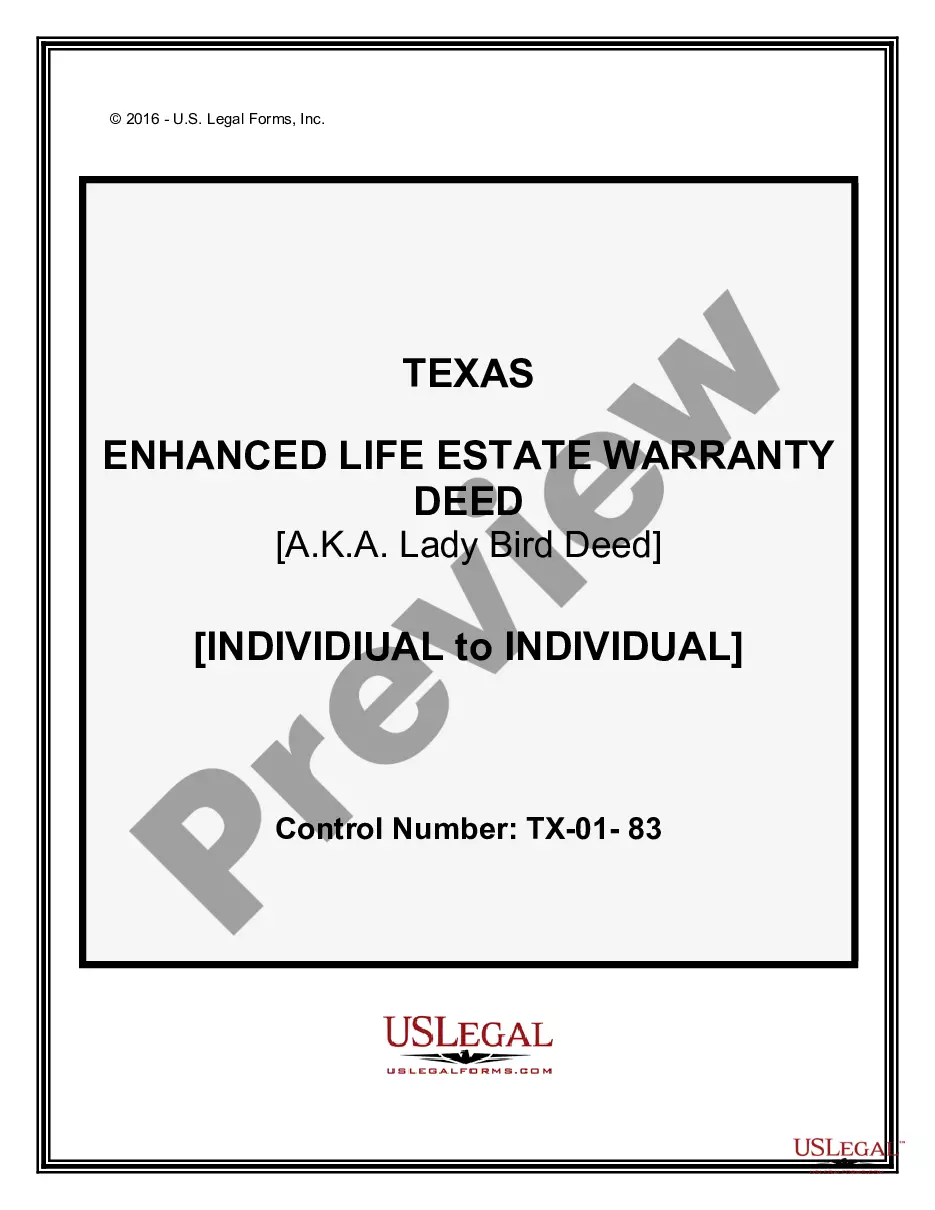
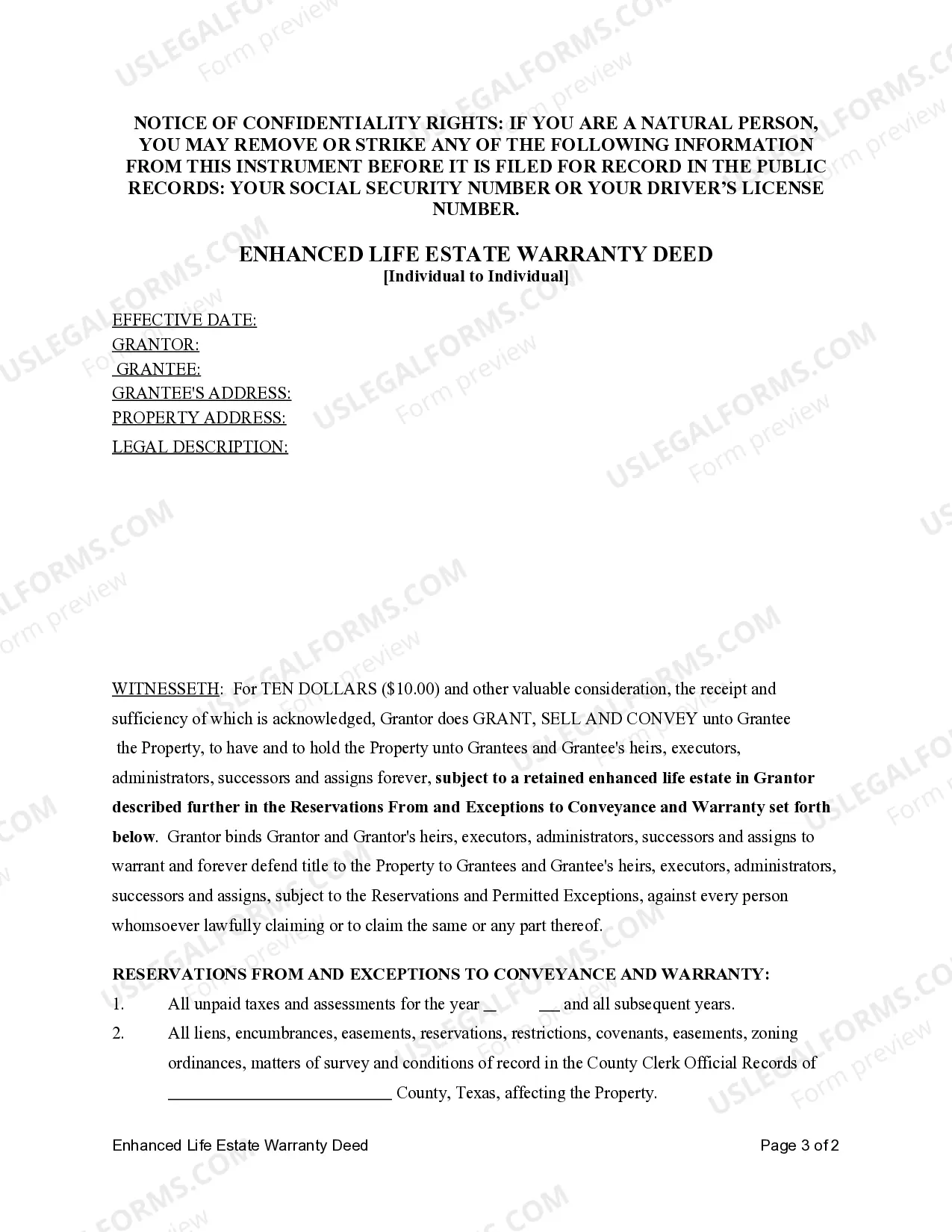
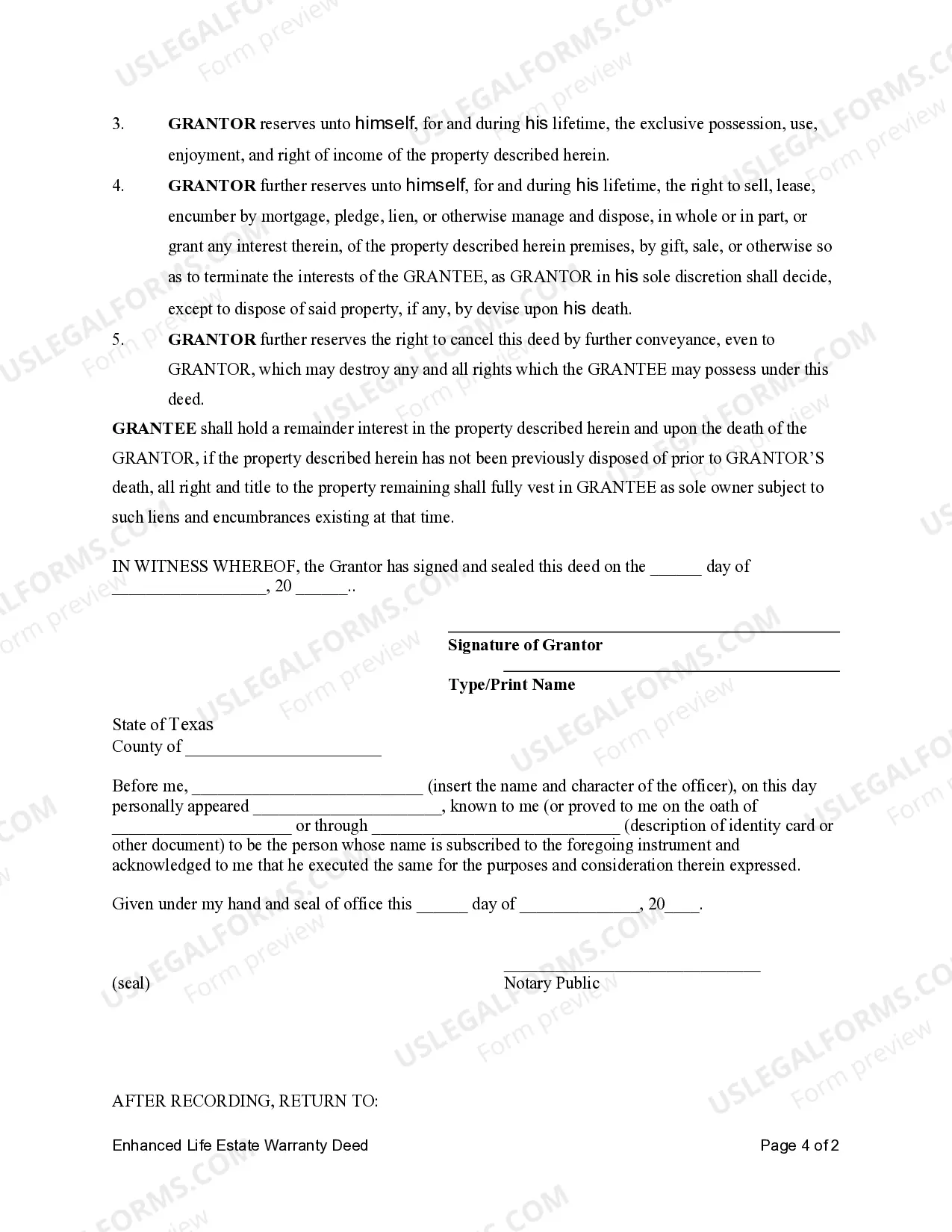
How to fill out Texas Lady Bird Or Enhanced Life Estate Warranty Deed - Individual To Individual?
- If you have an existing account, log in to access your saved forms and download them instantly. Ensure that your subscription is active; if not, renew it according to your payment plan.
- For first-time users, begin by exploring the Preview mode to review form descriptions. Make sure the document fits your requirements and complies with local jurisdiction regulations.
- Use the Search tab to locate additional templates if necessary. If you find a suitable replacement, proceed to the next step.
- Select your document by clicking on the Buy Now button. Choose an appropriate subscription plan and create an account for full access.
- Complete your purchase by entering your payment information, either via credit card or PayPal.
- Finally, download your form to your device for immediate use and always access it later through the My Forms section.
By following these steps, you'll quickly leverage the extensive resources on US Legal Forms to create precise legal documents tailored to your needs.
Explore the benefits today and take the hassle out of legal documentation by visiting US Legal Forms for more information.
Form popularity
FAQ
Filling out a life insurance claim form can be straightforward if you follow these steps. First, gather all required documents, such as the policy number, death certificate, and any relevant identification. Next, carefully complete the claim form, ensuring that you provide accurate information regarding the deceased and your relationship to them. If you have questions during the process, consider visiting US Legal Forms for templates and guidance designed to help you navigate the Enh life est process smoothly.
The term 'life est' refers to a legal arrangement where one party, the life tenant, maintains ownership rights during their lifetime while transferring future ownership to another party, the remainder beneficiaries. An enhanced life estate deed is a specific type that improves upon traditional life estate arrangements by allowing the life tenant to access additional benefits, such as avoiding probate. Understanding life est is crucial for estate planning, as it helps in effective asset management. Consider utilizing resources like US Legal Forms for guidance on creating or managing such arrangements.
While an enhanced life estate deed offers benefits, it also has some drawbacks to consider. One significant disadvantage is the potential loss of control over the property, as the beneficiaries gain rights upon the owner's death. Moreover, if you need to sell or refinance the property, complications may arise, requiring consent from your beneficiaries. As with any legal matter, reviewing your specific situation with a platform like US Legal Forms can help ensure you make informed decisions.
An enhanced life estate deed, often referred to as an 'enh life est,' allows a property owner to transfer their property to beneficiaries while retaining the right to live in it during their lifetime. This type of deed can simplify the transfer of assets and avoid probate after death. With an enh life est, you retain control over the property, ensuring it meets your needs as you age. This approach offers both security and flexibility for homeowners and their heirs.
Yes, the remainderman of a life estate can sell the property, but this cannot take place until the life tenant passes away. The sale would not affect the life tenant's rights during their lifetime. Once the life tenant is no longer living, the remainderman becomes the full owner of the property. For any legal documents required in this process, check out what US Legal Forms offers for managing an Enh life est.
In North Carolina, life estate rules specify that the life tenant has the right to live in and use the property for their lifetime. Once the life tenant passes away, the property automatically transfers to the remainderman. Additionally, life tenants must not waste the property or significantly alter it without consent. For comprehensive legal advice, explore the solutions provided by US Legal Forms, especially for an Enh life est.
A life estate has several downsides that you should consider. First, the life tenant cannot sell or transfer the property without the consent of the remainderman. Also, the property is subject to the financial responsibilities of the life tenant, which can complicate matters if there are tax liabilities or maintenance costs. It's important to weigh these factors carefully when exploring options related to an Enh life est.
The primary benefit of a life estate deed is that it allows for an efficient transfer of property upon the owner's death, avoiding the lengthy probate process. You maintain the right to live in the property for life while designating a remainderman who will inherit it automatically. This arrangement not only simplifies estate planning but also helps your heirs secure their inheritance quickly and seamlessly.
One disadvantage of a life estate is the potential loss of control over the property. Once you create a life estate deed, the remainderman has certain rights, which may limit your ability to sell or mortgage the property without their consent. Additionally, if financial obligations arise, such as unpaid taxes, the property could be at risk. Hence, think carefully before proceeding.
A life estate deed can be a great idea for many property owners. It allows you to retain control over your property during your lifetime while also designating who will inherit it afterward. It helps avoid probate, ensuring your loved ones receive the property quickly and easily. However, consider your specific circumstances and how it aligns with your estate planning goals.