Limited Meaning
Description
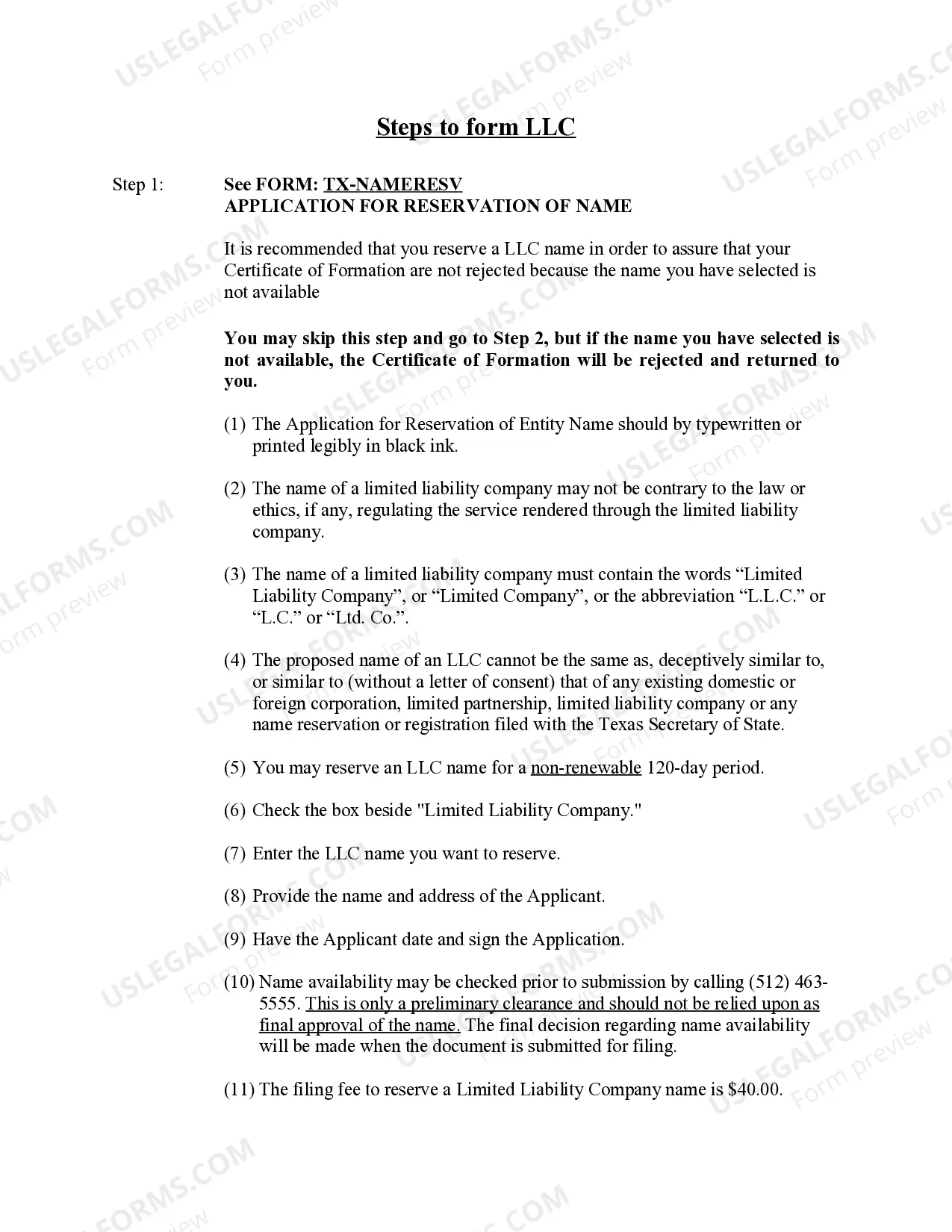
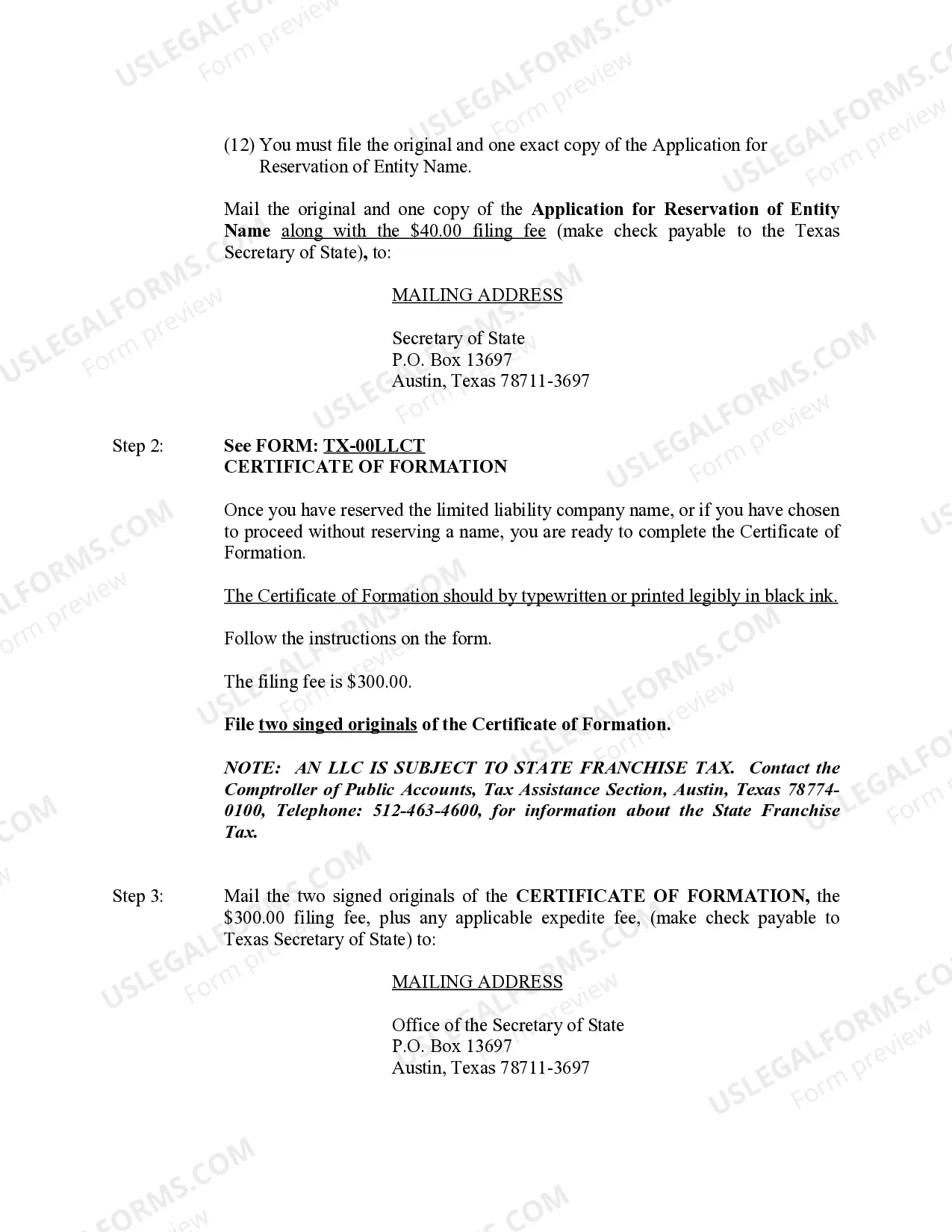

Get your form ready online
Our built-in tools help you complete, sign, share, and store your documents in one place.
Make edits, fill in missing information, and update formatting in US Legal Forms—just like you would in MS Word.
Download a copy, print it, send it by email, or mail it via USPS—whatever works best for your next step.
Sign and collect signatures with our SignNow integration. Send to multiple recipients, set reminders, and more. Go Premium to unlock E-Sign.
If this form requires notarization, complete it online through a secure video call—no need to meet a notary in person or wait for an appointment.
We protect your documents and personal data by following strict security and privacy standards.

Make edits, fill in missing information, and update formatting in US Legal Forms—just like you would in MS Word.

Download a copy, print it, send it by email, or mail it via USPS—whatever works best for your next step.

Sign and collect signatures with our SignNow integration. Send to multiple recipients, set reminders, and more. Go Premium to unlock E-Sign.

If this form requires notarization, complete it online through a secure video call—no need to meet a notary in person or wait for an appointment.

We protect your documents and personal data by following strict security and privacy standards.
Looking for another form?
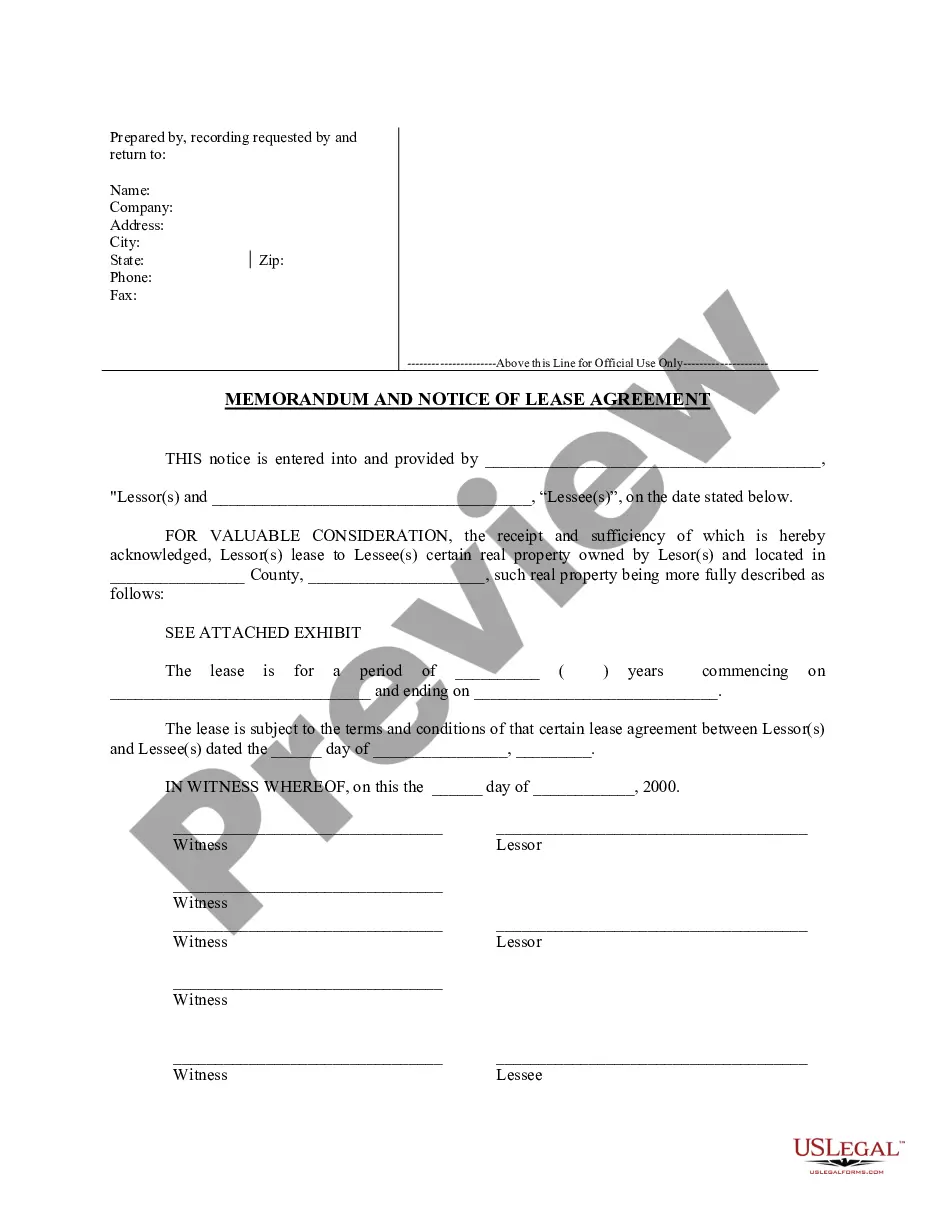







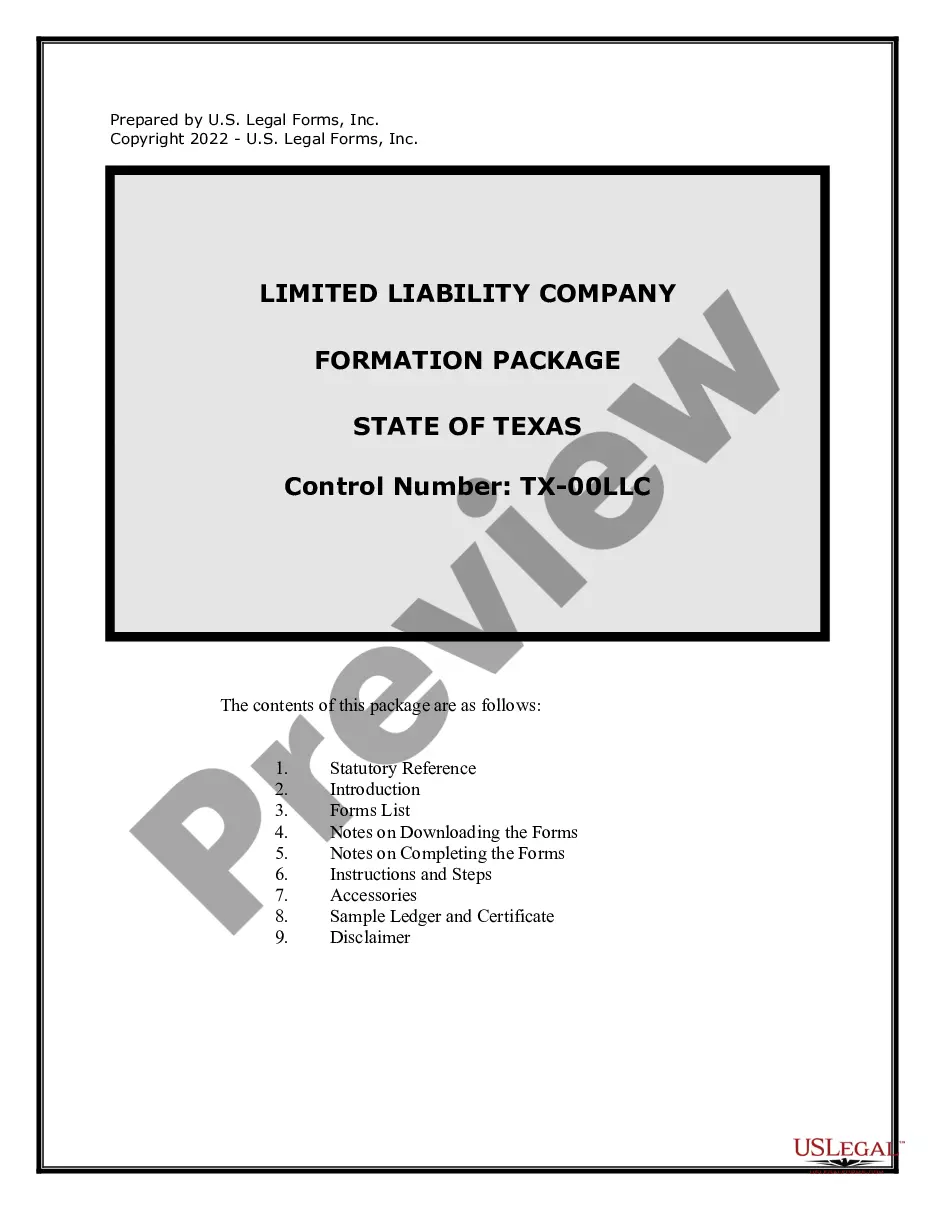
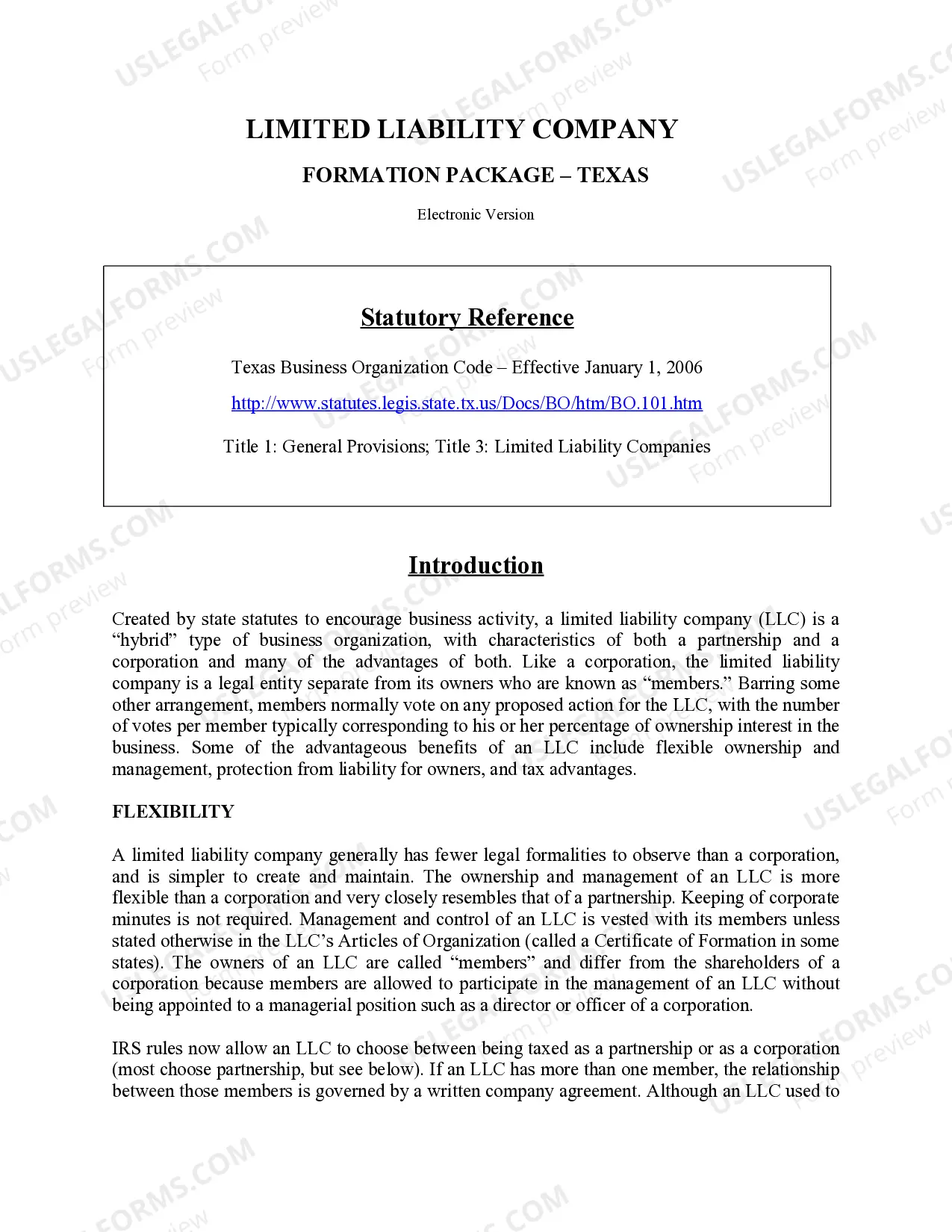
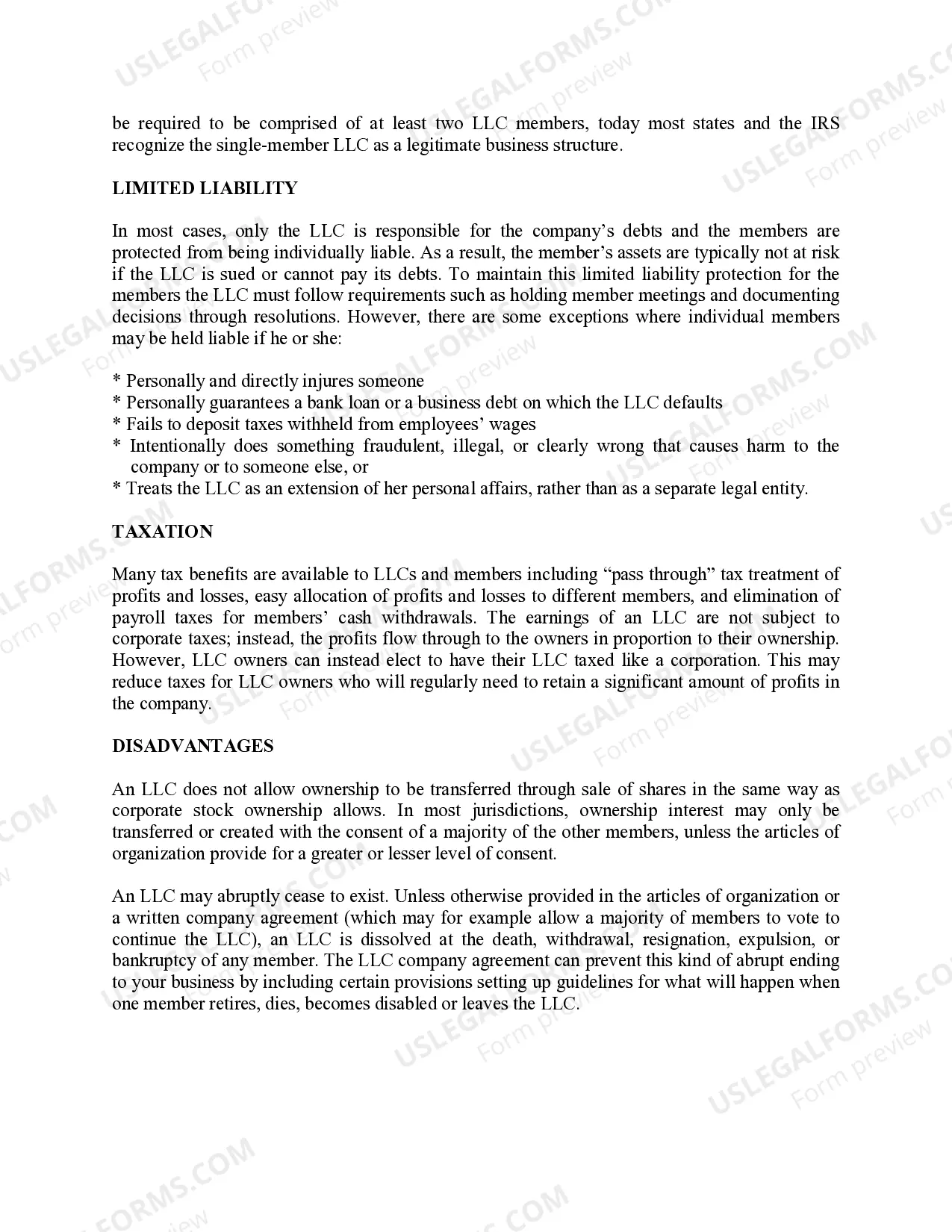
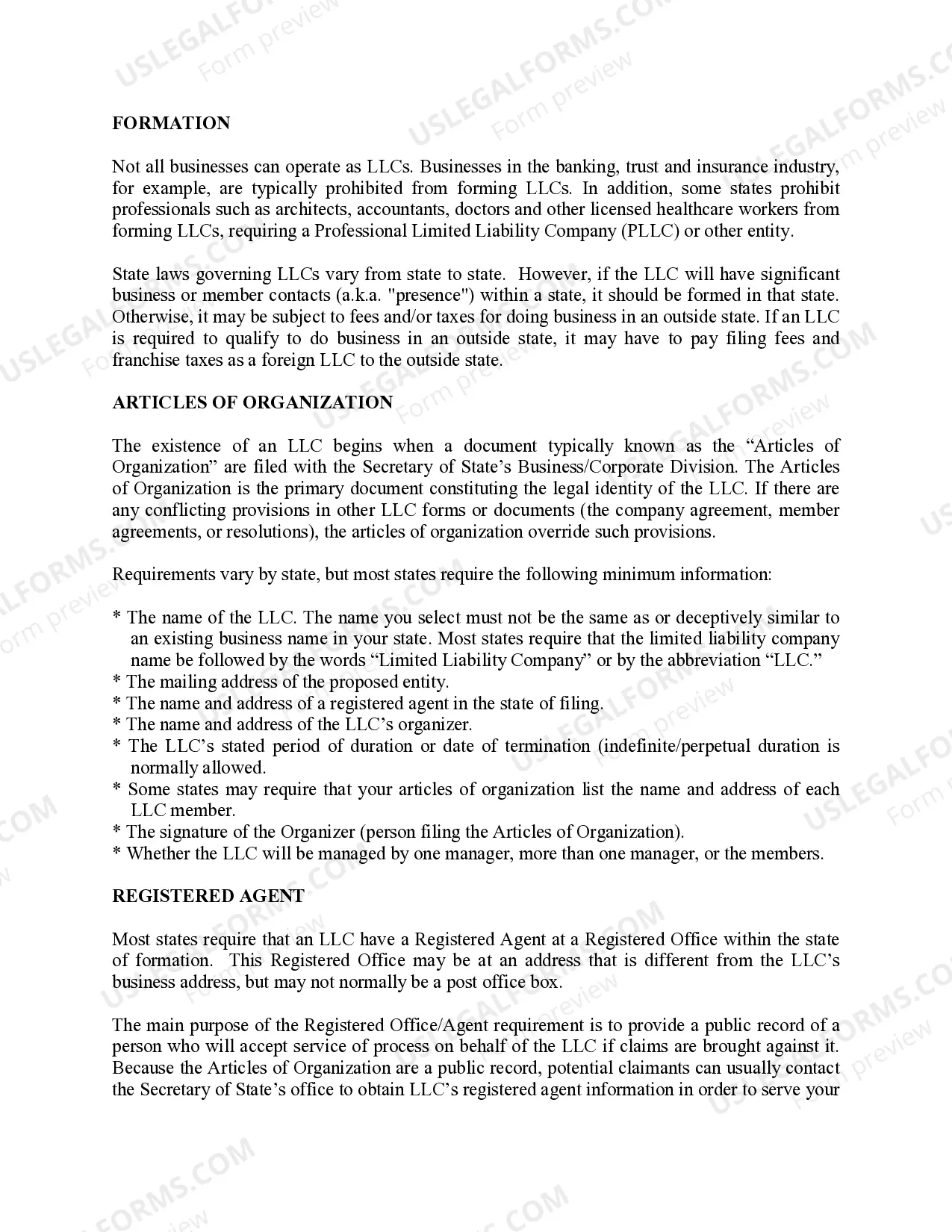
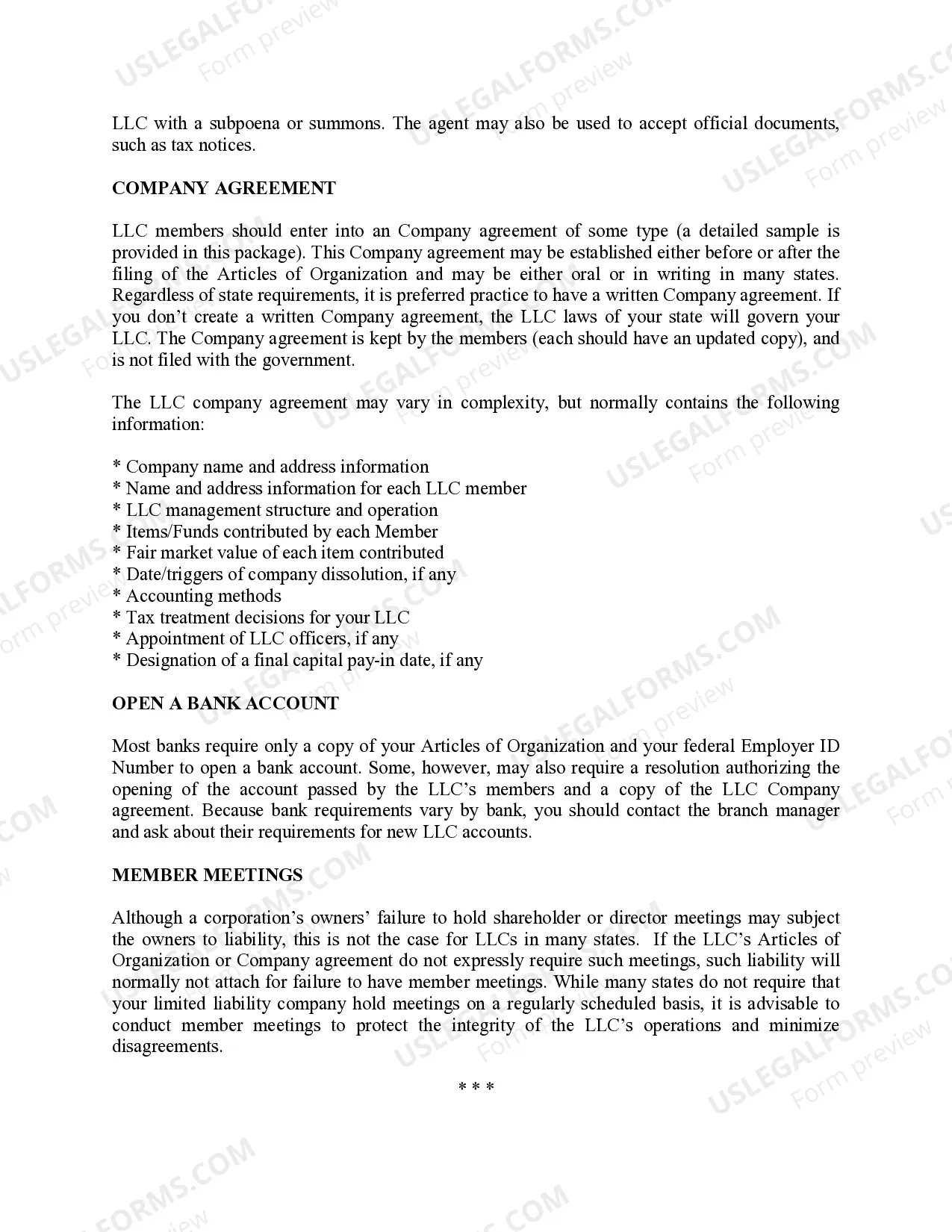
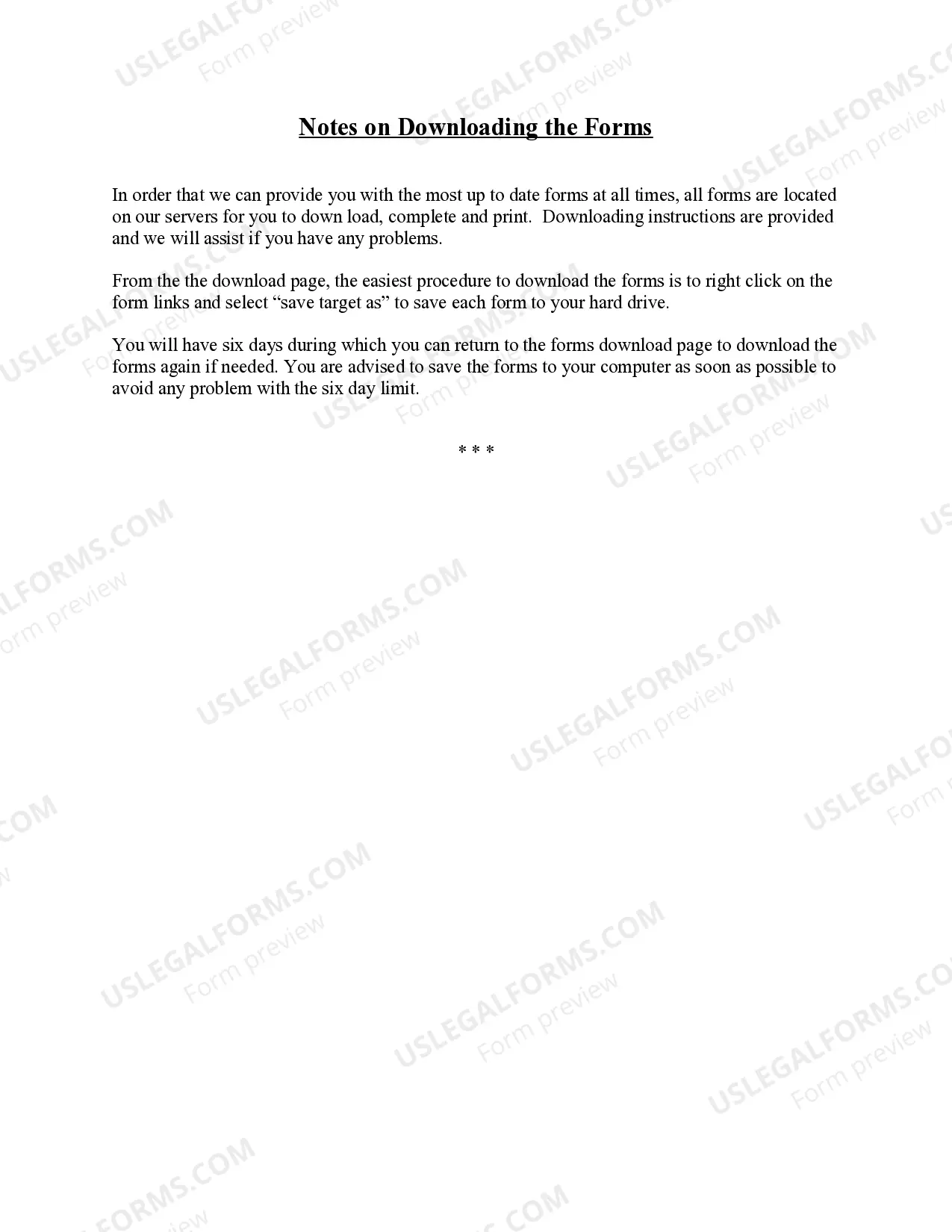
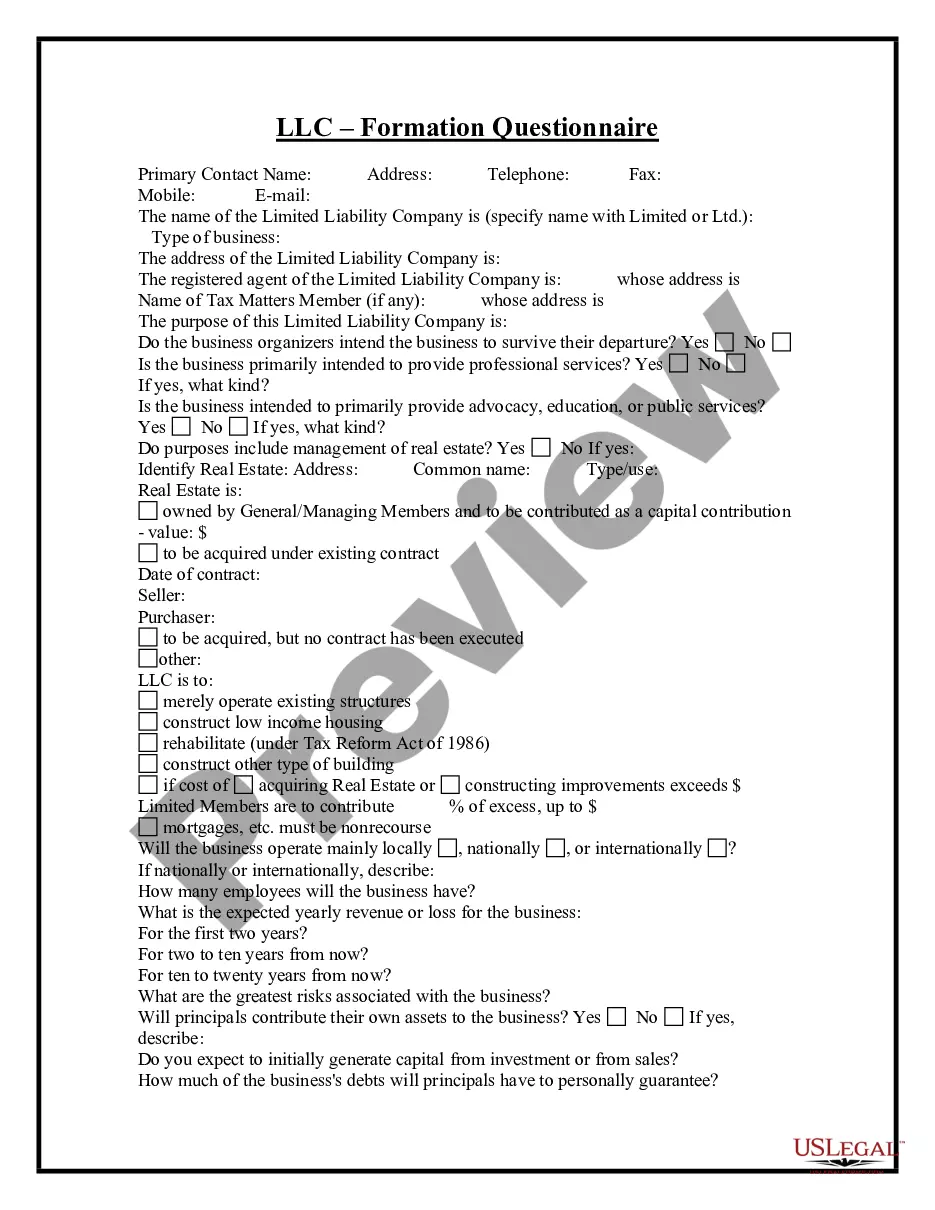
How to fill out Texas Limited Liability Company LLC Formation Package?
- If you already have a US Legal Forms account, start by logging in and access the document library. Verify that your subscription is active; renew it if needed.
- Familiarize yourself with the form descriptions in the Preview mode to ensure you select the appropriate template for your requirements and locality.
- Should you encounter any discrepancies, utilize the Search function to locate alternative templates. Proceed only when you find the correct one.
- Purchase the selected document by clicking the Buy Now button and choosing a suitable subscription plan. You will need to create an account if this is your first purchase.
- Complete your transaction by entering your payment information through credit card or PayPal options.
- Finally, download your legal form and save it onto your device. You can always revisit your documents later via the My Forms section in your account.
By following these steps, you empower yourself with the knowledge and tools necessary to create compliant and impactful legal documents.
Take advantage of US Legal Forms today and simplify your legal documentation process!
Form popularity
FAQ
Examples of limited include limited liability companies (LLCs) and limited partnerships (LPs). Both structures limit personal liability for debts and obligations, facilitating safer investment environments. Understanding the various forms of limited is essential for anyone considering forming a business, as it directly relates to personal financial protection.
'Limited' on a company indicates a business structure that restricts owner liability to their shares in the company. In practical terms, if the company suffers a loss, shareholders will not lose personal assets beyond their investment. This protection is central to the limited meaning, making it a valuable option for both small and large enterprises.
Limited amount refers to a specific cap on either the number of shares or the total resources available in a business arrangement. This term often appears in contracts or agreements to clearly define the maximum liability or financial commitment. Recognizing limited meaning helps stakeholders understand the boundaries of their financial exposure.
An example of limited means could be a small business with a limited partnership structure. In this setup, general partners manage the business while limited partners invest but have no decision-making power. This reflects limited meaning as it highlights the division of responsibilities and liability within the company’s framework.
When a company describes itself as limited, it signifies that its shareholders' liability is restricted to their investment in the company. This structure protects personal assets from business debts, making it a popular choice for entrepreneurs. Understanding limited meaning is crucial, as it can influence how investors view risk and liability.
To say 'limited to' signifies that something is confined within specified boundaries or categories. This phrase is often used to clarify the scope of rights, responsibilities, or resources. Recognizing the implications of 'limited to' is important for proper interpretation in legal situations. By understanding this concept, you can navigate agreements on platforms like US Legal Forms, ensuring you grasp the full extent of your obligations.
The phrase 'only limited to' specifies that whatever is being discussed applies solely within certain constraints. It underscores exclusivity, signaling that there are no additional considerations beyond what is mentioned. This precision is crucial in legal contexts, as it assures that all parties recognize the confines of an agreement or understanding. In documents, clarity leads to fewer disputes.
A word that encapsulates the concept of 'limited to something' is 'restricted.' This term emphasizes the idea that there are specific parameters or boundaries that apply to a situation, idea, or agreement. In legal terms, using words such as 'restricted' helps clarify the extent of rights or obligations. It also aids in preventing misunderstandings between parties.
The phrase 'will be limited to' refers to setting boundaries around what is applicable or acceptable in a given situation. It asserts that specific conditions or topics will define the scope of a discussion, agreement, or action. Understanding this phrase is vital in legal contexts, as it outlines expectations clearly. By using this expression, parties create a defined framework, ensuring all involved understand the limits.
When a document or statement says 'not limited to,' it indicates that there are additional items or ideas included beyond those explicitly stated. This phrase opens the door for broader interpretation and inclusion. It suggests that while certain aspects might be specified, others can also apply. This flexibility is essential in legal documents to ensure comprehensive understanding.