Tenant Landlord With Foreclosed Homes
Description


Get your form ready online
Our built-in tools help you complete, sign, share, and store your documents in one place.
Make edits, fill in missing information, and update formatting in US Legal Forms—just like you would in MS Word.
Download a copy, print it, send it by email, or mail it via USPS—whatever works best for your next step.
Sign and collect signatures with our SignNow integration. Send to multiple recipients, set reminders, and more. Go Premium to unlock E-Sign.
If this form requires notarization, complete it online through a secure video call—no need to meet a notary in person or wait for an appointment.
We protect your documents and personal data by following strict security and privacy standards.

Make edits, fill in missing information, and update formatting in US Legal Forms—just like you would in MS Word.

Download a copy, print it, send it by email, or mail it via USPS—whatever works best for your next step.

Sign and collect signatures with our SignNow integration. Send to multiple recipients, set reminders, and more. Go Premium to unlock E-Sign.

If this form requires notarization, complete it online through a secure video call—no need to meet a notary in person or wait for an appointment.

We protect your documents and personal data by following strict security and privacy standards.
Looking for another form?
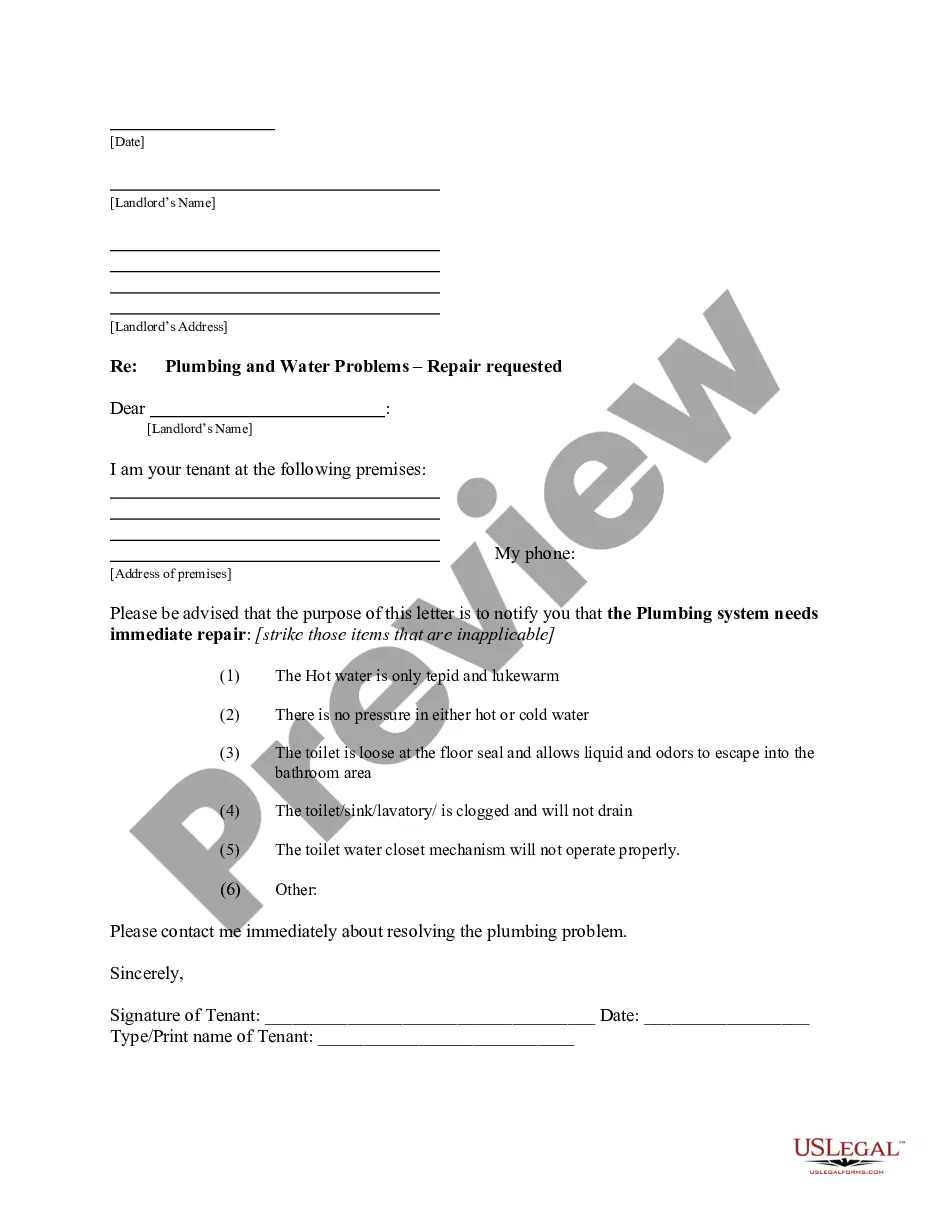
How to fill out Tennessee Letter From Tenant To Landlord With Demand That Landlord Repair Plumbing Problem?
- If you already have an account with US Legal Forms, log in and download your required template by clicking the Download button, ensuring your subscription is current.
- If you're a first-time user, begin by checking the Preview mode and form descriptions to confirm you've selected the right template that aligns with your local jurisdiction.
- If the chosen form doesn't meet your needs, use the Search tab to explore other available templates until you find the one that fits.
- Once you find the suitable document, click on the Buy Now button and select your preferred subscription plan before registering for an account.
- After registering, proceed with your purchase by entering your credit card information or using your PayPal account.
- Finally, download the form to your device for completion, and you can revisit it anytime from the My Forms section of your profile.
US Legal Forms is designed to empower individuals and legal professionals to create accurate legal documents swiftly. With over 85,000 fillable templates, users benefit from a vast selection at an affordable price.
Don't delay in securing the rights and responsibilities in your real estate transactions. Start browsing US Legal Forms today and experience the ease of legal document creation.
Form popularity
FAQ
Foreclosure can lead to significant financial loss and a damaged credit score, which can hinder future opportunities. Additionally, being a tenant landlord with foreclosed homes may involve unforeseen expenses related to repairs and management challenges. It is critical to weigh these disadvantages against potential benefits and explore resources like UsLegalForms for assistance.
While both foreclosure and eviction can be stressful, foreclosure impacts property ownership and can have long-term financial implications for tenant landlords. In contrast, eviction is typically a tenant’s immediate issue related to lease agreements. Evaluating the long-term consequences is essential, and having a clear plan can help reduce anxiety during these transitions.
The Federal Protecting Tenants at Foreclosure Act provides certain protections for renters living in foreclosed properties. This law requires that tenants receive written notice before being evicted due to foreclosure, allowing them time to secure new housing. Understanding these protections can help tenant landlords navigate their rights and obligations in foreclosed homes.
If personal property remains in a foreclosed home, the fate of that property varies by state law. Generally, the previous owner's belongings can be removed or disposed of by the new owner. However, as a tenant landlord with foreclosed homes, it's essential to be familiar with local regulations to protect yourself and respect any rights the former owner may have.
When considering foreclosed homes as a tenant landlord, you should be aware that these properties often come with hidden challenges. For example, some foreclosures may require significant repairs or have existing liens. It's crucial to conduct thorough research and inspections to understand the full scope of the property condition and its legal implications.
A foreclosure typically remains on your credit record for about seven years from the date it was filed. During this time, it may affect your ability to rent, though many landlords are willing to work with candidates who can demonstrate their reliability and current financial stability. To improve your chances, focus on rebuilding your credit by paying bills on time and considering smaller credit opportunities. Understanding this timeline can help you strategize your rental search in the tenant landlord with foreclosed homes sector.
To find a rental after a foreclosure, utilize online rental websites and local listings to discover available properties. Attend open houses or contact landlords directly to express your interest. Always be transparent about your background when necessary; many renters are still open to negotiating with responsible applicants. Additionally, you can use resources like US Legal Forms to help you navigate agreements in the tenant landlord with foreclosed homes context.
Finding a place to live after a foreclosure involves a few strategic steps. Begin by looking for rental listings online or seeking assistance from local real estate agents who understand the tenant landlord with foreclosed homes market. Consider networking with friends, family, or coworkers who might know available rentals. Finally, be prepared to provide references and proof of income to landlords who may feel uncertain about your rental history.
In West Virginia, the foreclosure process typically takes several months, often ranging from six months to over a year. Factors such as court schedules, the specifics of the case, and local laws can all influence this timeline. Understanding this process can help you navigate your housing options as a tenant landlord with foreclosed homes.
A foreclosure can affect your ability to rent, but it does not eliminate your chances for securing a home. Landlords typically conduct background checks, and a foreclosure may show up. However, providing references, proof of income, and a solid rental history can ease concerns about your past financial issues.