Pa Inheritance Tax In Trust For Accounts
Description
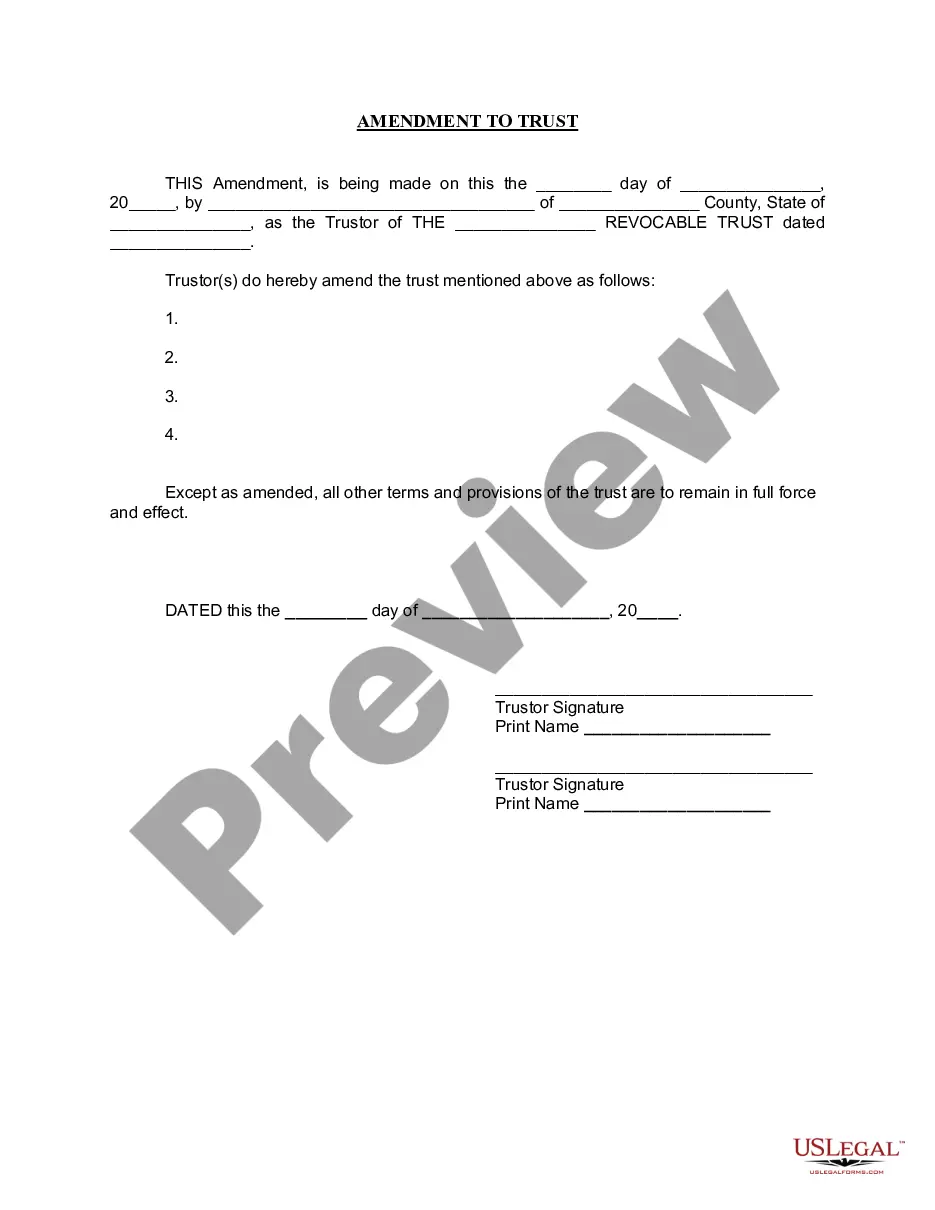
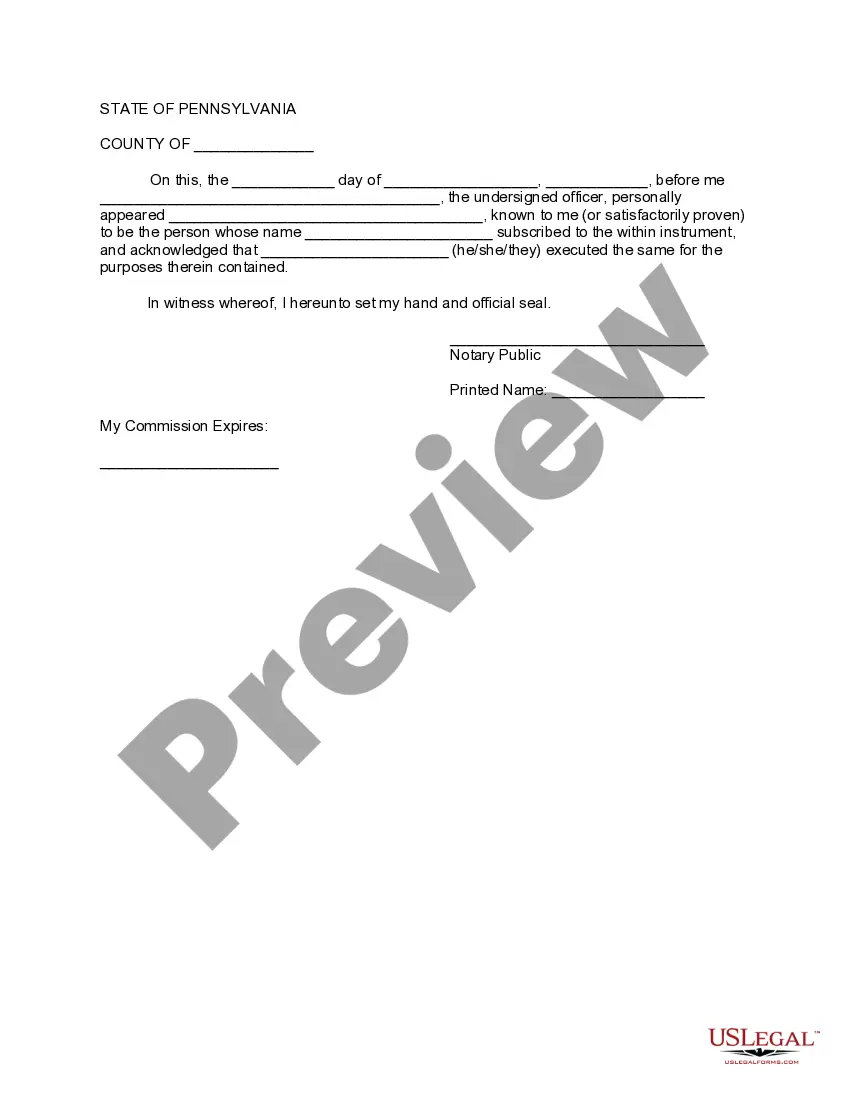


Get your form ready online
Our built-in tools help you complete, sign, share, and store your documents in one place.
Make edits, fill in missing information, and update formatting in US Legal Forms—just like you would in MS Word.
Download a copy, print it, send it by email, or mail it via USPS—whatever works best for your next step.
Sign and collect signatures with our SignNow integration. Send to multiple recipients, set reminders, and more. Go Premium to unlock E-Sign.
If this form requires notarization, complete it online through a secure video call—no need to meet a notary in person or wait for an appointment.
We protect your documents and personal data by following strict security and privacy standards.

Make edits, fill in missing information, and update formatting in US Legal Forms—just like you would in MS Word.

Download a copy, print it, send it by email, or mail it via USPS—whatever works best for your next step.

Sign and collect signatures with our SignNow integration. Send to multiple recipients, set reminders, and more. Go Premium to unlock E-Sign.

If this form requires notarization, complete it online through a secure video call—no need to meet a notary in person or wait for an appointment.

We protect your documents and personal data by following strict security and privacy standards.
Looking for another form?




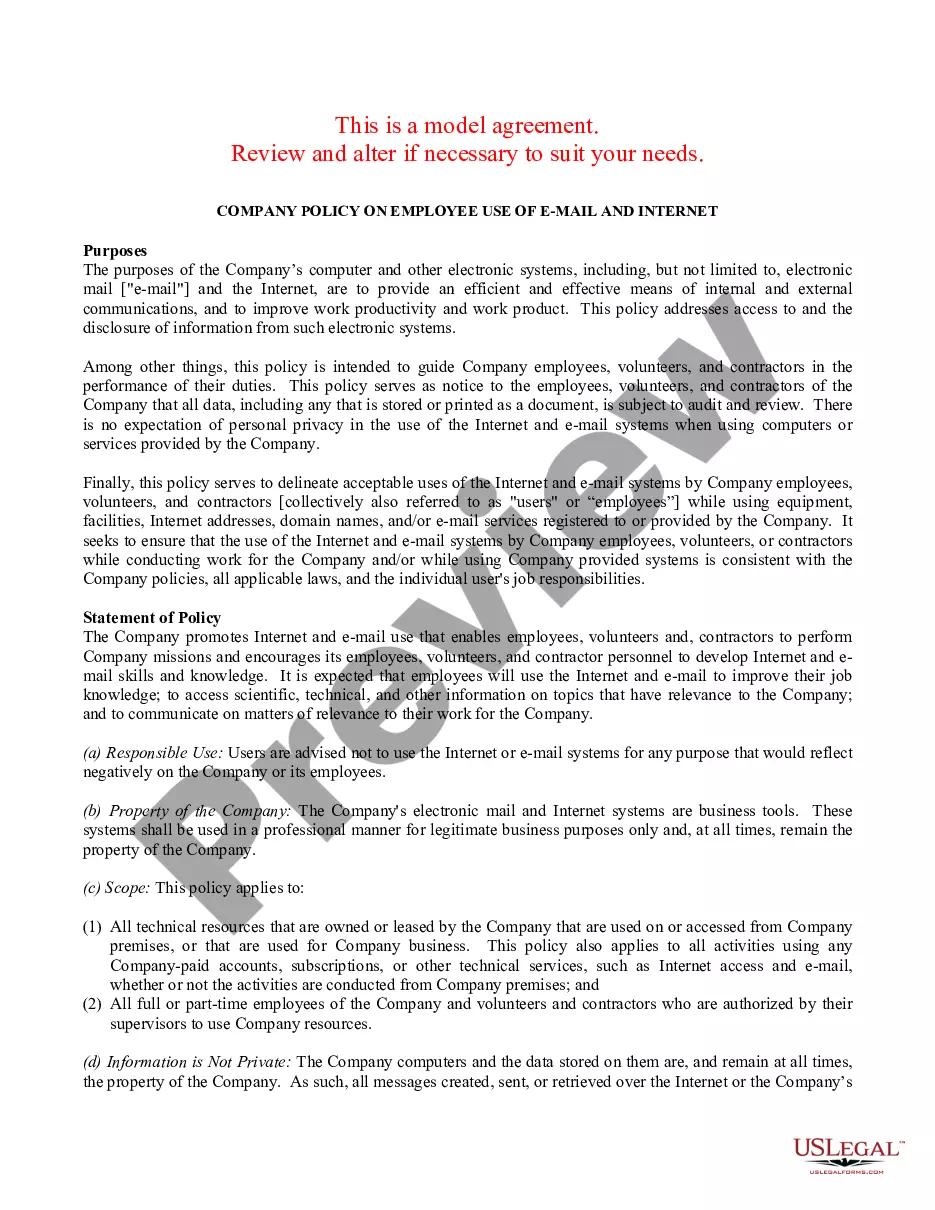



How to fill out Pennsylvania Amendment To Living Trust?
Managing legal paperwork can be perplexing, even for the most seasoned professionals.
If you need a Pa Inheritance Tax In Trust For Accounts but lack the time to search for the correct and up-to-date version, the process can be overwhelming.
US Legal Forms meets any needs you may have, from personal to business documentation, all in one place.
Employ advanced tools to complete and manage your Pa Inheritance Tax In Trust For Accounts.
Here are the steps to follow after downloading your desired form: Confirm it is the correct form by previewing it and reviewing its description.
- Access a valuable resource library of articles, guides, and materials relevant to your situation and needs.
- Save time and effort in searching for the documents required, and use US Legal Forms' advanced search and Preview feature to locate and obtain Pa Inheritance Tax In Trust For Accounts.
- If you hold a membership, Log In to your US Legal Forms account, search for the needed form, and procure it.
- Check your My documents tab to review saved documents and manage your folders as desired.
- If it's your first time using US Legal Forms, create a free account for unlimited access to all library benefits.
- Utilize a powerful online form library that can be a game-changer for anyone looking to effectively navigate these scenarios.
- US Legal Forms is a leader in online legal documents, with over 85,000 state-specific legal forms accessible at any time.
- Access state- or county-specific legal and business documents.
Form popularity
FAQ
To avoid Pennsylvania inheritance tax on bank accounts, you can explore options such as setting up payable-on-death accounts or utilizing trusts strategically. These methods can help ensure that your assets transfer directly to your beneficiaries without incurring significant tax. Additionally, working with uslegalforms can assist you in understanding the best approaches for managing PA inheritance tax in trust for accounts.
Assets in trust may not necessarily avoid inheritance tax, especially in Pennsylvania. The taxation depends on the type of trust and how the assets are distributed upon death. You should consider how different trusts impact your estate plan and tax obligations. Engaging with experts in Pennsylvania inheritance tax in trust for accounts can provide clarity on your unique situation.
Revocable trusts do not avoid Pennsylvania inheritance tax because the assets remain part of your estate for tax purposes. Since you retain control over the assets, they are subject to the same taxation as other estate assets. It is important to evaluate your estate planning strategy to effectively address this tax. Consulting professionals who specialize in Pennsylvania inheritance tax in trust for accounts can help you make informed decisions.
Yes, accounts that are held in trust are generally subject to Pennsylvania inheritance tax. The tax applies to the total value of the assets transferred from the deceased to the beneficiaries, including those in trust. Proper estate planning can help mitigate these tax implications. Utilizing resources from uslegalforms can provide valuable insights into managing PA inheritance tax in trust for accounts.
Whether a trust avoids state inheritance tax largely depends on the state laws and the type of trust established. In Pennsylvania, assets held in a trust may still be subject to inheritance tax. Understanding the nuances of state inheritance tax laws is crucial when planning your estate. Seek guidance from experts familiar with Pennsylvania inheritance tax in trust for accounts to navigate this complex area.
A trust does not automatically avoid Pennsylvania inheritance tax. The tax applies to the transfer of assets from the deceased to the beneficiaries, regardless of whether those assets are held in a trust. However, strategic planning can help minimize the tax burden. It is advisable to consult with a tax professional or an attorney experienced in Pennsylvania inheritance tax in trust for accounts.
Hear this out loud PauseThe tax rate for Pennsylvania Inheritance Tax is 4.5% for transfers to direct descendants (lineal heirs), 12% for transfers to siblings, and 15% for transfers to other heirs (except charitable organizations, exempt institutions, and government entities that are exempt from tax).
There are practical ways to minimize or avoid PA inheritance tax without needing to move to a state without estate tax or inheritance tax. #1 - Gifting. Either to individuals, charities, or irrevocable trusts. #2 - Buying real property in a state without estate or inheritance tax.
Hear this out loud PauseIf you still wish to keep control of it through a single trustee, you may set up an irrevocable trust that will pass it tax-free. That type of trust should be distinguished from a revocable trust, which is still subject to inheritance tax.
Hear this out loud PauseAssets Owned In a Revocable Trust: Generally, if someone dies owning assets in a revocable trust over which he or she had access and control those assets, those assets will be 100% taxable for Pennsylvania inheritance tax purposes.