Pa Estate Document With Will
Description
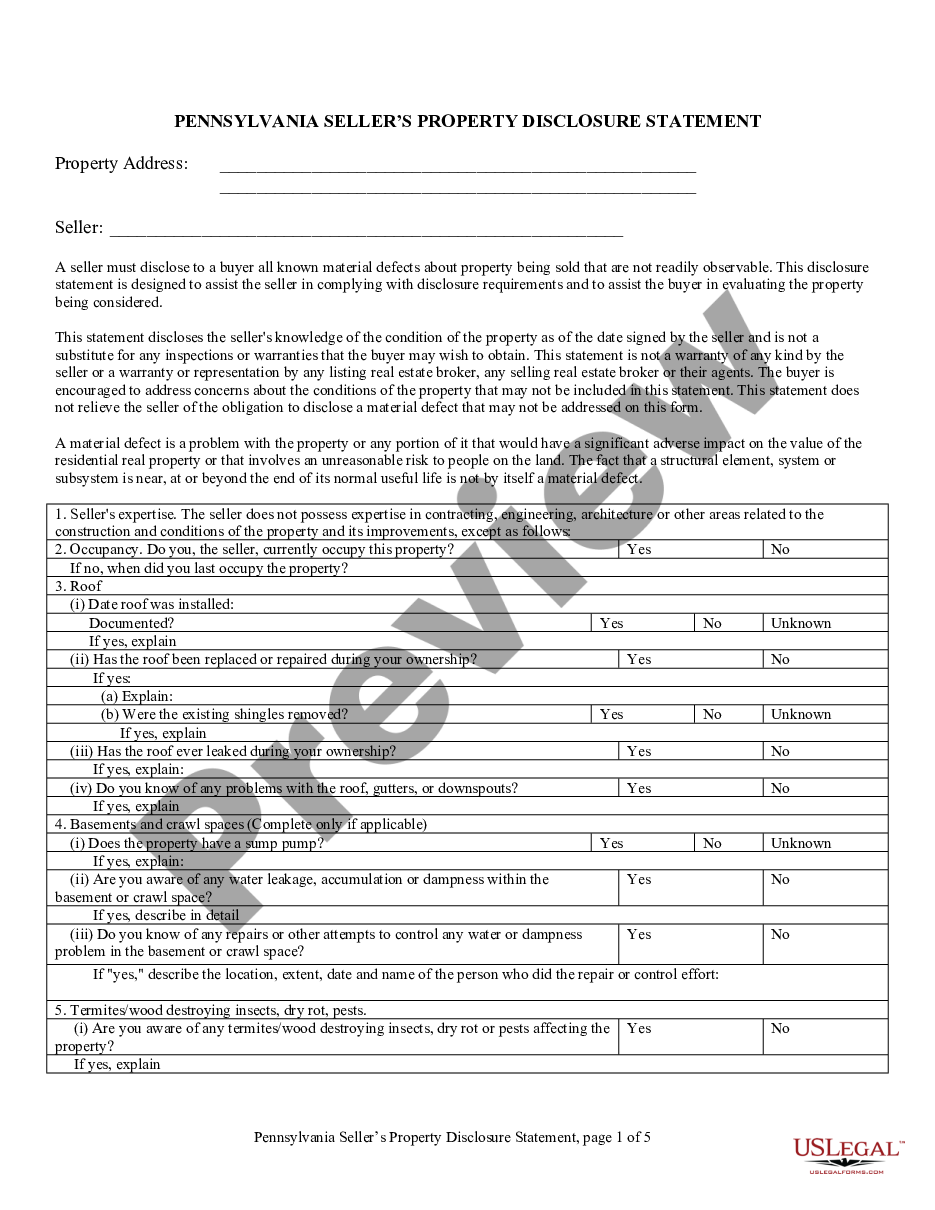
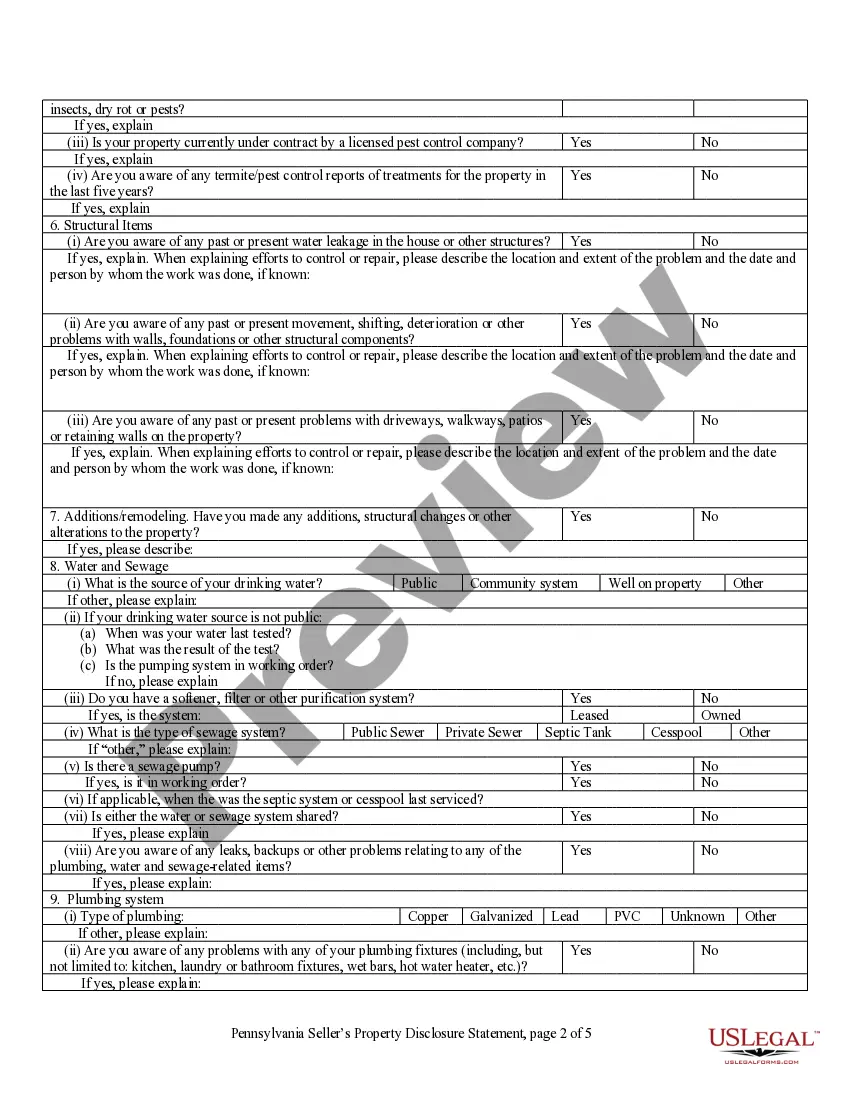
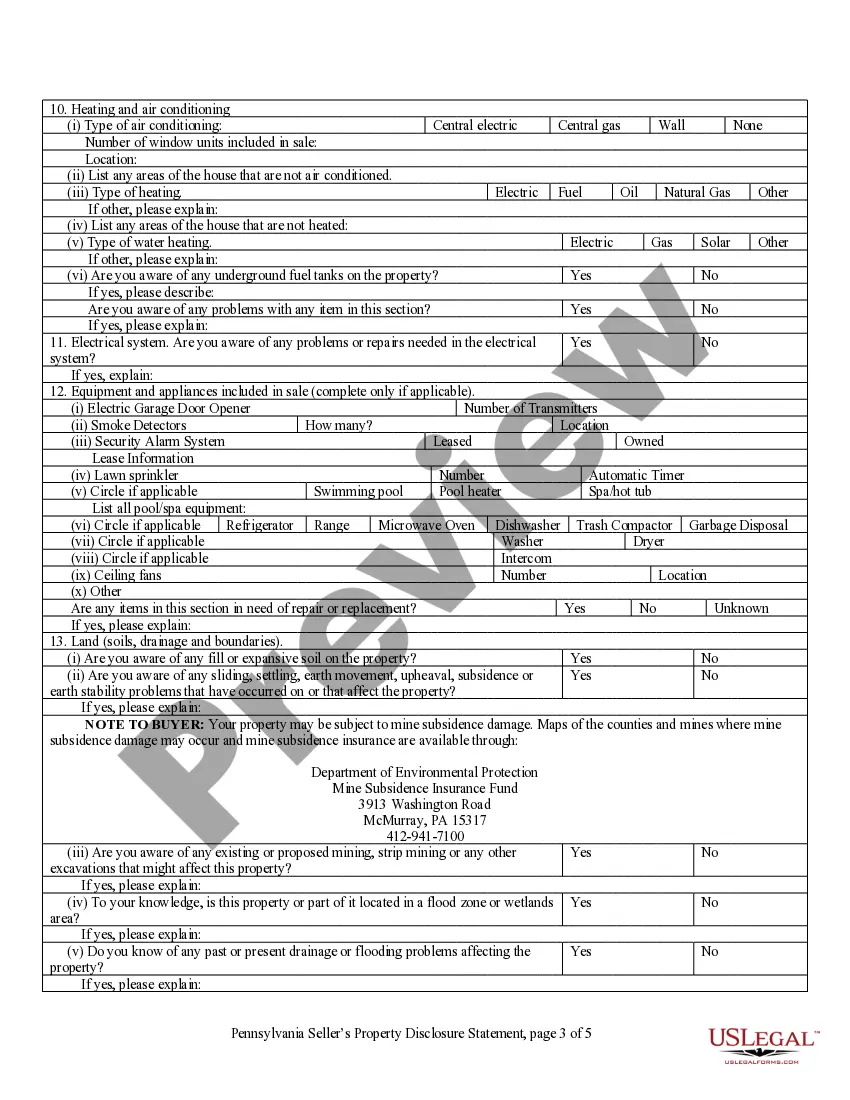
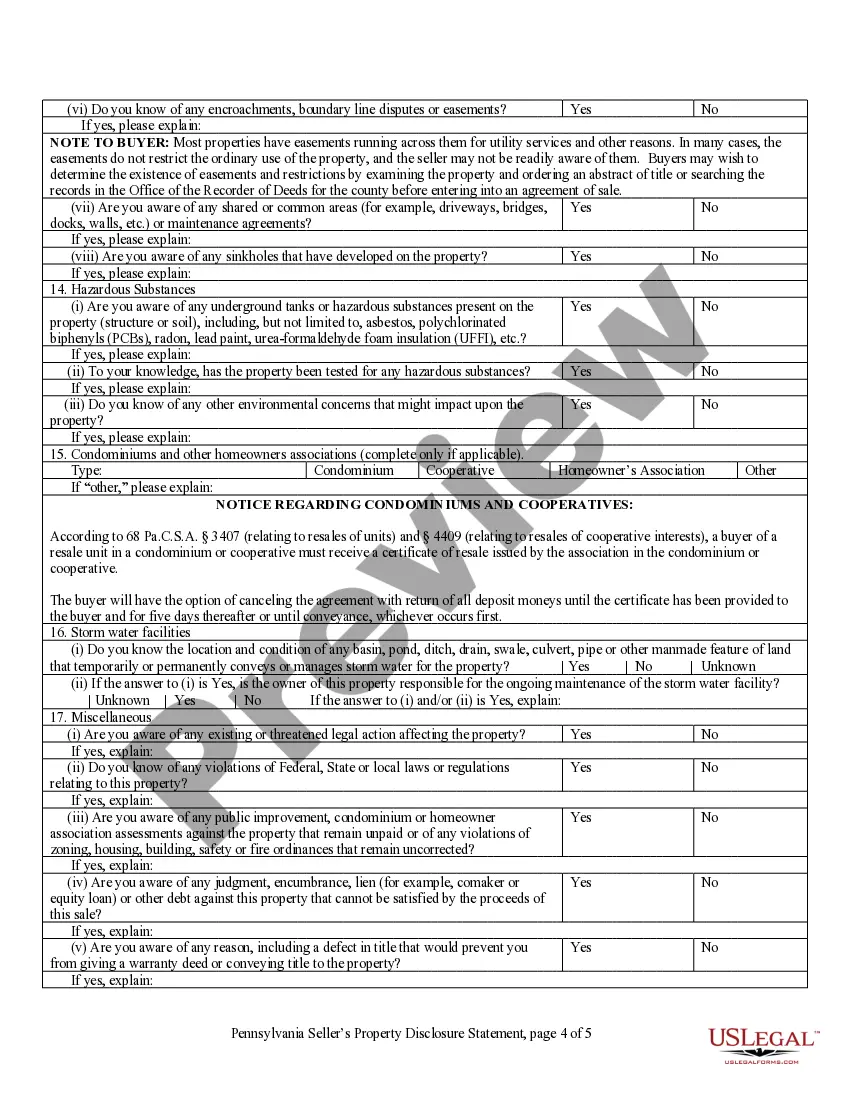
Get your form ready online
Our built-in tools help you complete, sign, share, and store your documents in one place.
Make edits, fill in missing information, and update formatting in US Legal Forms—just like you would in MS Word.
Download a copy, print it, send it by email, or mail it via USPS—whatever works best for your next step.
Sign and collect signatures with our SignNow integration. Send to multiple recipients, set reminders, and more. Go Premium to unlock E-Sign.
If this form requires notarization, complete it online through a secure video call—no need to meet a notary in person or wait for an appointment.
We protect your documents and personal data by following strict security and privacy standards.

Make edits, fill in missing information, and update formatting in US Legal Forms—just like you would in MS Word.

Download a copy, print it, send it by email, or mail it via USPS—whatever works best for your next step.

Sign and collect signatures with our SignNow integration. Send to multiple recipients, set reminders, and more. Go Premium to unlock E-Sign.

If this form requires notarization, complete it online through a secure video call—no need to meet a notary in person or wait for an appointment.

We protect your documents and personal data by following strict security and privacy standards.
Looking for another form?








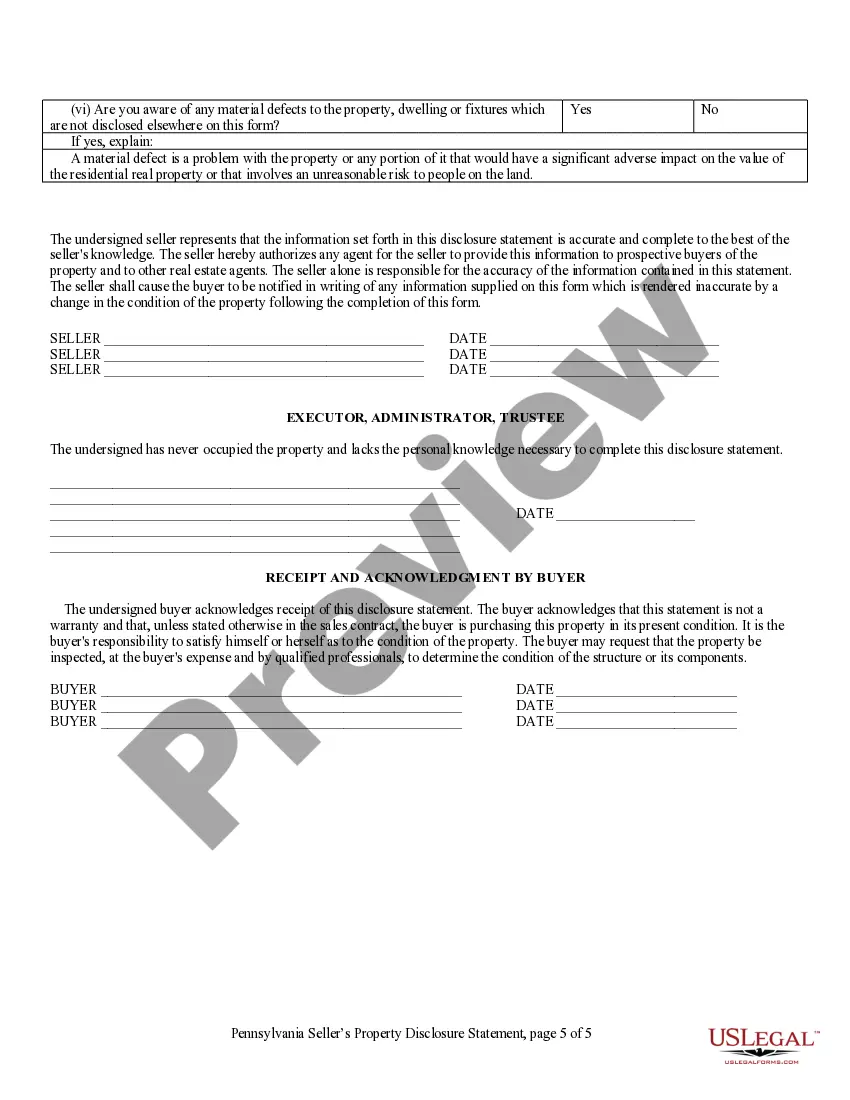
How to fill out Pennsylvania Residential Real Estate Sales Disclosure Statement?
Whether for commercial reasons or personal affairs, everyone must manage legal issues at some stage in their lifetime.
Completing legal documents requires meticulous care, starting with selecting the correct form template.
With an extensive US Legal Forms catalog available, you don’t need to waste time searching for the right sample online. Utilize the library’s straightforward navigation to find the suitable template for any situation.
- Obtain the example you need by using the search bar or catalog browsing.
- Review the form’s details to confirm it aligns with your circumstances, state, and county.
- Click on the form’s preview to inspect it.
- If it is the wrong document, return to the search feature to locate the Pa Estate Document With Will template you need.
- Acquire the file if it suits your requirements.
- If you possess a US Legal Forms account, click Log in to access previously saved documents in My documents.
- In case you do not have an account yet, you can obtain the form by clicking Buy now.
- Choose the appropriate pricing option.
- Complete the account registration form.
- Select your payment method: you can use a credit card or PayPal account.
- Choose the document format you desire and download the Pa Estate Document With Will.
- Once saved, you can fill out the form with the aid of editing software or print it and complete it by hand.
Form popularity
FAQ
In Pennsylvania, it is only necessary to probate if the decedent owned assets, whether financial or real estate holdings, solely in their name which did not already have a beneficiary designated. Such assets are called probate assets, and in order to convey ownership of them it is necessary to probate.
Writing a Valid Will in Pennsylvania Be 18 years or older and of sound mind. Create the will on paper. It can be typed or hand-written (aka a holographic will). ... Sign the will. However, there is no legal requirement for the will to be witnessed when signed to be considered valid.
Here's a quick checklist for making a will in Pennsylvania: Decide what property to include in your will. Decide who will inherit your property. Choose an executor to handle your estate. Choose a guardian for your children. Choose someone to manage children's property. Make your will.
If all goes ingly, the will is first and quickly filed with the local, county, or municipal probate court in which the Testator died or last lived.
If you are unable to receive a referral to a pro bono attorney to assist you in writing your will, you may be able to legally write one yourself. It is legal to handwrite a will in Pennsylvania. You should include two witness signatures in the written will, as well as your own signature and date.