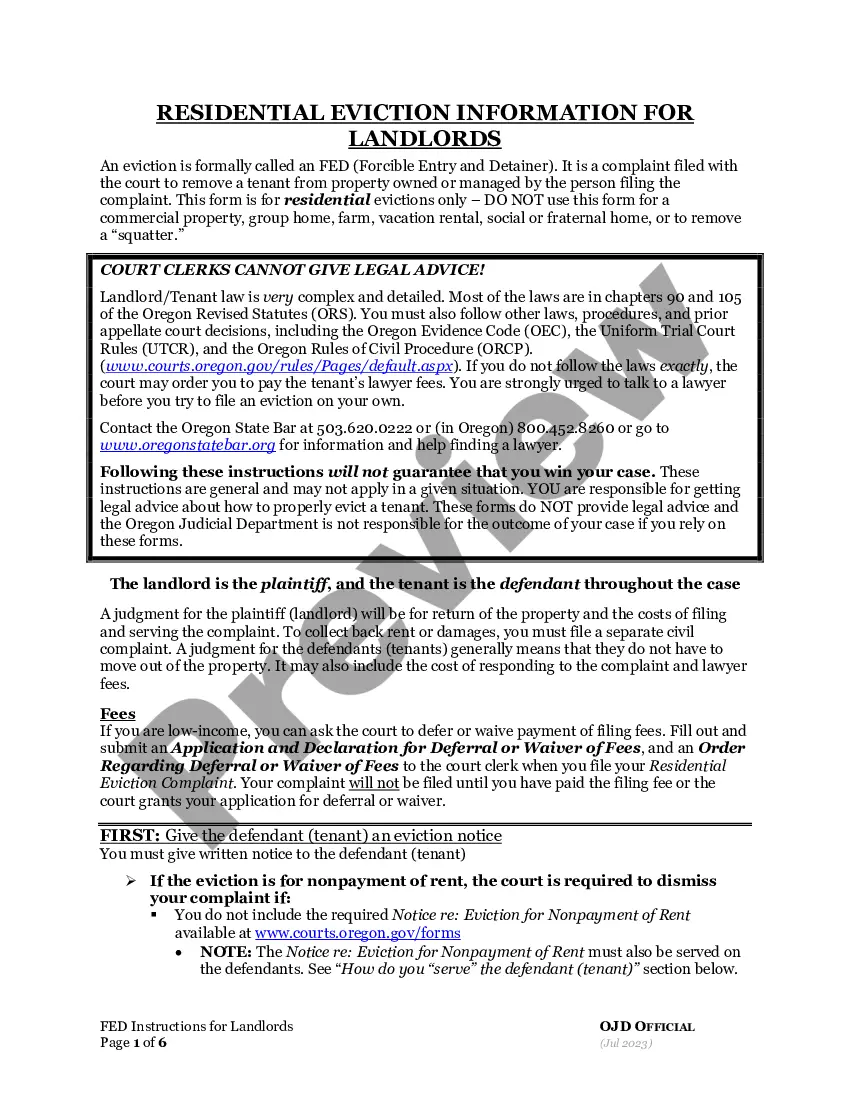
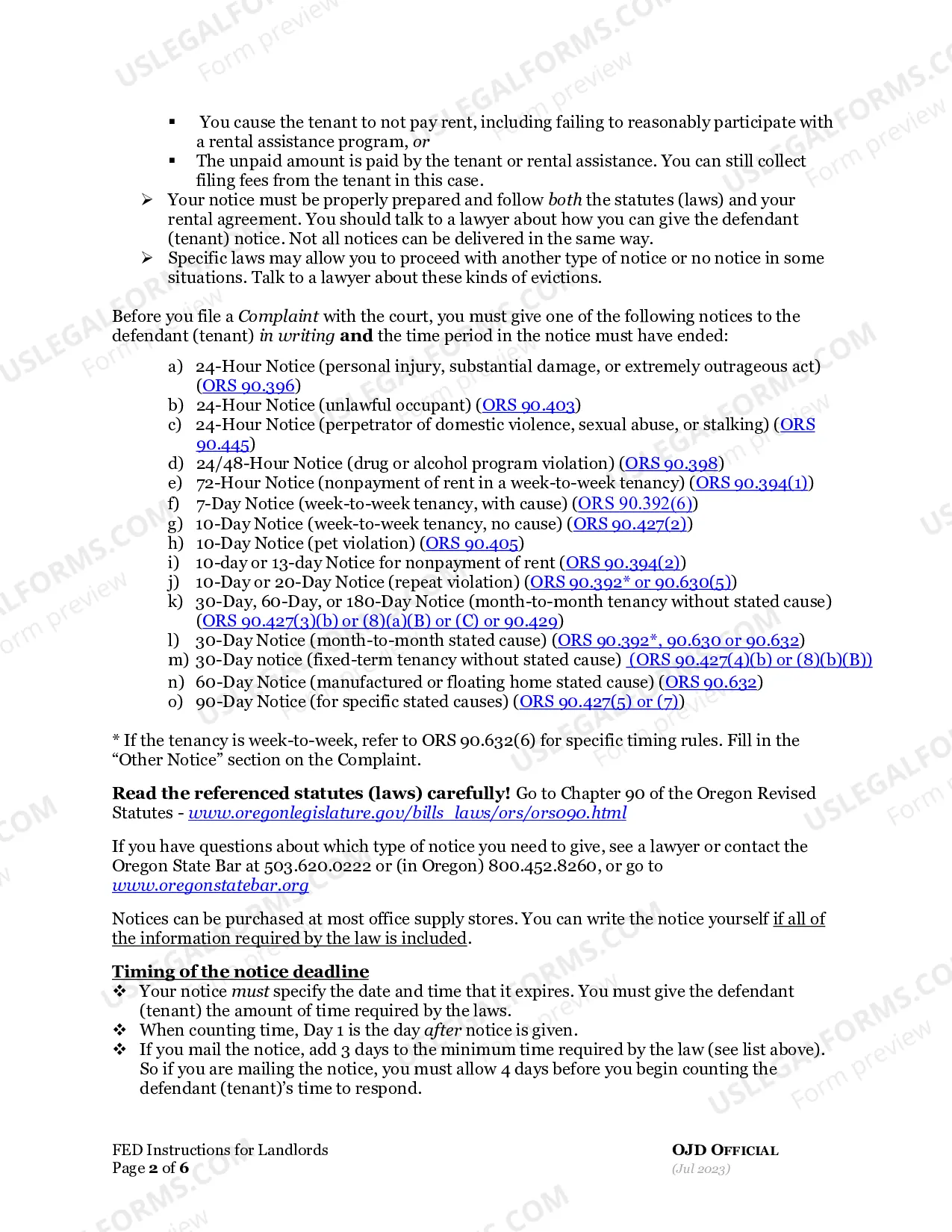
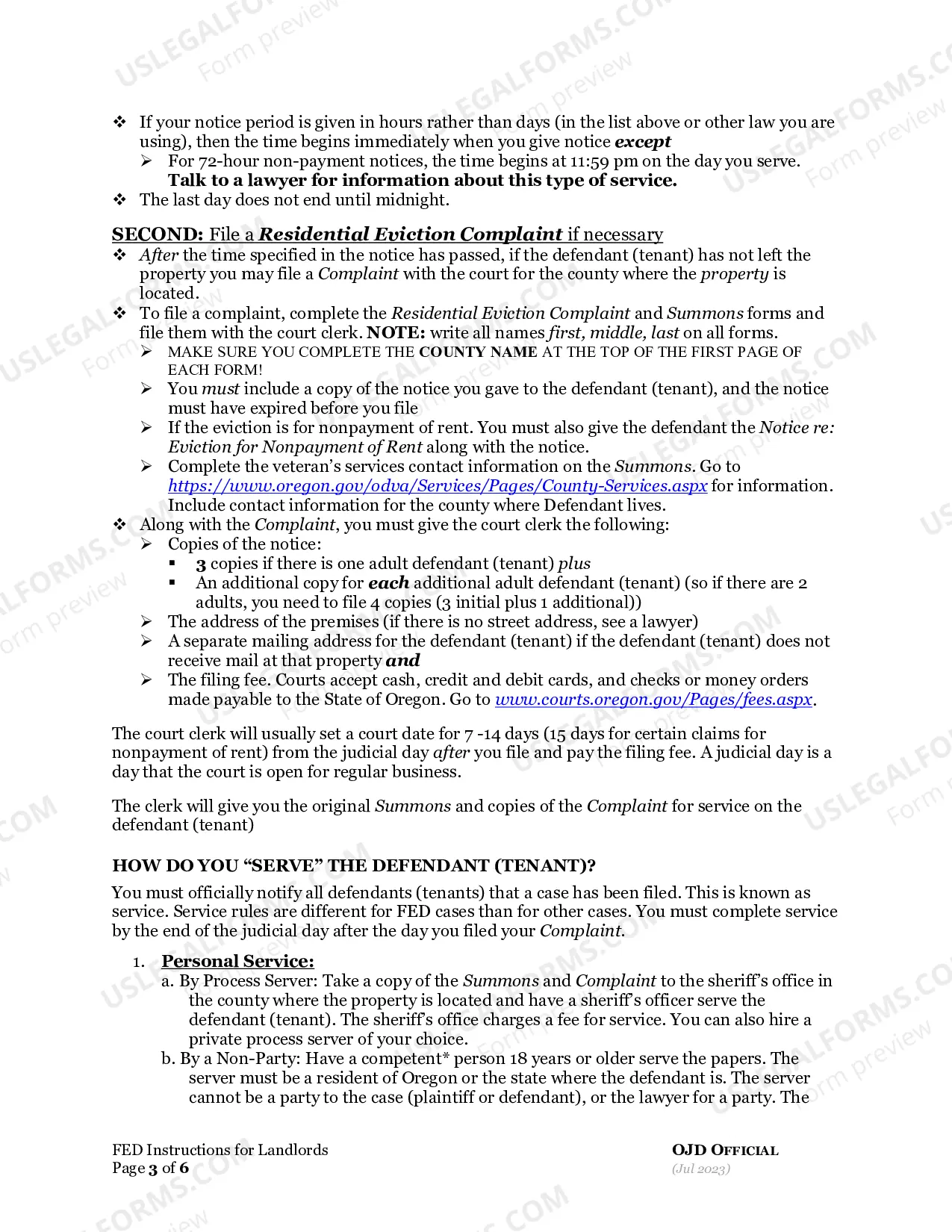
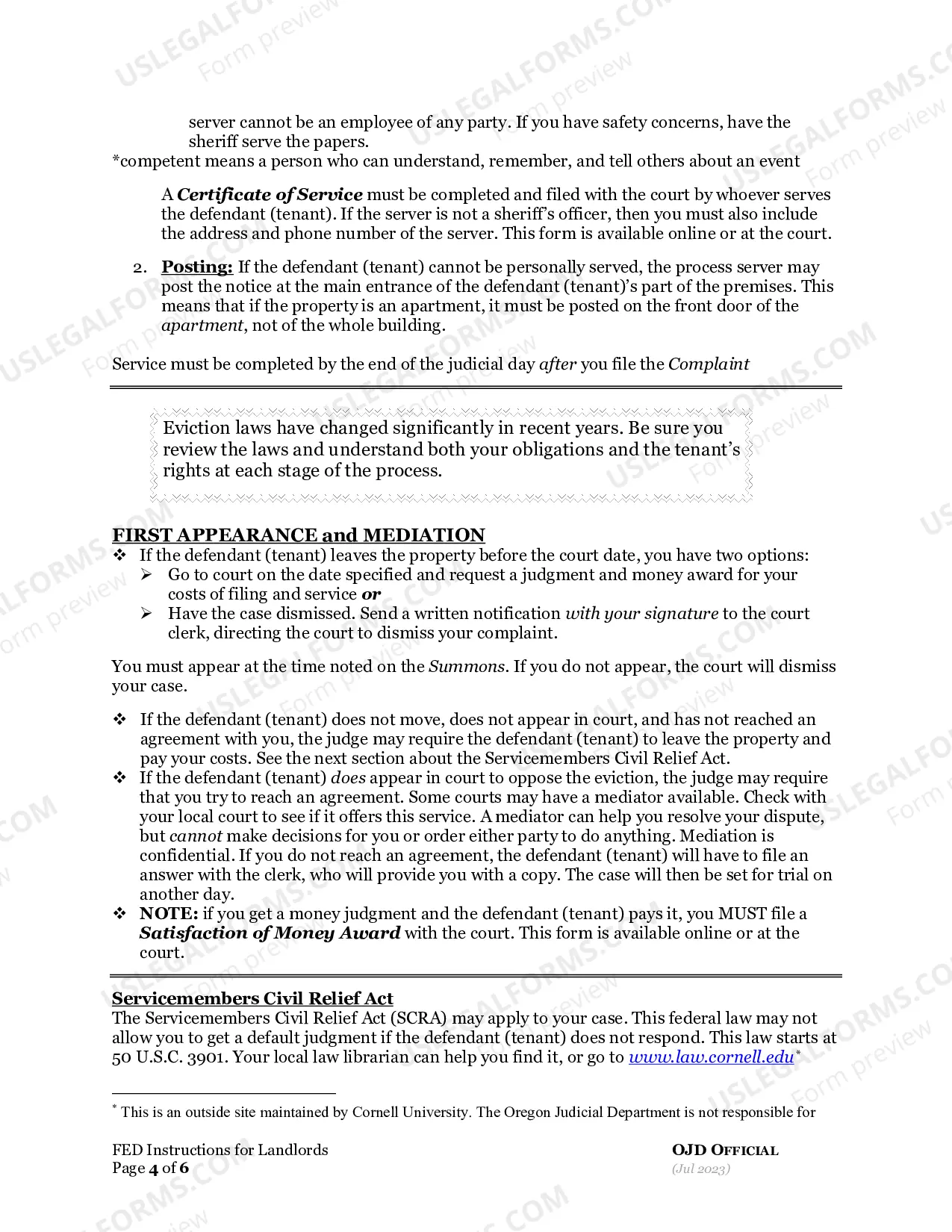
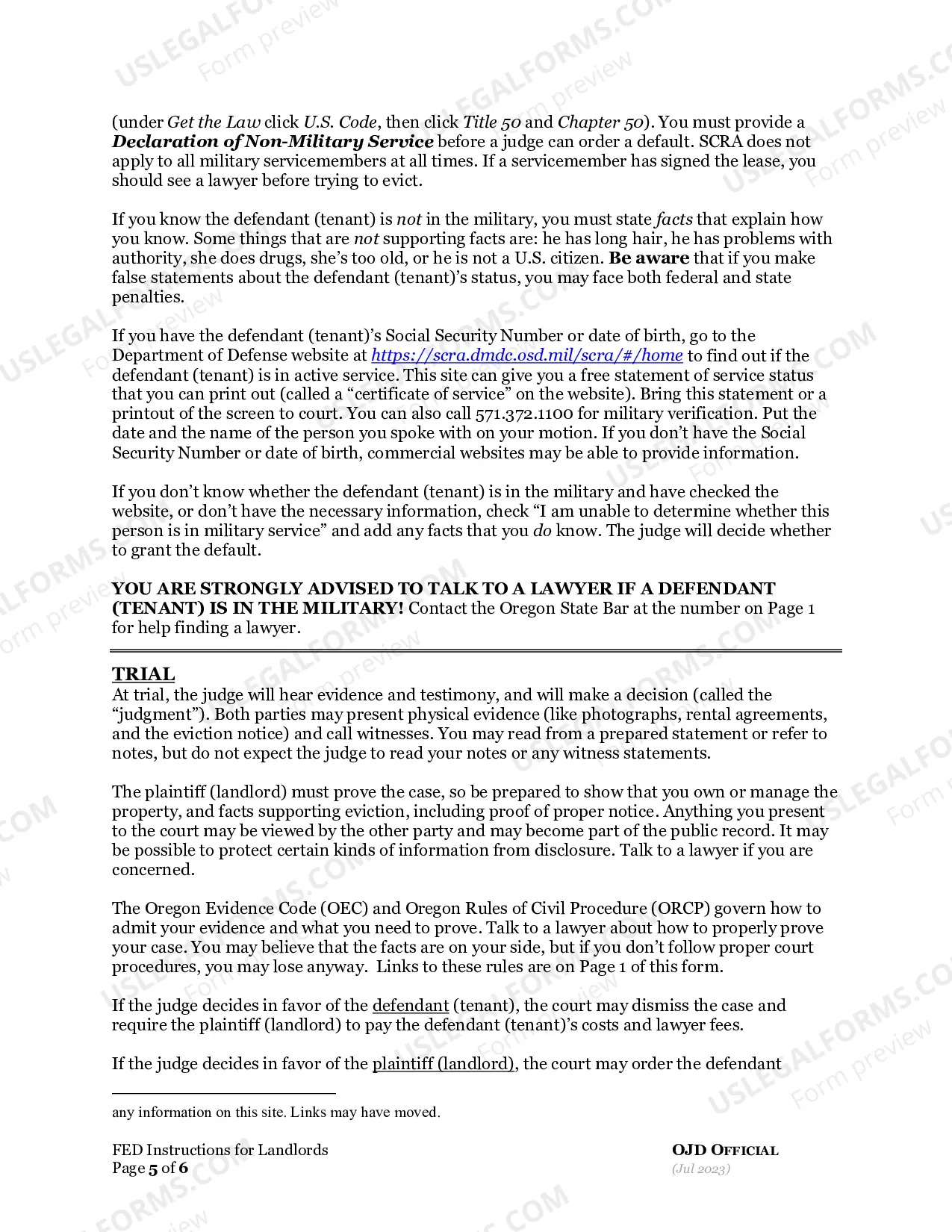
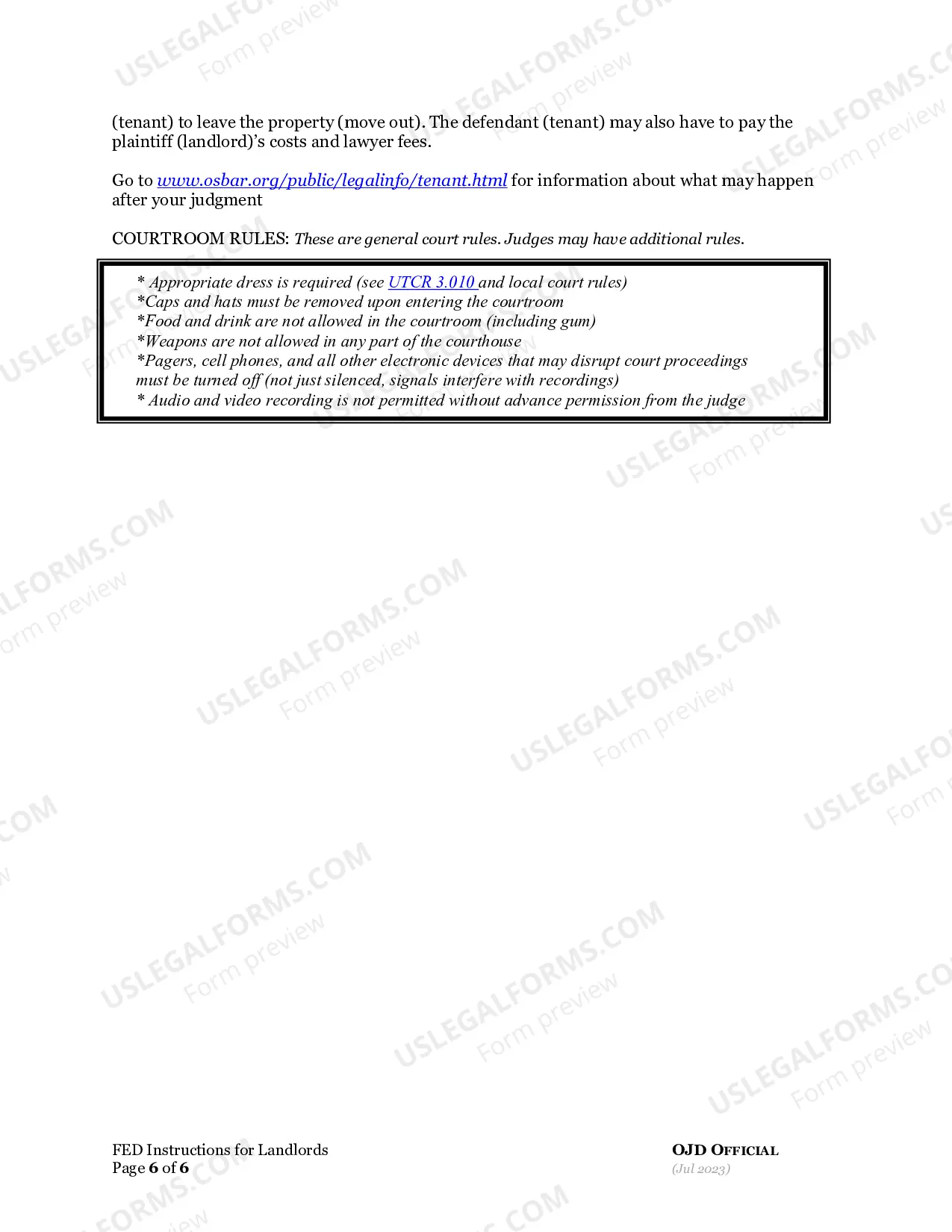
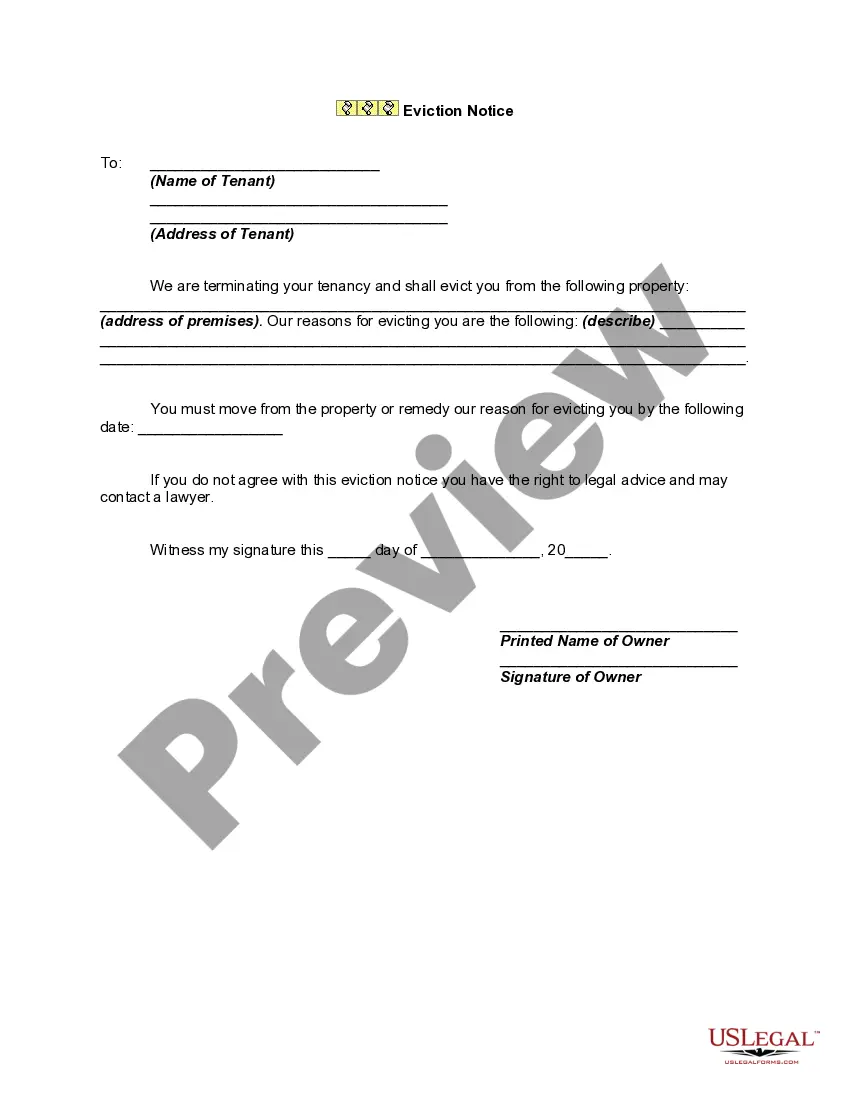
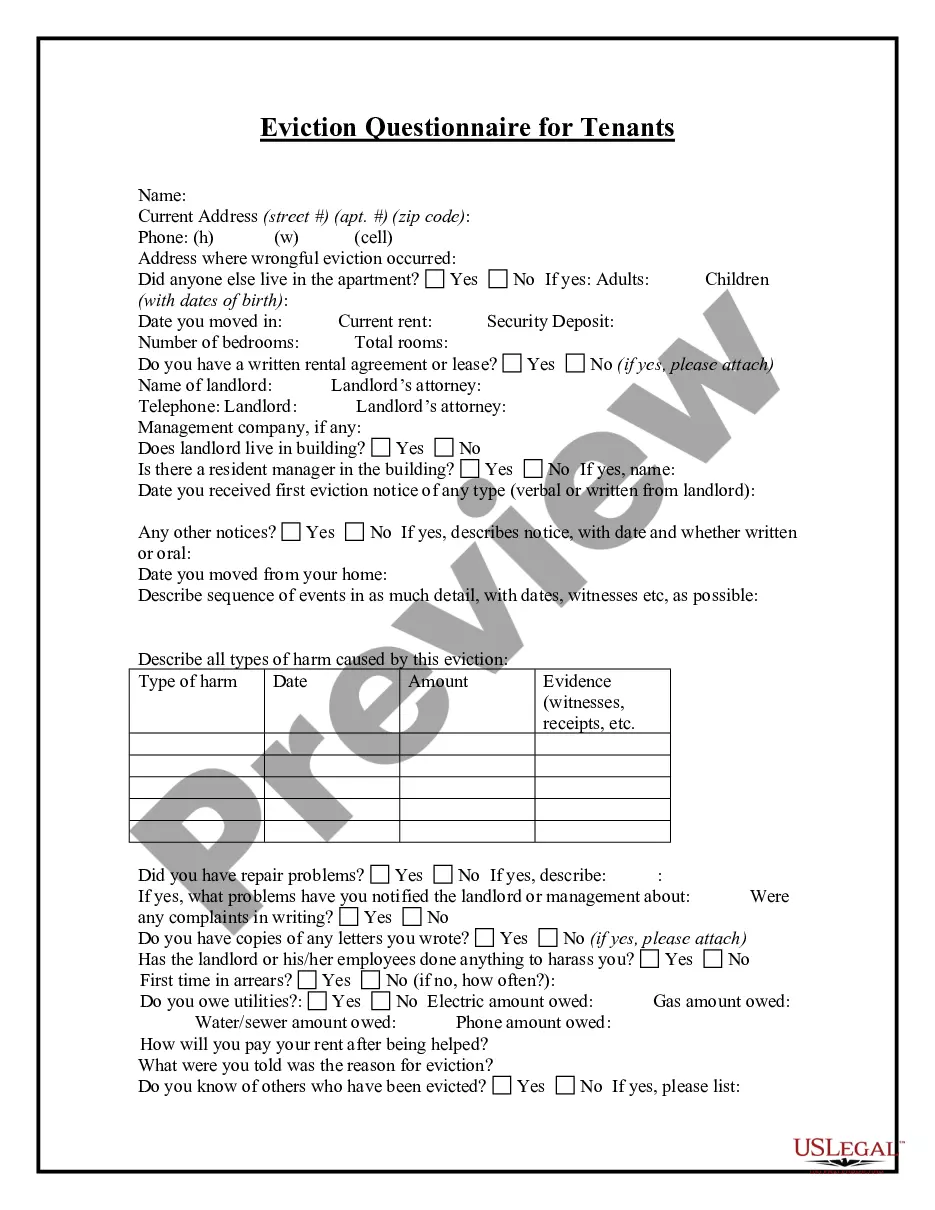
Residential Eviction Instructions - This is an informational guide to the residential eviction process in Oregon courts. The procedural steps to the eviction process are explained in this three page guide.
Evictions For Commercial Tenants
Instant download
This website is not affiliated with any governmental entity
Public form
Description
Free preview
Get your form ready online
Our built-in tools help you complete, sign, share, and store your documents in one place.
Built-in online Word editor
Make edits, fill in missing information, and update formatting in US Legal Forms—just like you would in MS Word.
Export easily
Download a copy, print it, send it by email, or mail it via USPS—whatever works best for your next step.
E-sign your document
Sign and collect signatures with our SignNow integration. Send to multiple recipients, set reminders, and more. Go Premium to unlock E-Sign.
Notarize online 24/7
If this form requires notarization, complete it online through a secure video call—no need to meet a notary in person or wait for an appointment.
Store your document securely
We protect your documents and personal data by following strict security and privacy standards.

Make edits, fill in missing information, and update formatting in US Legal Forms—just like you would in MS Word.

Download a copy, print it, send it by email, or mail it via USPS—whatever works best for your next step.

Sign and collect signatures with our SignNow integration. Send to multiple recipients, set reminders, and more. Go Premium to unlock E-Sign.

If this form requires notarization, complete it online through a secure video call—no need to meet a notary in person or wait for an appointment.

We protect your documents and personal data by following strict security and privacy standards.
Looking for another form?
Form popularity
FAQ
In Pennsylvania, landlords cannot typically evict a tenant immediately without following due process, even in cases of non-payment or lease violations. The landlord must provide proper notice and go through the legal eviction process. Understanding the rules surrounding evictions for commercial tenants can help both parties ensure they follow the necessary steps. If you are facing potential eviction, seeking advice from legal experts can significantly benefit your situation.
Similar to other states, the duration to evict a commercial tenant in PA usually depends on the complexity of the case. The steps involved include providing notice, filing an eviction complaint, and attending court hearings, which can altogether take a few weeks to several months. To effectively navigate through evictions for commercial tenants, consider utilizing resources from platforms like uslegalforms, which offer guidance and essential forms. This way, you can be better prepared and informed during the entire process.
The timeline for evicting a commercial tenant in Pennsylvania can vary based on several factors, such as the grounds for eviction and the response of the tenant. Generally, the process might take several weeks to a few months from filing the eviction notice to the final court hearing. Working with professionals familiar with evictions for commercial tenants can streamline this process and help ensure compliance with state laws. Timely actions and proper documentation are essential.
Breaking a commercial lease can be complicated, but valid excuses may include severe property issues that affect business operations or changes in local laws that impact your ability to conduct business. It is crucial to review your lease agreement thoroughly to identify any clauses related to early termination. Before proceeding, consider consulting with a legal professional who specializes in evictions for commercial tenants to explore your options. This approach can help you avoid potential legal disputes.
As a commercial tenant in California, you have rights that protect you from unfair eviction and ensure the landlord honors the lease terms. You have the right to occupy the rental space without harassment and to request repairs and maintenance from the landlord. Being aware of your rights can aid you in effectively navigating the complexities of eviction scenarios, including evictions for commercial tenants.
In California, the amount of notice a commercial landlord must provide depends on the reason for eviction. For issues like unpaid rent, a 3-day notice is common, while other violations may require more extended notice periods. It's essential for landlords to comply with these legal requirements to avoid complications during evictions for commercial tenants. Consulting resources like US Legal Forms can help ensure compliance.
Commercial property tenants in California have various rights, including the right to a safe and habitable space, privacy, and the right to fair treatment under the lease. Tenants can also challenge illegal eviction attempts and seek remedies for breaches of the lease. When facing evictions for commercial tenants, understanding these rights can empower tenants to make informed decisions.
Yes, a landlord can evict a commercial tenant in California, but there are specific legal steps that must be followed. Evictions for commercial tenants typically require a formal lease agreement and adherence to state laws. It is essential to provide proper notice and valid reasons for the eviction. Seeking guidance from a professional can help ensure compliance with legal requirements.
Rent control laws in California primarily focus on residential properties and do not generally apply to commercial leases. Therefore, landlords and tenants in commercial real estate have more flexibility in negotiating rent amounts and terms. This flexibility can sometimes lead to higher rents, especially in popular areas. Understanding your obligations and options is vital when navigating evictions for commercial tenants.
In Georgia, landlords cannot lock out commercial tenants without following legal procedures. Attempting to remove a tenant without proper legal justification can result in significant penalties. The law requires following the eviction process to ensure both parties' rights are preserved. For those navigating evictions for commercial tenants, consulting legal resources or platforms like US Legal Forms can provide essential guidance and documentation.