Deed Reserving Life Estate For Property
Description
Get your form ready online
Our built-in tools help you complete, sign, share, and store your documents in one place.
Make edits, fill in missing information, and update formatting in US Legal Forms—just like you would in MS Word.
Download a copy, print it, send it by email, or mail it via USPS—whatever works best for your next step.
Sign and collect signatures with our SignNow integration. Send to multiple recipients, set reminders, and more. Go Premium to unlock E-Sign.
If this form requires notarization, complete it online through a secure video call—no need to meet a notary in person or wait for an appointment.
We protect your documents and personal data by following strict security and privacy standards.

Make edits, fill in missing information, and update formatting in US Legal Forms—just like you would in MS Word.

Download a copy, print it, send it by email, or mail it via USPS—whatever works best for your next step.

Sign and collect signatures with our SignNow integration. Send to multiple recipients, set reminders, and more. Go Premium to unlock E-Sign.

If this form requires notarization, complete it online through a secure video call—no need to meet a notary in person or wait for an appointment.

We protect your documents and personal data by following strict security and privacy standards.
Looking for another form?

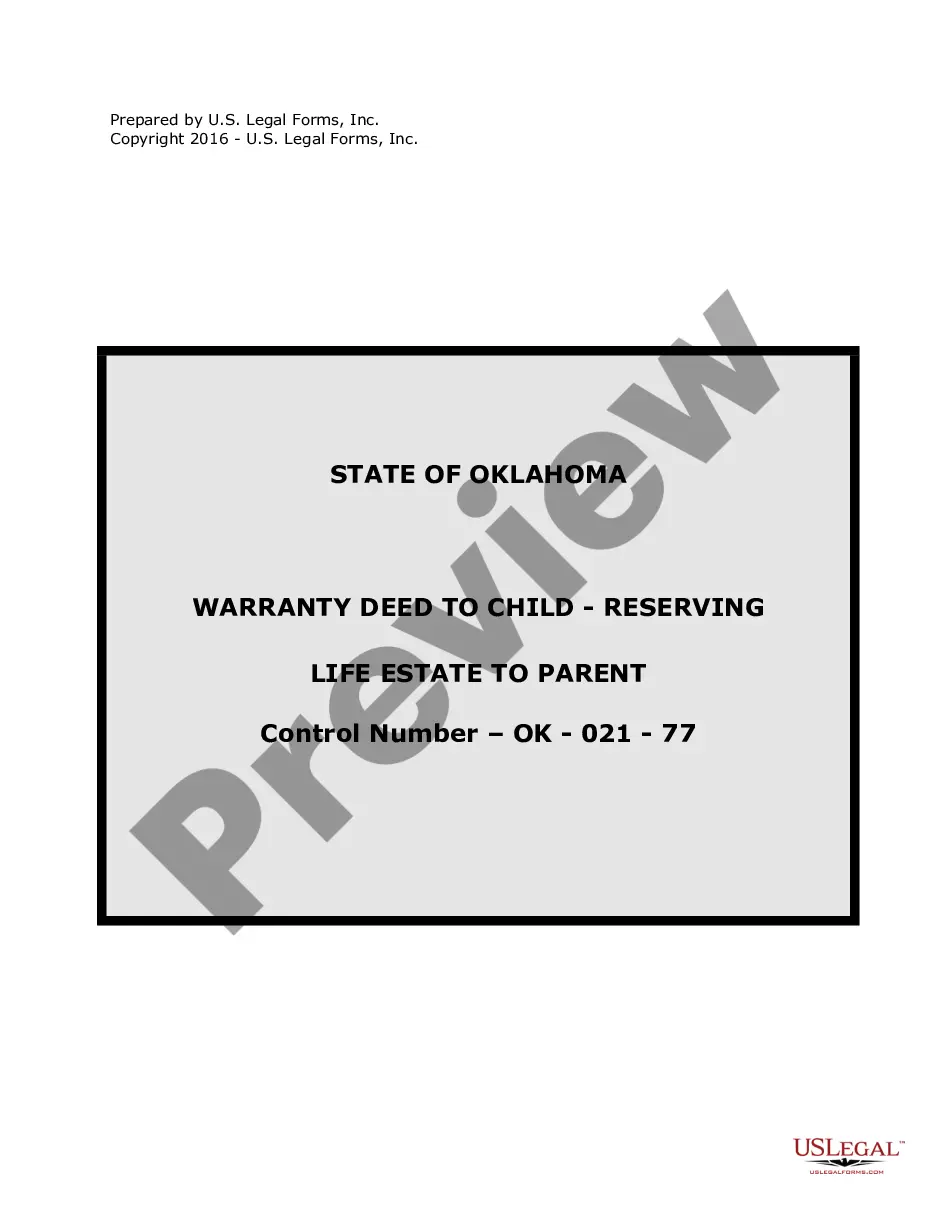
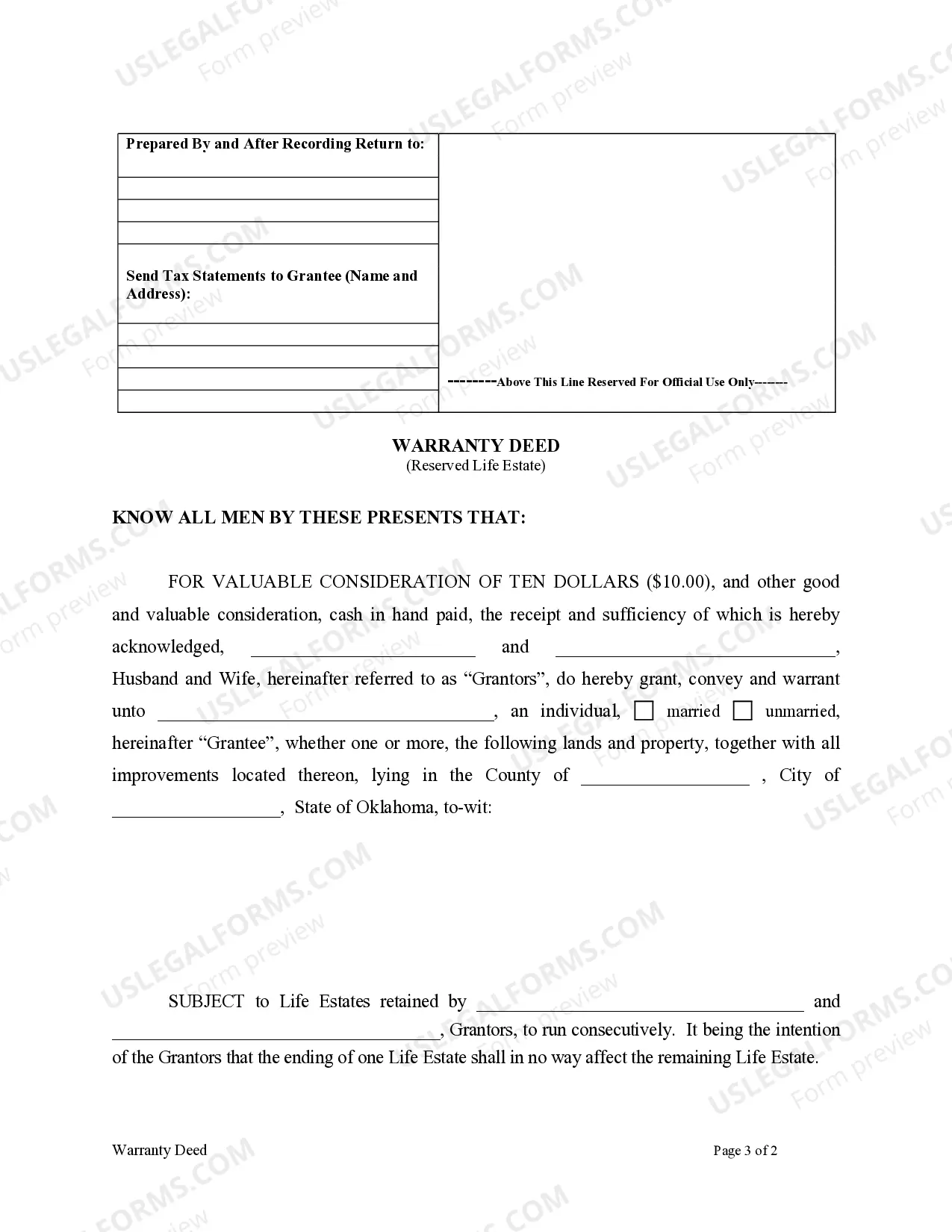
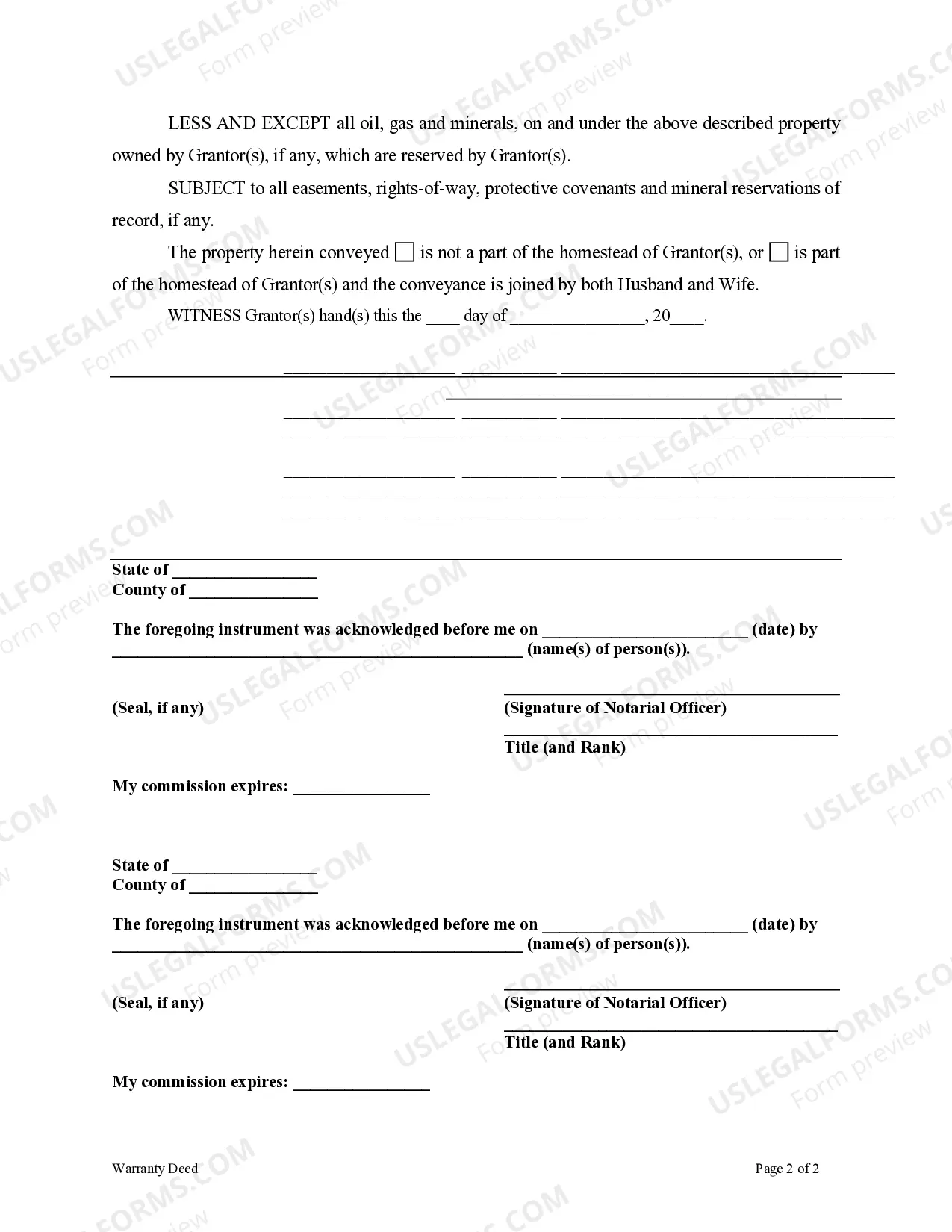
How to fill out Oklahoma Warranty Deed To Child Reserving A Life Estate In The Parents?
Creating legal documents from the beginning can often feel a bit daunting. Some situations may require extensive research and potentially cost a significant amount. If you’re looking for a more straightforward and budget-friendly method of drafting Deed Reserving Life Estate For Property or any other documentation without hassle, US Legal Forms is readily available to you.
Our online collection of over 85,000 current legal forms covers nearly every aspect of your economic, legal, and personal situations. With just a few clicks, you can swiftly find state- and county-specific templates carefully prepared for you by our legal experts.
Utilize our platform whenever you need a dependable service through which you can easily find and obtain the Deed Reserving Life Estate For Property. If you’re already familiar with our services and have an existing account with us, just sign in to your account, find the template, and download it, or re-download it anytime later in the My documents section.
Not signed up yet? No problem. Setting up and exploring the library takes minimal time. But before you dive straight into downloading Deed Reserving Life Estate For Property, consider these recommendations.
US Legal Forms boasts an impeccable reputation and over 25 years of experience. Join us now and make document handling easy and efficient!
- Review the document preview and descriptions to ensure you have located the document you need.
- Verify if the template you select meets the regulations of your state and county.
- Choose the most appropriate subscription plan to purchase the Deed Reserving Life Estate For Property.
- Download the file. Then complete it, sign it, and print it.
Form popularity
FAQ
A life estate is a property interest that limits itself by the tenant's lifetime. In other words, the life tenant holds the right to use and occupy the property for their lifetime, after which the remainderman takes possession.
Life Estates establish two different categories of property owners: the Life Tenant Owner and the Remainder Owner. The Life Tenant Owner maintains the absolute and exclusive right to use the property during his or her lifetime. This can be a sole owner or joint Life Tenants.
Rights of a remainderman A remainderman has an interest in assuring that the life tenant does not destroy, damage, or otherwise diminish the value of the property. The life tenant must maintain the property, make any existing mortgage payments, pay property taxes, and keep the property adequately insured.
A life estate is a form of ownership that allows one person to live in or on a piece of real property until they pass away. At their death, the real property passes to the intended beneficiary of the original owner.
An additional potential problem with a Life Estate is that it does not offer creditor protection to the beneficiary, so if the heir has a debt or is sued, the creditor or court can come after the house. As you can see, a traditional Life Estate has the potential to create major conflict within a family.