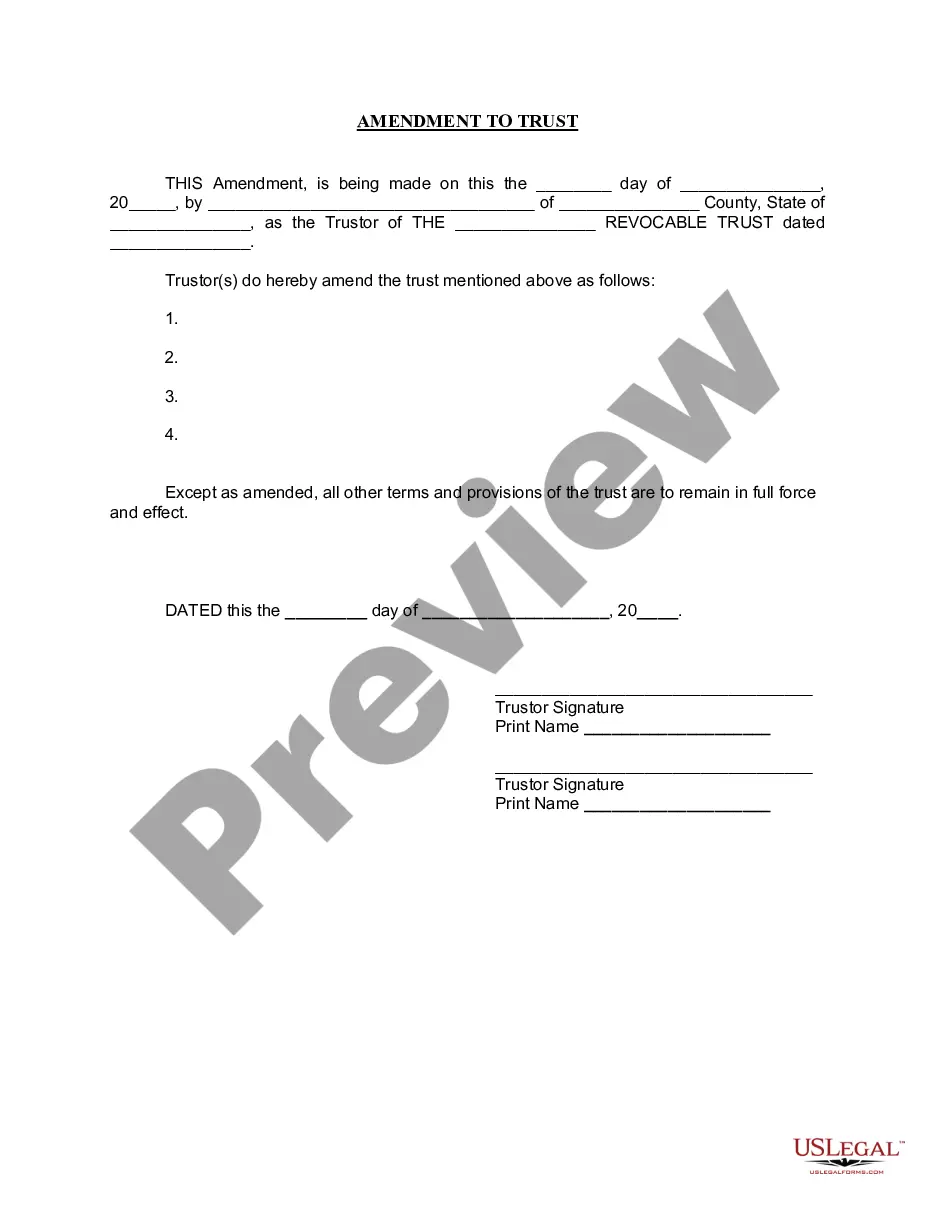
Amendment Form For Living Trust
Description

Get your form ready online
Our built-in tools help you complete, sign, share, and store your documents in one place.
Make edits, fill in missing information, and update formatting in US Legal Forms—just like you would in MS Word.
Download a copy, print it, send it by email, or mail it via USPS—whatever works best for your next step.
Sign and collect signatures with our SignNow integration. Send to multiple recipients, set reminders, and more. Go Premium to unlock E-Sign.
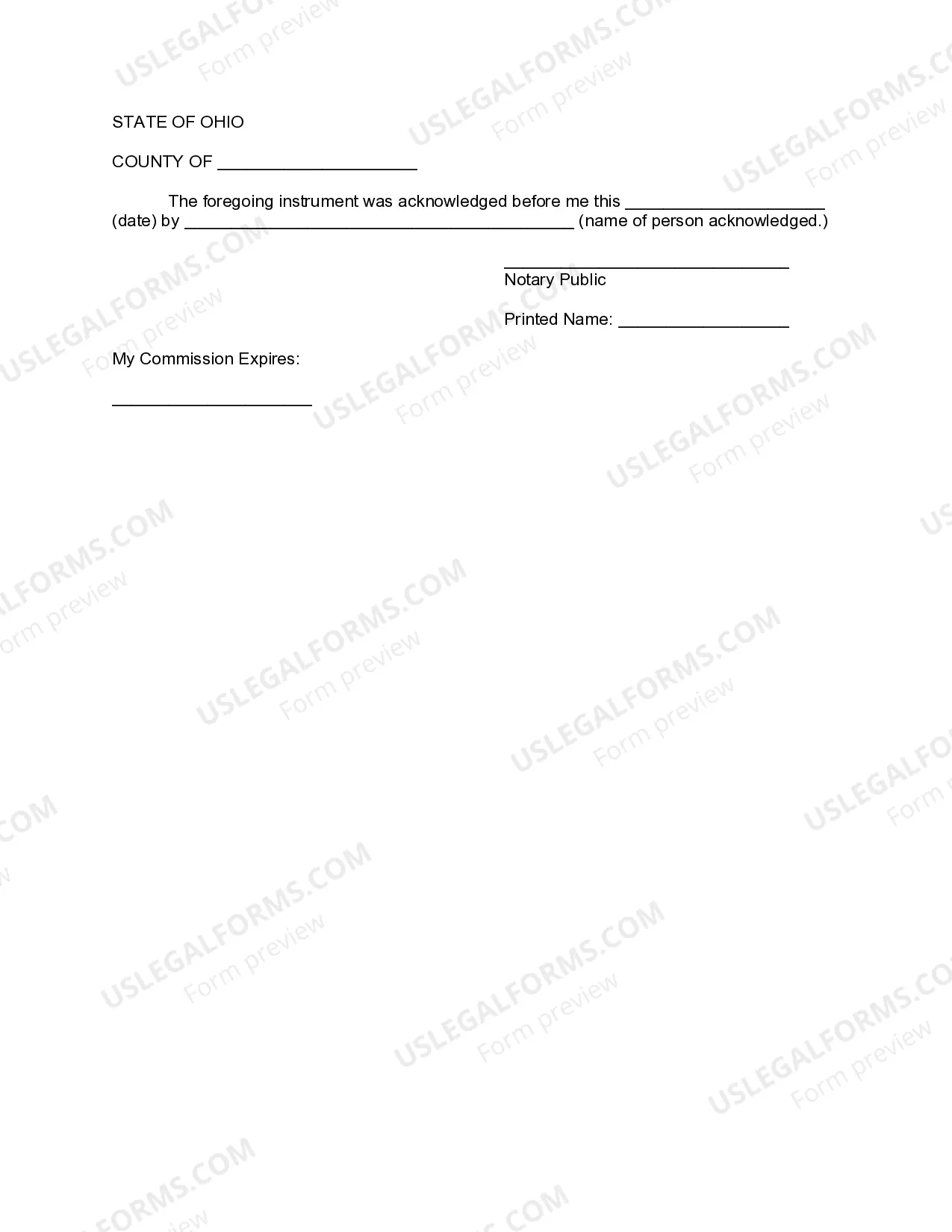
If this form requires notarization, complete it online through a secure video call—no need to meet a notary in person or wait for an appointment.
We protect your documents and personal data by following strict security and privacy standards.

Make edits, fill in missing information, and update formatting in US Legal Forms—just like you would in MS Word.

Download a copy, print it, send it by email, or mail it via USPS—whatever works best for your next step.

Sign and collect signatures with our SignNow integration. Send to multiple recipients, set reminders, and more. Go Premium to unlock E-Sign.

If this form requires notarization, complete it online through a secure video call—no need to meet a notary in person or wait for an appointment.

We protect your documents and personal data by following strict security and privacy standards.
Looking for another form?







How to fill out Ohio Amendment To Living Trust?
- If you are a returning user, log in to your account and find your form template. Check that your subscription is active, or renew it if necessary.
- For first-time users, begin by reviewing the various documents available. Use the Preview mode and form descriptions to select the amendment form for living trust that meets your jurisdictional requirements.
- If the selected form does not meet your needs, utilize the Search tab to find suitable alternatives. Once you find the correct document, proceed to the next step.
- Purchase the required form by clicking the Buy Now button and choose your subscription plan. An account registration will allow you access to the comprehensive library.
- Complete your purchase by entering your payment details or using PayPal to secure your subscription.
- Download your amendment form. Save the document to your device for easy access, and you can also find it later in the My Forms section of your profile.
US Legal Forms streamlines the process of accessing essential legal documents. With a vast collection exceeding 85,000 forms, users can ensure they choose the right templates tailored to their needs with ease.
Empower yourself to handle your legal matters efficiently—start using US Legal Forms today to secure your amendment form for living trust!
Form popularity
FAQ
One significant disadvantage of a codicil is that it can complicate the execution of a will if not managed properly. As you add codicils, it may become challenging to track the changes. In contrast, using an amendment form for living trust provides a more straightforward approach to updating your trust, eliminating potential confusion in your estate planning.
No, a codicil cannot be used to amend a trust. Codicils apply strictly to wills and do not impact trust documents. If you want to make changes to your trust, you should use an amendment form for living trust to ensure that your modifications are valid and recognized legally.
The key difference lies in their application. A codicil modifies a will, whereas an amendment alters a trust document. When you choose to use an amendment form for living trust, you are making direct changes to your trust, not to a will, which means you need to be aware of the specific requirements for each document type.
An amendment to a trust allows you to revise specific sections of the original trust document without having to create a new one. This process ensures that your trust remains current and reflects your wishes accurately. Utilizing an amendment form for living trust simplifies this process, making it accessible and efficient.
An amendment is a change made to a trust document, while a codicil applies specifically to wills. When you use an amendment form for living trust, you alter particular terms or provisions without rewriting the entire document. A codicil requires a different process, as it only modifies a will, demonstrating the importance of using the correct form.
Amending a trust is generally straightforward, especially with the right tools. You can use an amendment form for living trust to document your changes clearly and effectively. The process may vary depending on the complexities of your trust and any applicable state laws. Nonetheless, many find it manageable, especially when using reliable platforms like US Legal Forms for guidance.
You do not necessarily need a lawyer to make changes to a trust, but it is often a good idea. Using an amendment form for living trust allows you to outline the specific changes you want to make. However, if your situation is complex or involves significant assets, consulting a lawyer can provide peace of mind. They can ensure that your amendments comply with legal requirements.
To write an amendment to a trust effectively, begin with the name of the original trust and the date it was created. Specify the changes you wish to make, using clear language to avoid misunderstandings. Utilize an amendment form for living trust to ensure a structured approach and comply with legal standards. This method enhances the trust's clarity and protects your intentions.
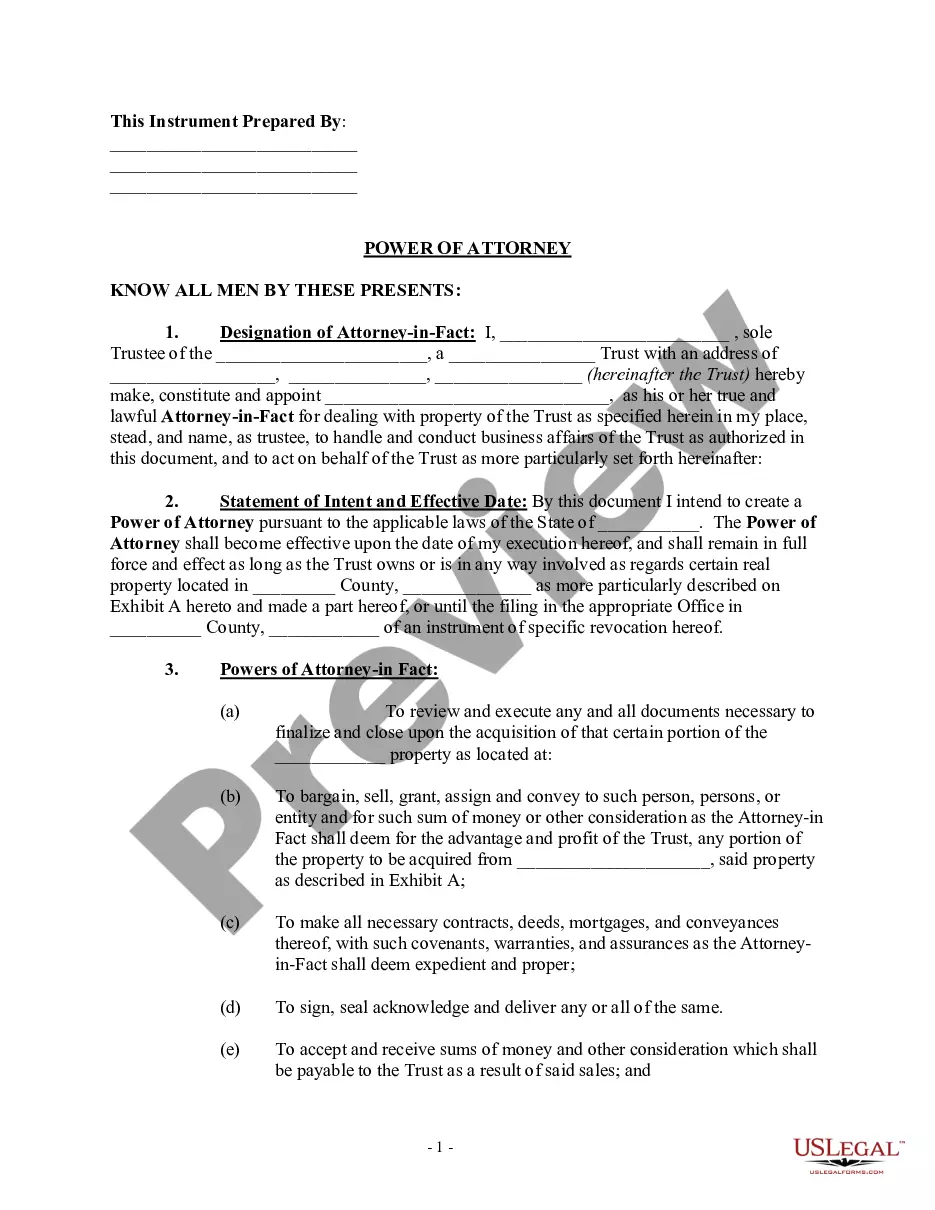
Writing an addendum to a trust involves creating a separate document that outlines specific modifications or additional instructions. Like an amendment form for living trust, the addendum should reference the original trust, detailing what changes or additions you wish to include. After writing the addendum, sign and date it to affirm its validity.
Handwritten changes to a trust, known as holographic amendments, can be legal if executed correctly. However, these changes often require clear intent and must comply with your state's laws. To avoid complications, consider using a formal amendment form for living trust. This approach guarantees clarity and legal recognition.