Parenting Plan Template Ohio For Sole Custody
Description
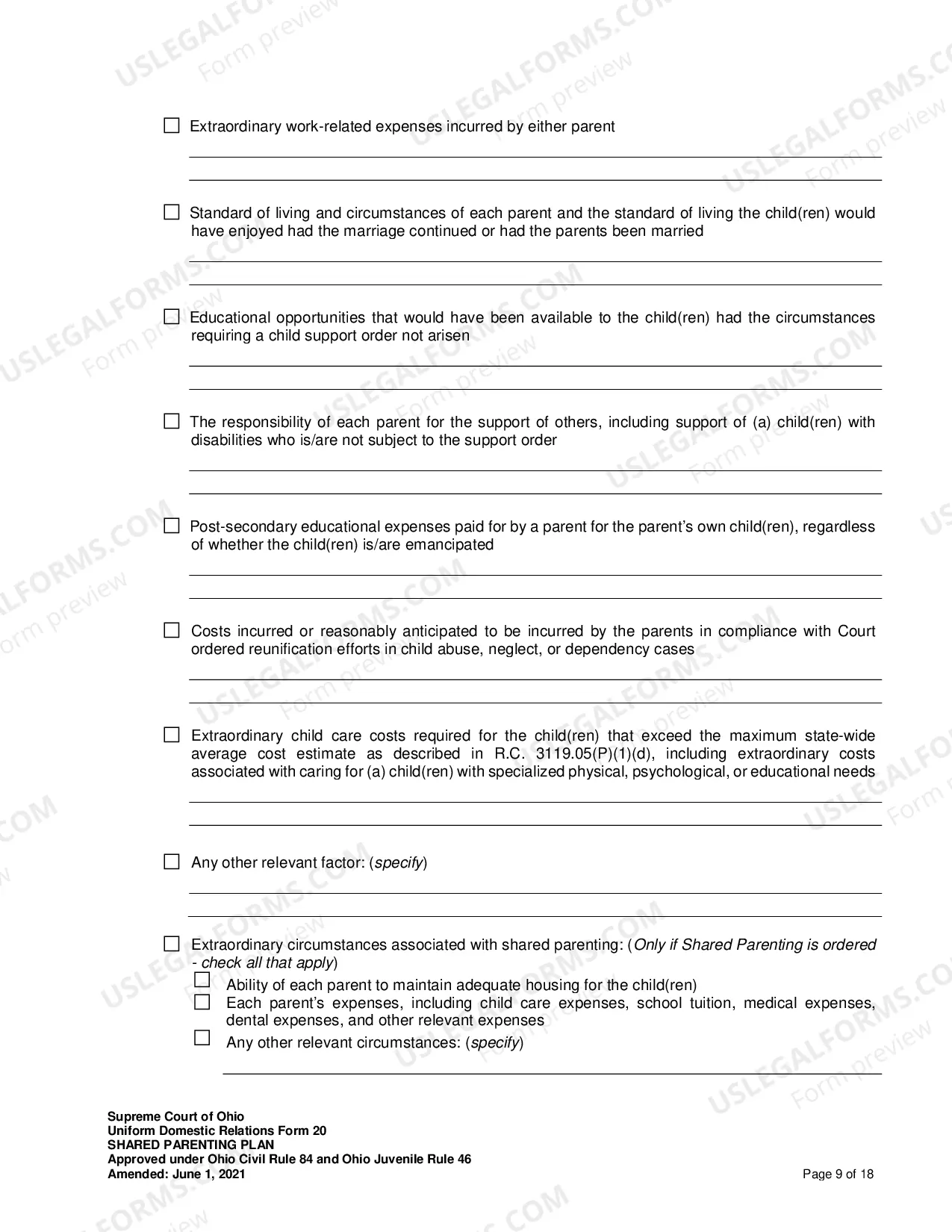
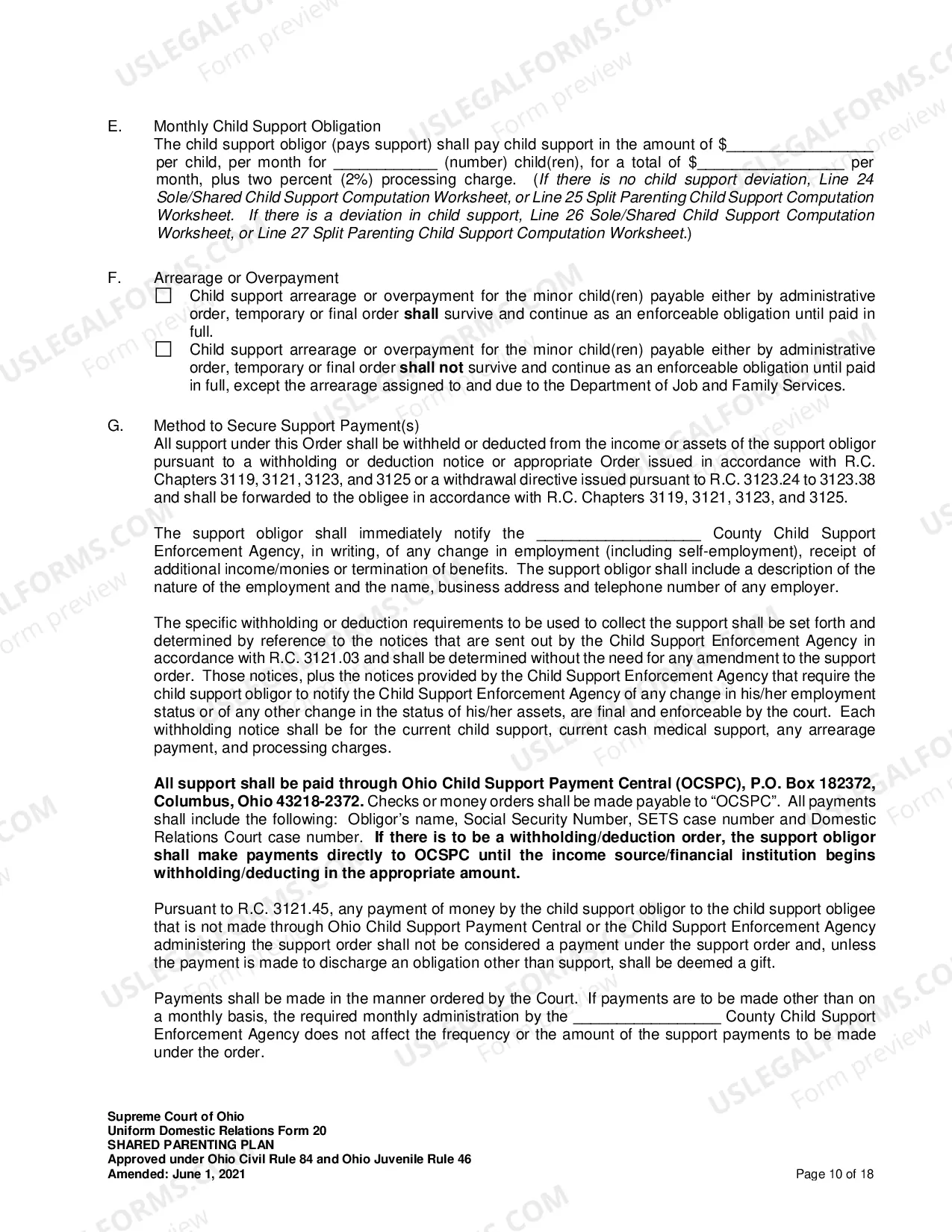

Get your form ready online
Our built-in tools help you complete, sign, share, and store your documents in one place.
Make edits, fill in missing information, and update formatting in US Legal Forms—just like you would in MS Word.
Download a copy, print it, send it by email, or mail it via USPS—whatever works best for your next step.
Sign and collect signatures with our SignNow integration. Send to multiple recipients, set reminders, and more. Go Premium to unlock E-Sign.
If this form requires notarization, complete it online through a secure video call—no need to meet a notary in person or wait for an appointment.
We protect your documents and personal data by following strict security and privacy standards.

Make edits, fill in missing information, and update formatting in US Legal Forms—just like you would in MS Word.

Download a copy, print it, send it by email, or mail it via USPS—whatever works best for your next step.

Sign and collect signatures with our SignNow integration. Send to multiple recipients, set reminders, and more. Go Premium to unlock E-Sign.

If this form requires notarization, complete it online through a secure video call—no need to meet a notary in person or wait for an appointment.

We protect your documents and personal data by following strict security and privacy standards.
Looking for another form?
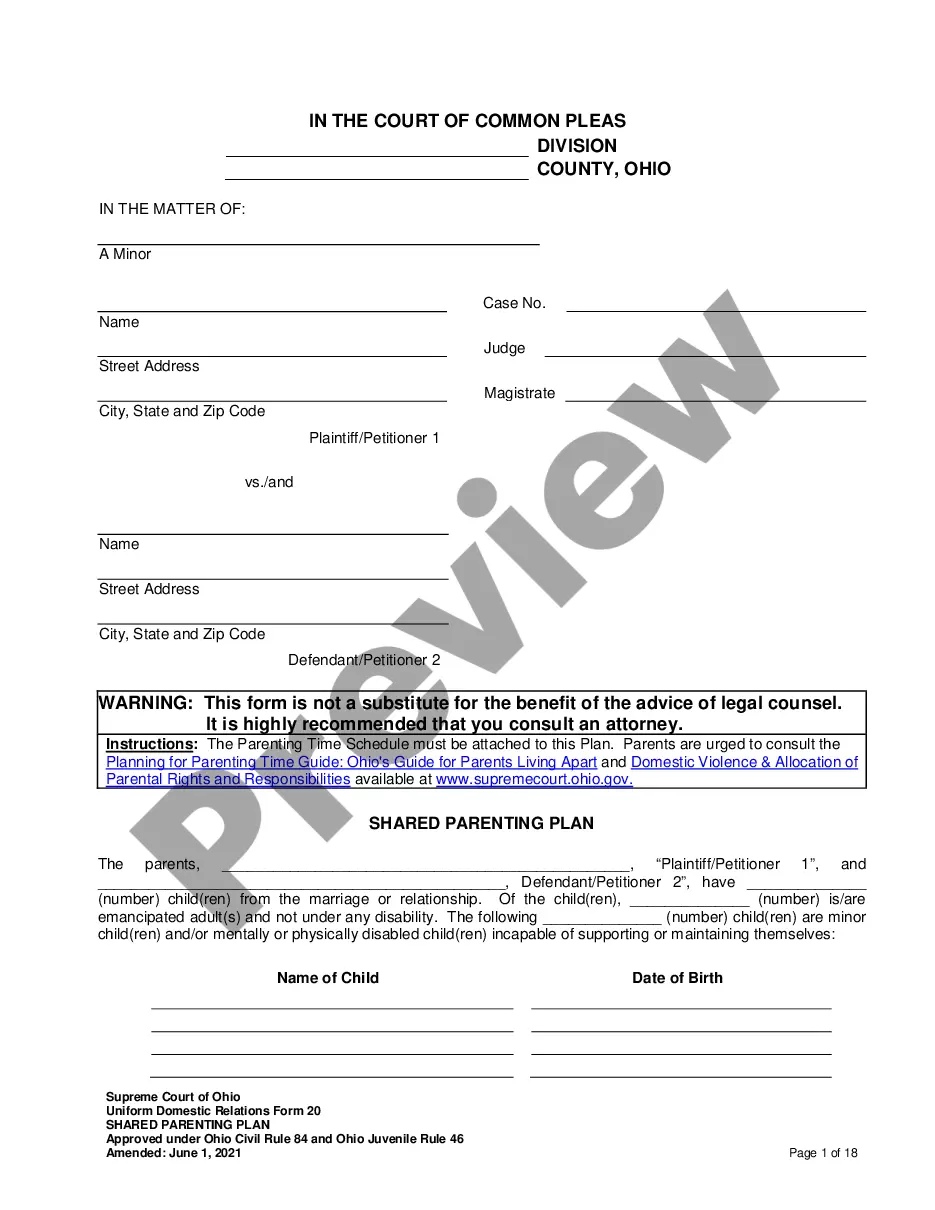
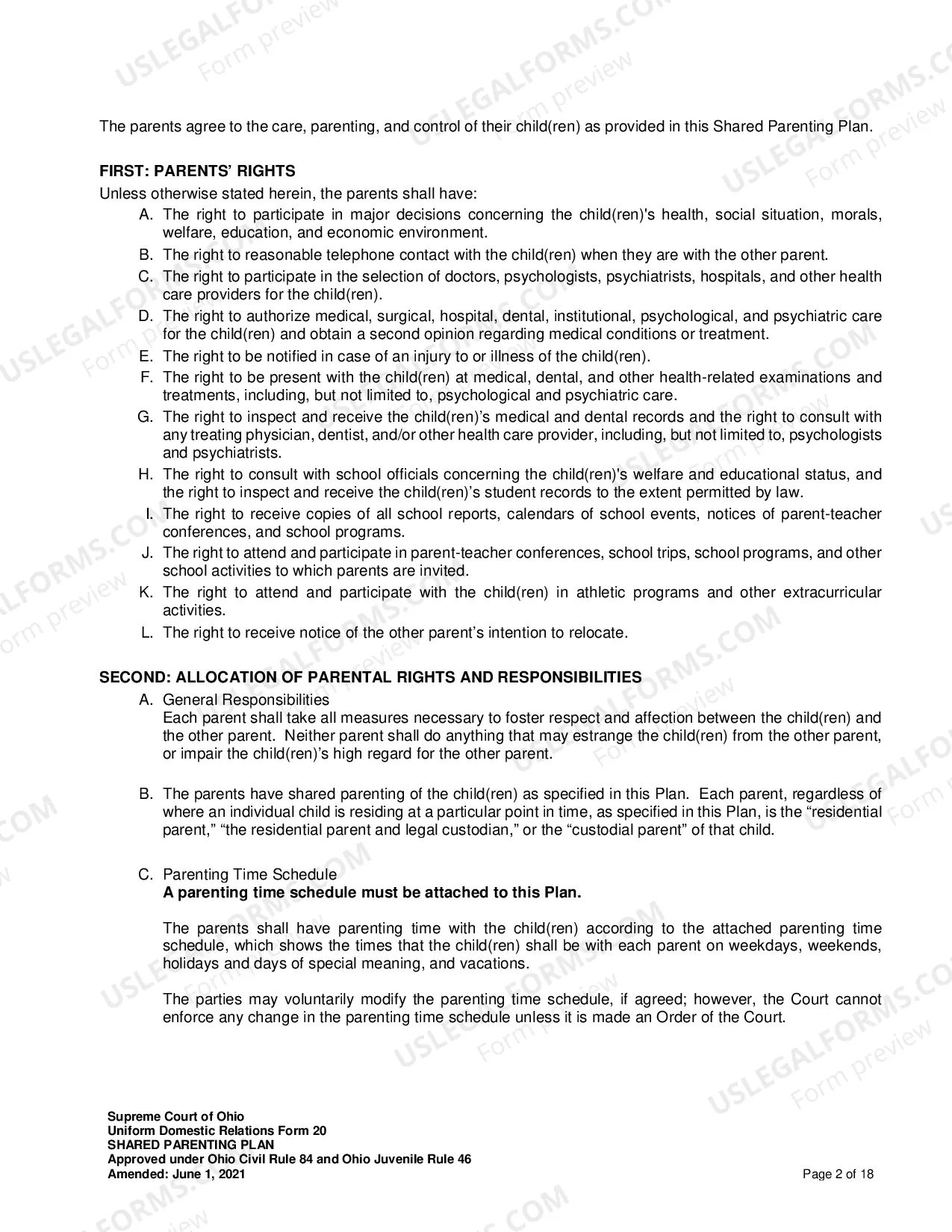
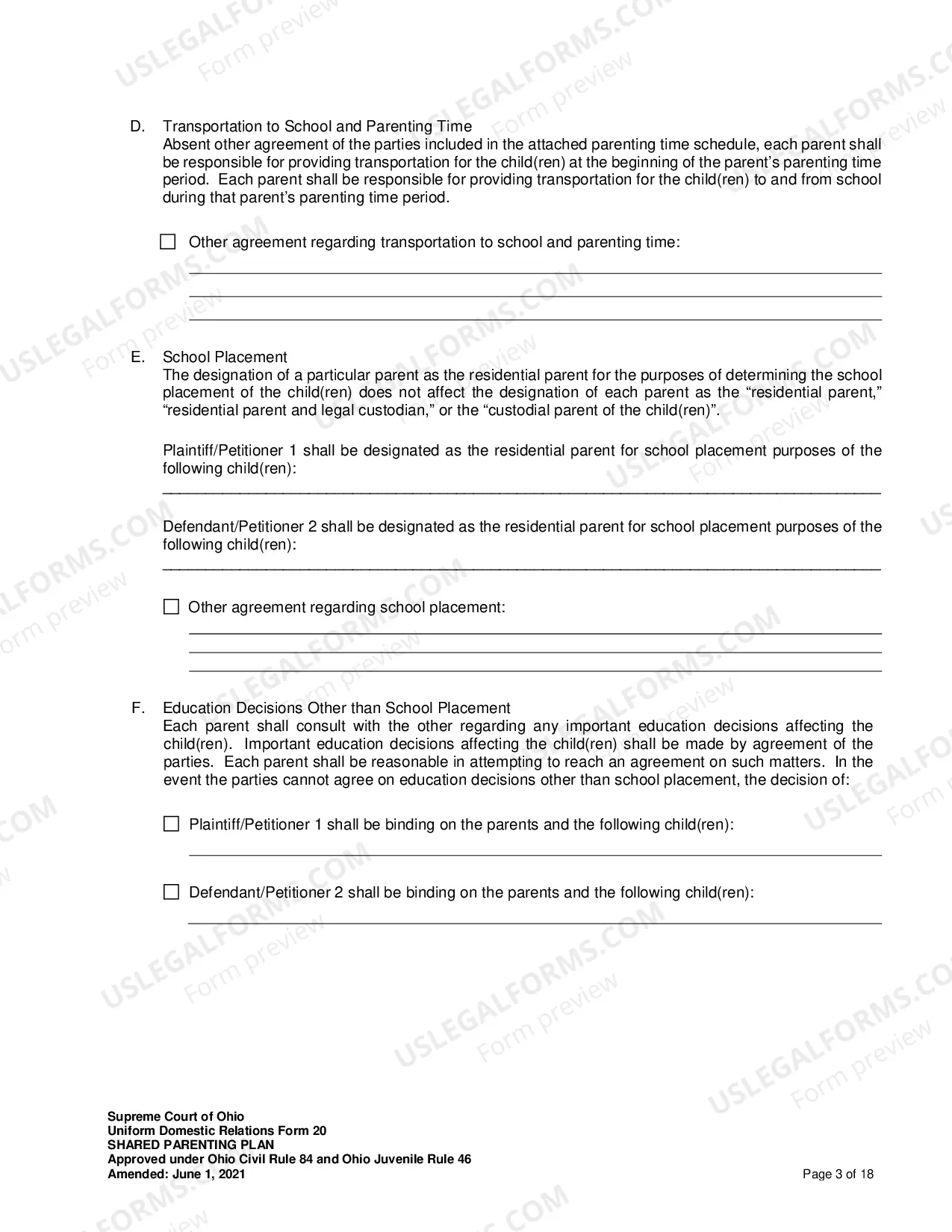
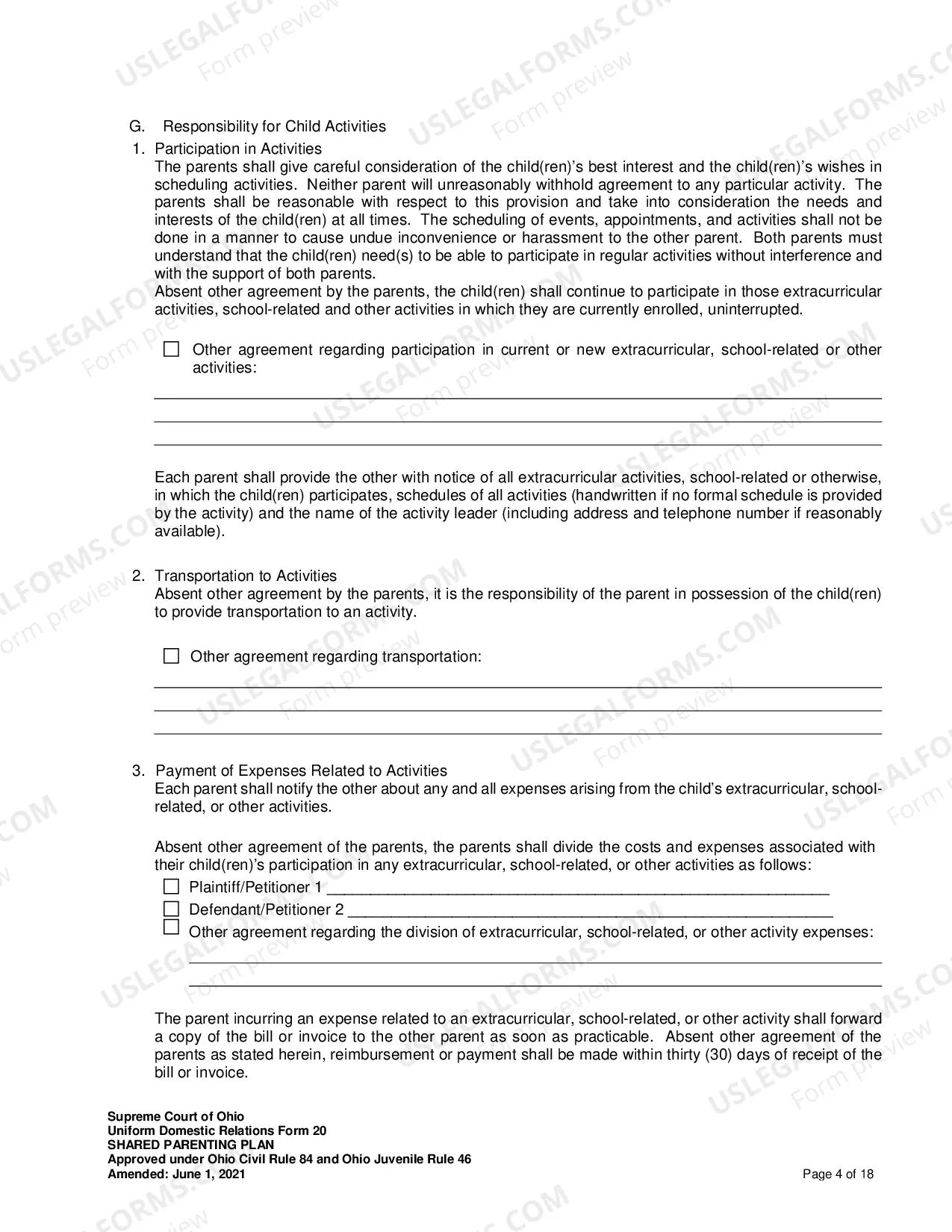
How to fill out Ohio Shared Parenting Plan?
Managing legal documents and processes can be a lengthy addition to your entire day.
Parenting Plan Template Ohio For Sole Custody and similar forms usually necessitate that you search for them and navigate the most effective way to complete them efficiently.
Thus, whether you are handling financial, legal, or personal issues, utilizing a comprehensive and straightforward online catalog of forms available will greatly assist.
US Legal Forms is the premier online platform for legal templates, featuring over 85,000 state-specific documents and various tools to help you finalize your paperwork effortlessly.
Is this your first time using US Legal Forms? Sign up and create your account in a few minutes and you’ll gain access to the form catalog and Parenting Plan Template Ohio For Sole Custody. Then, follow the steps below to fill out your form: Ensure you have located the correct form by utilizing the Review feature and examining the form details. Select Buy Now when ready, and choose the subscription plan that best suits you. Click Download, then complete, eSign, and print the form. US Legal Forms has 25 years of experience assisting clients with their legal documents. Obtain the form you need now and streamline any process effortlessly.
- Explore the catalog of relevant documents accessible to you with just a single click.
- US Legal Forms offers you state- and county-specific forms available for download at any time.
- Protect your document management processes with a premium service that allows you to prepare any form in just a few minutes without extra or hidden fees.
- Simply Log In to your account, find Parenting Plan Template Ohio For Sole Custody, and download it immediately from the My documents section.
- You can also access previously saved documents.
Form popularity
FAQ
To file for sole custody of a child in Ohio, you begin by completing the necessary forms, which include a parenting plan template Ohio for sole custody. Next, you need to file these forms at your local family court. After filing, the court will schedule a hearing where both parents can present their cases. It is essential to show the court that sole custody is in the best interest of the child, so having a detailed parenting plan can greatly support your case.
A 70/30 split generally means one parent has the child for 70% of the time, while the other parent has 30%. This arrangement can work well in shared custody situations, allowing the child to maintain relationships with both parents. When drafting a parenting plan template Ohio for sole custody, you should include specific details about the schedule, such as which days each parent has the child. Clear guidelines help prevent misunderstandings and promote a cooperative co-parenting relationship.
An example of sole custody occurs when one parent has both legal and physical custody of the child. In this situation, the custodial parent makes all significant decisions regarding the child's education, health, and welfare. When developing a parenting plan template Ohio for sole custody, it is important to outline the rights and responsibilities of the custodial parent clearly. This ensures that the other parent understands their role and the structure of the arrangement.
The 80 20 rule for custody refers to a guideline where one parent receives 80% of the time with the child, and the other parent has 20%. This rule often helps in determining a fair balance during custody arrangements. When creating a parenting plan template Ohio for sole custody, it is essential to consider how the time split affects the child's well-being and development. A well-structured plan can support both parents in fulfilling their roles.
Sole custody and parental rights are completely different legal concepts. Losing parental rights severs your legal relationship with your child. If you don't get sole custody, you still maintain your parental rights.
How to Get Full Custody Step 1: Find a Family Law Attorney You Can Trust. ... Step 2: Understand the Child Custody Laws in Ohio and Local Rules in Your County. ... Step 3: Prove You Are the ?Better Parent? ... Step 4: Fill Out Necessary Paperwork. ... Step 5: Attend the Child Custody Hearing. ... Step 6: Respect the Court's Decision.
Trying to earn full custody of your children can be difficult. When you are looking to do what is best for your children, sometimes it can mean having them live with you full-time. Unfortunately, Ohio custody laws do not grant full custody to everyone who applies for it.
Sole custody schedules If one parent has sole residential custody, the nonresidential parent commonly has the children every other weekend and once during the week for an overnight visit. Children also spend half a day on holidays and half of school breaks with the nonresidential parent.
Grounds for involuntary termination of parental rights include: abandonment; knowingly placing the child in danger; failing to support the child; felony criminal conviction; sexual offenses; murder of one parent by the other parent; and. causing the child to be born addicted to drugs or alcohol.