Transfer Death Tod For Sale
Description


Get your form ready online
Our built-in tools help you complete, sign, share, and store your documents in one place.
Make edits, fill in missing information, and update formatting in US Legal Forms—just like you would in MS Word.
Download a copy, print it, send it by email, or mail it via USPS—whatever works best for your next step.
Sign and collect signatures with our SignNow integration. Send to multiple recipients, set reminders, and more. Go Premium to unlock E-Sign.
If this form requires notarization, complete it online through a secure video call—no need to meet a notary in person or wait for an appointment.
We protect your documents and personal data by following strict security and privacy standards.

Make edits, fill in missing information, and update formatting in US Legal Forms—just like you would in MS Word.

Download a copy, print it, send it by email, or mail it via USPS—whatever works best for your next step.

Sign and collect signatures with our SignNow integration. Send to multiple recipients, set reminders, and more. Go Premium to unlock E-Sign.

If this form requires notarization, complete it online through a secure video call—no need to meet a notary in person or wait for an appointment.

We protect your documents and personal data by following strict security and privacy standards.
Looking for another form?




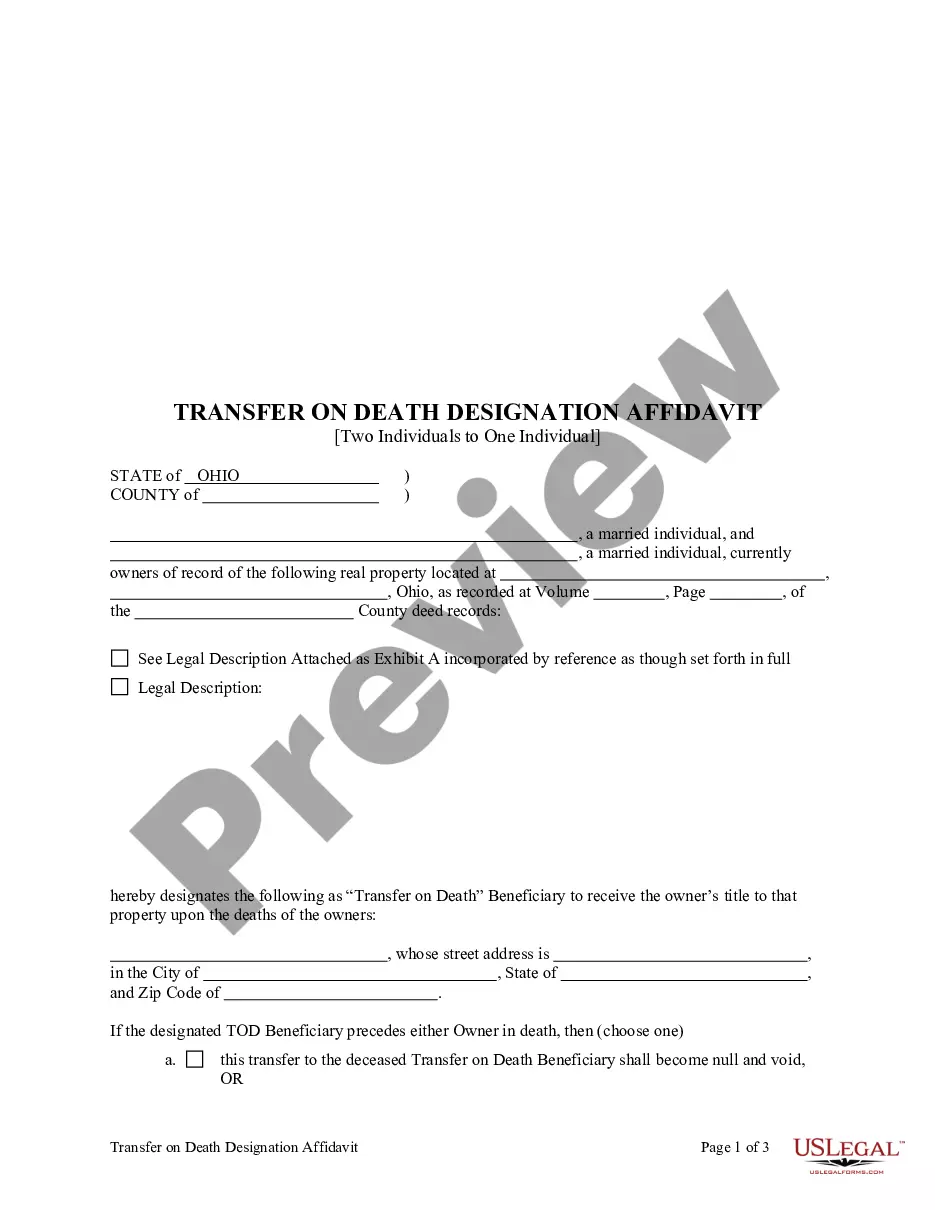
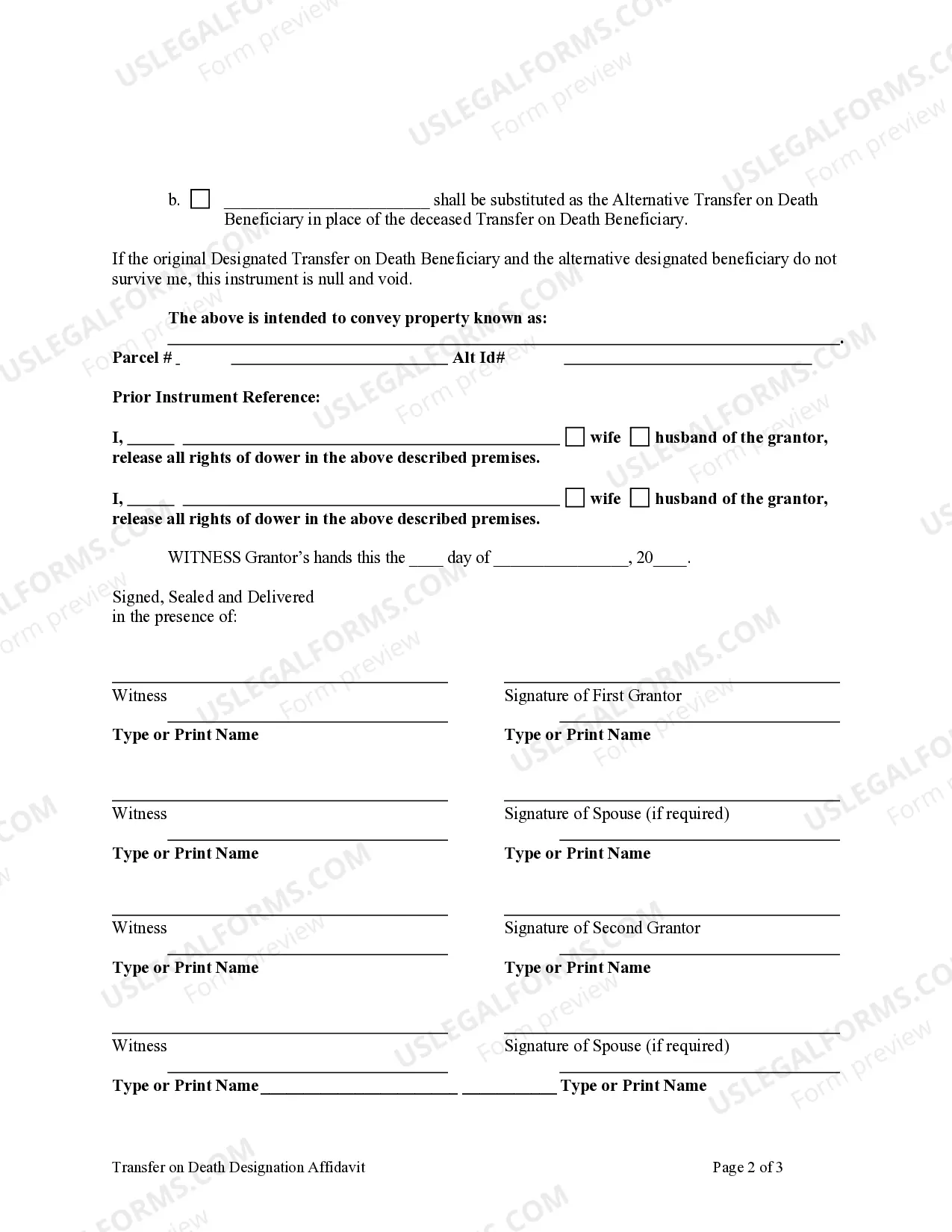
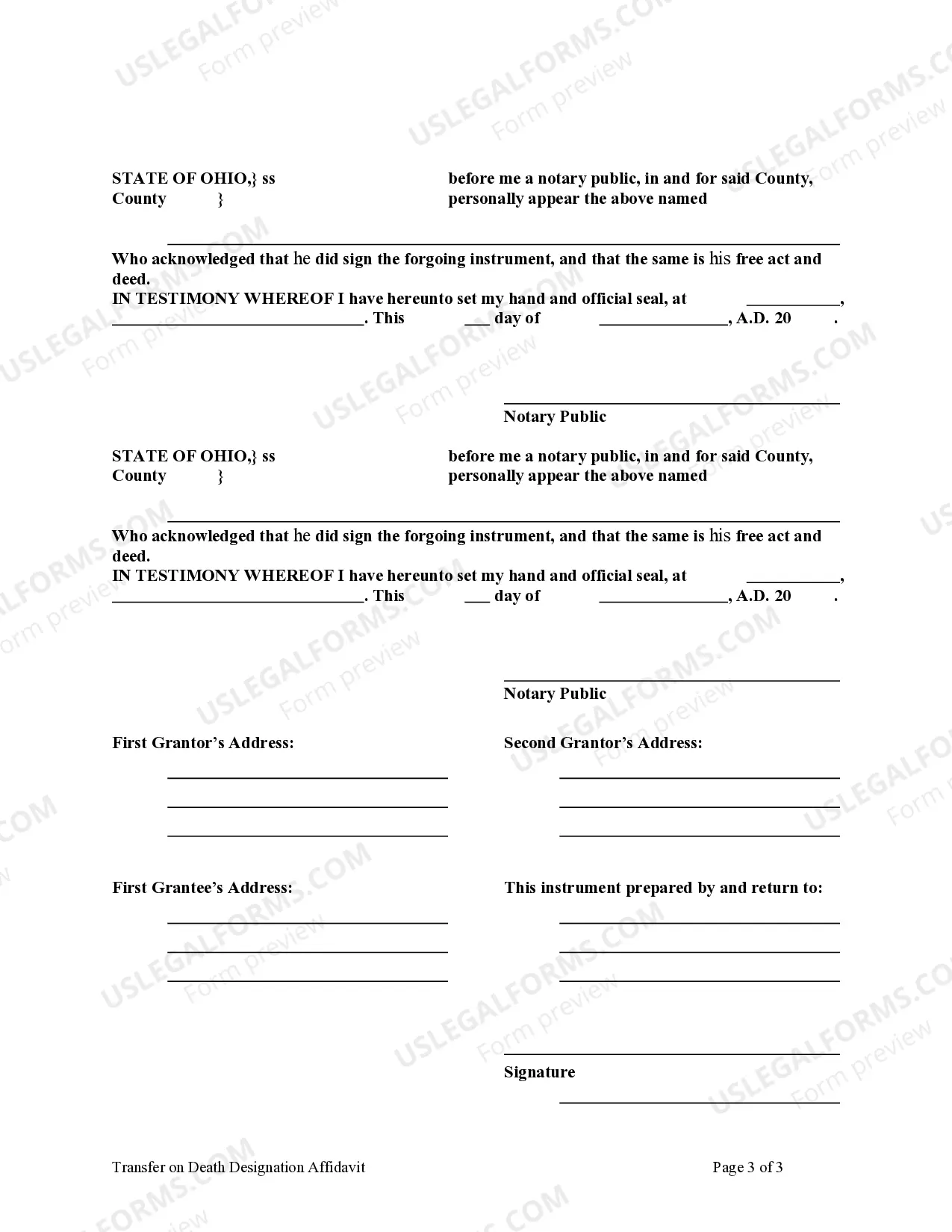
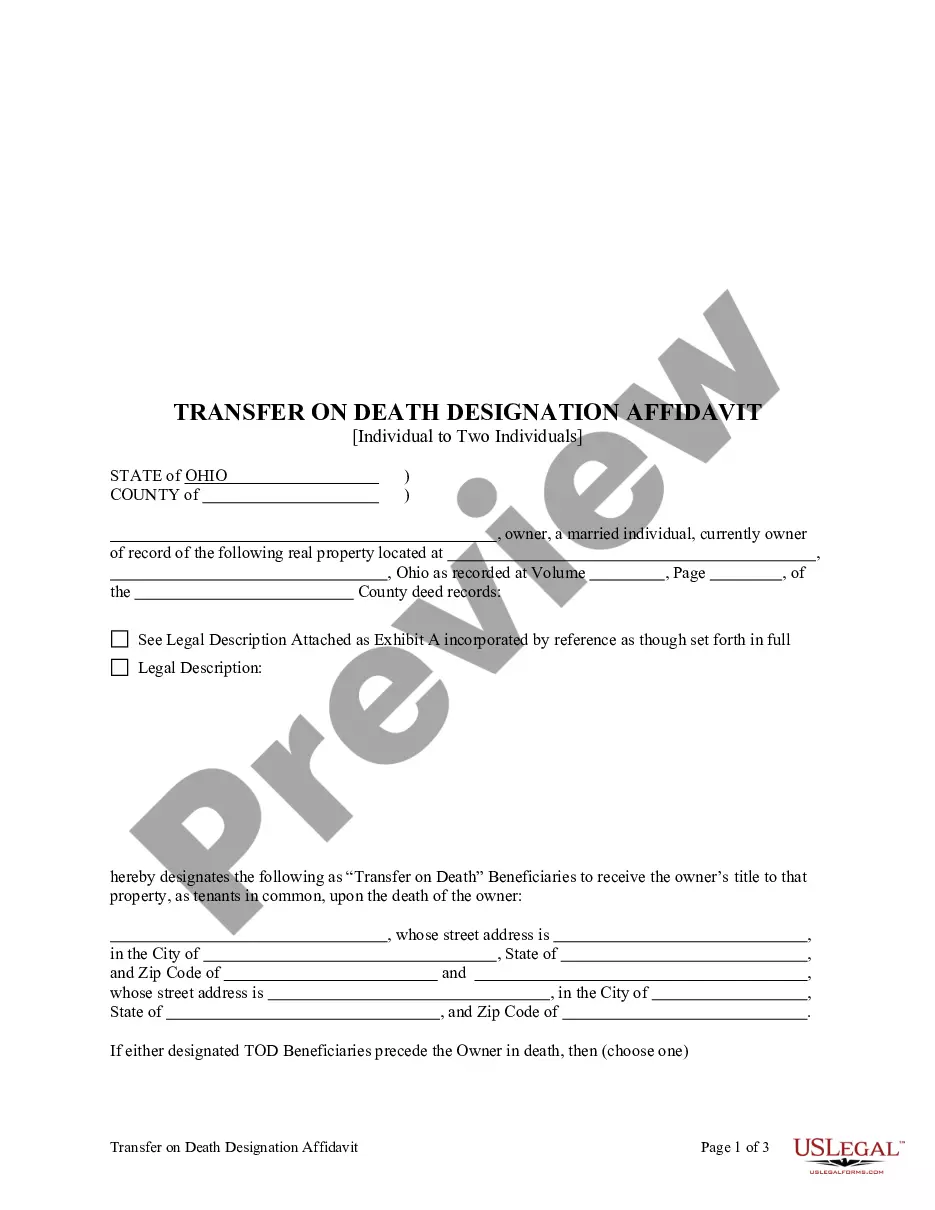
How to fill out Ohio Transfer On Death Designation Affidavit - TOD From Two Individuals To One Individual?
- Visit US Legal Forms and log in to your account or create a new one if you're a first-time user.
- Browse through the comprehensive form library, ensuring you select the correct TOD form that aligns with your local jurisdiction.
- Check the preview mode and read the form description carefully to confirm it meets your specific needs.
- Purchase your chosen document by clicking the Buy Now button and selecting a subscription plan that suits you.
- Complete the payment process using your credit card or PayPal, ensuring your account is active.
- Once the purchase is confirmed, download the completed TOD form to your device from the My Forms section of your profile.
By utilizing US Legal Forms, you benefit from a robust collection of over 85,000 fillable legal documents and the option to consult with premium experts.
Start your legal document journey today and make your TOD transfer seamless by visiting US Legal Forms.
Form popularity
FAQ
Generally, a transfer on death deed (TOD) does not inherently avoid inheritance tax, as tax obligations may depend on the property's value and state laws. However, because a TOD allows property to bypass probate, it can minimize some associated costs. If you are considering a transfer death TOD for sale, it’s wise to consult a tax professional to understand potential implications. This knowledge can help you make informed decisions for your estate.
In Texas, there are specific rules governing transfer on death deeds (TOD). You must complete the deed in writing, and it must be recorded in the county where the property is located. As you're looking into a transfer death TOD for sale, be sure to familiarize yourself with these regulations. Consulting resources like USLegalForms can simplify compliance and help you navigate the requirements.
A transfer on death deed (TOD) may have downsides that you should weigh carefully. One major concern is that a TOD does not protect the property from creditors, and it might not reflect your current wishes if circumstances change. Therefore, when considering a transfer death TOD for sale, it’s crucial to understand these risks. Consulting with an expert can clarify whether a TOD is the right choice for your estate planning.
While it is not legally required to hire a lawyer for a transfer on death deed (TOD), consulting one can offer personalized guidance. A lawyer can help you understand the implications of your decision and ensure the document meets state requirements. If you're exploring transfer death TOD for sale, legal advice may enhance your confidence in the process. It’s a smart approach to securing your property for your heirs.
Choosing between a transfer on death deed (TOD) and naming a beneficiary after death depends on your specific needs. A TOD offers a straightforward way to pass property without going through probate, while a beneficiary designation often applies to financial accounts. If you are considering a transfer death TOD for sale, think about how each option aligns with your estate planning goals. It’s beneficial to review both options carefully for your unique circumstances.
Yes, a Transfer on Death deed generally helps avoid capital gains tax at the time of property transfer. Since the property is transferred upon death, the beneficiaries receive the property at its current market value, which may reduce their tax liability. To learn more about how 'Transfer death tod for sale' strategies can benefit you, consider consulting with professionals or utilizing platforms like uslegalforms.
While a Transfer on Death deed offers many benefits, it does have potential disadvantages. For instance, it may not provide protection against creditors' claims on the estate, and it does not allow for specific conditions to be placed on the inheritance. The 'Transfer death tod for sale' approach can streamline the transfer but requires careful consideration of these potential drawbacks.
To transfer property and avoid capital gains tax, consider establishing a Transfer on Death deed. This method allows you to designate beneficiaries while avoiding taxation during the transfer process, as long as the property is inherited. Utilizing resources like uslegalforms can simplify creating this deed, especially if you're looking into strategies such as 'Transfer death tod for sale'.
A Transfer on Death (TOD) deed enables property owners to transfer their real estate to designated beneficiaries upon their death, without the need for probate. This simple process allows for the seamless transfer of assets while retaining full ownership during the owner's lifetime. If you're considering a TOD for your property, you can explore options like 'Transfer death tod for sale' to understand its benefits clearly.
A transfer on death deed does not inherently avoid inheritance tax. While it streamlines the transfer of property, any potential tax obligations will still apply according to state laws. It's essential to consult with a tax professional to understand the implications of a transfer death TOD for sale, as tax regulations can vary significantly between states.