Transfer Death Tod For Real Estate
Description


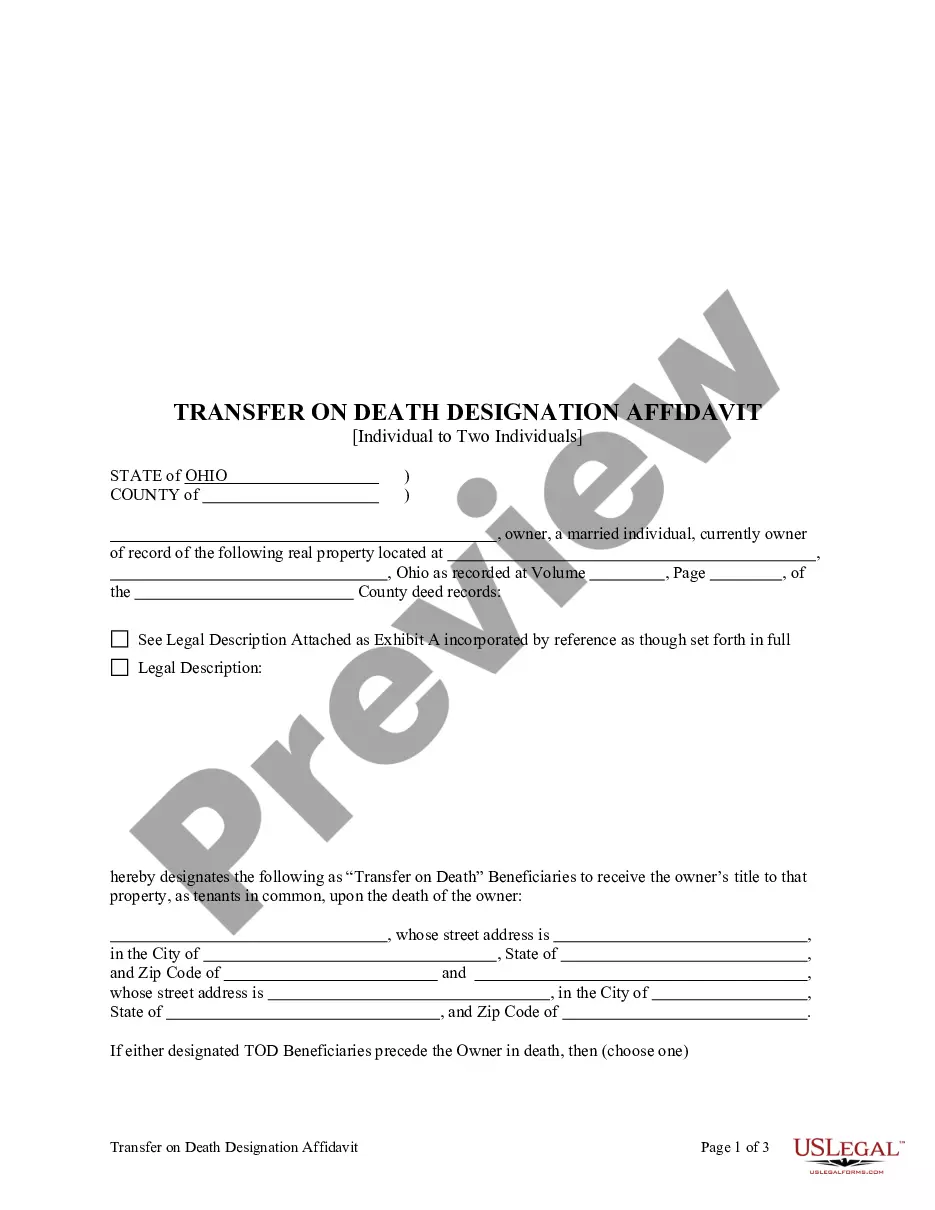
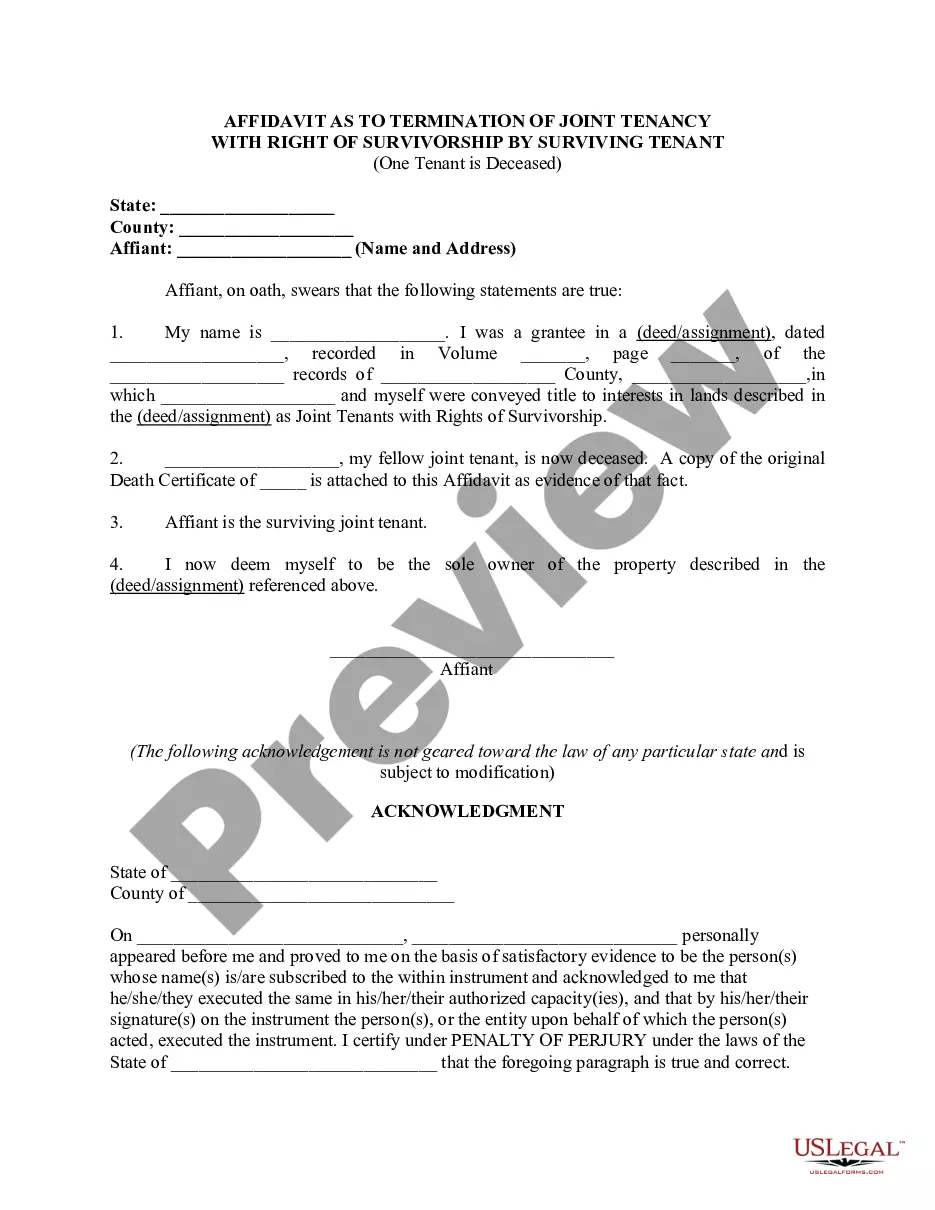
Get your form ready online
Our built-in tools help you complete, sign, share, and store your documents in one place.
Make edits, fill in missing information, and update formatting in US Legal Forms—just like you would in MS Word.
Download a copy, print it, send it by email, or mail it via USPS—whatever works best for your next step.
Sign and collect signatures with our SignNow integration. Send to multiple recipients, set reminders, and more. Go Premium to unlock E-Sign.
If this form requires notarization, complete it online through a secure video call—no need to meet a notary in person or wait for an appointment.
We protect your documents and personal data by following strict security and privacy standards.

Make edits, fill in missing information, and update formatting in US Legal Forms—just like you would in MS Word.

Download a copy, print it, send it by email, or mail it via USPS—whatever works best for your next step.

Sign and collect signatures with our SignNow integration. Send to multiple recipients, set reminders, and more. Go Premium to unlock E-Sign.

If this form requires notarization, complete it online through a secure video call—no need to meet a notary in person or wait for an appointment.

We protect your documents and personal data by following strict security and privacy standards.
Looking for another form?







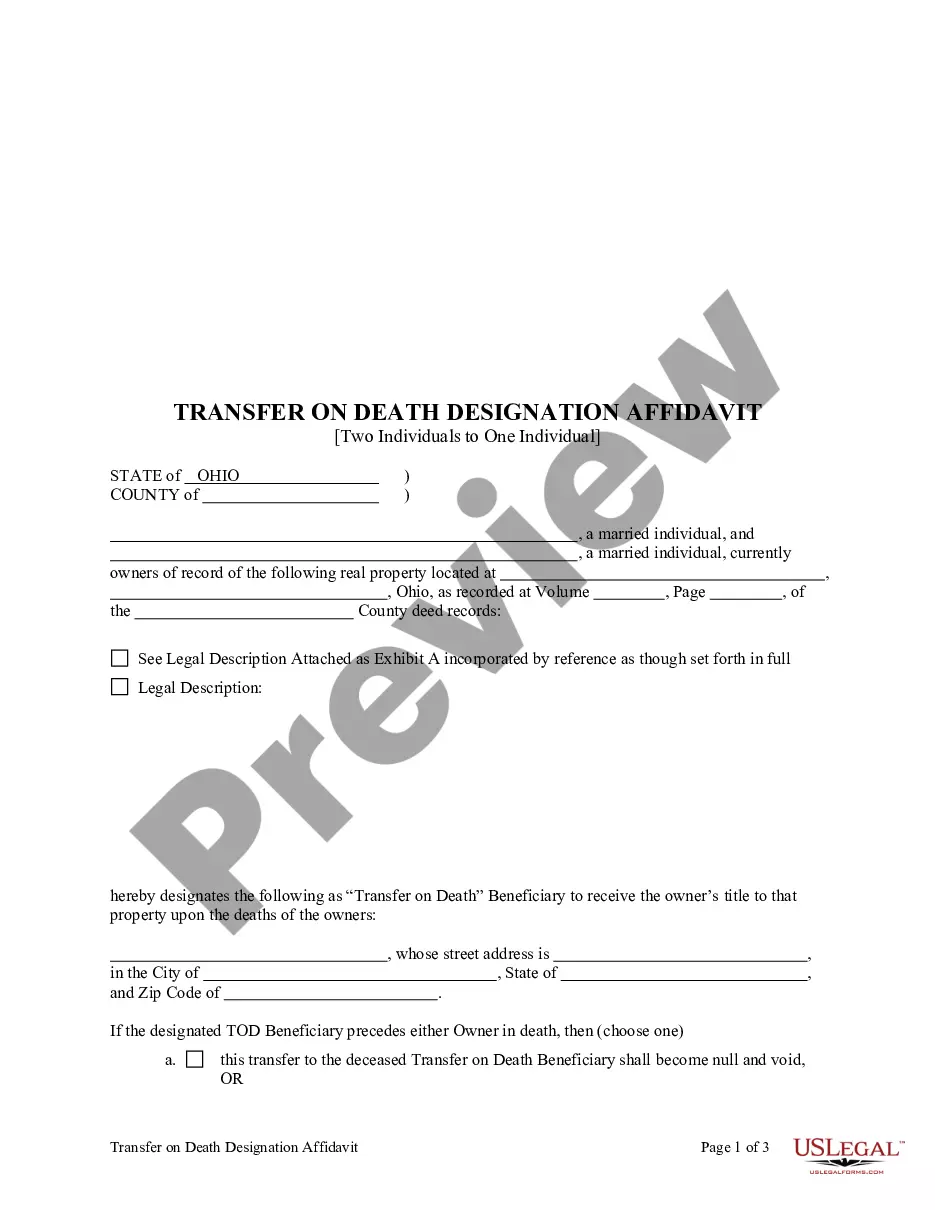
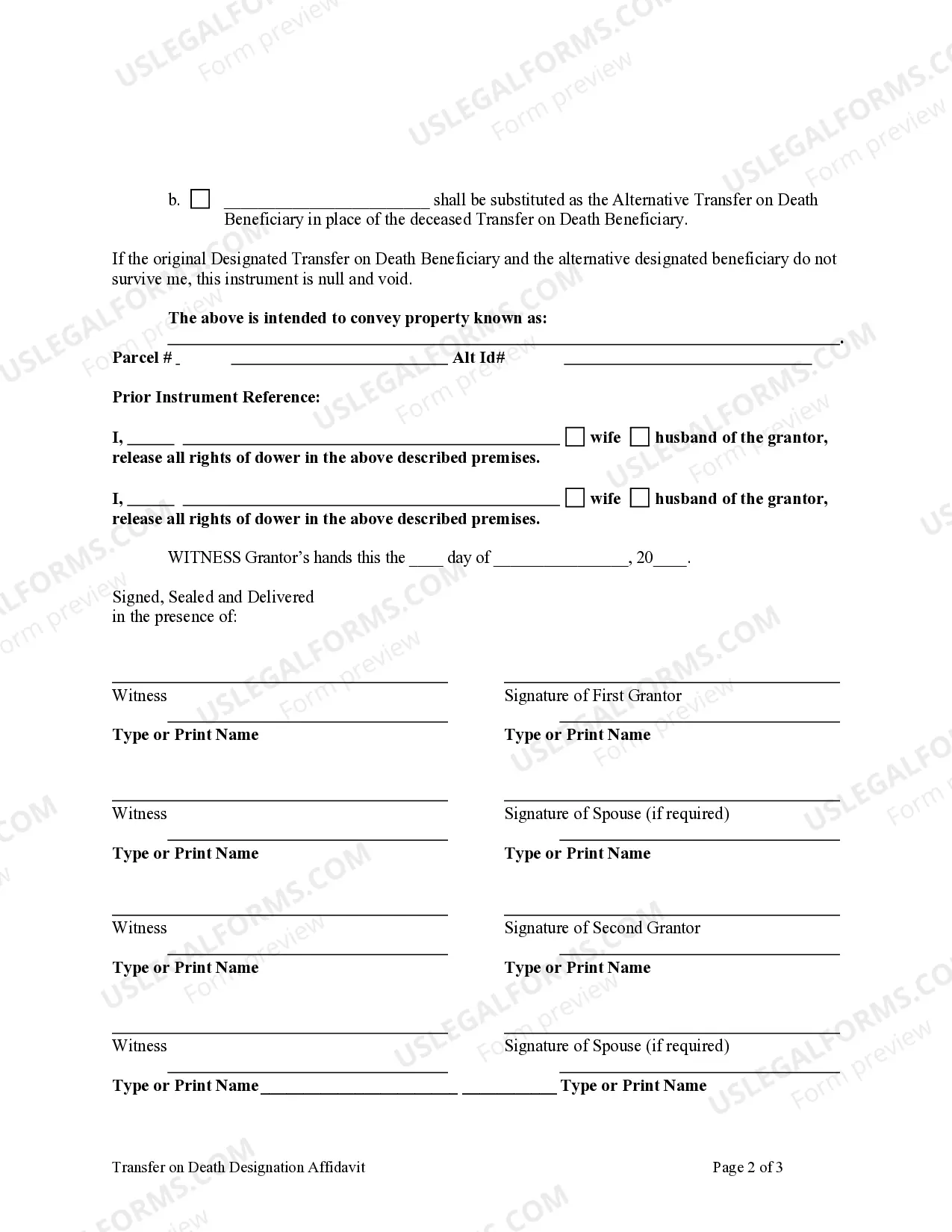
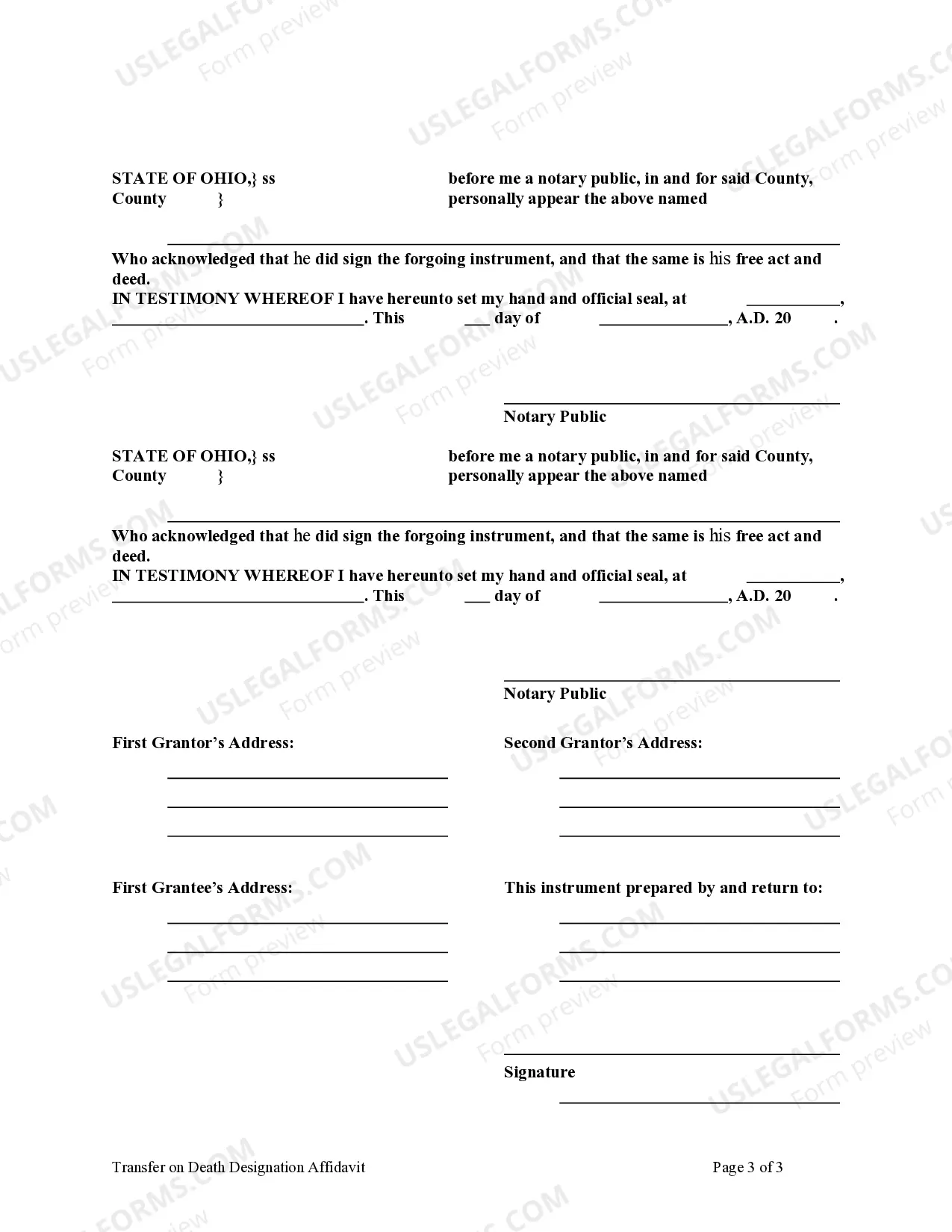
How to fill out Ohio Transfer On Death Designation Affidavit - TOD From Two Individuals To One Individual?
- If you are a returning user, log in to your US Legal Forms account. Check your subscription status—ensure it's active. If not, renew according to your plan.
- For new users, start by browsing the extensive library of over 85,000 legal forms. Search for the appropriate TOD form to meet your specific needs. Be sure to check the form description and preview mode for clarity.
- If the selected form does not meet your needs, utilize the Search tab to find an alternative that fits your requirements.
- Proceed to purchase the document by clicking the Buy Now button. Choose your preferred subscription plan and create an account for full access.
- Complete your purchase using your credit card or PayPal. This secures your subscription and access to various legal forms.
- Download your TOD form, saving it to your device. You can always access it through the My Forms menu in your account.
In conclusion, US Legal Forms offers an empowering solution for both individuals and attorneys when executing legal documents. Their robust collection and expert assistance ensure you have access to precise and legally sound forms.
Get started today and simplify your legal documentation process!
Form popularity
FAQ
The best way to leave property upon death often involves considering a Transfer on Death (TOD) deed for real estate. This option allows you to transfer your property directly to a beneficiary without the delays of probate. Another effective method may include trusts, providing more control over how the property is used or managed. Assess your preferences and consult with a legal expert to determine the most suitable approach for your estate planning.
Yes, New Jersey allows the use of Transfer on Death (TOD) deeds for real estate. This option enables property owners to designate a beneficiary to receive their real estate directly without the need for probate. It's a straightforward method to ensure your property passes smoothly to your chosen beneficiary. Consider using US Legal Forms to access the necessary documents tailored for New Jersey laws.
Yes, New York State allows Transfer on Death (TOD) deeds for real estate. This means you can designate a beneficiary who will receive your property upon your death without going through probate. It's an effective way to transfer assets while you are alive, allowing for easier management of your estate. Utilizing a TOD deed can streamline the transfer process, helping to avoid delays.
One downside of a Transfer on Death (TOD) deed for real estate is that it may conflict with other estate planning documents. For instance, if you have a will or trust that outlines property distribution, the TOD deed may override that plan. Additionally, you cannot control the distribution of property after your death if the beneficiary cannot manage the property or has financial issues. Therefore, it's crucial to consider your overall estate plan when using a TOD.
A Transfer on Death (TOD) for real estate allows property owners to pass their assets directly to beneficiaries without going through probate. This approach simplifies the transfer process, ensuring your loved ones receive the property quickly and efficiently. By utilizing a TOD, you maintain full control of your property while you're alive, and the transfer happens automatically upon your death. For those looking to navigate this process, US Legal Forms offers resources and templates to help you create a secure Transfer Death TOD for real estate.
One main disadvantage of a transfer on death deed (TOD) is that it does not provide any control over the property during the owner's life. If situations change, the owner may find it challenging to revoke or change the beneficiary without proper guidance. Additionally, unintended consequences may arise with joint ownership. Evaluating your specific needs can help determine whether a TOD is suitable.
While it is not mandatory to hire a lawyer to create a transfer on death deed (TOD), it is highly advisable. A legal expert can ensure the document adheres to your state’s specific laws, preventing potential issues later. Using platforms like USLegalForms can guide you through the necessary steps, making the process more straightforward and legally sound.
A transfer on death deed (TOD) allows property to bypass probate, which is often referred to as 'avoiding estate.' However, it does not eliminate the property from the overall estate for tax purposes. The real estate will still be included in the deceased's estate, impacting the value and distribution after death. Understanding these nuances can aid in effective estate planning.
Transfer on death accounts can pose several problems. They may unintentionally exclude some heirs, leading to potential conflicts. Furthermore, if the owner of the property becomes incapacitated, the TOD does not provide access for managing the property. It's essential to evaluate if a TOD is the best option for your situation.
While a transfer on death deed (TOD) simplifies the process of transferring property, it has some drawbacks. One major issue is that it does not protect the property from creditors. Additionally, a TOD may not accommodate complex family situations well, which may lead to disputes among heirs. Always consider these aspects before choosing a TOD for real estate.