Transfer Death Individual For A Child
Description


Get your form ready online
Our built-in tools help you complete, sign, share, and store your documents in one place.
Make edits, fill in missing information, and update formatting in US Legal Forms—just like you would in MS Word.
Download a copy, print it, send it by email, or mail it via USPS—whatever works best for your next step.
Sign and collect signatures with our SignNow integration. Send to multiple recipients, set reminders, and more. Go Premium to unlock E-Sign.
If this form requires notarization, complete it online through a secure video call—no need to meet a notary in person or wait for an appointment.
We protect your documents and personal data by following strict security and privacy standards.

Make edits, fill in missing information, and update formatting in US Legal Forms—just like you would in MS Word.

Download a copy, print it, send it by email, or mail it via USPS—whatever works best for your next step.

Sign and collect signatures with our SignNow integration. Send to multiple recipients, set reminders, and more. Go Premium to unlock E-Sign.

If this form requires notarization, complete it online through a secure video call—no need to meet a notary in person or wait for an appointment.

We protect your documents and personal data by following strict security and privacy standards.
Looking for another form?










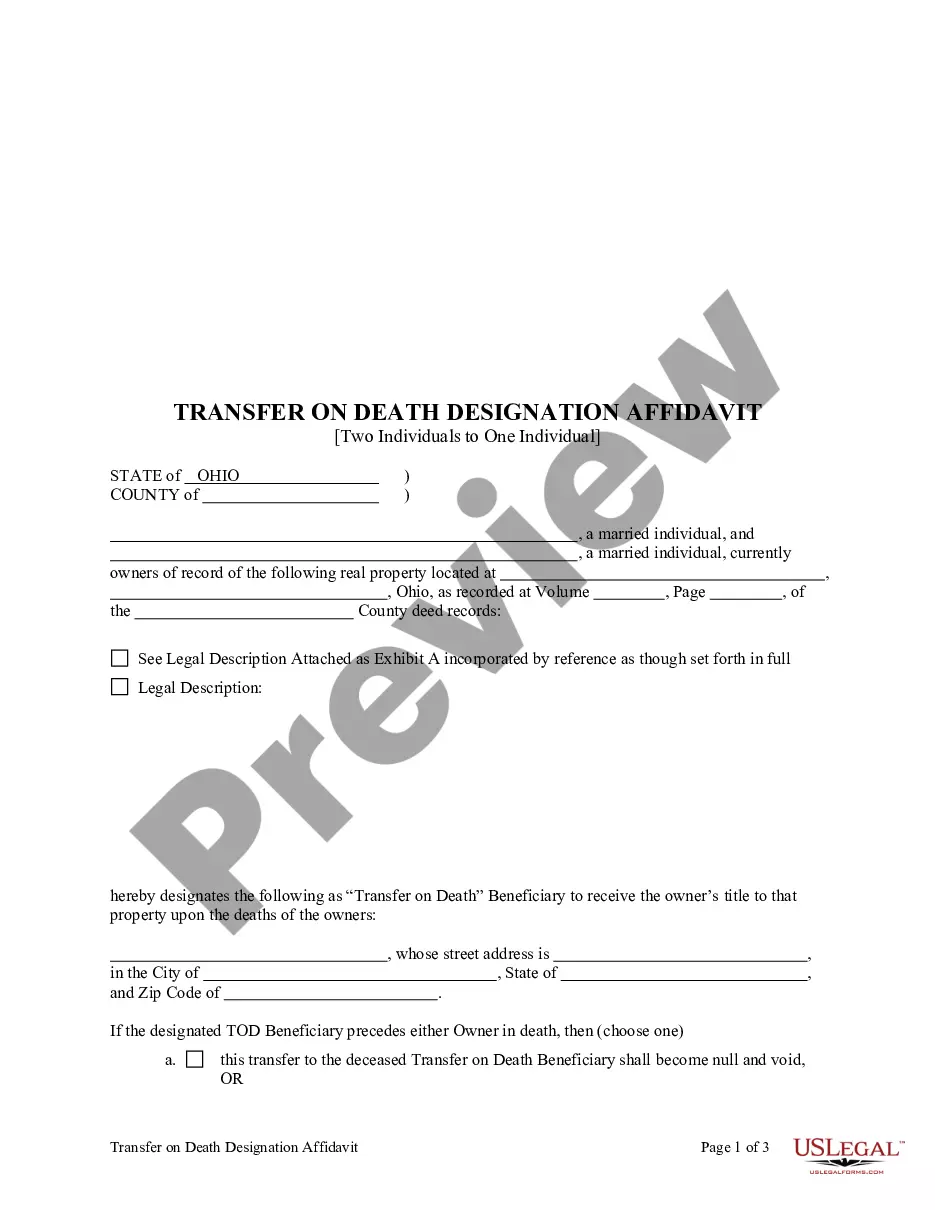
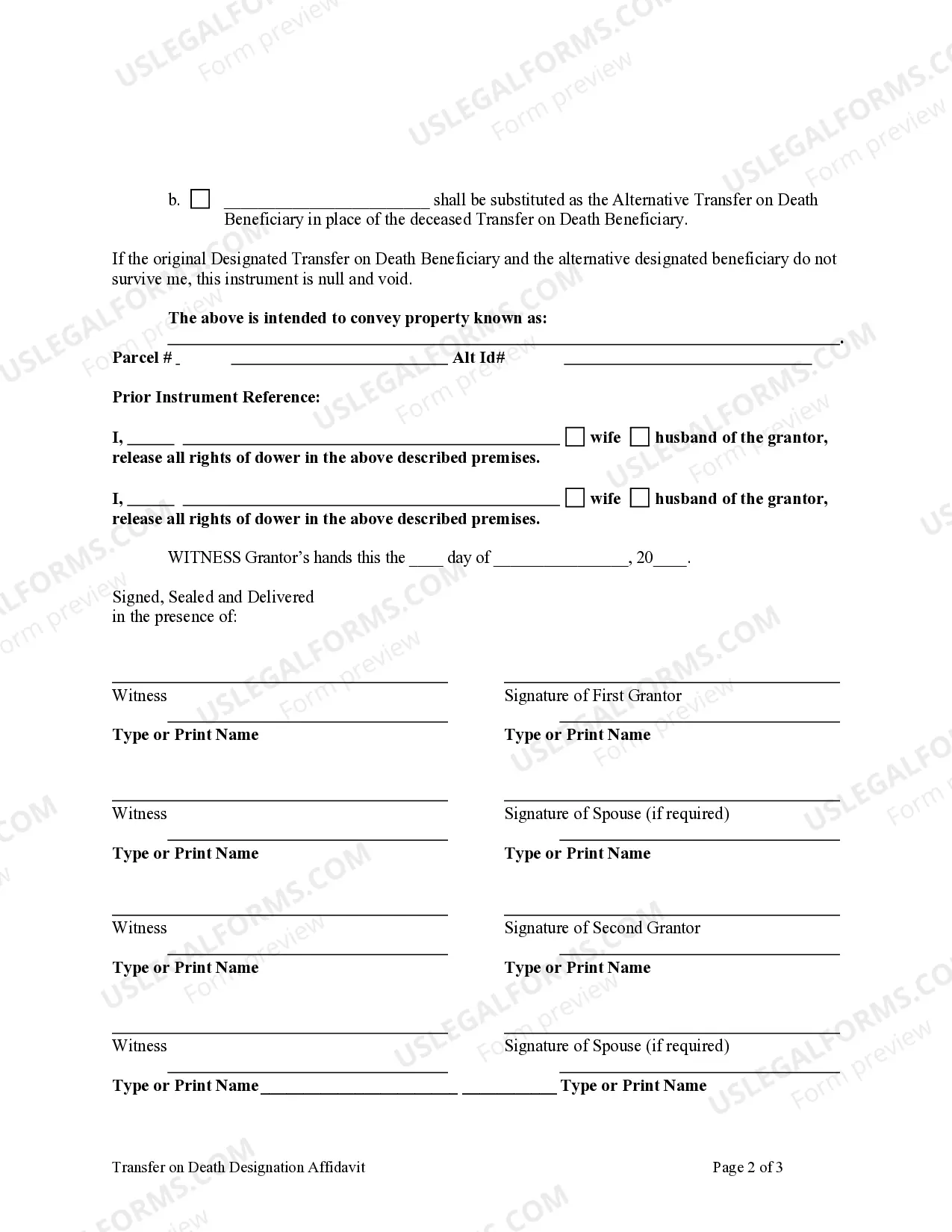
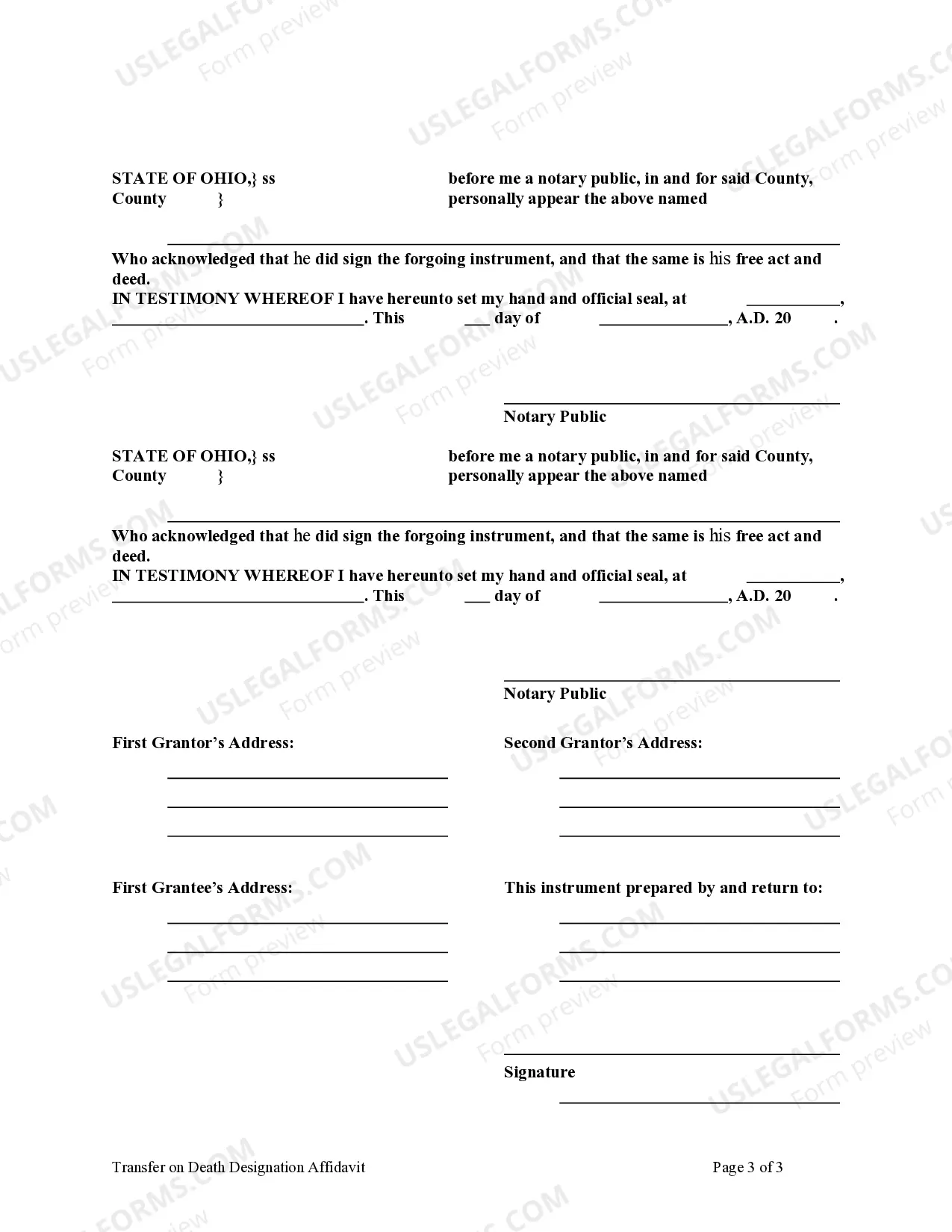
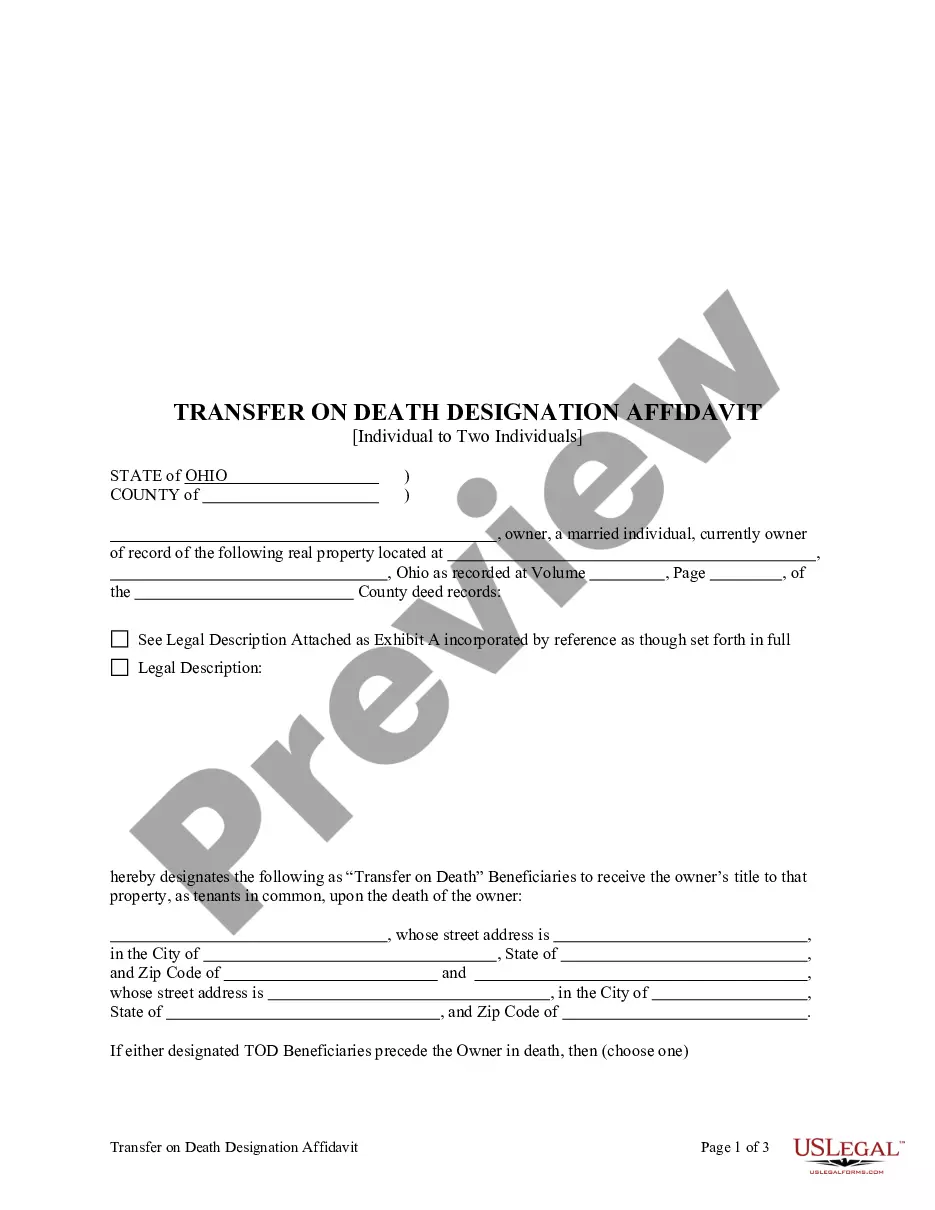
How to fill out Ohio Transfer On Death Designation Affidavit - TOD From Two Individuals To One Individual?
- Log in to your US Legal Forms account if you are a returning user. Click the Download button to save the form you need, ensuring your subscription is active.
- For new users, start by browsing the comprehensive library. Review the form descriptions and check the Preview mode to find the document that best suits your needs.
- Use the Search tab if necessary to find additional templates that match your requirements. Make sure the chosen form aligns with local legal standards.
- Click the Buy Now button to select your desired subscription plan and create an account to access the forms library.
- Complete the purchase by entering your payment details via credit card or PayPal.
- Download the completed form to your device. You can access it later in the My Forms section of your account.
US Legal Forms equips users with more forms than competitors, offering over 85,000 fillable and editable legal documents. This extensive collection, combined with access to premium experts for form assistance, ensures that your documents are prepared correctly and efficiently.
Simplify the process of transferring legal ownership today with US Legal Forms. Start now to ensure your forms are accurate and compliant!
Form popularity
FAQ
Deciding whether a TOD deed is better than naming a beneficiary depends on your specific situation, particularly when you think about the transfer death individual for a child. A TOD deed allows for a smoother transfer of assets upon death, avoiding probate. While a beneficiary designation can also accomplish this, a TOD deed may offer more control over how and when your assets transfer. Each option has its benefits, so consider your needs carefully to make the best choice.
Many people wonder if they need a lawyer for a transfer on death (TOD) deed, especially when considering the transfer death individual for a child. While it is not strictly necessary to hire a lawyer, having professional guidance can ensure the process goes smoothly and adheres to legal requirements. Using a platform like US Legal Forms can provide you with the templates and resources needed to create a TOD deed without the legal jargon. This can help you clearly understand the process, allowing you to make informed decisions.
Setting up a transfer on death can be a good idea for many people, as it simplifies the asset transfer process and avoids probate. However, it may not suit everyone's financial situation or goals. By exploring options with uslegalforms, you can determine if a TOD aligns with your plans for the transfer death individual for a child.
Problems with TOD accounts may include confusion over asset ownership if multiple beneficiaries exist, and potential conflicts if changes are not documented properly. Furthermore, if a beneficiary is not capable of managing the asset after your death, harder consequences may arise. Resources from uslegalforms can help you address these potential issues effectively.
While you do not necessarily need a lawyer to establish a transfer on death, having legal guidance can be beneficial. The nuances of state laws and asset management can complicate the process. With uslegalforms, you can find the necessary documentation and support to assist you in setting up a TOD properly.
An individual transfer on death account is a specific type of account that allows you to designate beneficiaries who will receive the account's assets upon your death. This setup helps bypass the probate process, providing a smoother transfer of ownership. Utilizing uslegalforms can simplify the process of setting up this type of account and ensure that it aligns with your estate planning goals.
The choice between a TOD and naming a beneficiary depends on your financial goals and assets. A TOD automatically transfers ownership upon death, streamlining the process, while a beneficiary designation is often used for accounts like insurance and retirement plans. Consulting uslegalforms can help you understand the implications of each option regarding the transfer death individual for a child.
One disadvantage of a transfer on death is that it only covers specific assets and may not provide a comprehensive estate plan. Additionally, the beneficiary does not have access to the asset during your lifetime, which can create challenges if you need assistance managing that property. Evaluating your entire estate plan with uslegalforms can help you address these limitations.
Whether TOD is better than a trust depends on your specific situation. A TOD allows assets to transfer directly to beneficiaries without going through probate, while a trust can offer more control and flexibility over distributions. It's worth exploring both options with uslegalforms to determine which method fits your needs best when planning for the transfer death individual for a child.
The main drawbacks of transfer on death (TOD) include potential complications during estate settlement, the possibility of tax implications, and a lack of control over asset distribution. For instance, if the designated beneficiary passes away before you, the asset may not transfer as intended. Using uslegalforms can help you navigate these challenges and ensure your wishes are clearly outlined.