Transfer Death Designation Form With Certificate
Description


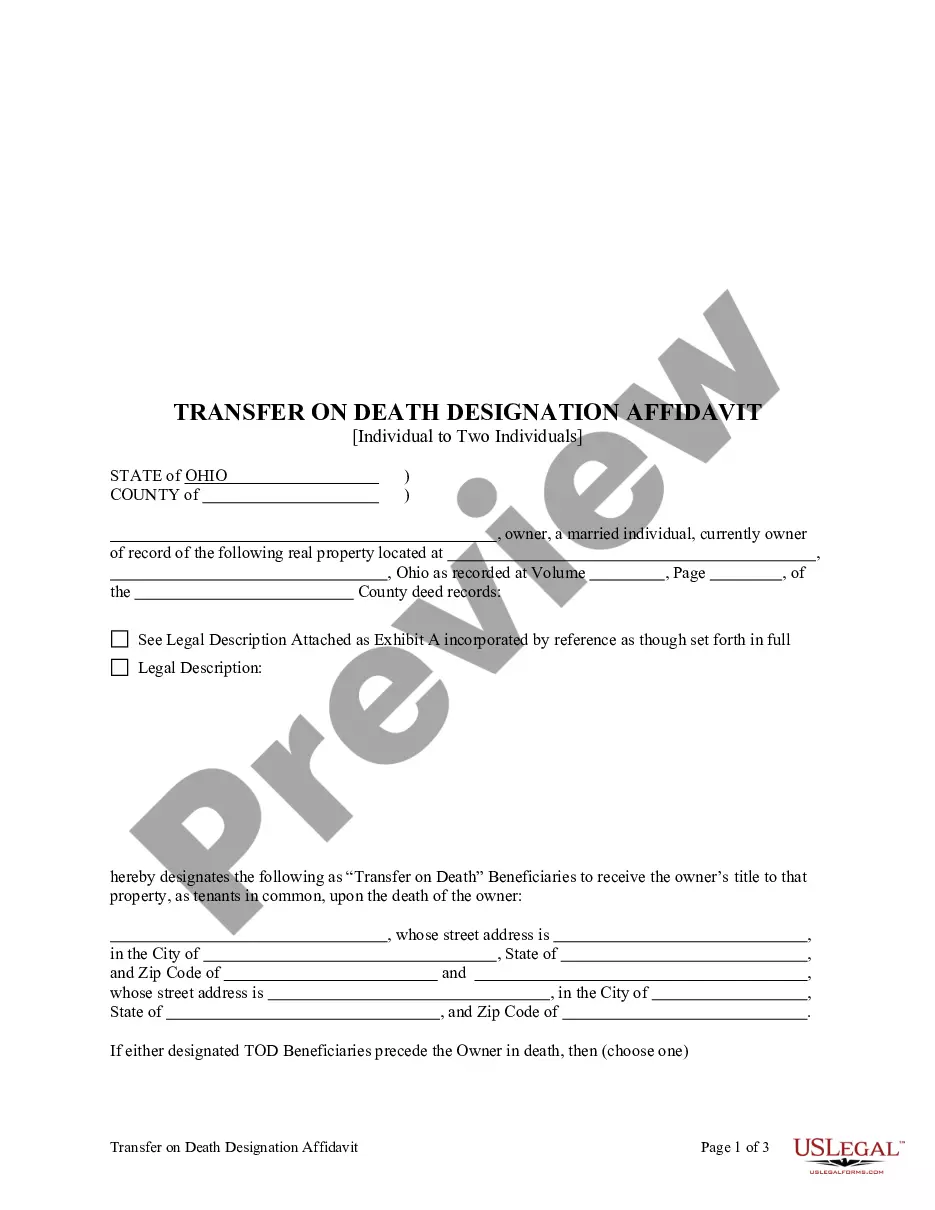
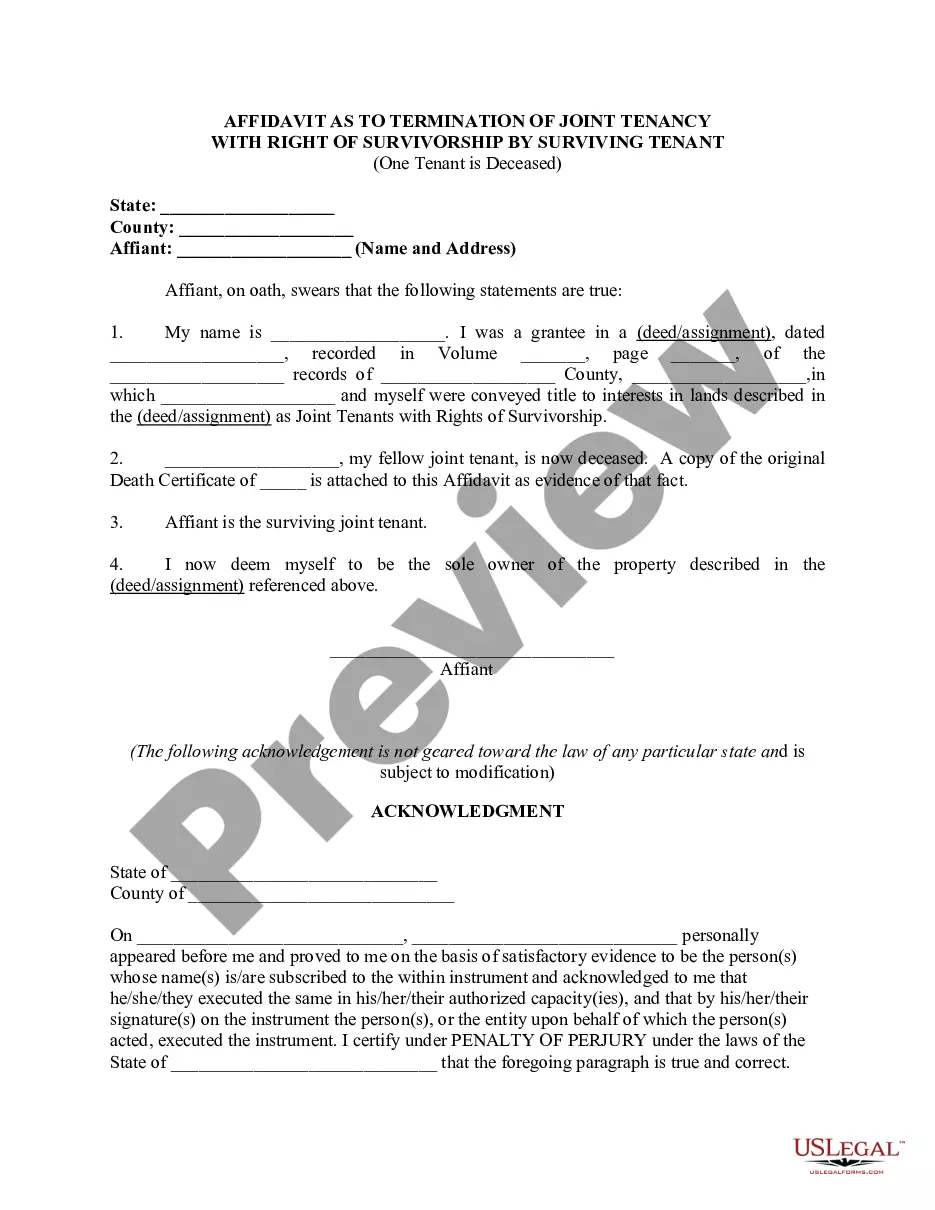
Get your form ready online
Our built-in tools help you complete, sign, share, and store your documents in one place.
Make edits, fill in missing information, and update formatting in US Legal Forms—just like you would in MS Word.
Download a copy, print it, send it by email, or mail it via USPS—whatever works best for your next step.
Sign and collect signatures with our SignNow integration. Send to multiple recipients, set reminders, and more. Go Premium to unlock E-Sign.
If this form requires notarization, complete it online through a secure video call—no need to meet a notary in person or wait for an appointment.
We protect your documents and personal data by following strict security and privacy standards.

Make edits, fill in missing information, and update formatting in US Legal Forms—just like you would in MS Word.

Download a copy, print it, send it by email, or mail it via USPS—whatever works best for your next step.

Sign and collect signatures with our SignNow integration. Send to multiple recipients, set reminders, and more. Go Premium to unlock E-Sign.

If this form requires notarization, complete it online through a secure video call—no need to meet a notary in person or wait for an appointment.

We protect your documents and personal data by following strict security and privacy standards.
Looking for another form?








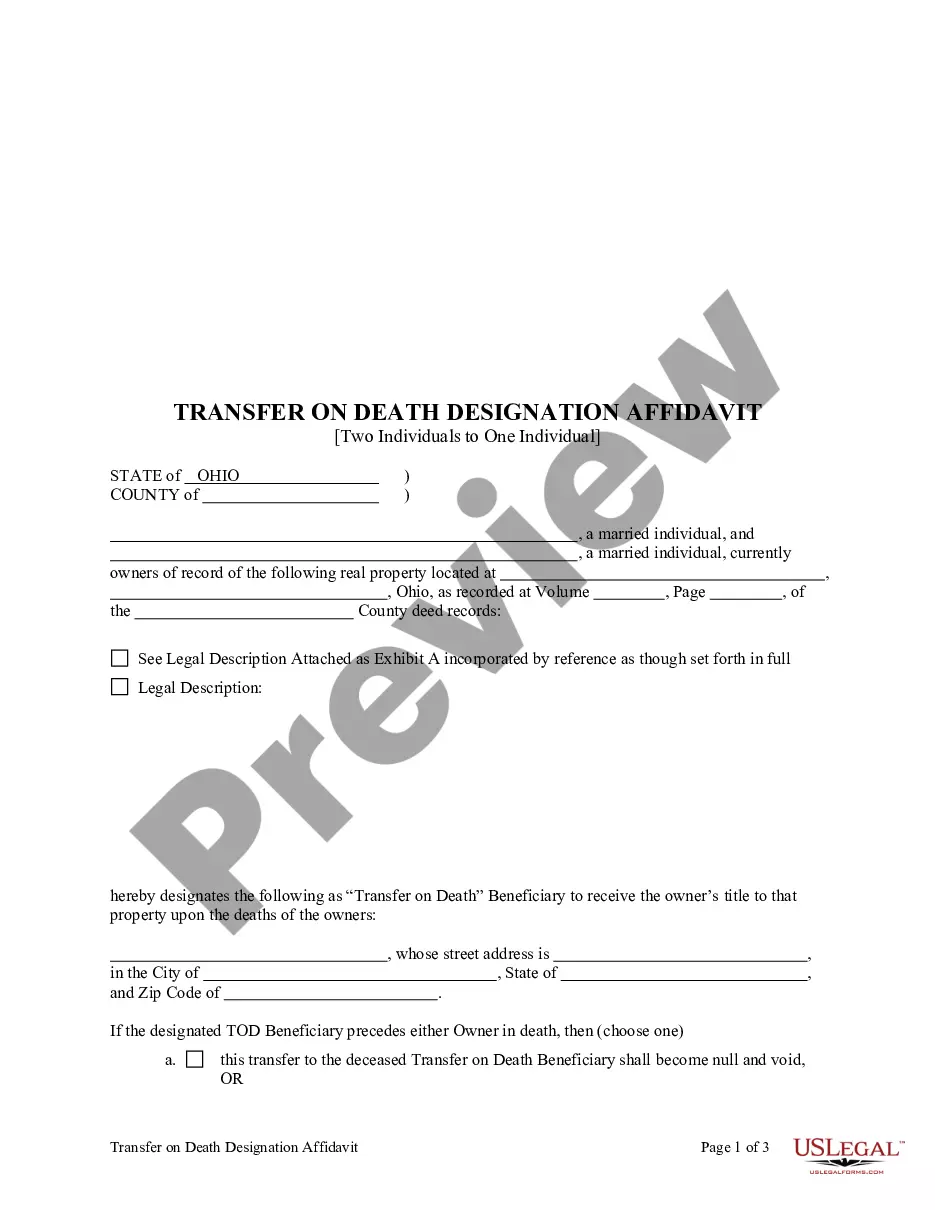
How to fill out Ohio Transfer On Death Designation Affidavit - TOD From Two Individuals To One Individual?
Managing legal documents can be daunting, even for the most proficient professionals.
If you are in search of a Transfer Death Designation Form With Certificate and cannot find the time to look for the correct and latest version, the tasks may become arduous.
US Legal Forms accommodates any requirements you might have, from personal to business documents, all in one place.
Utilize advanced tools to complete and manage your Transfer Death Designation Form With Certificate.
Here are the steps to follow after downloading the form you need: verify that it is the correct form by previewing it and reviewing its description, ensure the sample is recognized in your state or county, choose Buy Now when you are ready, select a subscription plan, find the format you wish, and Download, complete, sign, print, and submit your documents. Enjoy the US Legal Forms online repository, backed by 25 years of expertise and reliability. Streamline your daily document management into a simple and user-friendly experience today.
- Access a resource library of articles, guides, and materials related to your situation and needs.
- Save time and energy searching for the documents you require by using US Legal Forms’ sophisticated search and Preview tool to locate the Transfer Death Designation Form With Certificate and obtain it.
- If you have a monthly subscription, Log In to your US Legal Forms account, search for the form, and retrieve it.
- Check your My documents tab to see the documents you have previously downloaded and manage your folders as desired.
- If this is your first experience with US Legal Forms, create an account for unlimited access to all the platform's benefits.
- A comprehensive online form repository can be a significant advantage for anyone needing to handle these matters effectively.
- US Legal Forms stands as a leader in online legal forms, offering over 85,000 state-specific legal documents accessible at any time.
- With US Legal Forms, you can access state- or county-specific legal and business forms.
Form popularity
FAQ
A transfer on death certificate is a legal document that outlines the transfer of your property to a designated beneficiary upon your death. This document simplifies the transfer process and avoids probate, allowing your beneficiary to claim the property without legal hurdles. By completing a transfer death designation form with certificate, you ensure that your property passes smoothly to your loved ones according to your wishes.
You should file your transfer death designation form with certificate in the county where the property is located. This filing ensures that your wishes are documented and legally recognized. Typically, you will need to submit the form to the county recorder's office. Make sure to keep copies for your records and inform your beneficiaries about the filing.
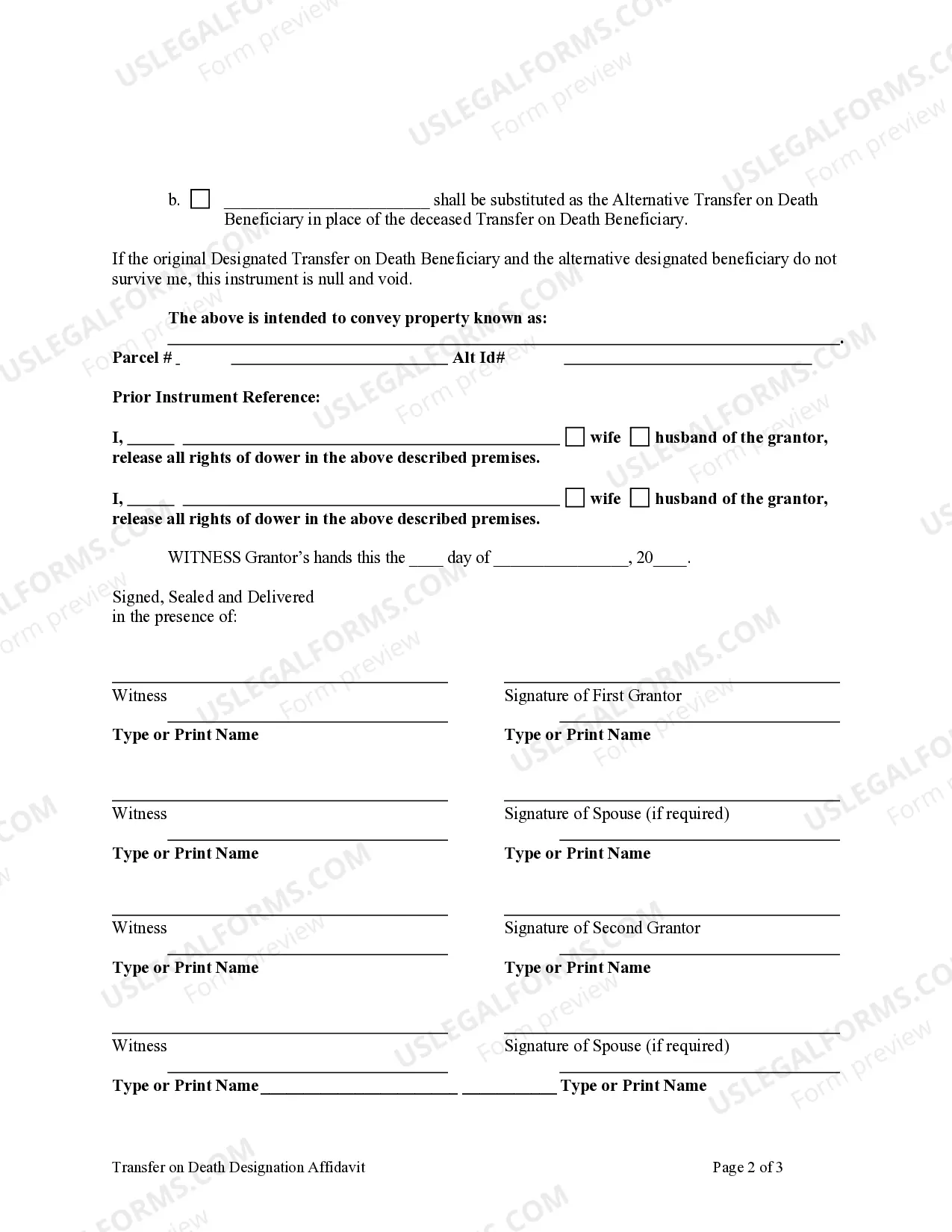
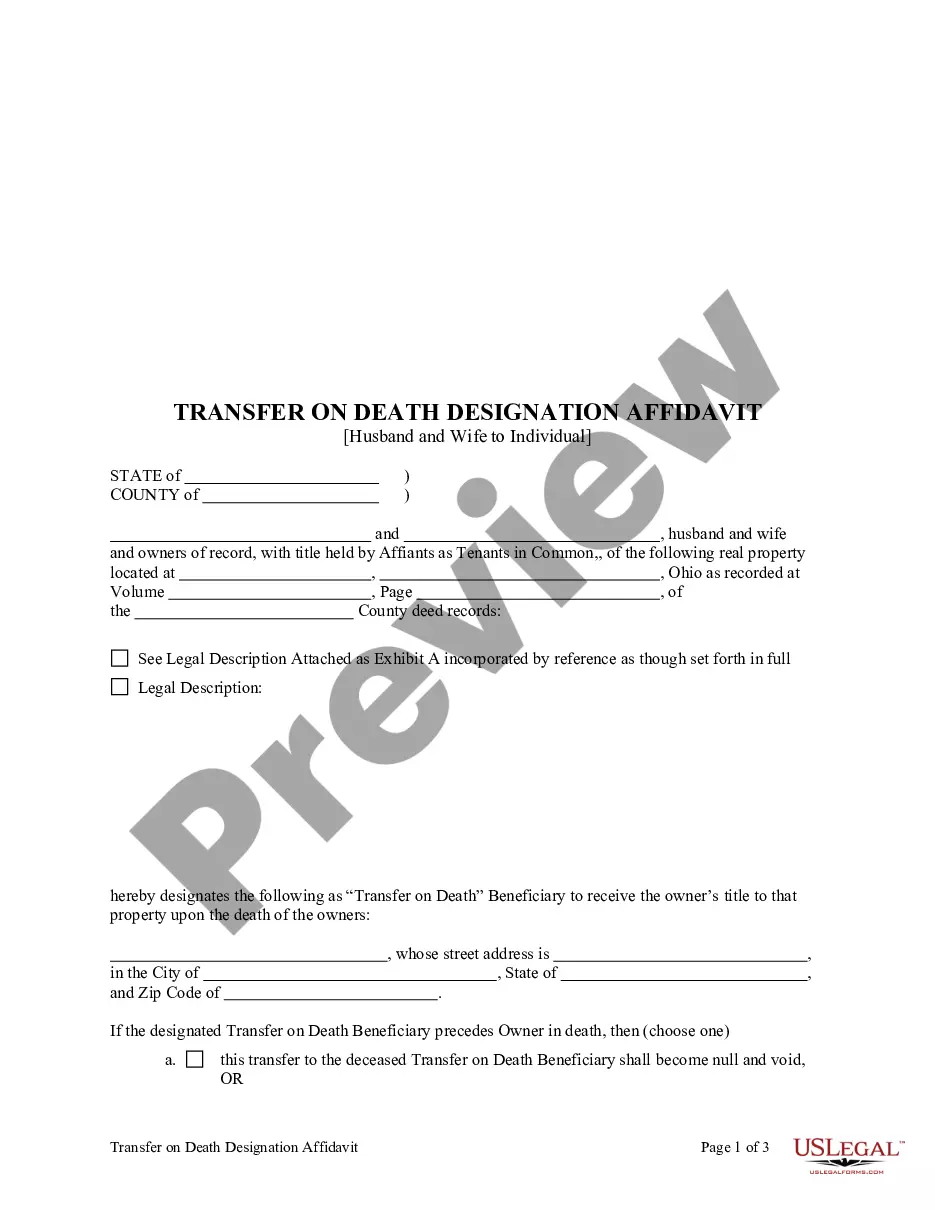
Filling out a transfer death designation form with certificate is straightforward. Start by providing your personal information, including your name and address. Next, include details about the property you wish to transfer, along with the names and addresses of your beneficiaries. Ensure that you sign and date the form, as this is crucial for its validity.
Instructions for filling out deeds Read the entire form carefully. ... Enter all the names of the current owners of the property as the grantors on the deed. Enter all the names of the persons you want to be owners of the property as the grantees. ... Attach the legal description of the property from the prior deed.
Step 1: Locate the Current Deed for the Property. ... Step 2: Read the ?Common Questions? Listed on Page 2 of the TOD Deed. ... Step 3: Fill Out the TOD Deed (Do Not Sign) ... Step 4: Sign in Front of a Notary; Have Two Witnesses Sign. ... Step 5: Record the Deed at the Recorder's Office within 60 Days of Signing It.
Disability: If your beneficiary has a disability or acquires one from an accident or illness before death. In that case, the POD and TOD funds could end up with the government or jeopardize their Medicaid and SSI.
What Is the Difference Between TOD and Beneficiary? A transfer on death is an instrument that transfers ownership of specific accounts and assets to someone. A beneficiary is someone that is named to receive something of value.
There are various components to the titling of assets: One is using a transfer on death (TOD) designation, generally used for investment accounts, or a payable on death (POD) designation, used for bank accounts, which act as beneficiary designations, stating to whom account assets are to pass when the owner dies.