Transfer Death Designation Form For Qualified Accounts
Description


Get your form ready online
Our built-in tools help you complete, sign, share, and store your documents in one place.
Make edits, fill in missing information, and update formatting in US Legal Forms—just like you would in MS Word.
Download a copy, print it, send it by email, or mail it via USPS—whatever works best for your next step.
Sign and collect signatures with our SignNow integration. Send to multiple recipients, set reminders, and more. Go Premium to unlock E-Sign.
If this form requires notarization, complete it online through a secure video call—no need to meet a notary in person or wait for an appointment.
We protect your documents and personal data by following strict security and privacy standards.

Make edits, fill in missing information, and update formatting in US Legal Forms—just like you would in MS Word.

Download a copy, print it, send it by email, or mail it via USPS—whatever works best for your next step.

Sign and collect signatures with our SignNow integration. Send to multiple recipients, set reminders, and more. Go Premium to unlock E-Sign.

If this form requires notarization, complete it online through a secure video call—no need to meet a notary in person or wait for an appointment.

We protect your documents and personal data by following strict security and privacy standards.
Looking for another form?








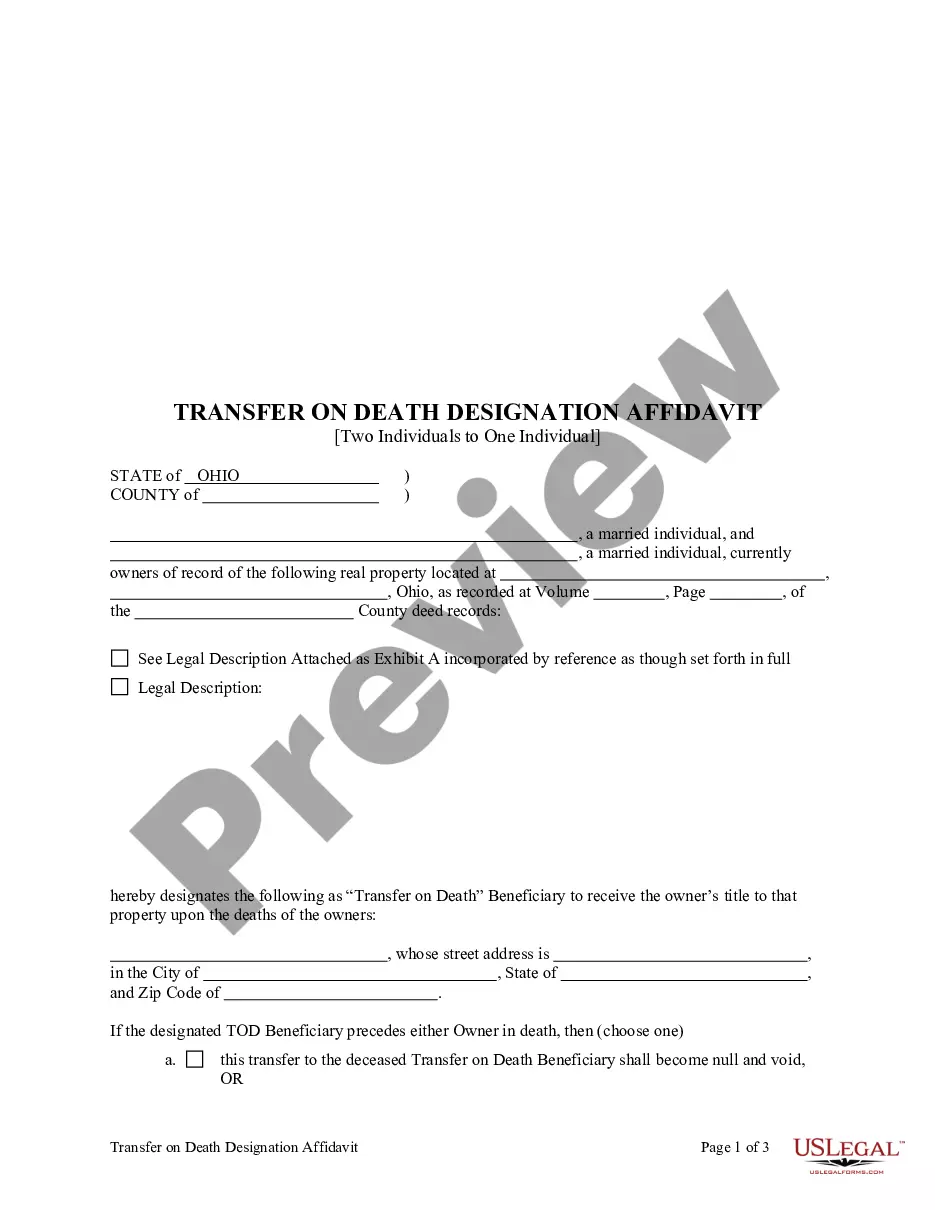
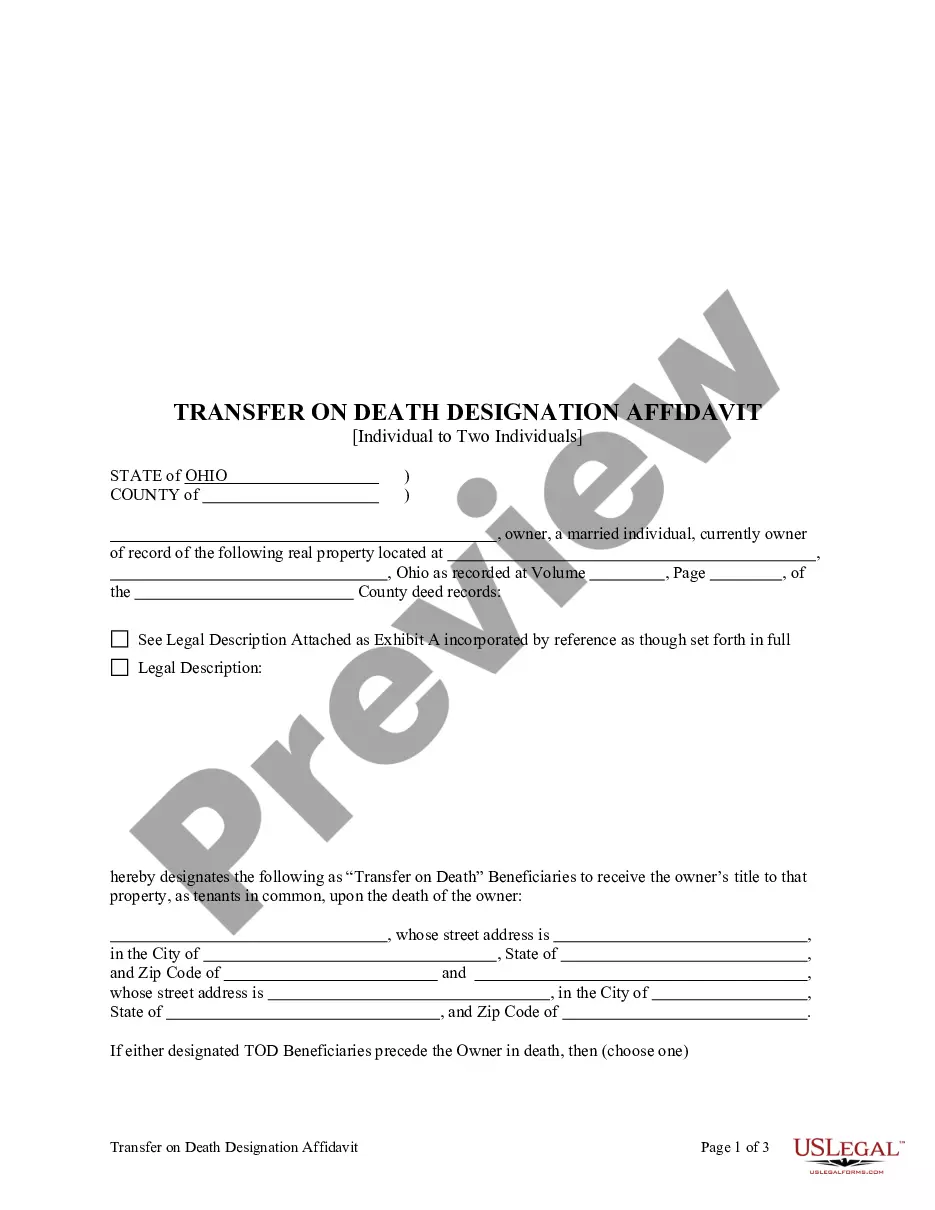
How to fill out Ohio Transfer On Death Designation Affidavit - TOD From Two Individuals To One Individual?
Creating legal documents from the ground up can frequently be daunting.
Some situations may require extensive research and significant financial investment.
If you seek a simpler and more economical method of preparing the Transfer Death Designation Form For Qualified Accounts or any other paperwork without unnecessary complications, US Legal Forms is always available to assist you.
Our online repository of over 85,000 current legal documents encompasses nearly every facet of your financial, legal, and personal affairs.
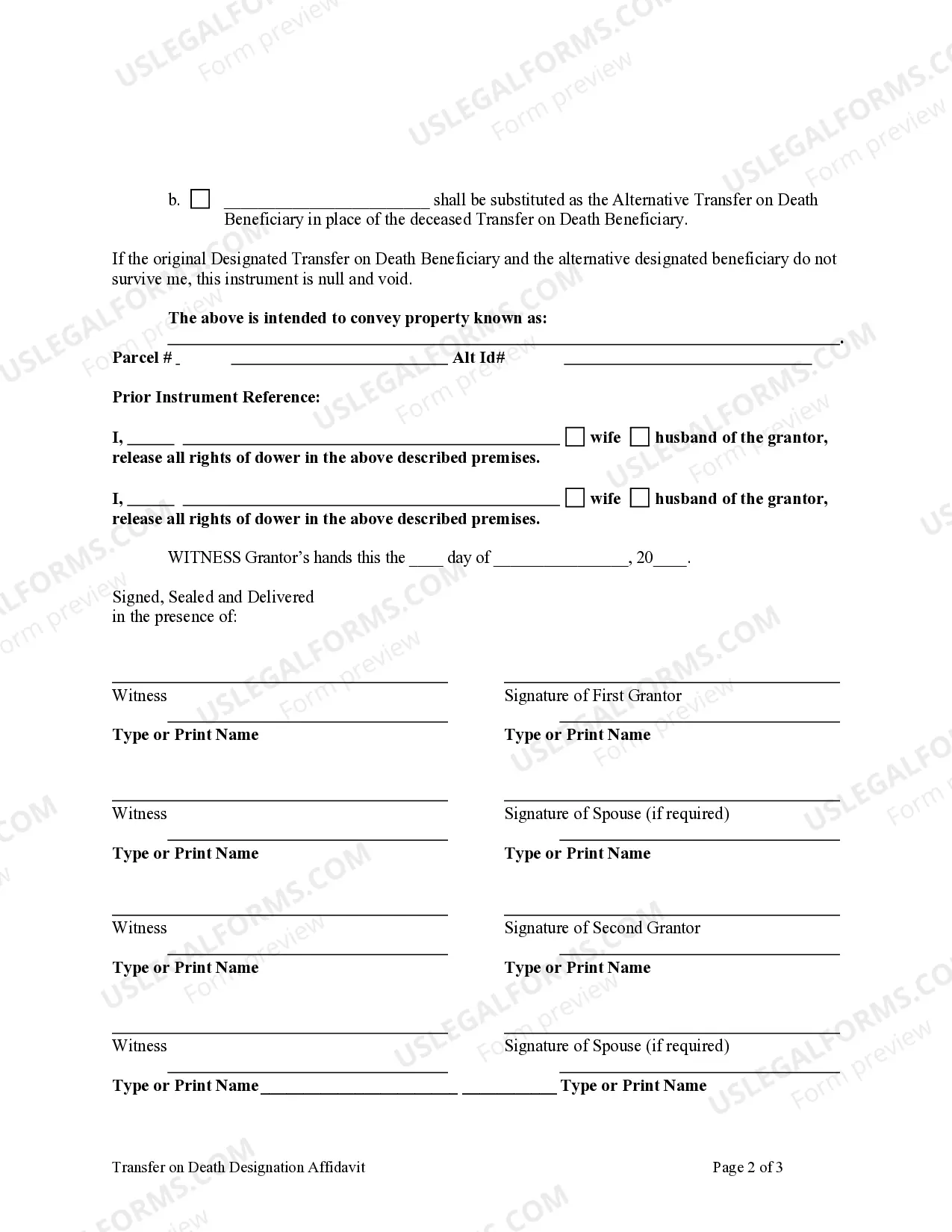
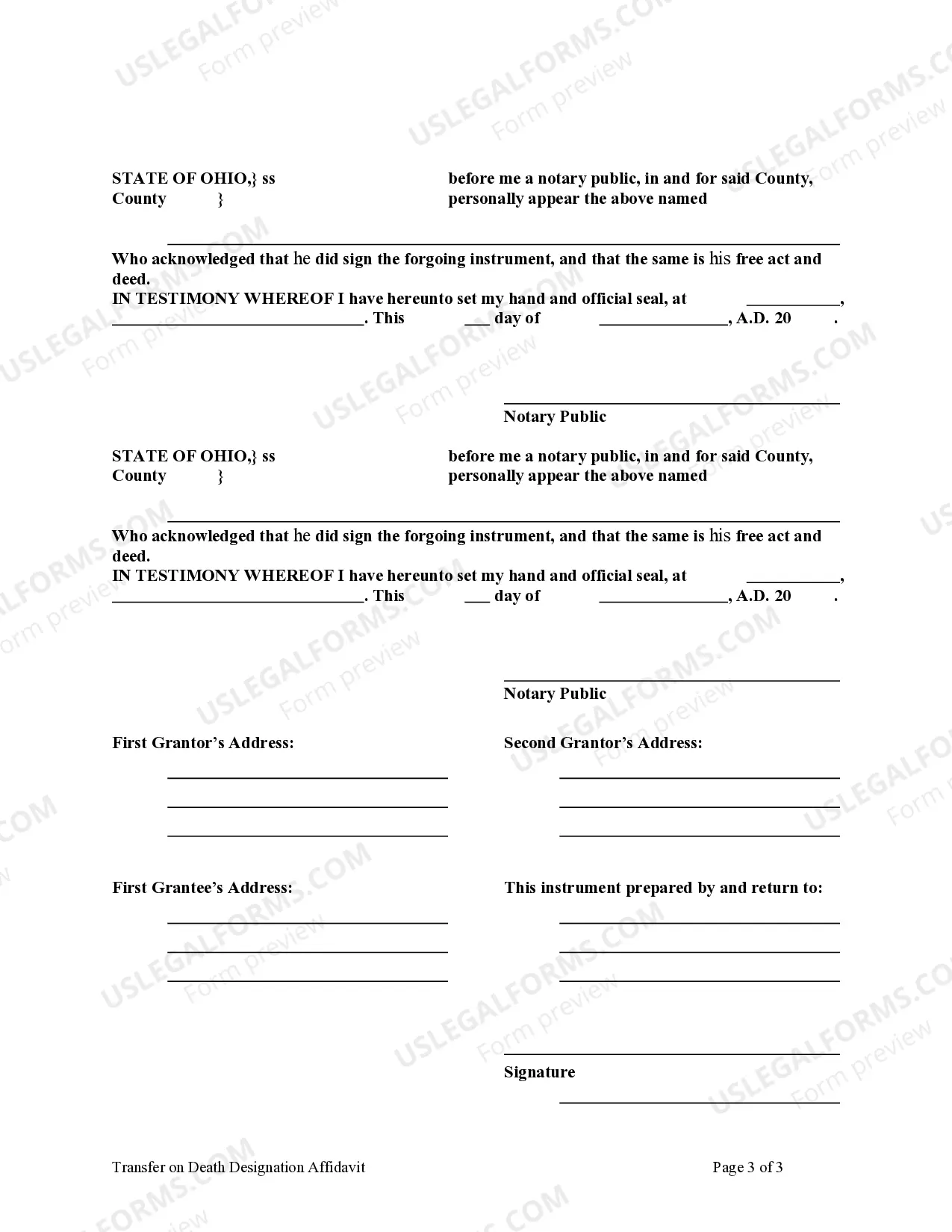
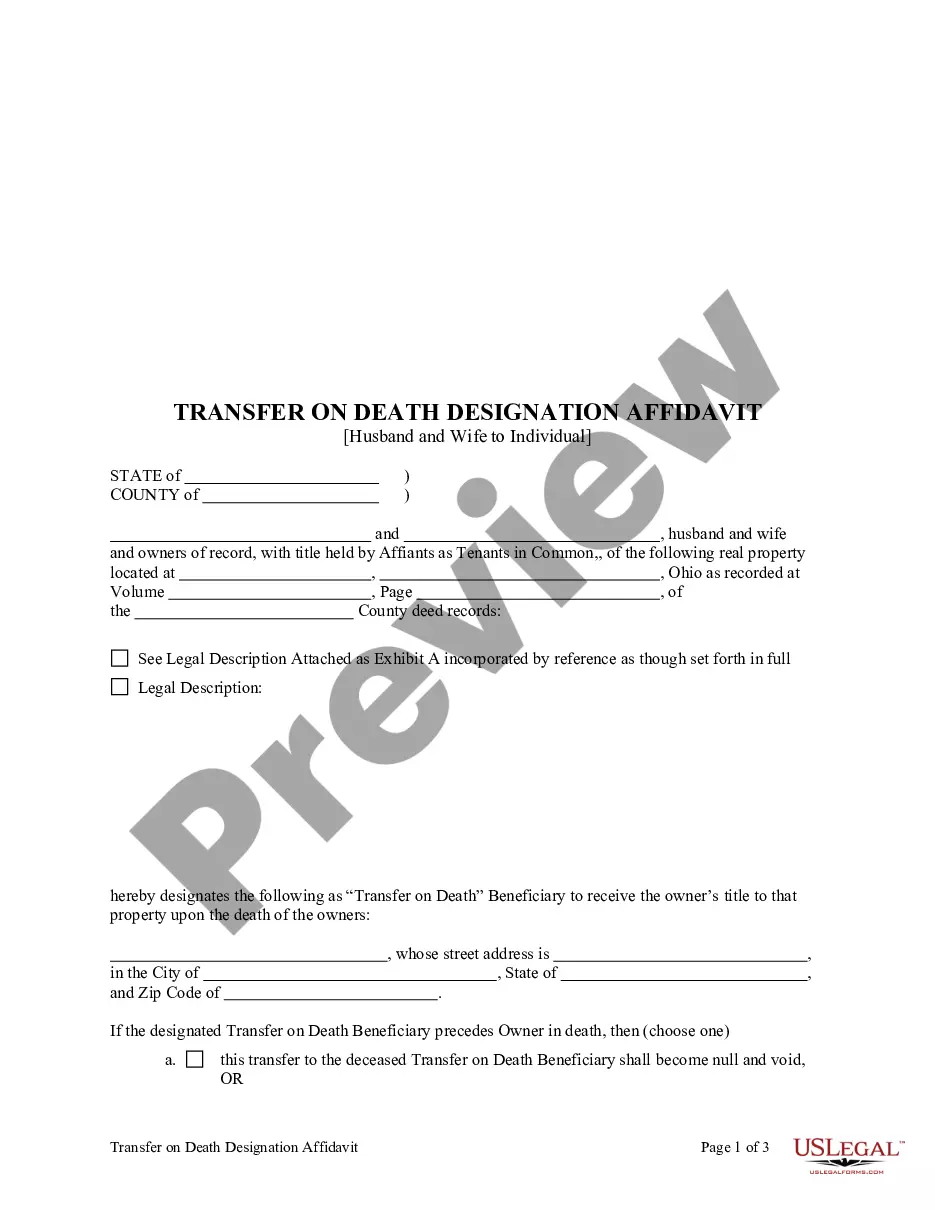
However, before proceeding directly to download the Transfer Death Designation Form For Qualified Accounts, follow these suggestions: Review the document preview and descriptions to confirm that you are accessing the form you need. Verify that the template you select adheres to your state and county's regulations. Choose the appropriate subscription plan to acquire the Transfer Death Designation Form For Qualified Accounts. Download the file, then complete, certify, and print it out. US Legal Forms boasts a solid reputation and over 25 years of experience. Join us today and make document completion an effortless and efficient process!
- With just a few clicks, you can immediately access state- and county-compliant templates meticulously crafted for you by our legal experts.
- Utilize our platform whenever you require dependable and trustworthy services to swiftly find and download the Transfer Death Designation Form For Qualified Accounts.
- If you’re familiar with our services and have previously registered with us, simply Log In to your account, find the template, and download it, or re-download it at any time from the My documents section.
- Not registered yet? No problem. It takes minimal time to set it up and browse the library.
Form popularity
FAQ
To add a transfer death designation to your checking account, start by contacting your bank or financial institution. They typically have a specific form for this purpose, which is similar to a transfer death designation form for qualified accounts. Complete the form with the required information about yourself and your beneficiary, and submit it as directed by your bank. This step ensures your account aligns with your wishes for asset transfer.
Using a transfer on death designation can be a smart choice for many people. This option allows your assets to transfer directly to your chosen beneficiaries without going through probate, saving time and reducing stress for your loved ones. It’s important to weigh the benefits against your specific situation, but generally, it promotes a smoother transition of your assets.
While it is not mandatory to hire a lawyer to complete a transfer death designation form for qualified accounts, consulting with one can offer peace of mind. A lawyer can provide guidance to ensure that you meet all legal requirements and that your wishes will be effectively honored. However, platforms like US Legal Forms can simplify the process and provide templates for you to follow.
Filling out a transfer death designation form for qualified accounts requires you to provide specific information about the account holder and the designated beneficiary. Start by entering your name, account number, and details about the account type. Then, clearly state the beneficiary's name and relationship to you. Ensure all information is accurate and consider reviewing it with a trusted source for clarity.
Adding a transfer on death designation to your bank account involves a few simple steps. First, contact your bank to request the appropriate transfer death designation form for qualified accounts. Complete the form with the required information about yourself and your chosen beneficiary, then submit it to your bank. This ensures that, upon your passing, the account assets go directly to the designated person without going through probate.
To put a transfer on death designation on a bank account, you typically need to fill out a specific form provided by your bank. This form acts as your transfer death designation form for qualified accounts, allowing you to specify a beneficiary. After completing the form, submit it to your bank, and they will update your account records. This process is generally straightforward, but always double-check with your bank for their specific requirements.
Transfer on death accounts do not inherently avoid capital gains tax. When the beneficiary inherits the account, they may be subject to capital gains tax based on the asset's value at the time of transfer. However, a step-up in basis may apply, which can reduce the taxable amount. It is essential to consult with a tax advisor to understand the implications fully.
Yes, a transfer on death designation does avoid probate, which can simplify the distribution of your assets. When you use a transfer death designation form for qualified accounts, the assets pass directly to the named beneficiary after your death, bypassing the lengthy probate process. This means your loved ones can access the funds without delays, making it a straightforward option for estate planning. However, it's wise to ensure that your estate plan covers all aspects.
Transfer on death (TOD) accounts can have disadvantages, such as limited control over the assets during your lifetime. Once you designate a beneficiary using a transfer death designation form for qualified accounts, the beneficiary gains rights upon your passing. Additionally, a TOD account may not be the best option if your situation changes, as updating beneficiaries can sometimes be complex. It's important to weigh these factors and consider consulting a legal professional.