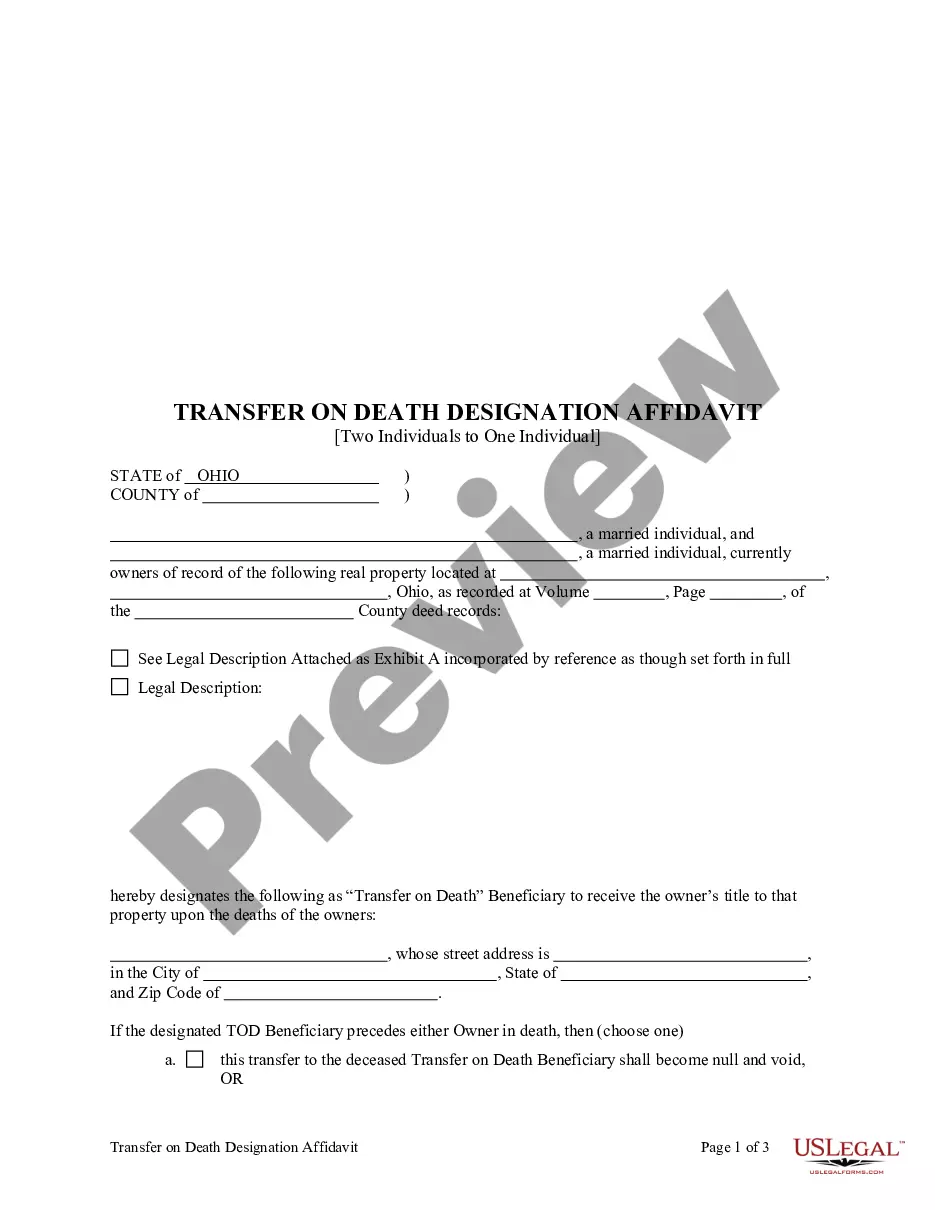
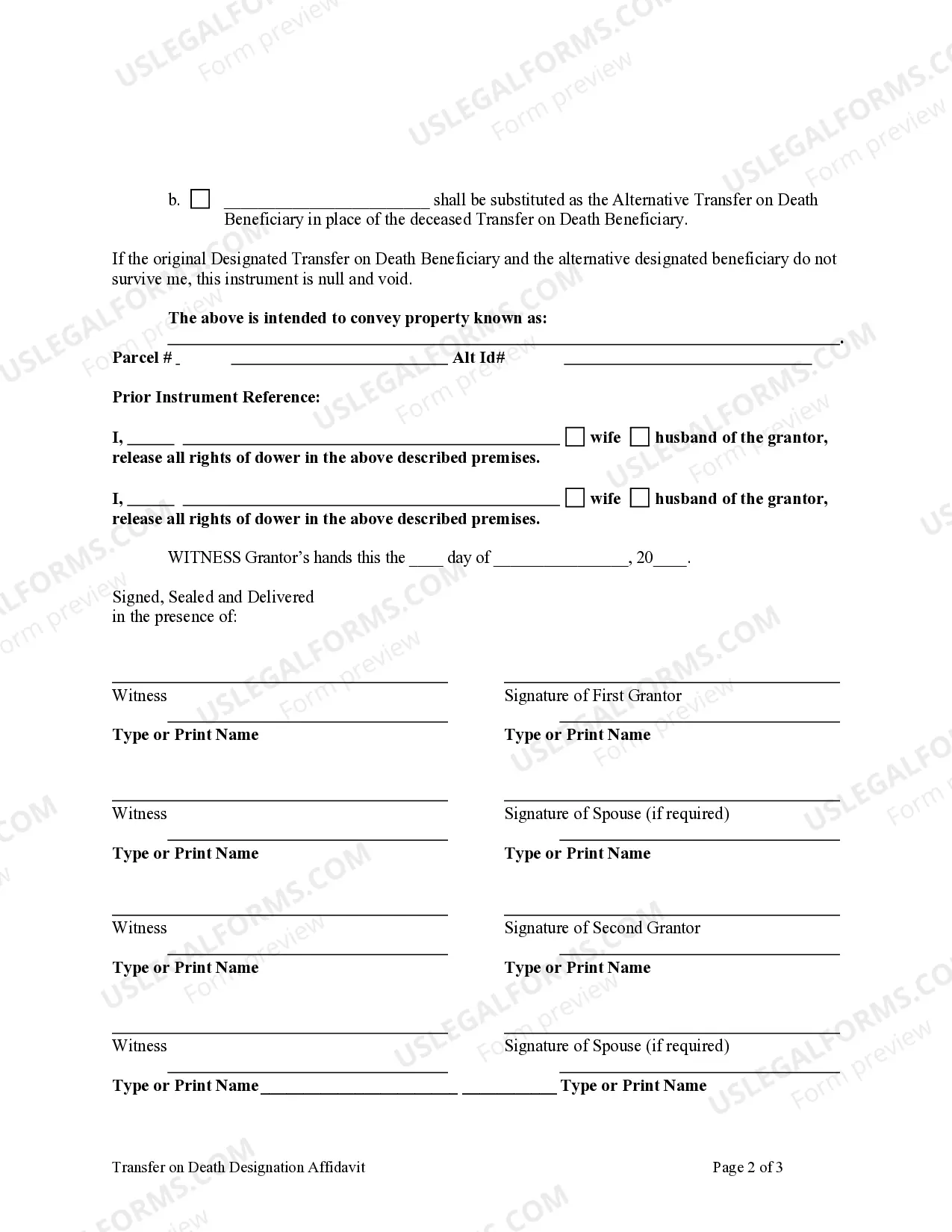
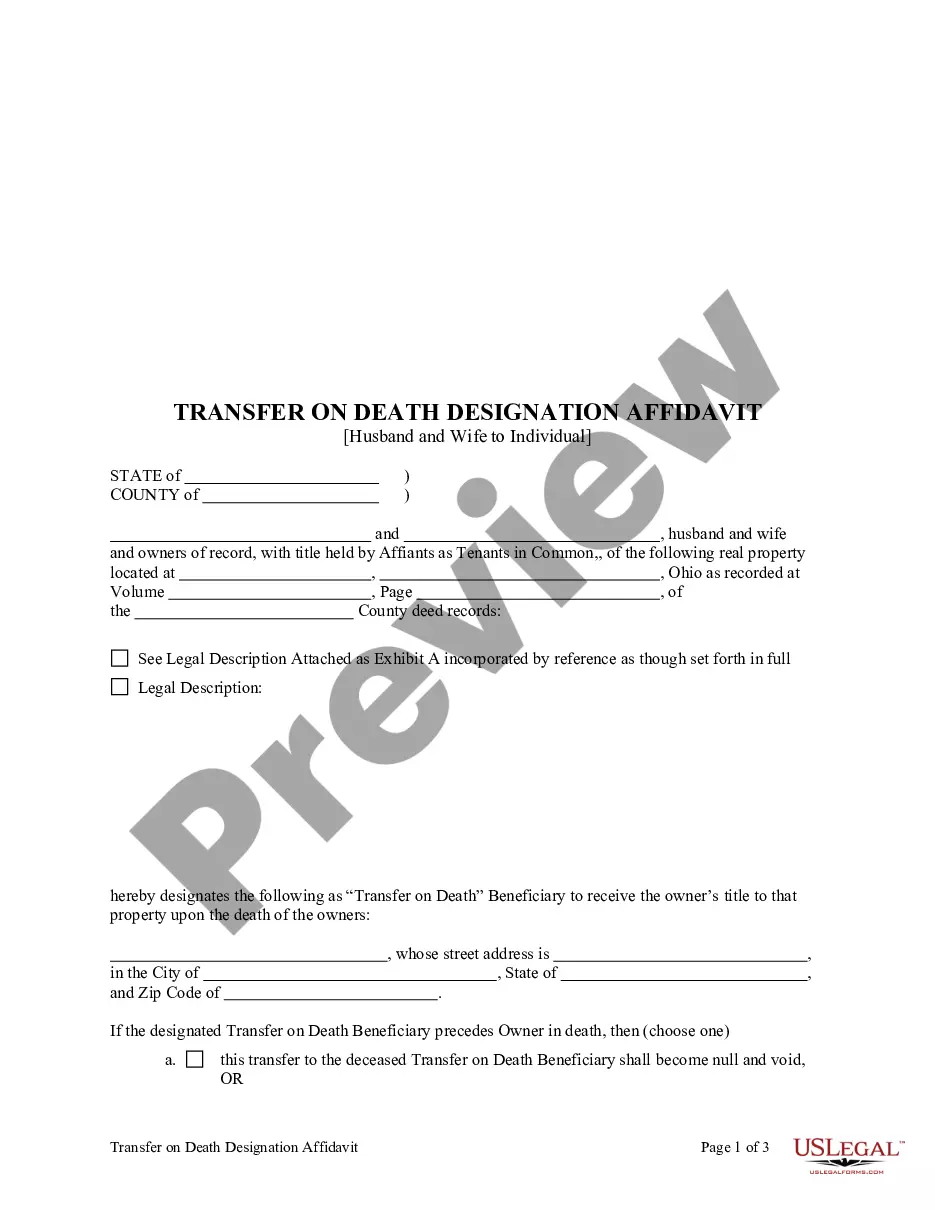
Ohio Affidavit Tod Form For Property
Description


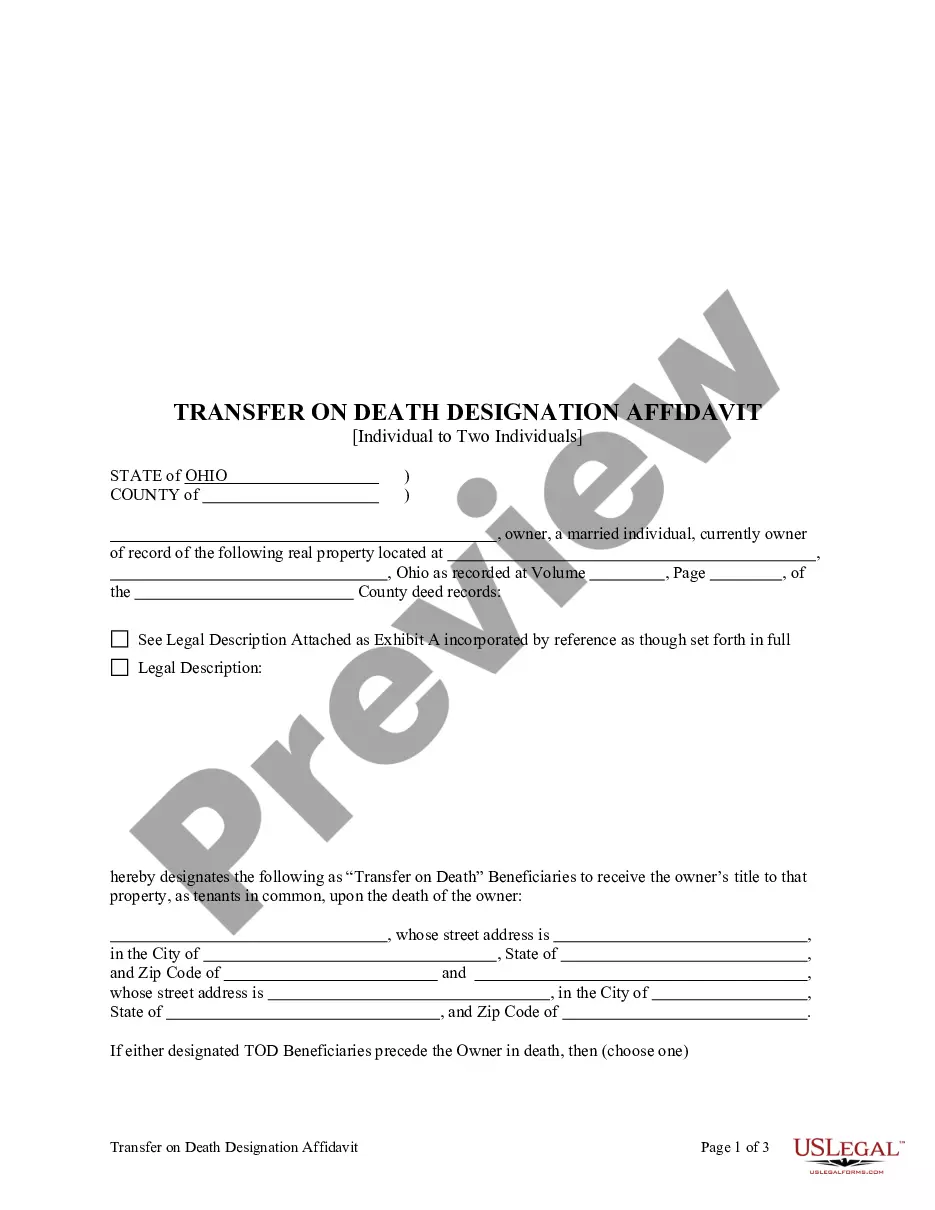
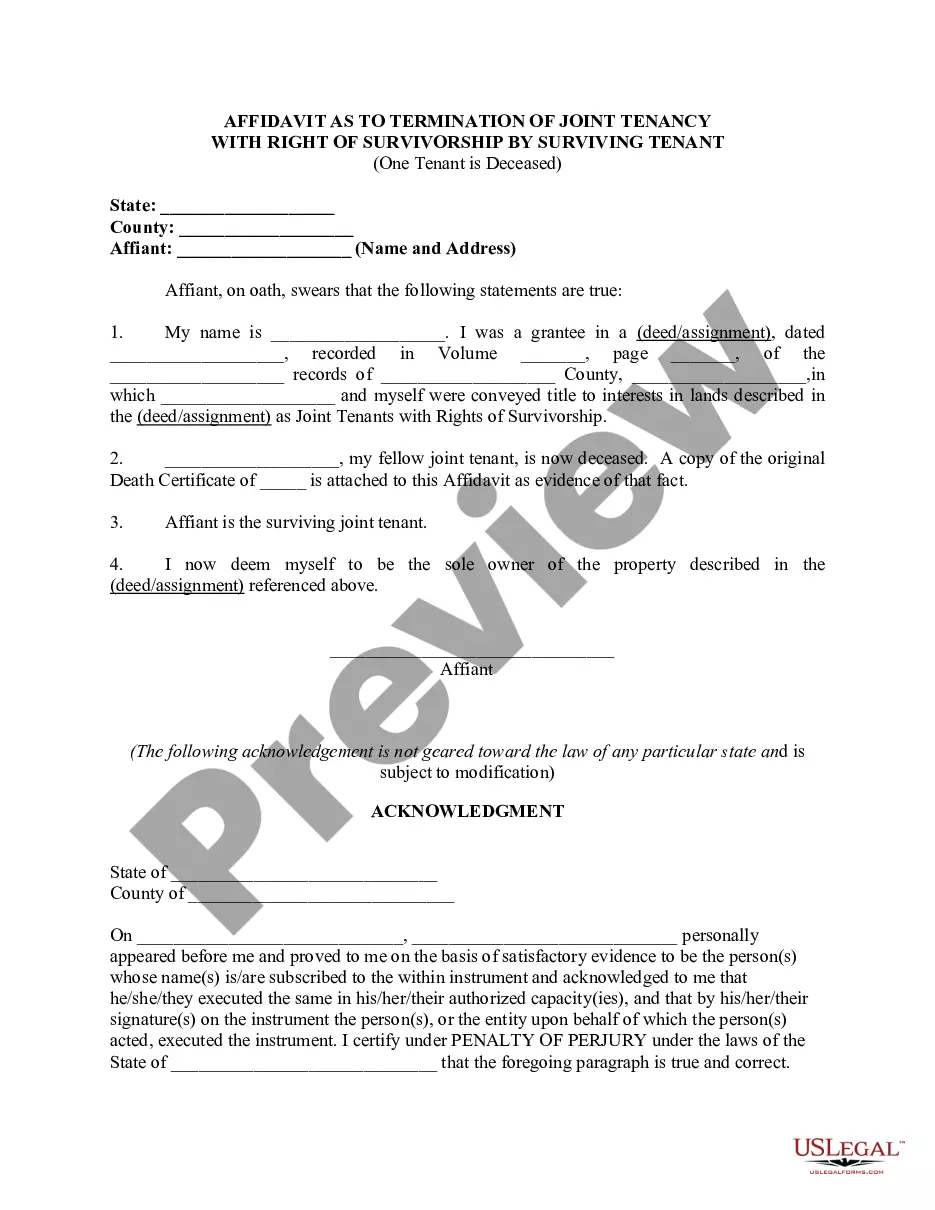
Get your form ready online
Our built-in tools help you complete, sign, share, and store your documents in one place.
Make edits, fill in missing information, and update formatting in US Legal Forms—just like you would in MS Word.
Download a copy, print it, send it by email, or mail it via USPS—whatever works best for your next step.
Sign and collect signatures with our SignNow integration. Send to multiple recipients, set reminders, and more. Go Premium to unlock E-Sign.
If this form requires notarization, complete it online through a secure video call—no need to meet a notary in person or wait for an appointment.
We protect your documents and personal data by following strict security and privacy standards.

Make edits, fill in missing information, and update formatting in US Legal Forms—just like you would in MS Word.

Download a copy, print it, send it by email, or mail it via USPS—whatever works best for your next step.

Sign and collect signatures with our SignNow integration. Send to multiple recipients, set reminders, and more. Go Premium to unlock E-Sign.

If this form requires notarization, complete it online through a secure video call—no need to meet a notary in person or wait for an appointment.

We protect your documents and personal data by following strict security and privacy standards.
Looking for another form?
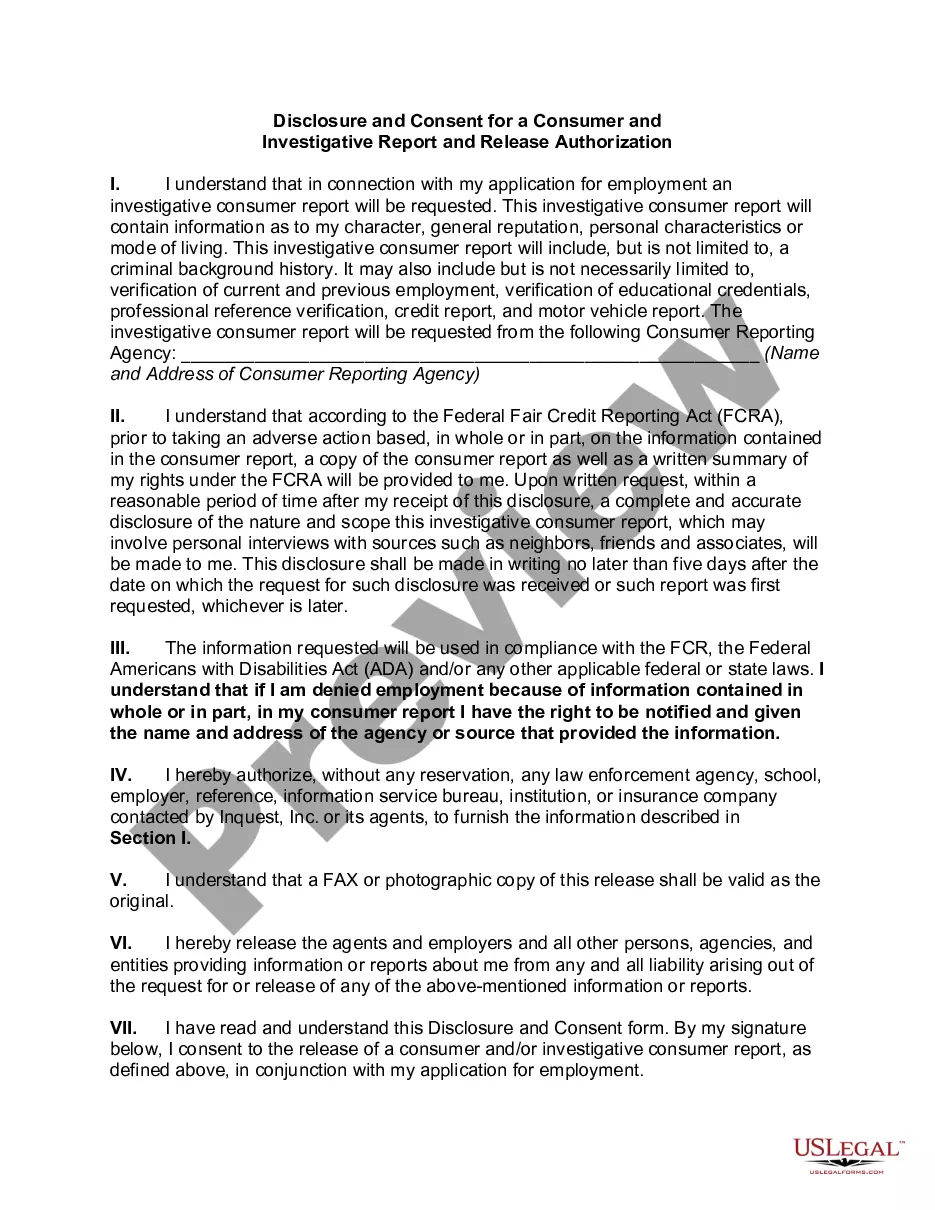









How to fill out Ohio Transfer On Death Designation Affidavit - TOD From Two Individuals To One Individual?
Regardless of whether for corporate objectives or personal issues, individuals must confront legal circumstances eventually in their lives. Completing legal paperwork requires meticulous focus, starting with choosing the appropriate form template. For instance, if you select an incorrect version of the Ohio Affidavit Tod Form For Property, it will be declined upon submission.
Thus, it is vital to have a trustworthy source for legal documents such as US Legal Forms.
With a comprehensive US Legal Forms catalog available, you won’t need to waste time searching for the right sample online. Make use of the library’s straightforward navigation to find the accurate template for any circumstance.
- Obtain the template you need by using the search bar or catalog browsing.
- Review the form’s description to confirm it matches your situation, state, and county.
- Click on the form’s preview to view it.
- If it is not the correct document, return to the search function to find the Ohio Affidavit Tod Form For Property template you require.
- Acquire the document if it fulfills your needs.
- If you possess a US Legal Forms account, click Log in to access previously saved templates in My documents.
- In case you don’t have an account yet, you may procure the form by clicking Buy now.
- Select the appropriate pricing choice.
- Complete the profile registration form.
- Choose your payment option: use a credit card or PayPal account.
- Select the file format you desire and download the Ohio Affidavit Tod Form For Property.
- After downloading, you can fill out the form with editing software or print it and complete it by hand.
Form popularity
FAQ
Yes, property can be transferred without probate in Ohio, primarily through the use of the Ohio affidavit tod form for property. By utilizing this form, property owners can designate beneficiaries who will receive the property directly upon their death. This method not only simplifies the transfer process but also helps avoid the costs and delays associated with probate, making it an effective estate planning tool.
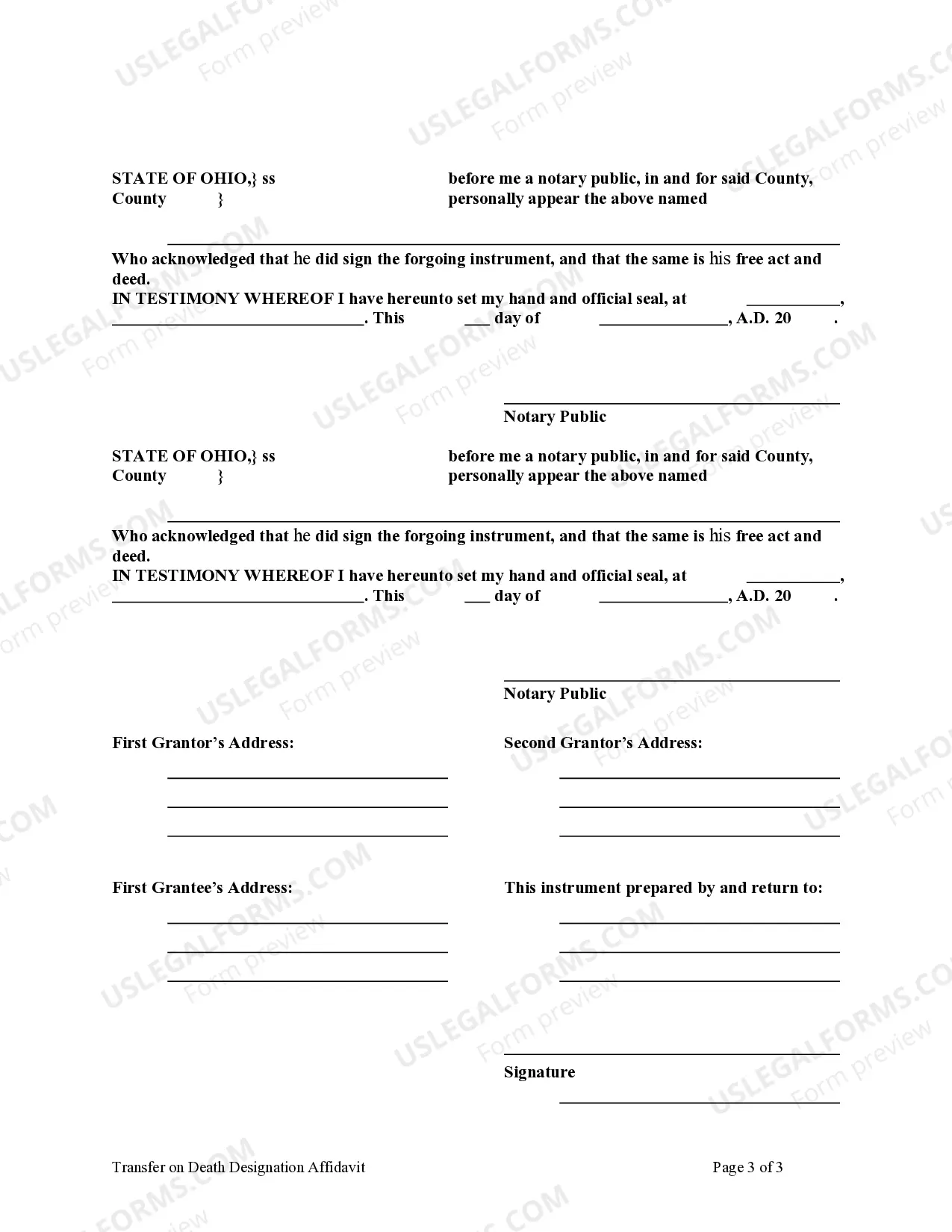
To add a transfer on death (Tod) designation to a house deed, you will need to complete the Ohio affidavit tod form for property with the necessary information. This includes specifying the beneficiary who will receive the property upon your death. After completing the form, ensure it is signed and notarized, then file it with the county recorder’s office. This process officially updates the deed and secures the beneficiary's rights.
A Tod form for real estate in Ohio is a legal document that allows property owners to transfer their property to a designated beneficiary upon their death, avoiding probate. This form is known as the Ohio affidavit tod form for property and simplifies the transfer process. By using this form, property owners can ensure their assets go directly to their loved ones without the lengthy probate process, making it a popular option for estate planning.
To complete a transfer on death affidavit in Ohio, first, you need to fill out the Ohio affidavit tod form for property accurately. This form must include the property owner's details and the beneficiary's information. After filling it out, you will need to sign it in the presence of a notary public. Finally, file the completed form with the county recorder's office where the property is located to ensure the transfer is legally recognized.
While a transfer on death deed has its benefits, there are some disadvantages to consider. For instance, property owners lose control over their assets as soon as they pass, which may complicate matters if the needs of the beneficiaries change. Additionally, the Ohio affidavit tod form for property must be filed correctly, as any errors could lead to unintended consequences regarding property transfer.
Transferring property after death in Ohio can be achieved seamlessly through a transfer on death deed, utilizing the Ohio affidavit tod form for property. Upon the owner's death, beneficiaries can present the completed affidavit to claim ownership without going through probate. This process simplifies property transfer and ensures beneficiaries receive their inheritance more efficiently.
To fill out a transfer on death affidavit in Ohio, begin by clearly writing down the property owner's name, the beneficiaries' names, and a description of the property. Utilize the Ohio affidavit tod form for property to ensure all necessary information is included and formatted correctly. Once completed, sign the affidavit and have it notarized for it to be legally binding.
Filling out a transfer on death form involves supplying specific information related to your property and beneficiaries. You will need to state your name, the names of the beneficiaries, and details of the property in question. Using the Ohio affidavit tod form for property is an excellent way to guide you through this process, ensuring everything is completed accurately.
To fill out a transfer on death affidavit, start by gathering essential information about the property and the beneficiaries. Clearly provide details such as property description, your name, and the names of the beneficiaries on the Ohio affidavit tod form for property. Ensure you follow the required format, sign the document, and have it notarized for validity.
No, you do not need a lawyer to file a transfer on death deed in Ohio. While legal assistance can be beneficial for complex situations, individuals can use the Ohio affidavit tod form for property to complete the filing themselves. It is essential, however, to ensure that the form is filled out correctly to avoid any potential issues later.