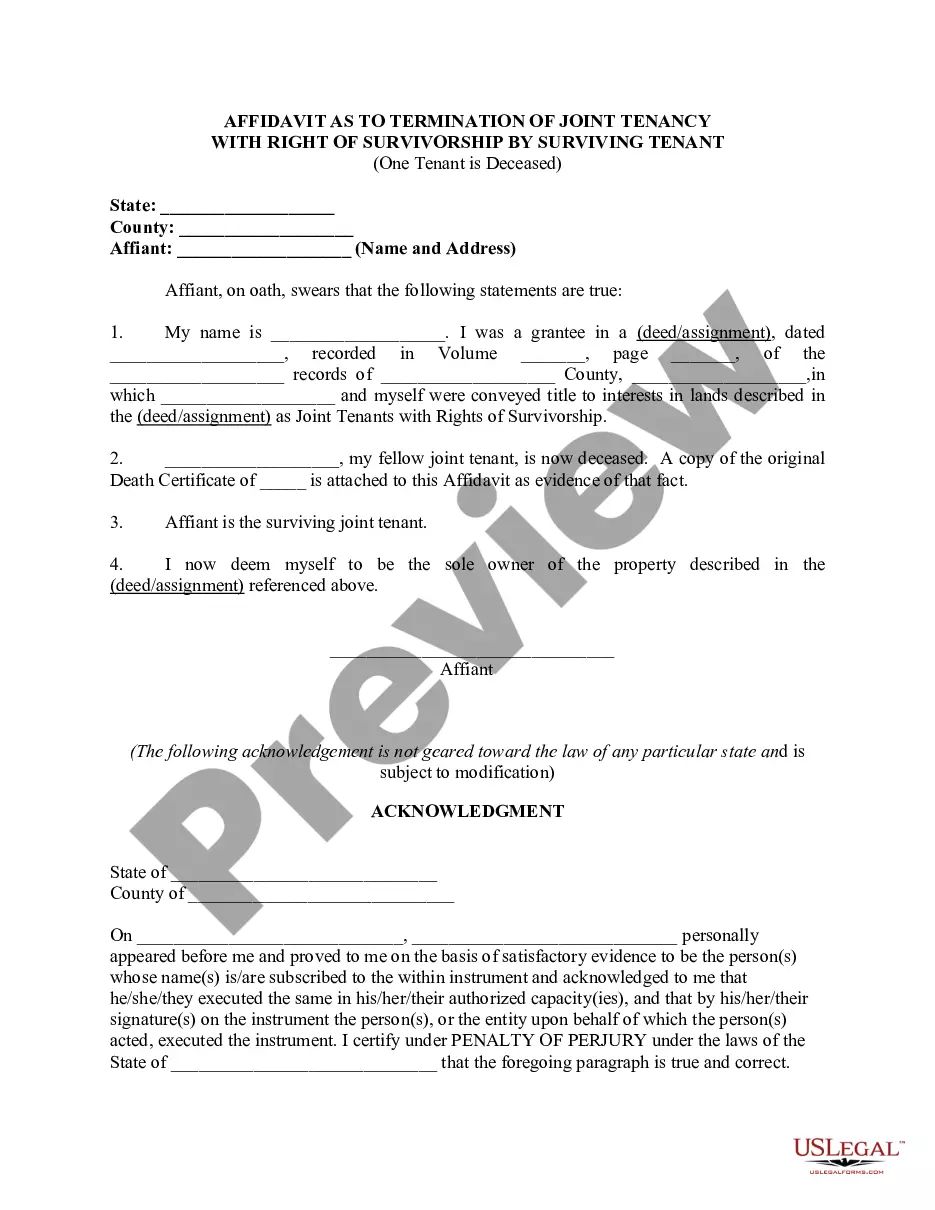
Affidavit Of Survivorship Transfer On Death Deed
Description


Get your form ready online
Our built-in tools help you complete, sign, share, and store your documents in one place.
Make edits, fill in missing information, and update formatting in US Legal Forms—just like you would in MS Word.
Download a copy, print it, send it by email, or mail it via USPS—whatever works best for your next step.
Sign and collect signatures with our SignNow integration. Send to multiple recipients, set reminders, and more. Go Premium to unlock E-Sign.
If this form requires notarization, complete it online through a secure video call—no need to meet a notary in person or wait for an appointment.
We protect your documents and personal data by following strict security and privacy standards.
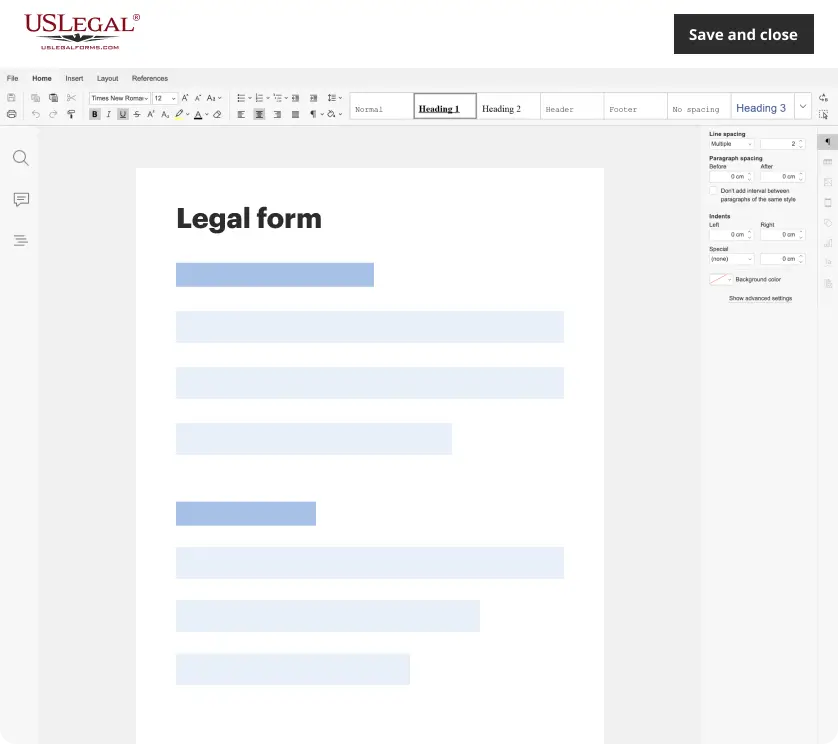
Make edits, fill in missing information, and update formatting in US Legal Forms—just like you would in MS Word.
Download a copy, print it, send it by email, or mail it via USPS—whatever works best for your next step.
Sign and collect signatures with our SignNow integration. Send to multiple recipients, set reminders, and more. Go Premium to unlock E-Sign.

If this form requires notarization, complete it online through a secure video call—no need to meet a notary in person or wait for an appointment.

We protect your documents and personal data by following strict security and privacy standards.
Looking for another form?
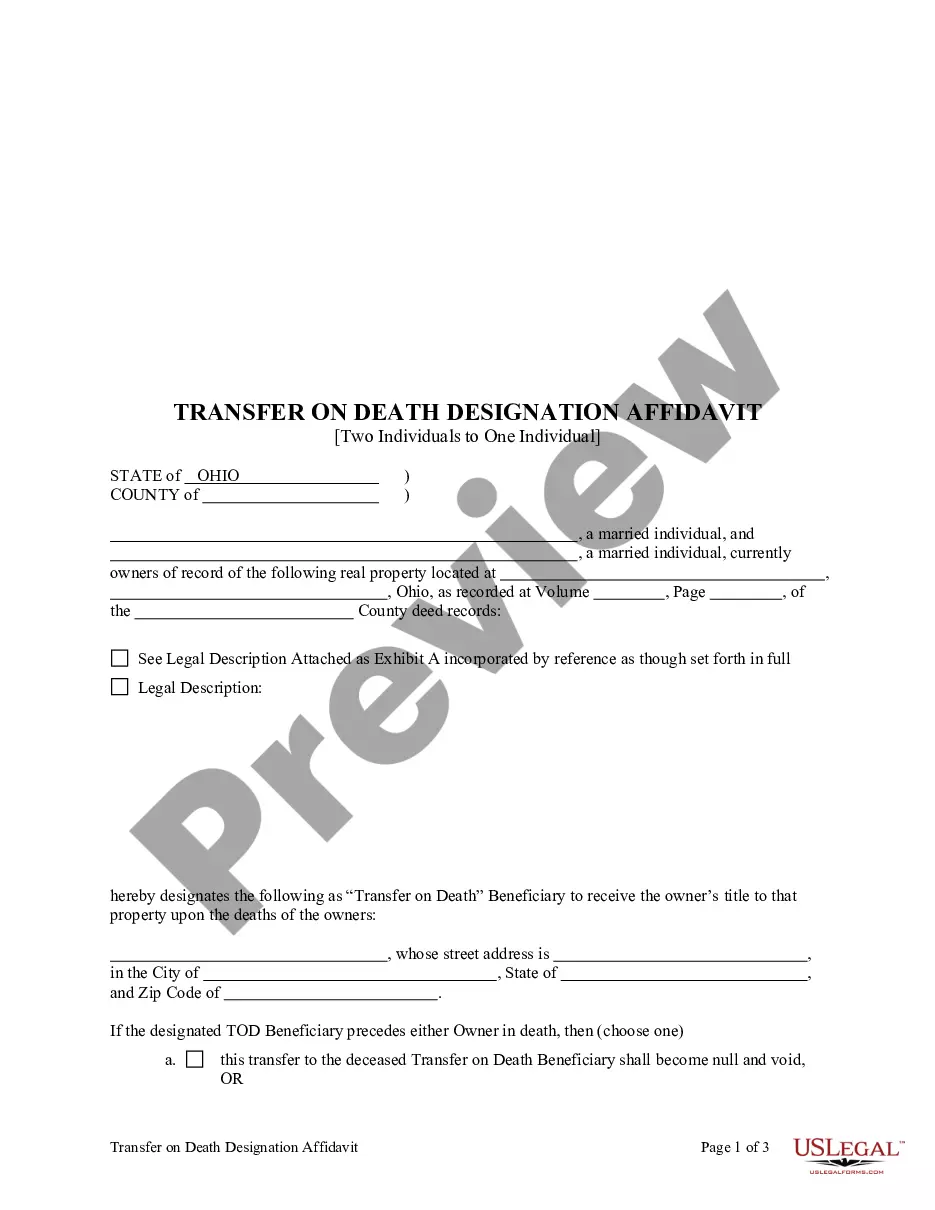
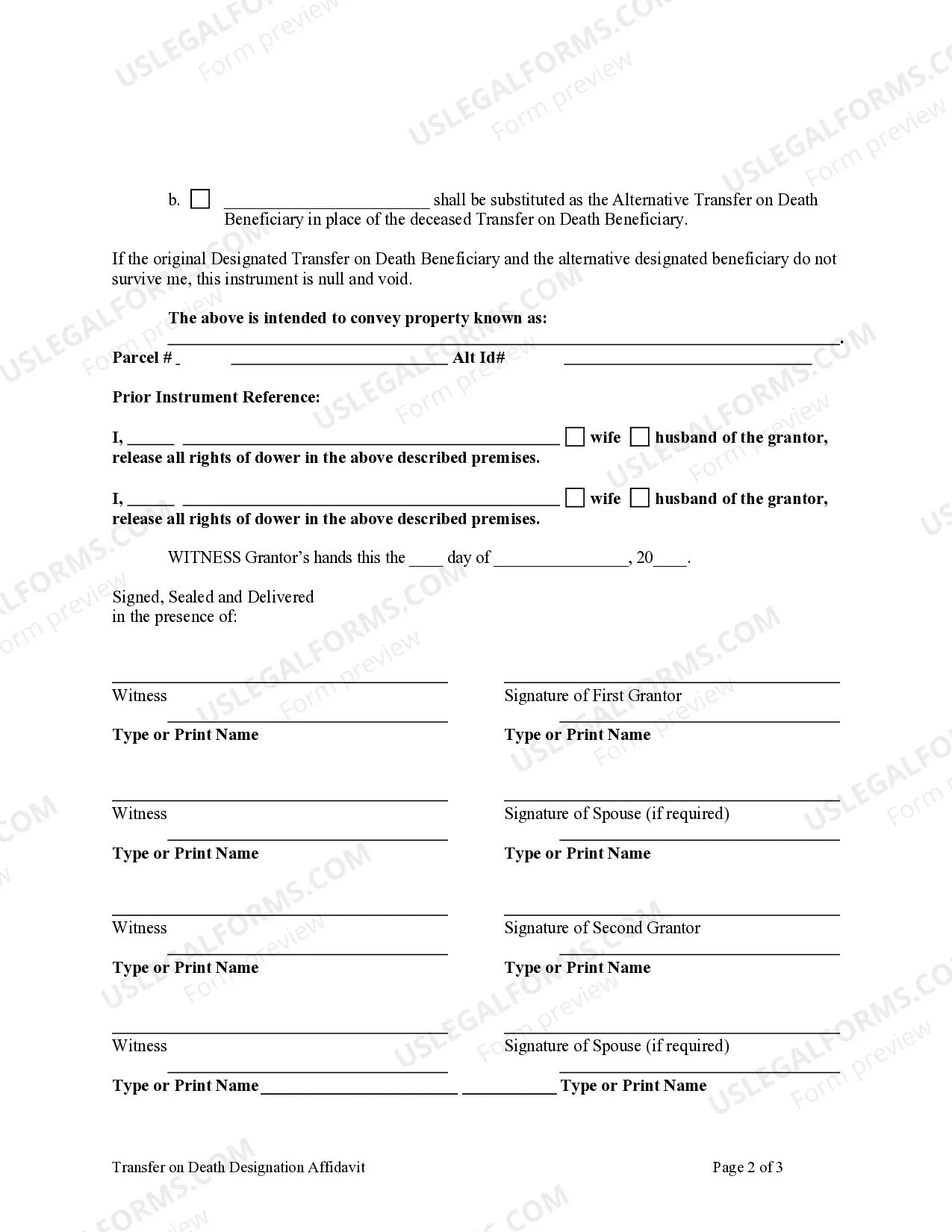
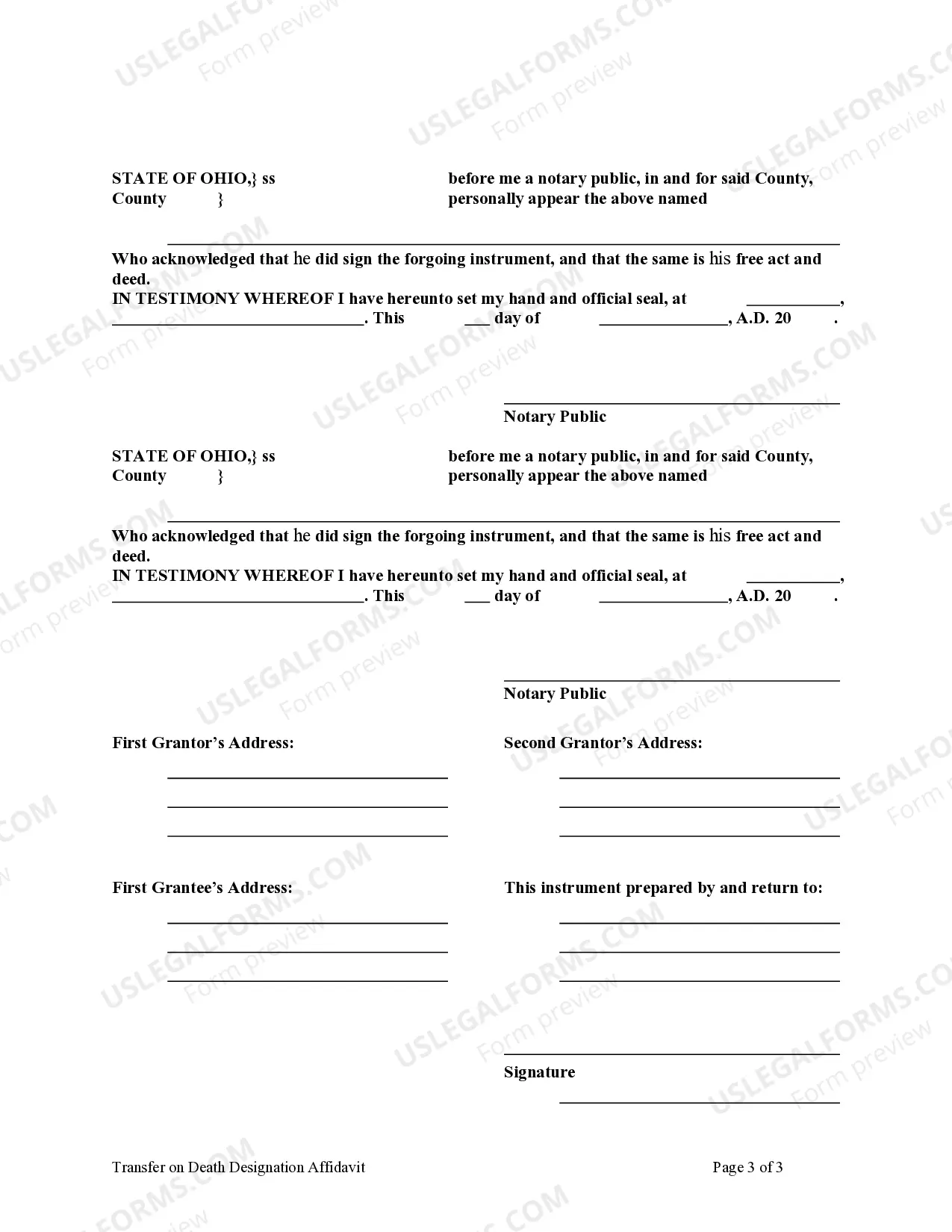
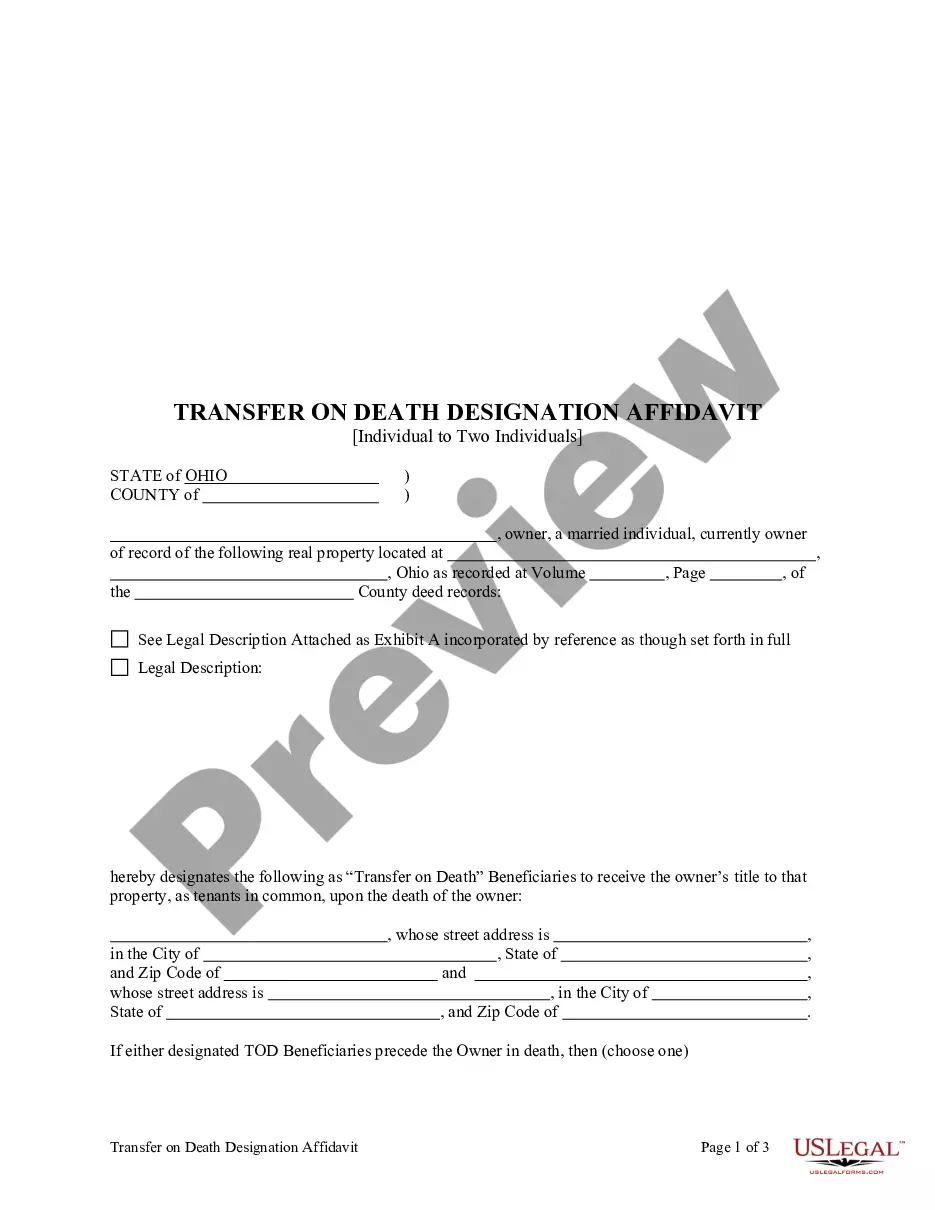
How to fill out Ohio Transfer On Death Designation Affidavit - TOD From Two Individuals To One Individual?
- If you're a returning user, start by logging into your account and downloading the required template by clicking 'Download'. Ensure your subscription is active before proceeding.
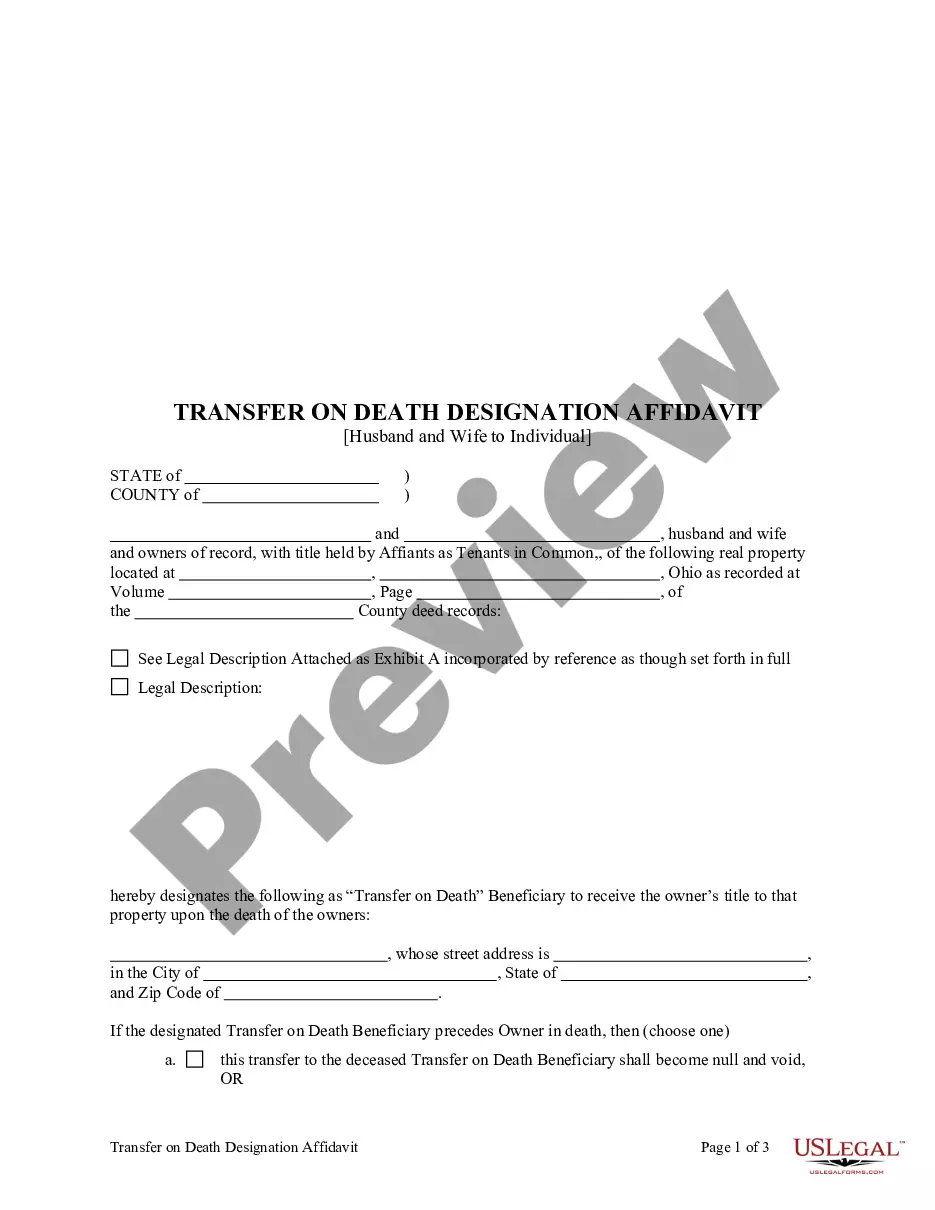
- For first-time users, first review the Preview mode and form description to confirm you have the correct document that aligns with your local regulations.
- If you encounter any discrepancies or require a different template, utilize the Search tab above to find the appropriate form.
- Once satisfied with your selection, click the 'Buy Now' button and choose your preferred subscription plan, creating an account if you haven't already.
- Proceed to finalize your purchase by entering your credit card information or using your PayPal account.
- After payment, download the template directly to your device for completion. Access it anytime in the My Forms section of your profile.
With US Legal Forms, individuals and attorneys can swiftly generate legal documents from an extensive library boasting over 85,000 forms, ensuring you find precisely what you need.
Empower yourself legally today by leveraging the robust resources available at US Legal Forms—your trusted partner for seamless documentation!
Form popularity
FAQ
The disadvantages of a transfer on death deed include lack of control over the property once the owner passes away and potential disputes among surviving family members. This deed also does not account for changes in family dynamics, such as divorce or additions to the family. Therefore, it's important to think through your choices carefully and consider professional guidance, such as what US Legal Forms offers, for drafting and executing your estate plans.
A transfer on death deed can avoid probate, but it does not necessarily eliminate inheritance tax obligations. The impact of the transfer on inheritance tax varies by state and the specific financial situation of your heirs. Always consult a tax professional to understand how this deed may affect your estate and your beneficiaries.
The best way to leave property upon death often involves a combination of estate planning tools. Utilizing a transfer on death deed can effectively pass property directly to beneficiaries, avoiding probate. Additionally, consider combining this method with a will or trust for comprehensive protection and clarity regarding your wishes.
A transfer on death deed may have drawbacks, such as not providing protection from creditors. This deed does not prevent the property from being included in the decedent's estate, which may lead to complications if debts are owed. Additionally, potential heirs might find it challenging to contest the deed if they believe it contradicts their expectations or the decedent's intentions.
To write a deed with right of survivorship, include specific language in the property deed indicating that the property will transfer to surviving owners upon death. Clearly name all joint tenants and use terms like 'joint tenants with right of survivorship.' Using an attorney or platforms like US Legal Forms can help ensure you follow the correct format and legal requirements.
When considering a transfer on death (TOD) deed versus a beneficiary designation, the choice often depends on your specific circumstances. A TOD deed transfers property directly to the named beneficiary upon death, potentially avoiding probate. This method can be advantageous over traditional beneficiary designations as it is limited to real estate and often provides more control in certain situations.
Filling out an affidavit of survivorship pdf requires attention to detail. Start by entering the decedent's name and relevant property information. Clearly state that the surviving joint tenant is entitled to ownership. You can use US Legal Forms to access ready-to-use templates that simplify this process.
One significant disadvantage of a transfer on death (TOD) deed is that it doesn’t account for potential disputes among heirs. Furthermore, if the property owner dies without a clear understanding of the deed, it could lead to complications in enforcing the transfer. To mitigate risks and clarify the process, consider consulting resources from USLegalForms to understand better the implications of a TOD deed.
Filling out an affidavit of death and heirship requires identification of the deceased, including their full name and date of death. Next, list the heirs and their relationship to the deceased. It’s essential to follow your state’s requirements, which can be easily accomplished with the forms provided by USLegalForms.
To complete a survivorship affidavit, begin by clearly stating your name and relationship to the deceased. Outline any property involved, ensuring to include pertinent details about the transfer on death deed. Be sure to follow applicable legal requirements and consider utilizing USLegalForms for templates that guided you through the process effectively.