Revocation Living Trust With A Beneficiary
Description
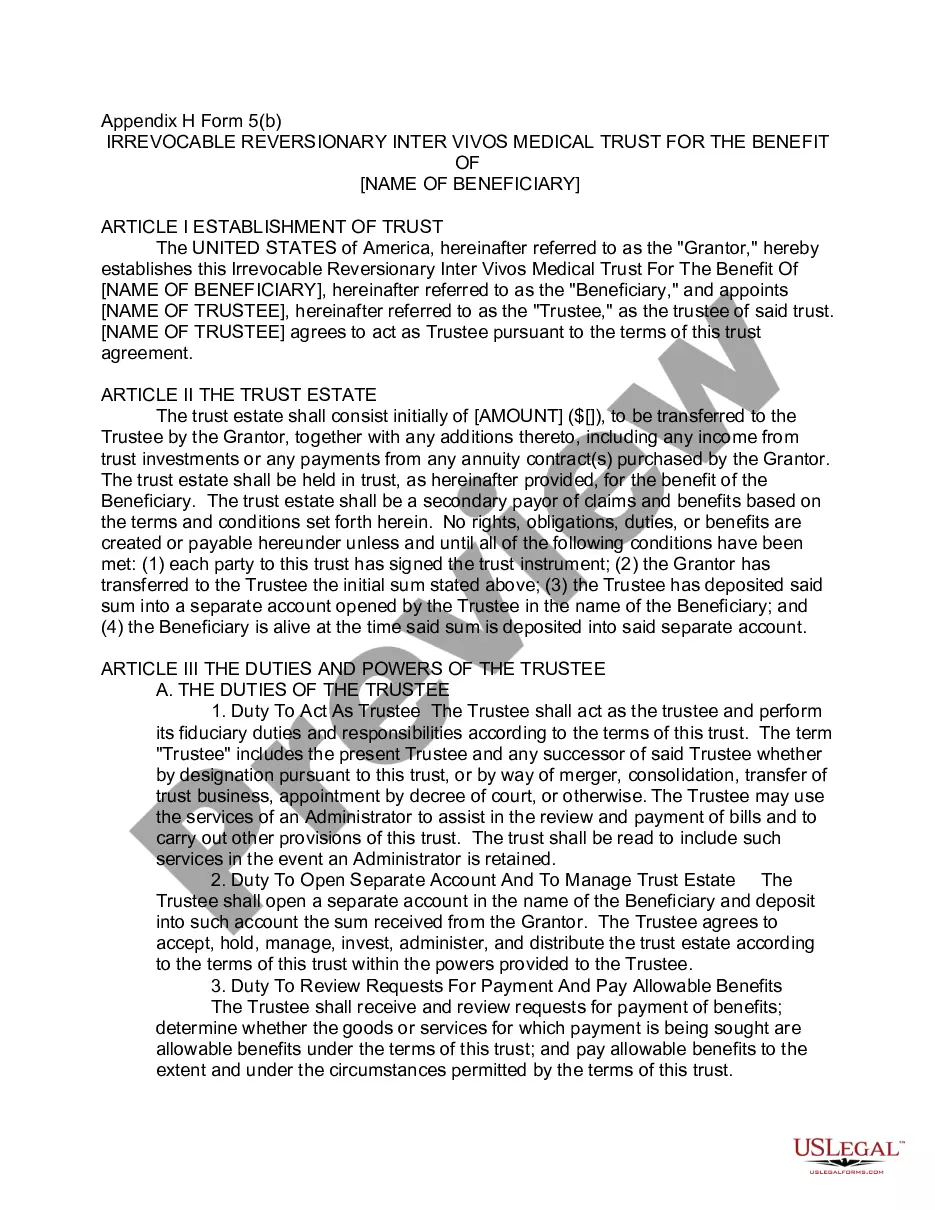
Get your form ready online
Our built-in tools help you complete, sign, share, and store your documents in one place.
Make edits, fill in missing information, and update formatting in US Legal Forms—just like you would in MS Word.
Download a copy, print it, send it by email, or mail it via USPS—whatever works best for your next step.
Sign and collect signatures with our SignNow integration. Send to multiple recipients, set reminders, and more. Go Premium to unlock E-Sign.
If this form requires notarization, complete it online through a secure video call—no need to meet a notary in person or wait for an appointment.
We protect your documents and personal data by following strict security and privacy standards.

Make edits, fill in missing information, and update formatting in US Legal Forms—just like you would in MS Word.

Download a copy, print it, send it by email, or mail it via USPS—whatever works best for your next step.

Sign and collect signatures with our SignNow integration. Send to multiple recipients, set reminders, and more. Go Premium to unlock E-Sign.

If this form requires notarization, complete it online through a secure video call—no need to meet a notary in person or wait for an appointment.

We protect your documents and personal data by following strict security and privacy standards.
Looking for another form?







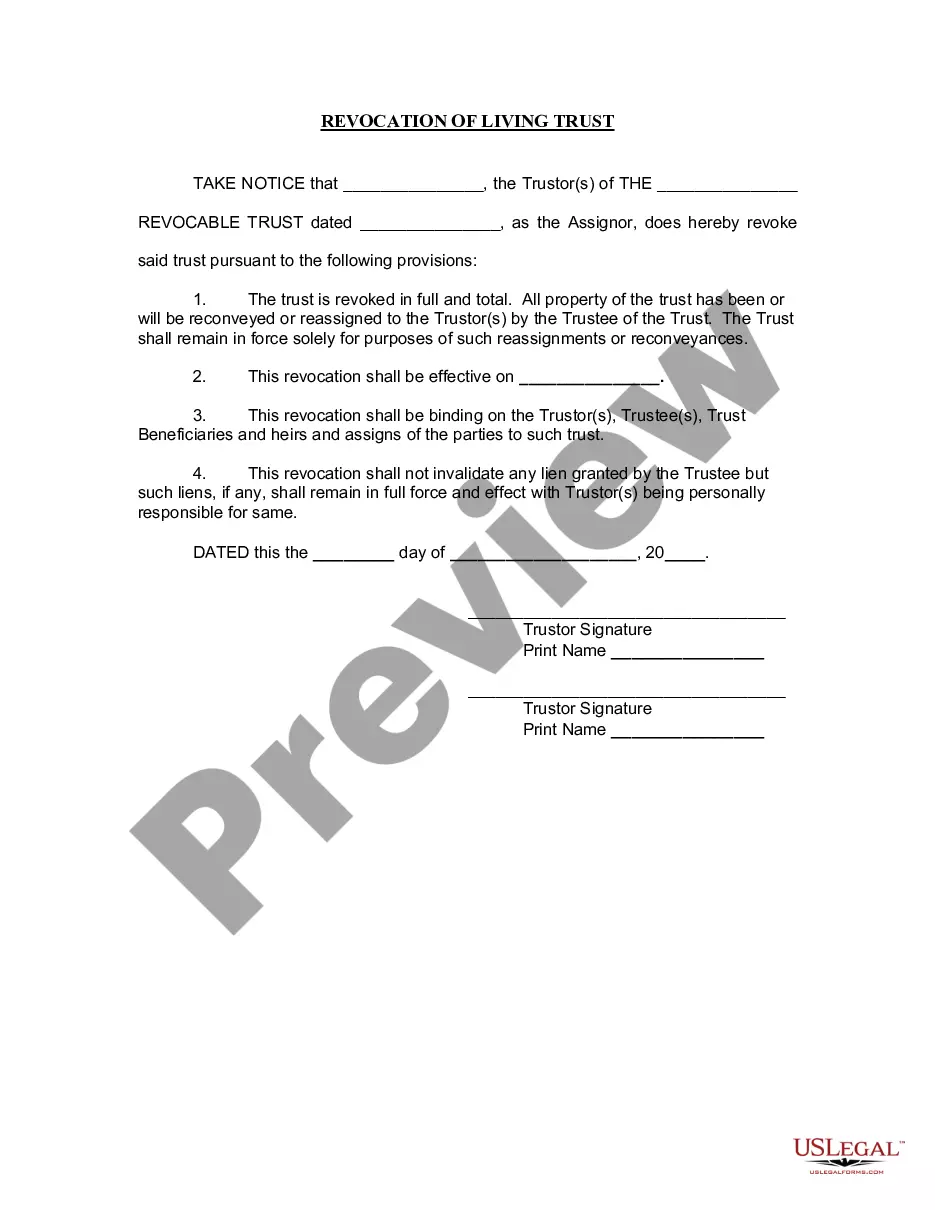
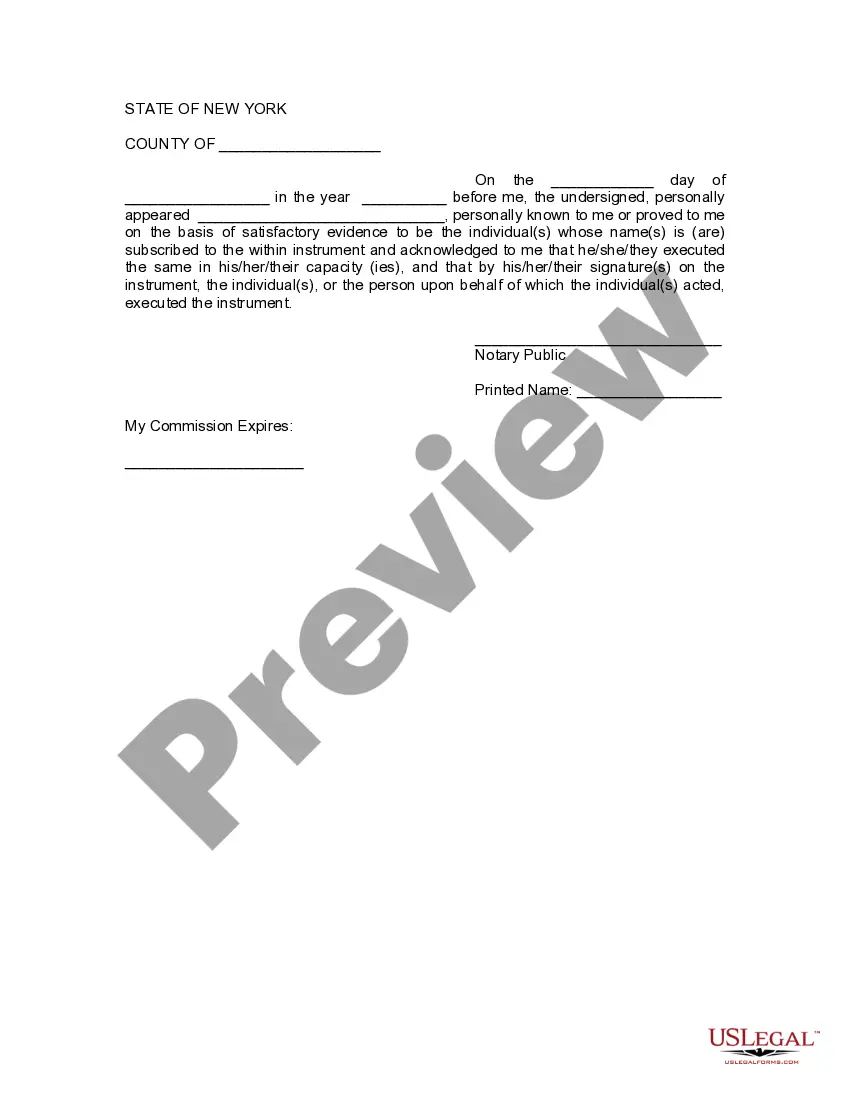
How to fill out New York Revocation Of Living Trust?
- Log into your existing US Legal Forms account. If you’re a new user, start by creating an account.
- Search for the 'Revocation Living Trust' template that meets your needs by reviewing the preview and detailed description.
- If necessary, browse through the extensive library to find other suitable forms by using the Search tab.
- Once you’ve found the appropriate document, click the 'Buy Now' button and select your preferred subscription plan.
- Complete your purchase with your credit card or PayPal account to gain full access to the library.
- Download your revocation form and save it on your device for completion later. Access it anytime via the 'My Documents' section of your profile.
In just a few steps, you can easily revoke your living trust and ensure your estate planning aligns with your current intentions. US Legal Forms not only simplifies the document process but also equips you with a vast library of legal forms and expert support.
Get started today and make sure your estate planning is up to date!
Form popularity
FAQ
The biggest mistake parents often make when setting up a trust fund is failing to properly fund the trust. If the trust is not funded with assets, such as properties or accounts, the revocation living trust with a beneficiary will not serve its intended purpose. Parents should take time to understand what needs to be included and ensure that the trust is adequately funded to meet their goals. Using a reliable platform like US Legal Forms can guide you in correctly setting up and managing a trust fund.
A sample of a revocation of a living trust typically includes a declaration that clearly states the creator's name, the trust's name, and the date of revocation. The document also outlines the intent to cancel the revocation living trust with a beneficiary. It often concludes with signatures of the creator and witnesses, depending on legal requirements. Having a well-drafted revocation document assures that the cancellation is clear and binding.
A revocable trust is terminated through a written declaration by the trust creator stating their intention to end the trust. Often, this includes a formal revocation document that must be signed and dated. This action effectively disbands the revocation living trust with a beneficiary and reallocates assets according to the creator's wishes. It’s crucial to follow any state-specific procedures to ensure the trust's termination is legally effective.
An example of a trust revocation is when the trust creator decides to terminate their revocation living trust with a beneficiary. This can occur when the creator wishes to make changes to how their assets will be distributed or if they want to create a new trust altogether. The process typically involves a written document clearly stating the intent to revoke the existing trust. By doing so, the assets in the revoked trust can be reassigned or placed into a new trust.
Yes, you can amend a revocable trust without an attorney, but it requires careful attention to detail. Many choose to do this to save on legal fees, especially when discussing a revocation living trust with a beneficiary. Ensure you follow the amendment process outlined in your trust document accurately. However, consulting with an attorney may still provide clarity and prevent potential disputes.
To revoke a revocable living trust, you need to follow specific steps outlined in the trust document. Typically, this involves creating a formal revocation document that states your intention to revoke the trust, often referred to when discussing a revocation living trust with a beneficiary. Ensure that you also notify any involved parties, such as trustees and beneficiaries, to make the change clear and legally binding.
A trust can be terminated in several ways. First, it can end by the express wishes of the grantor, communicated through a revocation living trust with a beneficiary. Second, it can terminate upon the fulfillment of its purpose, such as when the trust achieves its intended goal. Lastly, the trust can be dissolved by a court if it becomes impossible to fulfill its terms.
A trust can be deemed null and void for several reasons, including lack of proper execution or failure to comply with state laws. Additionally, if the trust's purpose is illegal or if the trustor lacked the mental capacity to create the trust, it may be invalid. Understanding the nuances of a revocation living trust with a beneficiary is crucial in maintaining its validity. Consulting experts or using a reliable service like uslegalforms can help clarify these complexities.
To revoke a beneficiary in a revocation living trust with a beneficiary, you need to follow the trust's amendment process. This typically involves drafting an official document that specifies the changes to the beneficiary designation. It's essential to ensure that the amendment complies with state laws and the existing trust terms. Uslegalforms offers templates and guidance to simplify this task.
Revoking a revocation living trust with a beneficiary is typically straightforward. You can revoke it through a written declaration that states your intention to terminate the trust. As long as you follow the legal requirements outlined in your state, the process can be quick. Seeking assistance from uslegalforms can ensure that you complete the revocation correctly.