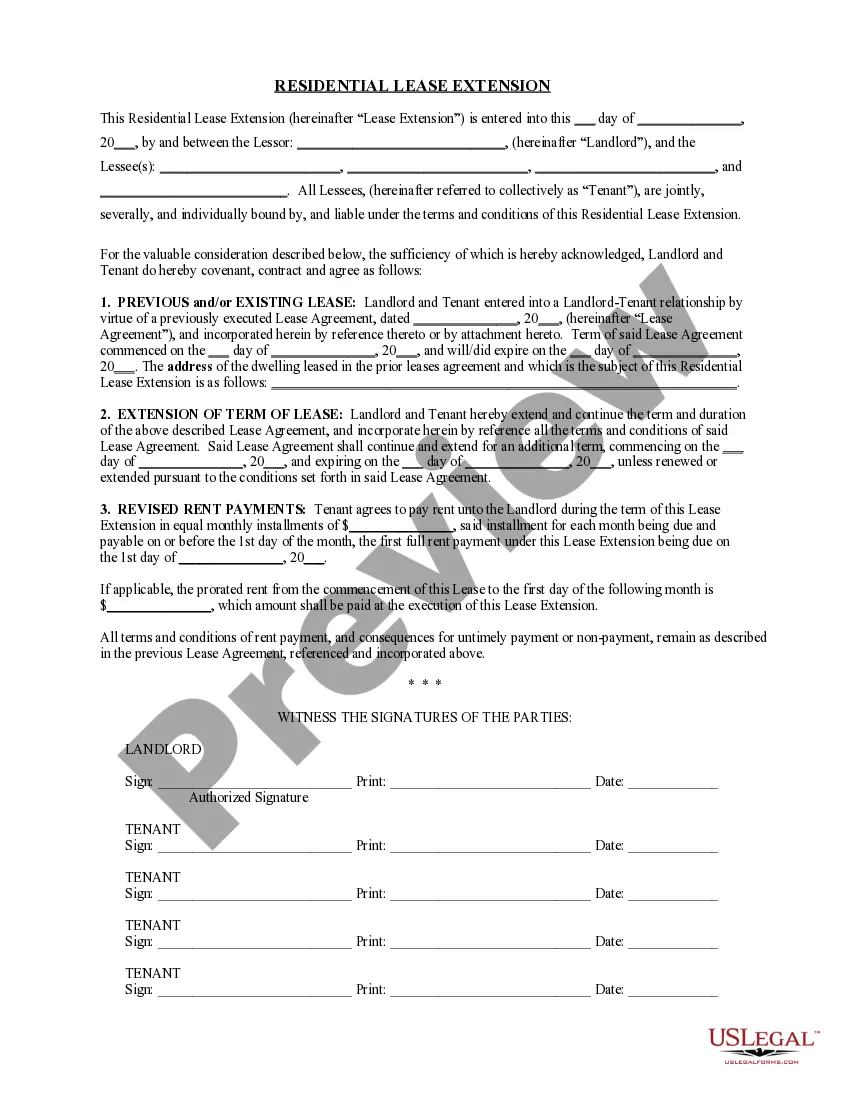
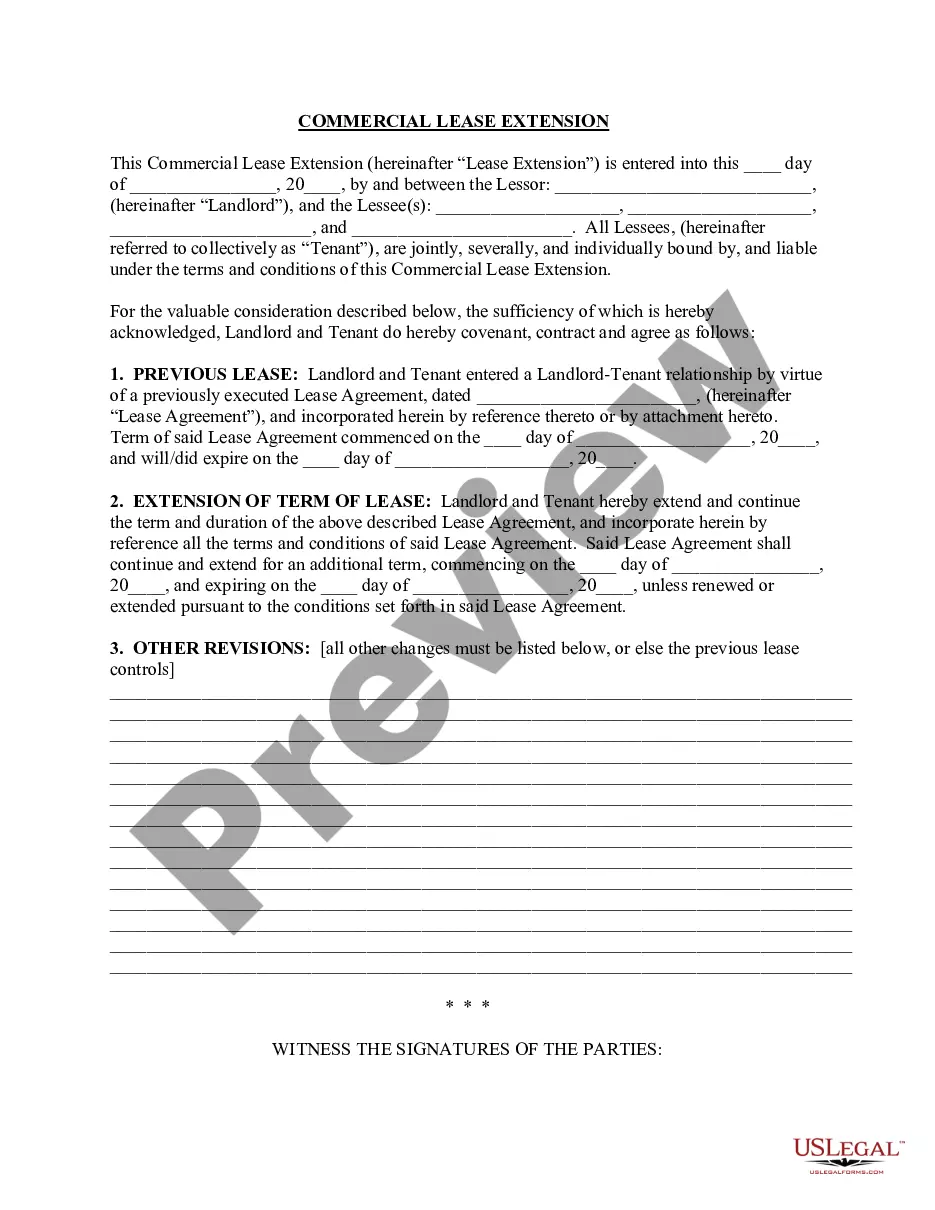
Lease Agreement Renewal Format
Description
Get your form ready online
Our built-in tools help you complete, sign, share, and store your documents in one place.
Make edits, fill in missing information, and update formatting in US Legal Forms—just like you would in MS Word.
Download a copy, print it, send it by email, or mail it via USPS—whatever works best for your next step.
Sign and collect signatures with our SignNow integration. Send to multiple recipients, set reminders, and more. Go Premium to unlock E-Sign.
If this form requires notarization, complete it online through a secure video call—no need to meet a notary in person or wait for an appointment.
We protect your documents and personal data by following strict security and privacy standards.

Make edits, fill in missing information, and update formatting in US Legal Forms—just like you would in MS Word.

Download a copy, print it, send it by email, or mail it via USPS—whatever works best for your next step.

Sign and collect signatures with our SignNow integration. Send to multiple recipients, set reminders, and more. Go Premium to unlock E-Sign.

If this form requires notarization, complete it online through a secure video call—no need to meet a notary in person or wait for an appointment.

We protect your documents and personal data by following strict security and privacy standards.
Looking for another form?









How to fill out New York Residential Or Rental Lease Extension Agreement?
Whether for commercial reasons or personal issues, everyone must confront legal matters at some time in their life.
Completing legal documents requires meticulous care, starting with selecting the correct template.
Complete the profile registration form.
- For example, if you choose an incorrect version of a Lease Agreement Renewal Template, it will be rejected upon submission.
- Thus, it is crucial to find a reliable source of legal documents like US Legal Forms.
- If you wish to obtain a Lease Agreement Renewal Template sample, follow these straightforward steps.
- Utilize the search box or browse the catalog to find the desired sample.
- Review the description of the form to confirm it matches your circumstances, state, and locality.
- Click on the preview of the form to inspect it.
- If it is not the correct document, return to the search option to find the Lease Agreement Renewal Template sample you require.
- Download the file if it meets your standards.
- If you have a US Legal Forms account, click Log in to access previously saved documents in My documents.
- If you haven't created an account yet, you can download the form by clicking Buy now.
- Choose the suitable payment option.
Form popularity
FAQ
To start a custody change, you have to file a motion in court. Go to the ?Motion for custody change? page to find the forms you need. Explain your proposed changes and why they meet the requirements above. File them in the court where the original order was made.
Hand in your paperwork to the clerk of court and pay the filing fees. In juvenile court, the filing fee is $160, plus $50 per child in your case. In domestic relations court, there's a $300 fee to file for divorce and a $200 fee for dissolution or legal separation. You also have to pay $75 for every motion you file.
Complete a "Complaint for Parentage, Allocation of Parental Rights and Responsibilities (Custody), Parenting Time (Companionship and Visitation)" form. This form is available at supremecourt.ohio.gov. By filling out this form, you can request a parenting plan and child support obligation from the court.
An adult can file a custody case in either the Domestic Relations or Juvenile Court in the county where the child lives. Then, the judge can decide to issue a custody order. The custody order allows the non-parent custodian to care for the child's daily needs. The parents and child still have a legal relationship.
Filing Fee Schedule COMPLAINTSCustody*$160.00* Filings for more than one child is $160.00 for the first child and $50.00 for each additional child.MOTIONSChange of Venue$75.0031 more rows
From start to finish, this process can take between 3 months and 2 years. After you file a motion , the court will schedule a hearing.
Filing Fee Schedule COMPLAINTSCustody*$160.00Visitation$75.00MISCELLANEOUS FILINGSAffidavit for Publication$25.0031 more rows
The person files a motion with the court seeking companionship or visitation; The Court determines that the person has an interest in the welfare of the child; and. The Court determines that granting companionship or visitation rights is in the child's best interest.