New York Life Estate Without Will
Description
Get your form ready online
Our built-in tools help you complete, sign, share, and store your documents in one place.
Make edits, fill in missing information, and update formatting in US Legal Forms—just like you would in MS Word.
Download a copy, print it, send it by email, or mail it via USPS—whatever works best for your next step.
Sign and collect signatures with our SignNow integration. Send to multiple recipients, set reminders, and more. Go Premium to unlock E-Sign.
If this form requires notarization, complete it online through a secure video call—no need to meet a notary in person or wait for an appointment.
We protect your documents and personal data by following strict security and privacy standards.

Make edits, fill in missing information, and update formatting in US Legal Forms—just like you would in MS Word.

Download a copy, print it, send it by email, or mail it via USPS—whatever works best for your next step.

Sign and collect signatures with our SignNow integration. Send to multiple recipients, set reminders, and more. Go Premium to unlock E-Sign.

If this form requires notarization, complete it online through a secure video call—no need to meet a notary in person or wait for an appointment.

We protect your documents and personal data by following strict security and privacy standards.
Looking for another form?
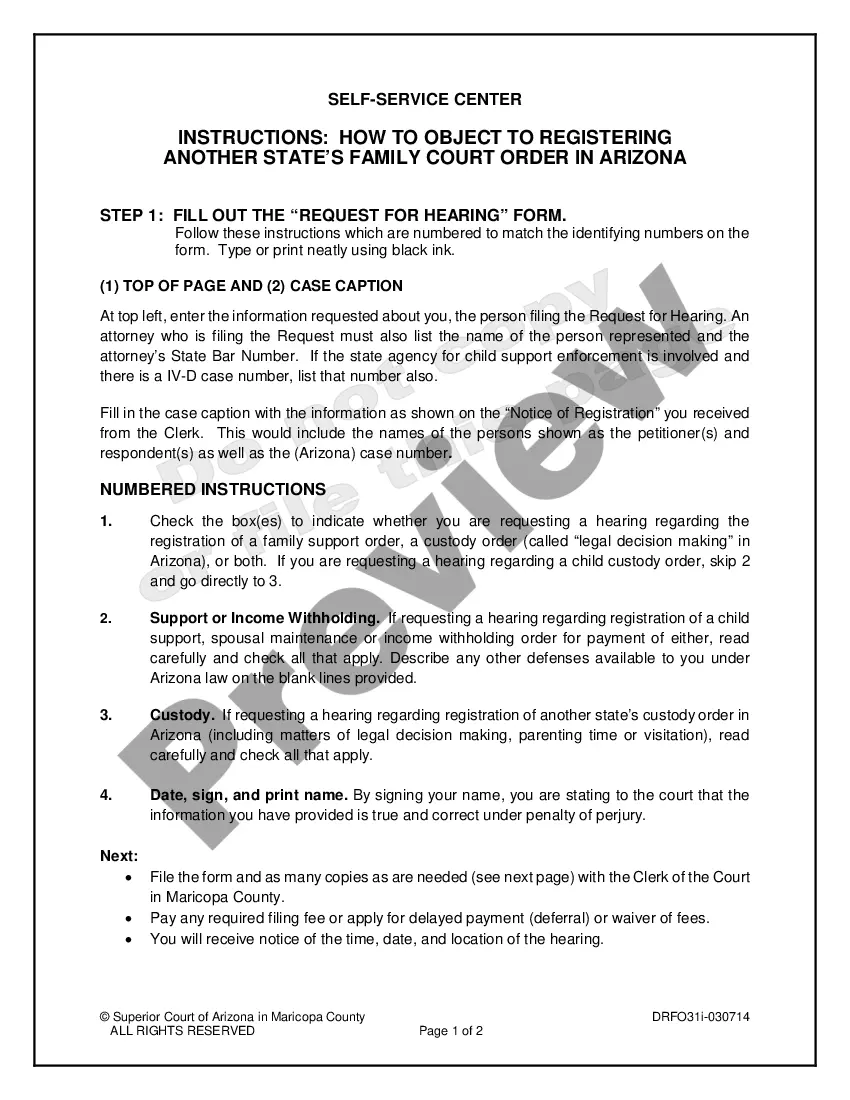
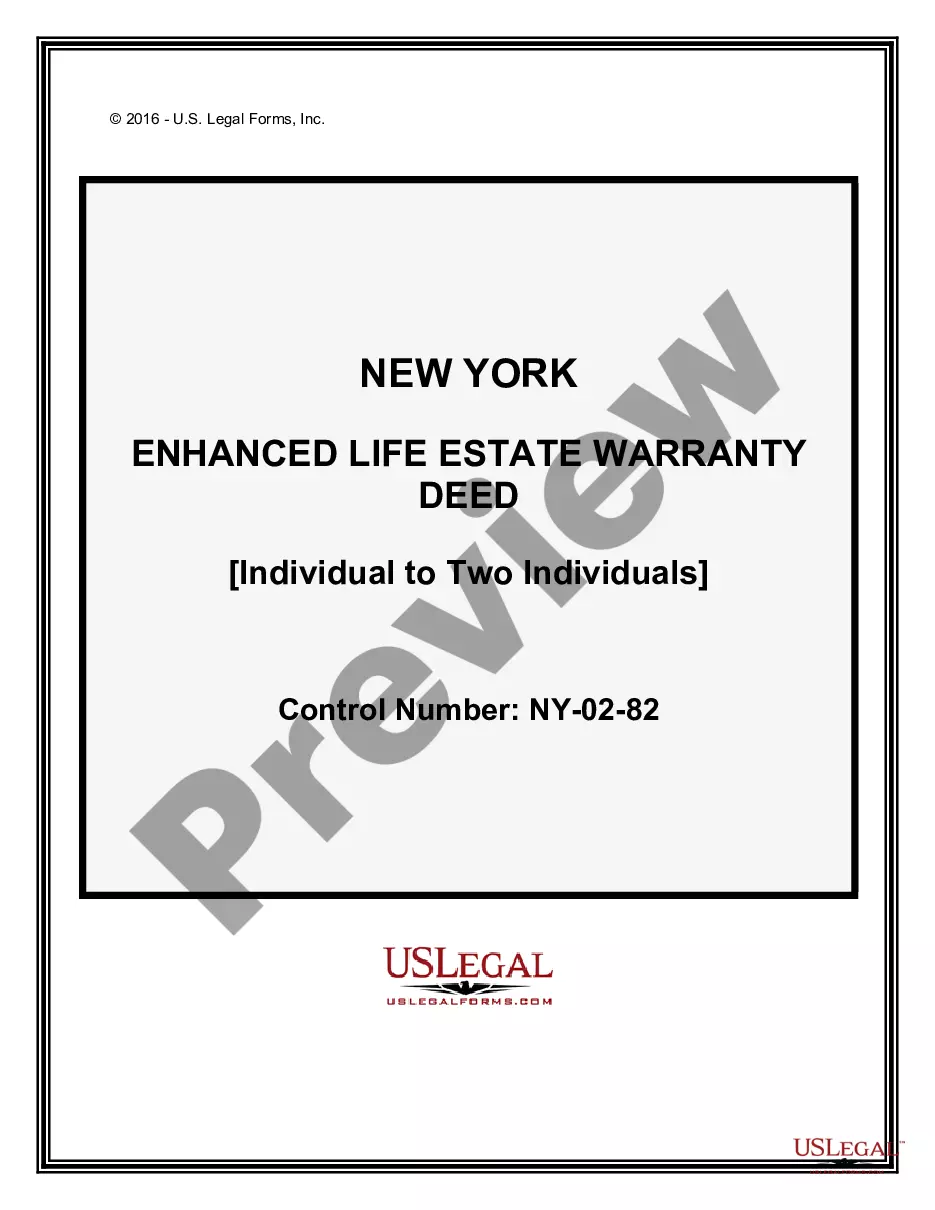
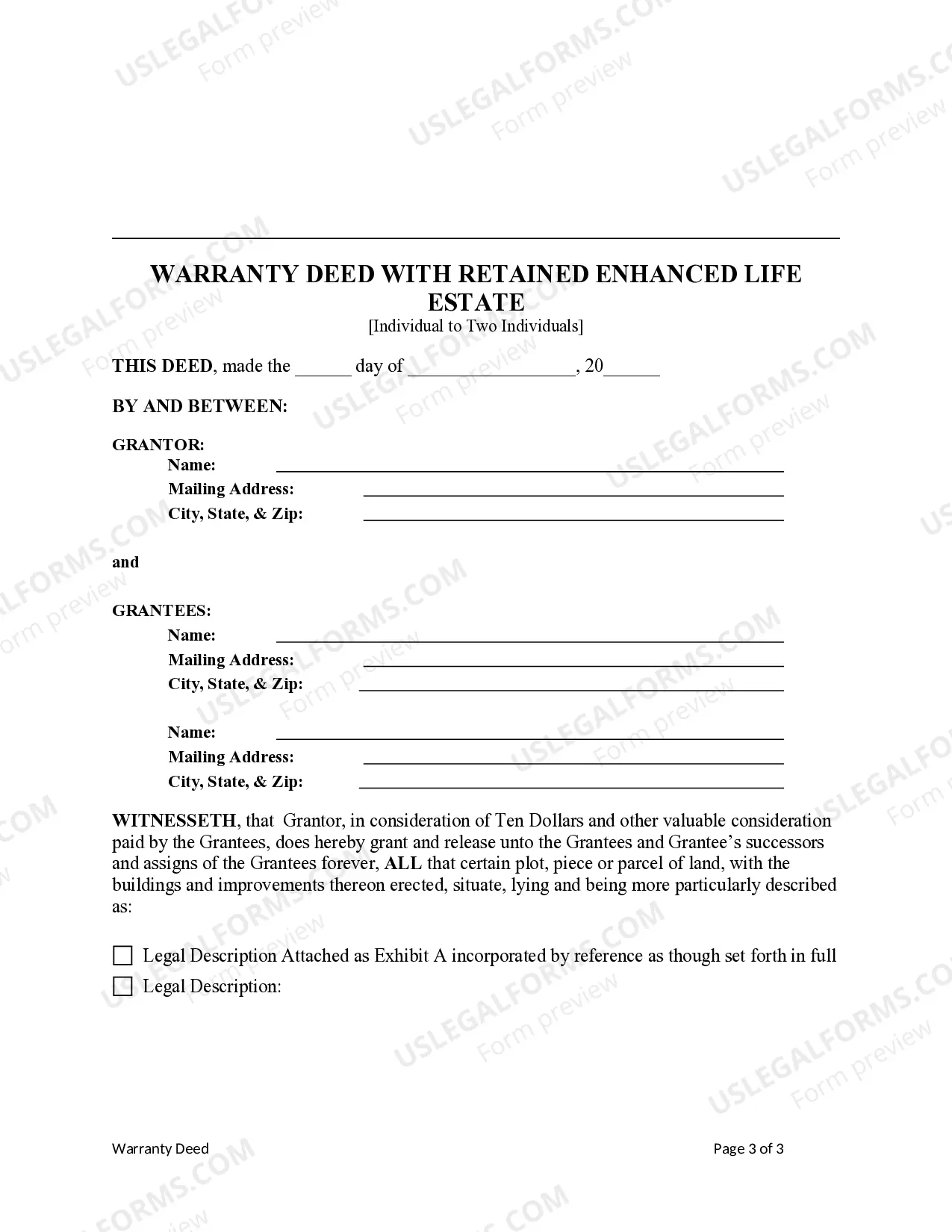
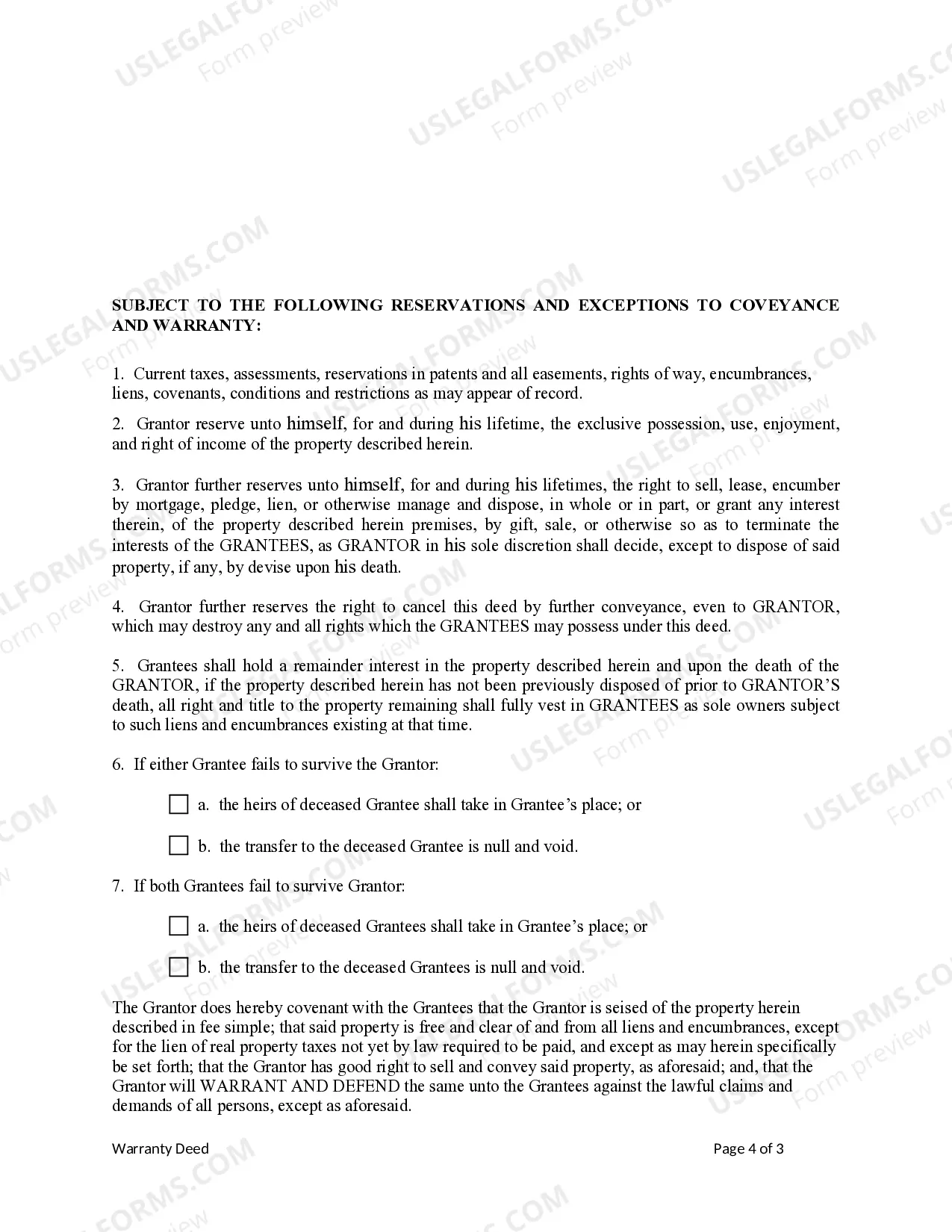
How to fill out New York Enhanced Life Estate Or Lady Bird Warranty Deed From Individual To Two Individuals?
Creating legal documents from the beginning can occasionally be daunting.
Certain situations may require extensive investigation and substantial amounts of money.
If you’re seeking a simpler and more budget-friendly method for generating New York Life Estate Without Will or any other documentation without unnecessary complications, US Legal Forms is readily available.
Our online library of over 85,000 current legal documents covers nearly every facet of your financial, legal, and personal matters. With only a few clicks, you can swiftly acquire state- and county-specific forms meticulously crafted for you by our legal experts.
Examine the form preview and descriptions to ensure you are on the document you are looking for.
- Utilize our platform whenever you require dependable and trustworthy services through which you can promptly discover and download the New York Life Estate Without Will.
- If you’re familiar with our website and have previously established an account with us, simply Log In to your account, find the form, and download it or retrieve it again at any later time in the My documents section.
- Not signed up yet? No worries. It only takes a few minutes to register and browse the catalog.
- But before rushing to download New York Life Estate Without Will, consider these suggestions.
Form popularity
FAQ
An additional potential problem with a Life Estate is that it does not offer creditor protection to the beneficiary, so if the heir has a debt or is sued, the creditor or court can come after the house. As you can see, a traditional Life Estate has the potential to create major conflict within a family.
?Intestate? is the legal term for when someone dies without leaving a will. In New York, a judge in Surrogate's Court will appoint an administrator to lead intestate estates through probate. Administrators, like executors, are empowered legally and financially to act on behalf of the estate.
This process begins by determining who is in the family. If there is a spouse and no children, the spouse receives 100 percent of the estate. If there is a spouse and children, the spouse receives $50,000 plus half of the balance of the estate. The children inherit everything else.
A life estate deed is a tool that can help with estate planning. With a life estate deed, people deed real estate to another party, but reserve a life estate, which means they have the legal right to occupy the property until death. Upon death, the property passes to the beneficiaries.
Spouses in New York Inheritance Law If you and your spouse have no biological or adopted children together, and you have no children outside this marriage, then your spouse will receive all of your property. But if there are biological or adopted children involved, things change a bit.