Life Estate Language For Deed
Description
Get your form ready online
Our built-in tools help you complete, sign, share, and store your documents in one place.
Make edits, fill in missing information, and update formatting in US Legal Forms—just like you would in MS Word.
Download a copy, print it, send it by email, or mail it via USPS—whatever works best for your next step.
Sign and collect signatures with our SignNow integration. Send to multiple recipients, set reminders, and more. Go Premium to unlock E-Sign.
If this form requires notarization, complete it online through a secure video call—no need to meet a notary in person or wait for an appointment.
We protect your documents and personal data by following strict security and privacy standards.

Make edits, fill in missing information, and update formatting in US Legal Forms—just like you would in MS Word.

Download a copy, print it, send it by email, or mail it via USPS—whatever works best for your next step.

Sign and collect signatures with our SignNow integration. Send to multiple recipients, set reminders, and more. Go Premium to unlock E-Sign.

If this form requires notarization, complete it online through a secure video call—no need to meet a notary in person or wait for an appointment.

We protect your documents and personal data by following strict security and privacy standards.
Looking for another form?
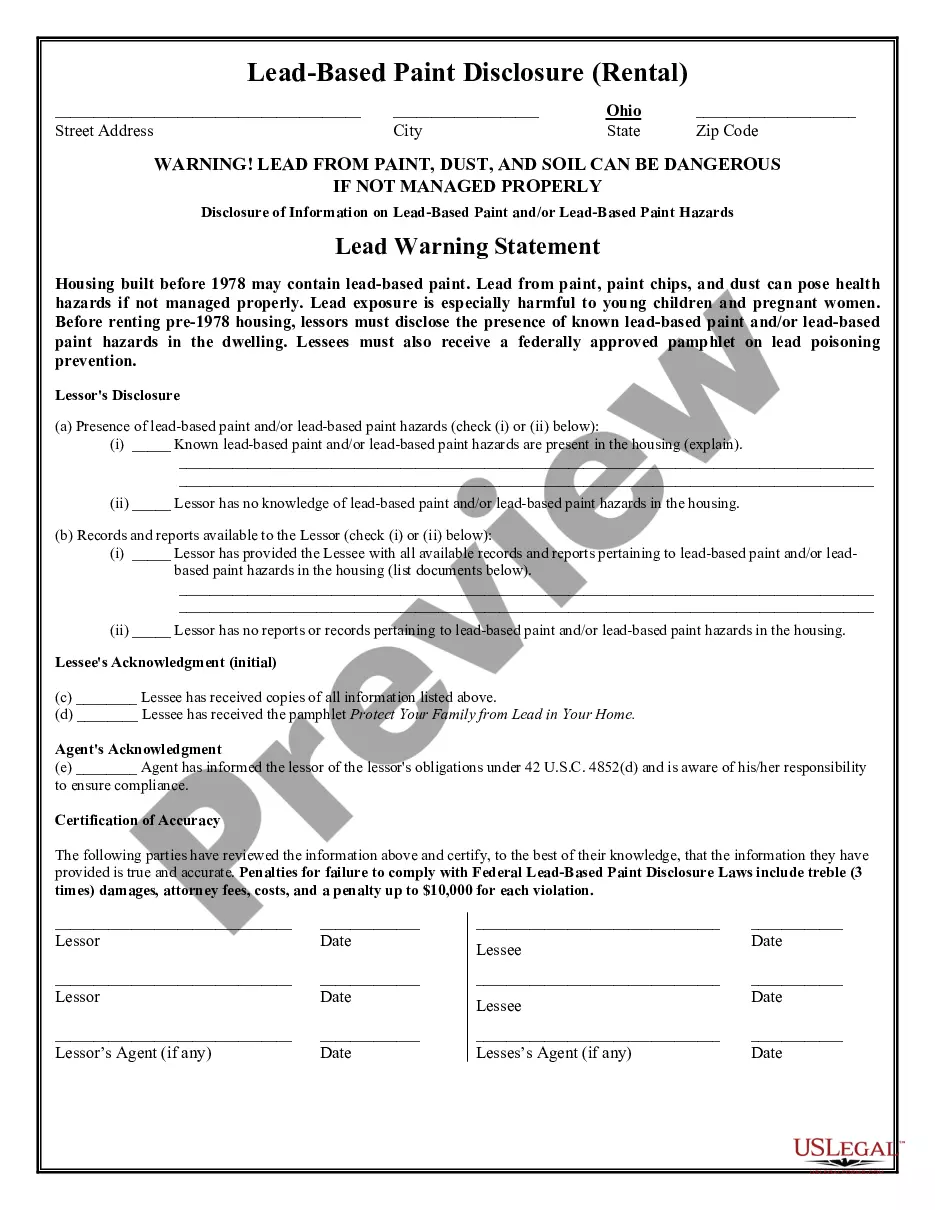
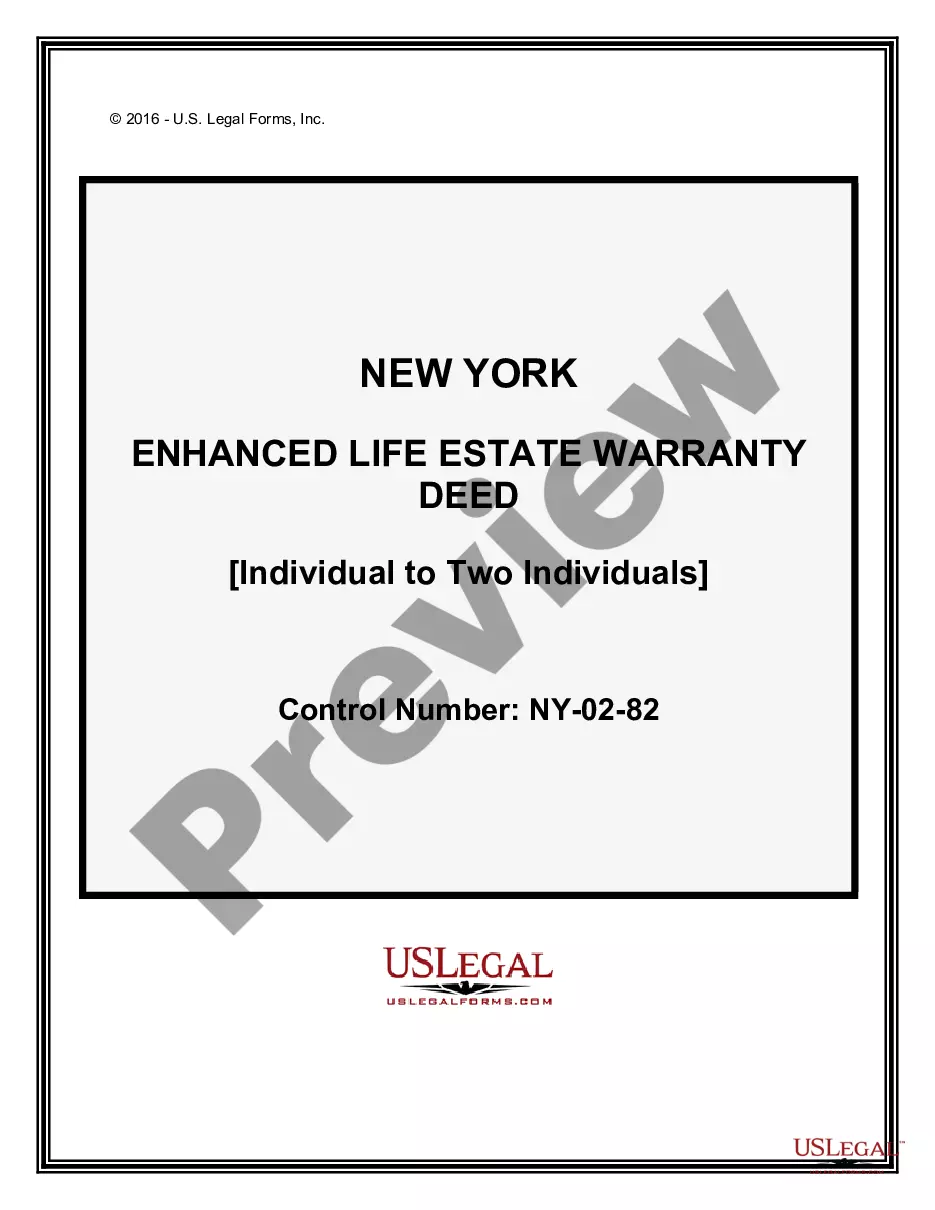
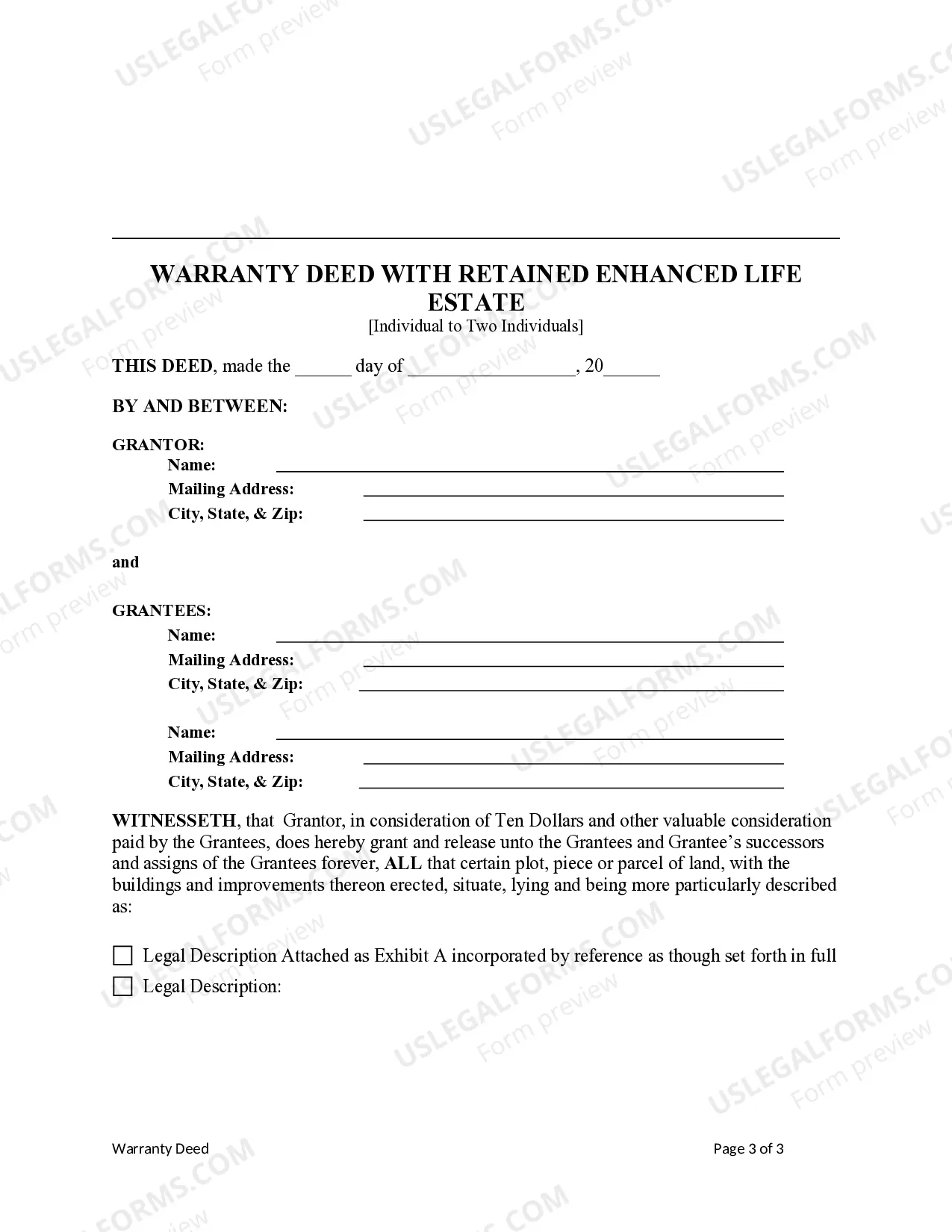
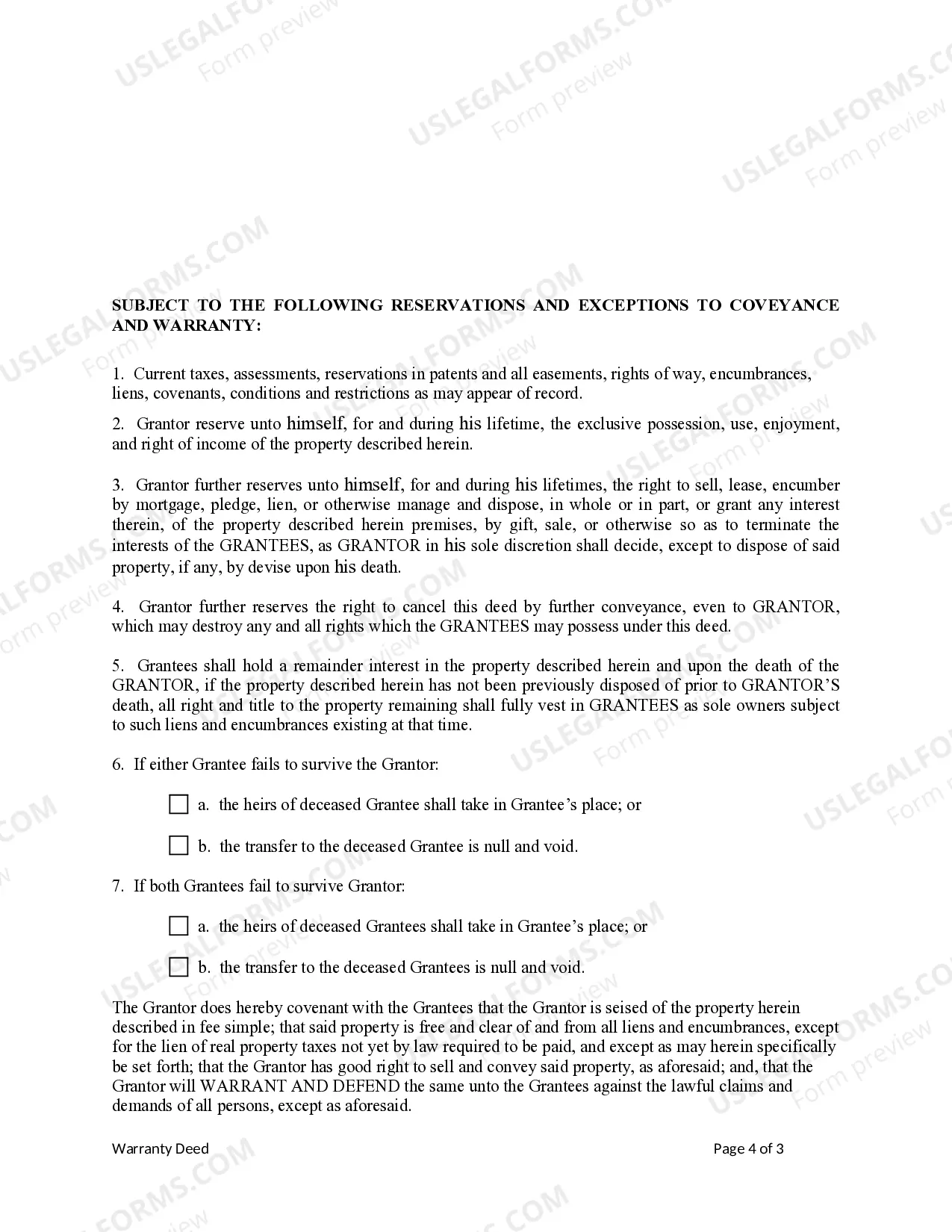
How to fill out New York Enhanced Life Estate Or Lady Bird Warranty Deed From Individual To Two Individuals?
- Log into your existing US Legal Forms account to access your previous templates. Ensure your subscription is active; otherwise, renew it according to your chosen plan.
- If you’re new, start by previewing the available forms. Review their descriptions carefully to select the one that aligns with your requirements and local legal standards.
- In case you need a different form, utilize the search function to find the appropriate template. Confirm it suits your needs before proceeding.
- Purchase your selected document by clicking the Buy Now button and select your desired subscription plan. You’ll need to create an account to unlock full access.
- Complete your payment using credit card information or your PayPal account before finalizing your purchase.
- Download the template directly to your device. You can also return to your profile at any time to access it from the My Forms section.
In conclusion, US Legal Forms simplifies the process of acquiring crucial legal documents. With a wealth of templates and expert assistance, you can ensure that your life estate language for a deed is both accurate and legally sound.
Explore the vast library today and take the first step towards hassle-free legal documentation!
Form popularity
FAQ
A life estate clause often specifies the rights of the life tenant and the remainder beneficiaries. For instance, it may state, 'I grant my property to John for his lifetime, and upon his death, the property will pass to Mary.' Using precise life estate language for deed ensures that all parties clearly understand their rights and responsibilities, helping to prevent future disputes.
The granting clause in a deed is a specific statement that conveys ownership of the property from one party to another. It typically includes phrases like 'grant,' 'convey,' or 'transfer,' clearly indicating the intent to transfer title. Understanding the correct life estate language for deed is essential, as this clause establishes the legal foundation for ownership rights.
Generally, a will cannot override a life estate because the life estate grants specific rights that remain in effect until the life tenant passes away. The life tenant retains the right to live in or manage the property as they see fit, regardless of changes made in the will. Thus, it is essential to understand how life estate language for deed operates in conjunction with estate planning to avoid conflicts.
An example of a life estate can be found in a scenario where a parent transfers ownership of their home to their child but retains the right to live there until their death. This arrangement allows the parent to enjoy full use of the home while ensuring the property passes to the child without going through probate. Using clear life estate language for deed is crucial in such cases to avoid legal complications later.
A will with a life estate clause typically specifies that an individual, known as the life tenant, has the right to use the property during their lifetime, after which ownership transfers to another person. For instance, your will might say, 'I give my house to my daughter for her lifetime, and upon her passing, it will go to my grandson.' This life estate language for deed helps clarify ownership transfer and usage rights.
To write a real estate deed, you must start with a clear title that identifies the property and the parties involved. Ensure you include the legal description of the property, which typically involves the property's boundaries and specifications. Utilize precise life estate language for deed to define the rights of the life tenant clearly. Lastly, sign the deed in front of a notary to validate it legally.
To create a life estate, your deed should include distinct life estate language for deed, such as, 'I grant to name of life tenant a life estate in property description for the duration of their life.' This language establishes the rights of the life tenant while clearly defining the future ownership passing to the remainderman. Using precise language is essential to ensure proper legal standing and enforceability.
Creating a life estate involves using specific phrases that express the intent to grant a life estate. Essential terms include 'life estate,' 'life tenant,' and 'remainderman' to clarify roles in the arrangement. It's important to include language that states the duration of the life estate, often indicated as 'for the life of.' These clear terms help avoid misunderstandings and legal disputes.
The terms of a life estate specify how the property can be used and what happens after the life tenant's passing. Generally, the life tenant enjoys the right to live on and use the property during their lifetime. Once the life tenant dies, the property will automatically transfer to the remainderman without going through probate. Understanding these terms can help you make informed decisions about property management and succession.
The language for a life estate deed must clearly define the rights and responsibilities of the life tenant and remainderman. Common phrases include 'to have and to hold for the life of' followed by the life tenant's name. This specific life estate language for deed conveys the intended duration of ownership and ensures that the property will pass smoothly to the remainderman upon the life tenant's death. Precision in this language is crucial for legal clarity.