Trust Account With Chase
Description

Get your form ready online
Our built-in tools help you complete, sign, share, and store your documents in one place.
Make edits, fill in missing information, and update formatting in US Legal Forms—just like you would in MS Word.
Download a copy, print it, send it by email, or mail it via USPS—whatever works best for your next step.
Sign and collect signatures with our SignNow integration. Send to multiple recipients, set reminders, and more. Go Premium to unlock E-Sign.
If this form requires notarization, complete it online through a secure video call—no need to meet a notary in person or wait for an appointment.
We protect your documents and personal data by following strict security and privacy standards.

Make edits, fill in missing information, and update formatting in US Legal Forms—just like you would in MS Word.

Download a copy, print it, send it by email, or mail it via USPS—whatever works best for your next step.

Sign and collect signatures with our SignNow integration. Send to multiple recipients, set reminders, and more. Go Premium to unlock E-Sign.

If this form requires notarization, complete it online through a secure video call—no need to meet a notary in person or wait for an appointment.

We protect your documents and personal data by following strict security and privacy standards.
Looking for another form?
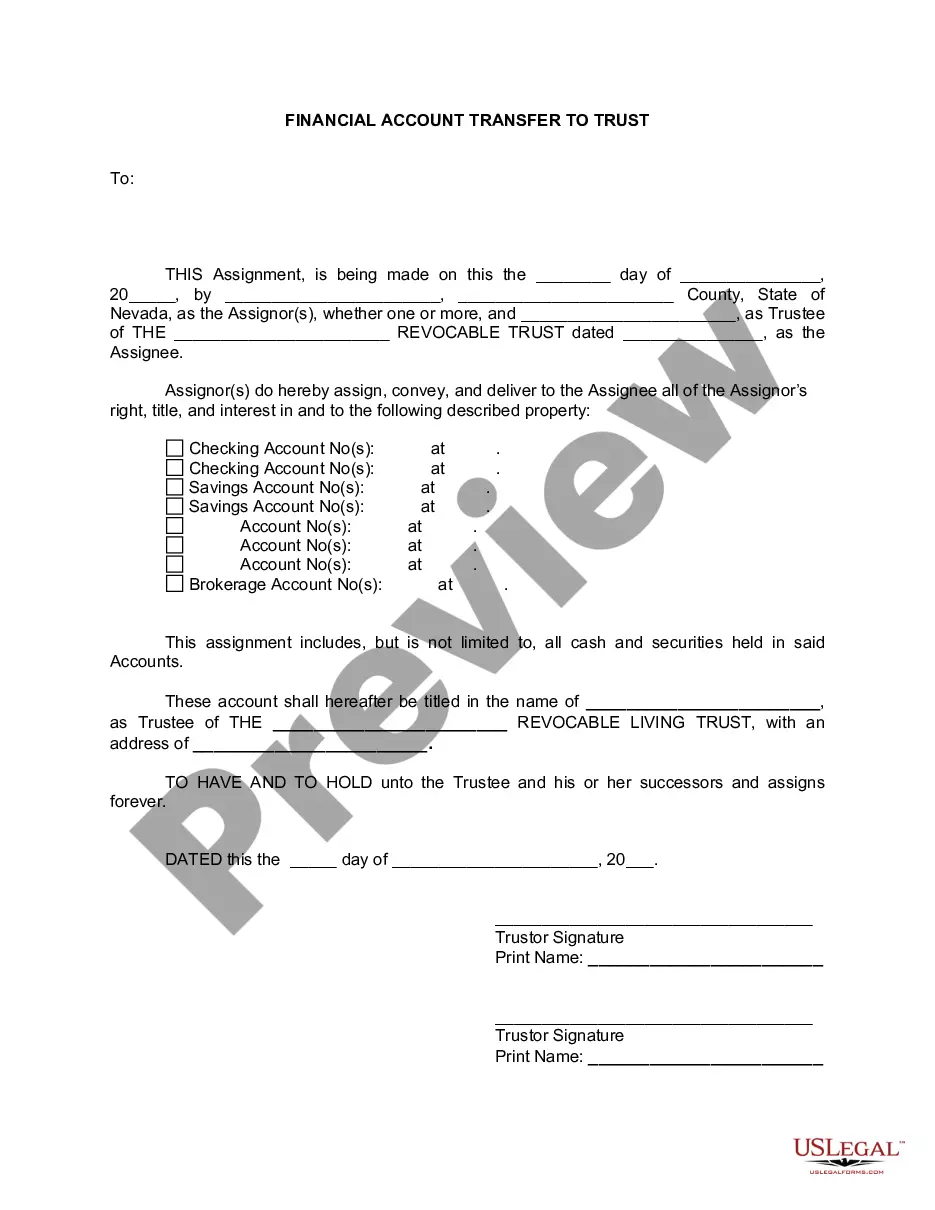
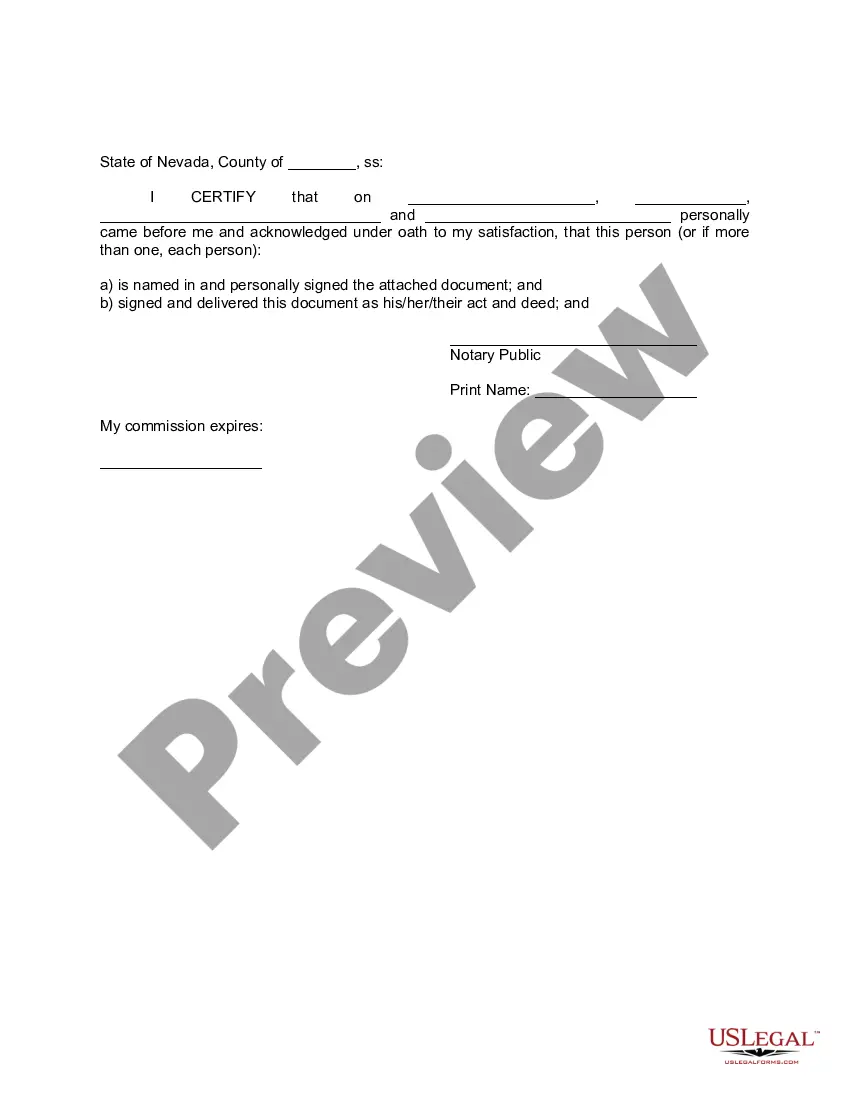
How to fill out Nevada Financial Account Transfer To Living Trust?
- If you're an existing user, start by logging in to your account. Verify that your subscription is active, or renew it according to your payment plan.
- For new users, begin by reviewing the form descriptions in Preview mode. Confirm that you've selected the correct document that aligns with your local jurisdiction.
- If you find discrepancies or require a different template, utilize the Search feature to find the suitable form.
- Once you select the right document, click the Buy Now button and choose a subscription plan that fits your needs. Remember to create an account for access to the extensive library.
- Proceed to make your purchase by entering your credit card information or using your PayPal account.
- Finally, download your selected form and store it on your device. You can always return to it later through the My Forms section of your profile.
In conclusion, US Legal Forms equips you with a robust collection of legal documents that empowers efficient trust account management. With over 85,000 forms available, you are just a few clicks away from having your legal documentation in order.
Take control of your legal needs today—explore US Legal Forms for a hassle-free experience!
Form popularity
FAQ
A trust account with Chase stands out as an excellent choice for managing trusts. This account type is designed for the unique needs of trust management, featuring tools that simplify tracking and reporting. Choosing Chase for your trust account means you benefit from their customer support and expert guidance. This can help you make the best financial decisions for your beneficiaries.
In most cases, you will need an EIN to open a bank account for a trust. The IRS requires an Employer Identification Number, even if the trust does not have employees. When you apply for a trust account with Chase, they will guide you through obtaining an EIN. This ensures compliance with tax regulations and streamlines account management.
Yes, you can open a bank account under a trust. When you open a trust account with Chase, you must provide specific documentation, such as the trust agreement and personal identification. This allows the trustee to access and manage the funds as needed. It’s a straightforward process that helps ensure your trust operates smoothly.
Chase is recognized as one of the best banks for opening a trust account. Their trust accounts come with strong support and well-established management tools. Additionally, by choosing Chase, you gain access to a variety of financial services that can assist in wealth management and planning. This can greatly benefit you and your beneficiaries.
A trust account with Chase is often the best option for managing trust funds. This type of account offers features tailored for trusts, including separate records for each beneficiary. Furthermore, trust accounts usually come with reporting tools to help you keep track of financial activities. This makes it easier to manage the assets held in the trust.
Yes, you can open a bank account specifically for a trust. A trust account with Chase allows you to manage funds for beneficiaries effectively. You’ll need to provide the trust document and identification for the trustee. This process ensures that your trust is funded and managed according to your wishes.
Chase may require a minimum deposit amount to open a trust account, depending on the type of account you choose. It's always a good idea to check with their customer service or website for specific requirements. Maintaining this minimum balance can help you avoid fees, making it easier to manage your trust funds effectively. If you need assistance, consider checking uslegalforms for guidance on setting up your trust.
In a trust bank account with Chase, access is primarily granted to the trustee, who is responsible for managing the account and ensuring compliance with the trust terms. Additionally, co-trustees can share access if designated by the trust agreement. Beneficiaries have no direct access unless specifically allowed by the trust's instructions. Understanding these limitations is crucial for effective trust governance.
Access to funds in a trust account with Chase typically depends on the terms set out in the trust agreement. Generally, the trustee has full authority to manage the account and distribute funds as needed. Beneficiaries may only access funds according to the instructions outlined in the trust. It is essential to understand these roles to ensure proper management of the trust assets.
To open a trust account with Chase, start by gathering necessary documents, including the trust agreement, tax identification number, and personal identification. Next, visit a local Chase branch or their website to fill out the account application. You may also need to provide information about the trustees and beneficiaries. Once approved, you can fund the account and manage your trust transactions.