Bank Account For Trust
Description


Get your form ready online
Our built-in tools help you complete, sign, share, and store your documents in one place.
Make edits, fill in missing information, and update formatting in US Legal Forms—just like you would in MS Word.
Download a copy, print it, send it by email, or mail it via USPS—whatever works best for your next step.
Sign and collect signatures with our SignNow integration. Send to multiple recipients, set reminders, and more. Go Premium to unlock E-Sign.
If this form requires notarization, complete it online through a secure video call—no need to meet a notary in person or wait for an appointment.
We protect your documents and personal data by following strict security and privacy standards.

Make edits, fill in missing information, and update formatting in US Legal Forms—just like you would in MS Word.

Download a copy, print it, send it by email, or mail it via USPS—whatever works best for your next step.

Sign and collect signatures with our SignNow integration. Send to multiple recipients, set reminders, and more. Go Premium to unlock E-Sign.

If this form requires notarization, complete it online through a secure video call—no need to meet a notary in person or wait for an appointment.

We protect your documents and personal data by following strict security and privacy standards.
Looking for another form?
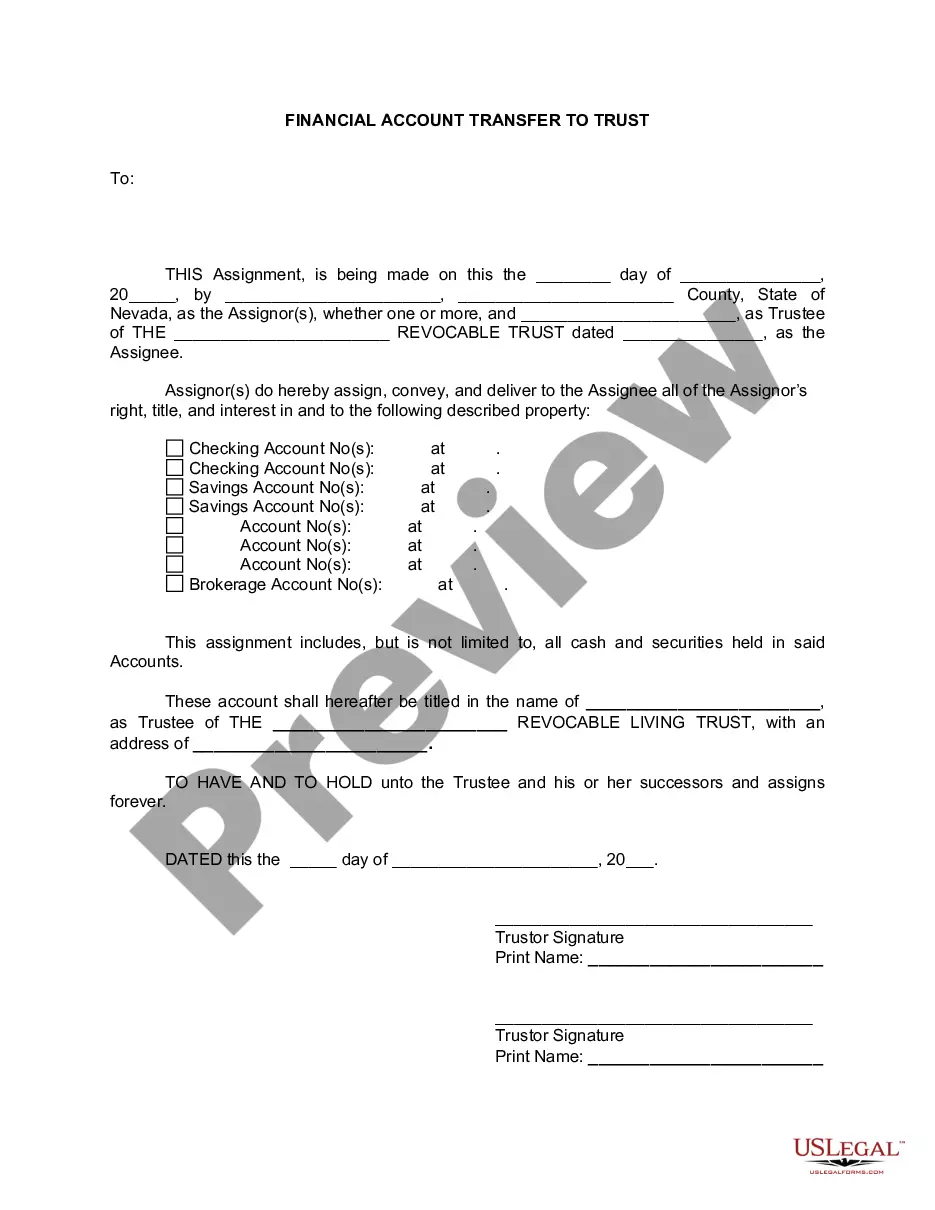
How to fill out Nevada Financial Account Transfer To Living Trust?
- First-time users should explore US Legal Forms by visiting the website and searching for 'bank account for trust' to find the appropriate template.
- Review the form description and ensure it meets your needs, matching your local jurisdiction requirements before proceeding.
- If you require another template, utilize the Search tab at the top of the page to locate the correct document that suits your specifications.
- Once you identify your form, click the 'Buy Now' button to select your desired subscription plan and create an account for access.
- Complete your purchase by entering your payment details, using either a credit card or PayPal for convenience.
- Download the completed form to your device, and you can access it anytime from the 'My Forms' section in your profile. Removing the hassle, US Legal Forms ensures you have your documents on hand when you need them.
By following these straightforward steps, you can effectively acquire the necessary forms for setting up a bank account for your trust. US Legal Forms not only provides a robust collection of templates, but also ensures you have access to expert support.
Start your journey towards setting up your bank account for trust today! Visit US Legal Forms now and explore the extensive resources available to make your legal documentation hassle-free.
Form popularity
FAQ
To list bank accounts in a trust, you should first create a comprehensive inventory of all assets, including financial accounts. A bank account for trust should be clearly identified, detailing how each account fits within the trust structure. Working with a legal professional or using services from platforms like uslegalforms can streamline this process, ensuring everything is accurately recorded and compliant with relevant laws.
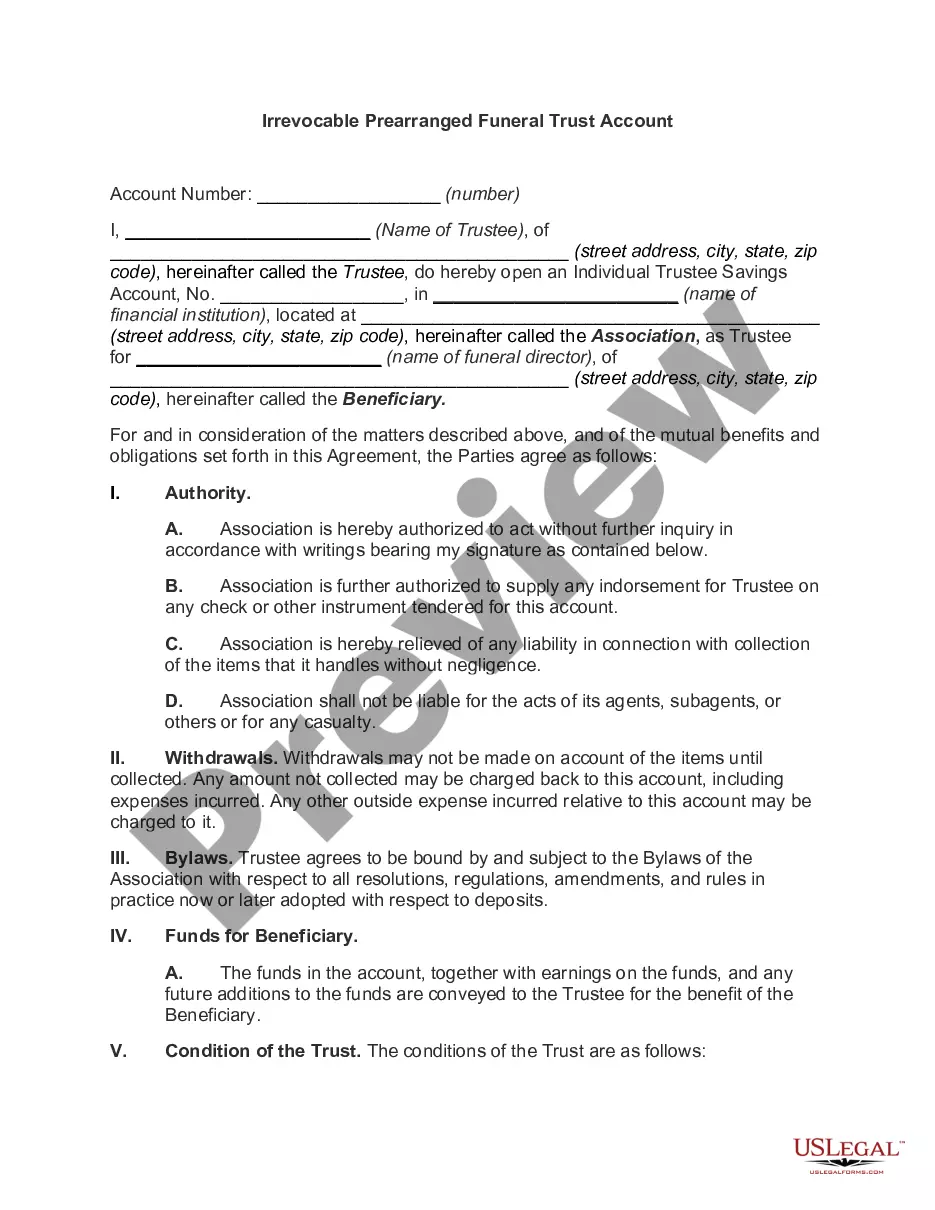
The main purpose of a trust account is to manage and protect assets for the benefit of designated beneficiaries. By using a bank account for trust, individuals can set specific terms under which the assets will be distributed, providing clarity and security for financial matters. This structure can crucially help in estate planning, ensuring that final wishes are honored and that beneficiaries receive their intended inheritance.
A trust account example could include an estate fund established for heirs after the grantor's death. The bank account for trust holds the estate funds until certain conditions are fulfilled, such as the completion of probate. This mechanism ensures that the funds are managed according to the trust's instructions, providing a secure way to handle financial matters.
An example of a trust account is a special savings account set up for a child's education. In this scenario, a parent might open a bank account for trust, designating funds to be used exclusively for tuition and other educational expenses. This setup ensures that financial resources are available when needed and used for their intended purpose.
When selecting a bank account for trust purposes, it is vital to consider options such as revocable and irrevocable trust accounts. Each type serves different needs; a revocable account allows changes throughout the account holder's life, while an irrevocable account provides greater protection for beneficiaries after the grantor's passing. Choosing the right type ensures that the account meets the specific objectives of your trust.
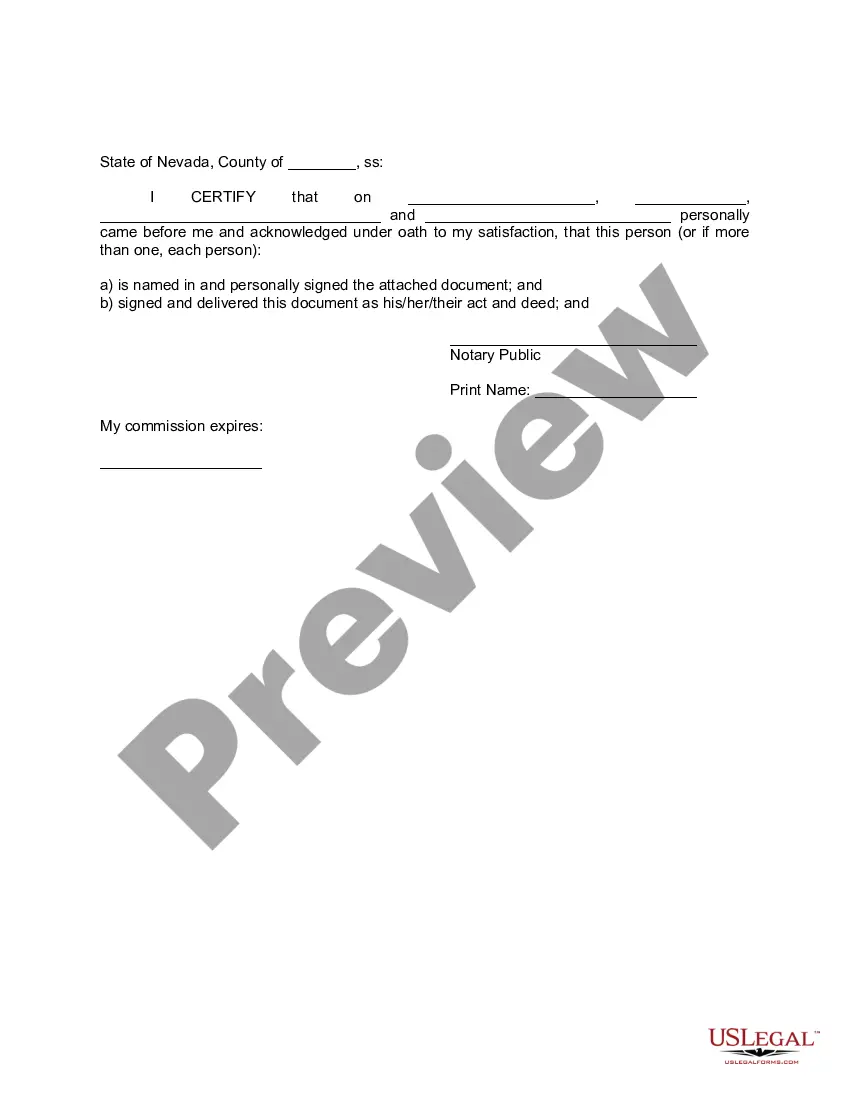
A bank account in trust for essentially designates that the assets within the account are managed by one person for the benefit of another. This type of arrangement allows the trust owner to control how funds are used until a specific condition is met, such as reaching a certain age. Using a bank account for trust ensures that financial resources are safeguarded according to the trust’s terms, providing peace of mind for both the trustee and beneficiaries.
Creating a bank account for a trust involves several steps. First, ensure you have all the necessary documentation, including the trust certificate. Then, go to a bank that supports trust accounts and present these documents to open the account. Establishing a bank account for trust ensures that all transactions are organized and comply with legal standards.
To set up a bank account for a trust, start by gathering the trust's legal documents, including the trust deed. Next, visit your chosen bank, where you'll discuss the specific type of account suited for your trust. Prepare to provide identification for both the trustee and the trust itself. This process ensures that you establish a secure and functional bank account for trust assets.
The best bank account for a trust typically offers features like enhanced interest rates and no monthly fees. Look for financial institutions that provide dedicated trust accounts designed specifically for this purpose. A bank account for trust should also allow easy access to funds for beneficiaries while ensuring that the trust's assets stay secure. Choosing the right account helps you manage funds efficiently.
Yes, a trust requires a special bank account to manage its assets effectively. This type of account distinguishes trust funds from personal funds, reducing confusion and simplifying tax reporting. Using a designated bank account for trust is essential for legal compliance and accurate accounting. This separation fosters proper management and helps protect trust assets.