No Divorce
Description
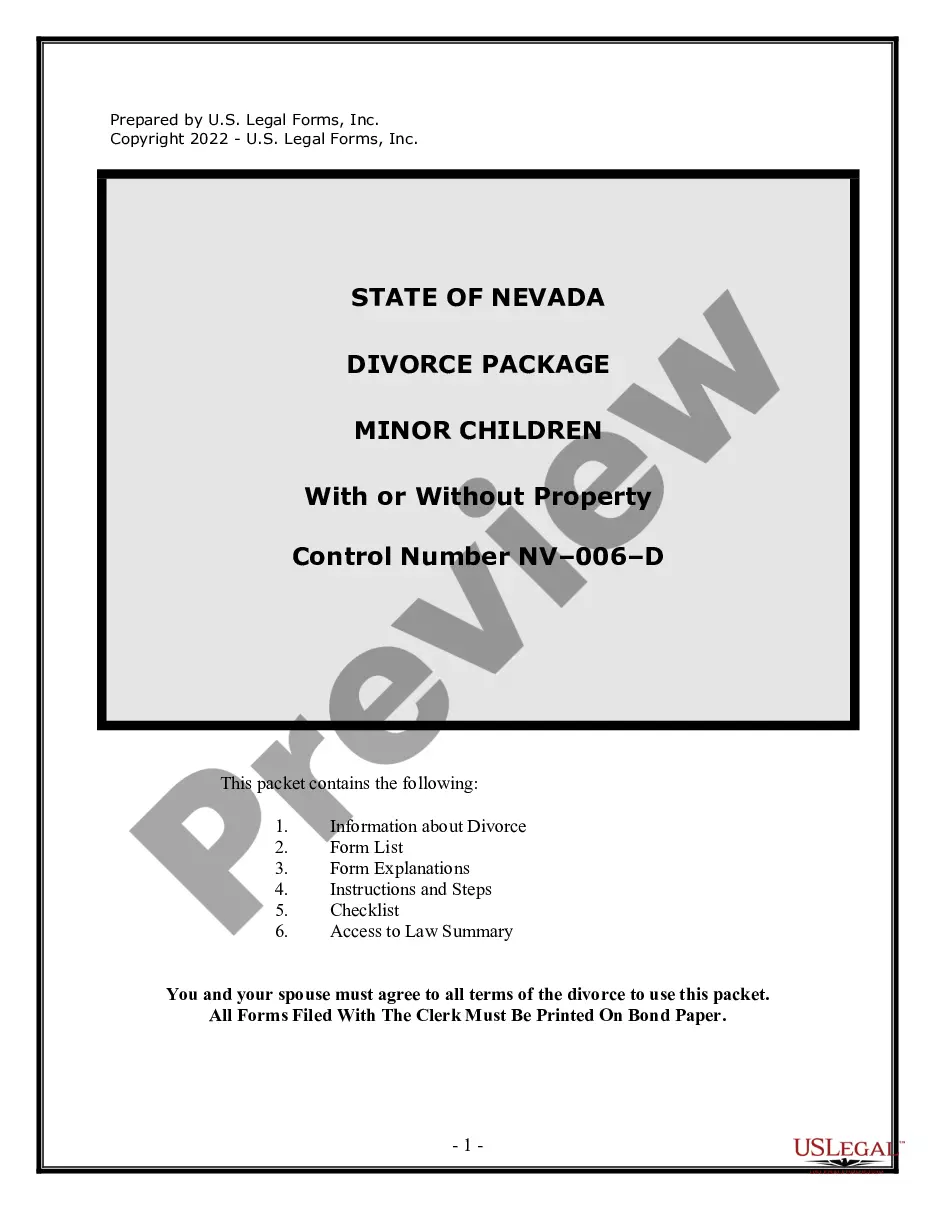
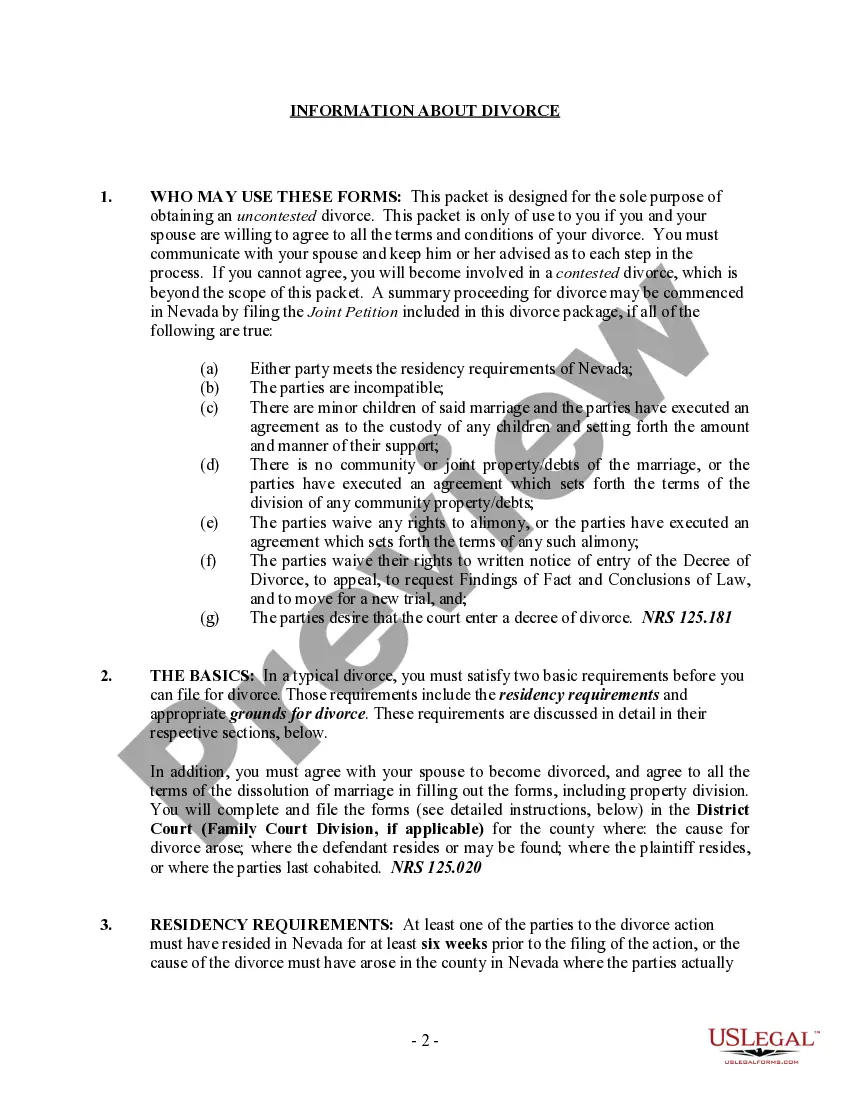
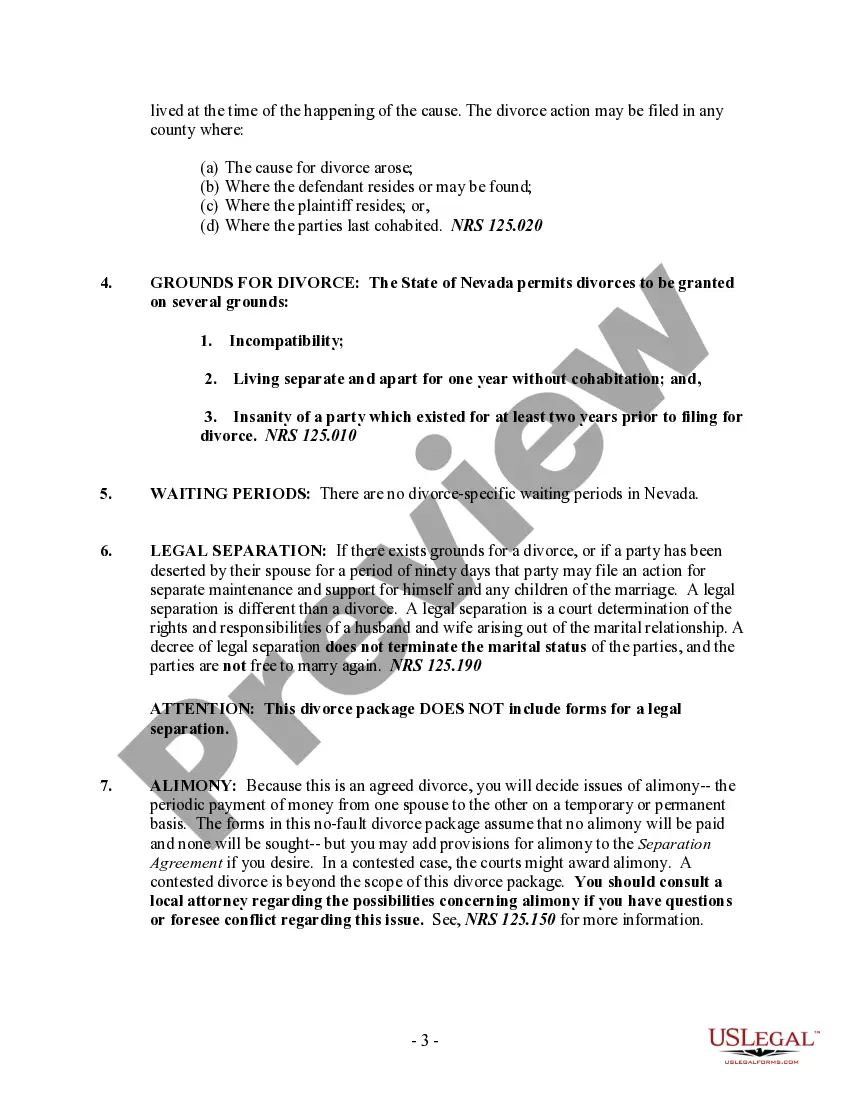
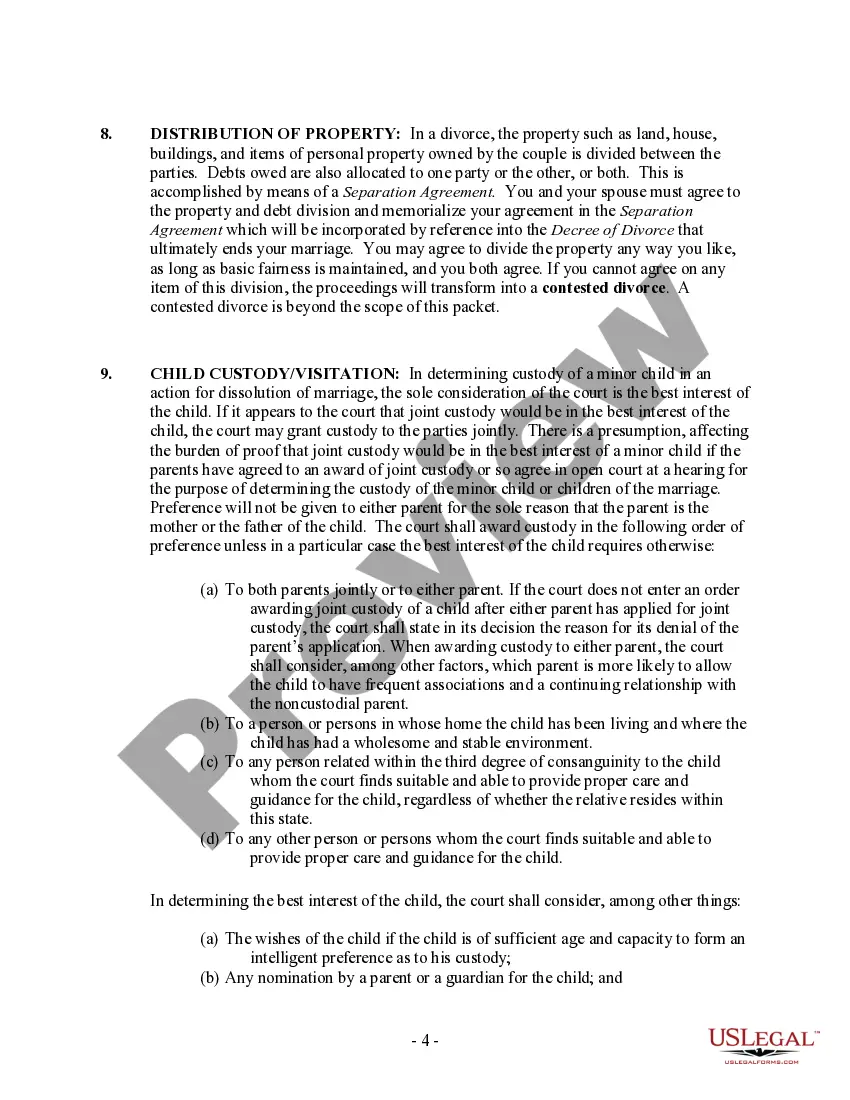

Get your form ready online
Our built-in tools help you complete, sign, share, and store your documents in one place.
Make edits, fill in missing information, and update formatting in US Legal Forms—just like you would in MS Word.
Download a copy, print it, send it by email, or mail it via USPS—whatever works best for your next step.
Sign and collect signatures with our SignNow integration. Send to multiple recipients, set reminders, and more. Go Premium to unlock E-Sign.
If this form requires notarization, complete it online through a secure video call—no need to meet a notary in person or wait for an appointment.
We protect your documents and personal data by following strict security and privacy standards.

Make edits, fill in missing information, and update formatting in US Legal Forms—just like you would in MS Word.

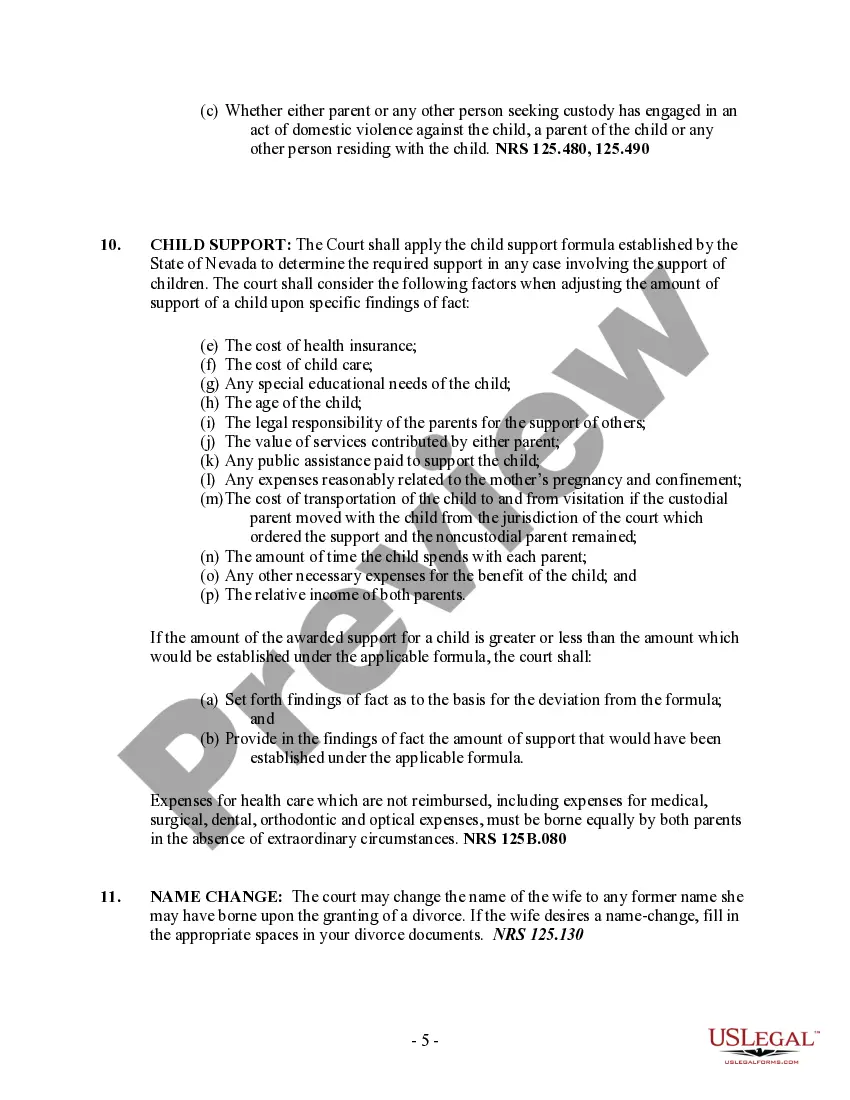
Download a copy, print it, send it by email, or mail it via USPS—whatever works best for your next step.

Sign and collect signatures with our SignNow integration. Send to multiple recipients, set reminders, and more. Go Premium to unlock E-Sign.

If this form requires notarization, complete it online through a secure video call—no need to meet a notary in person or wait for an appointment.

We protect your documents and personal data by following strict security and privacy standards.
Looking for another form?






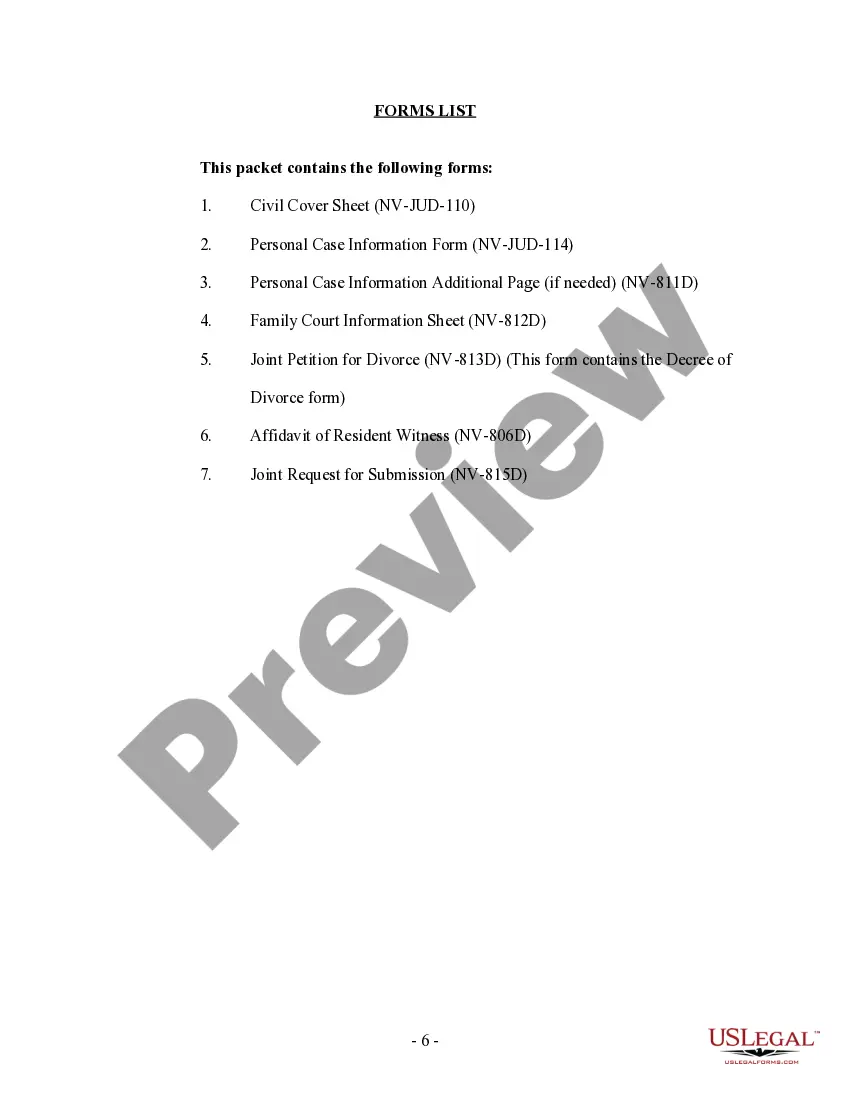
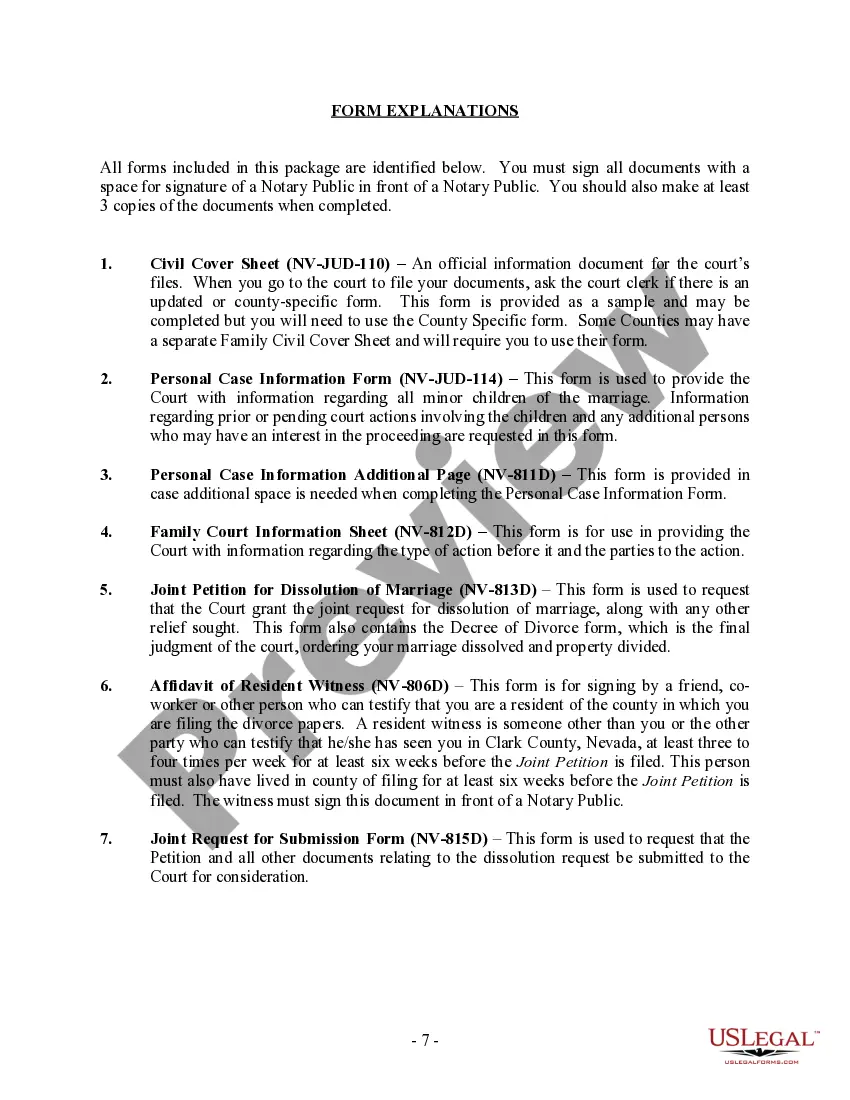
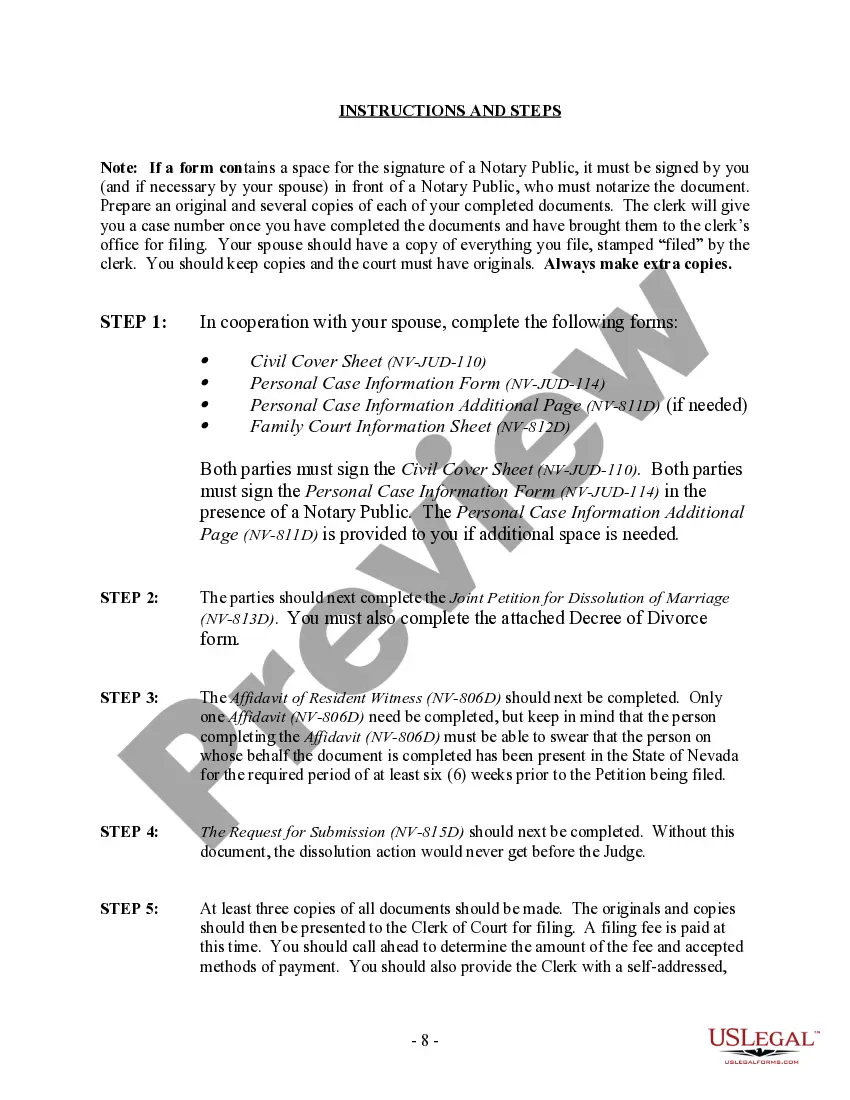
How to fill out Nevada No-Fault Agreed Uncontested Divorce Package For Dissolution Of Marriage For People With Minor Children?
- Log in to your US Legal Forms account if you're a returning user, ensuring your subscription is valid.
- If you're new, start by reviewing the Preview mode and detailed descriptions to choose the right form for your needs.
- Use the Search tab to find additional templates if you have specific requirements or if your initial choice doesn't fit.
- Click the Buy Now button to select a subscription plan that suits you, while you register for an account for continued access.
- Enter your payment information to finalize your purchase, either via credit card or PayPal.
- Download the chosen template to your device and access it anytime through the My Forms menu in your profile.
By following these easy steps, you can secure the necessary legal documents with confidence. US Legal Forms not only enhances your processing experience but also ensures you have expert assistance when needed.
Ready to simplify your legal paperwork? Head over to US Legal Forms today!
Form popularity
FAQ
There is a way to achieve a divorce without court involvement, primarily through negotiation and the use of legal documentation services. By opting for a no divorce procedure, couples can settle their matters privately and with less hassle. USLegal offers comprehensive services that facilitate this process, making it easier to finalize your divorce amicably.
Yes, a couple can indeed finalize their divorce without stepping foot in court by using mediation or an uncontested divorce process. This approach allows partners to agree on the terms of their separation, helping to avoid conflict and reduce stress. Tools like USLegal provide templates and resources to help you navigate this route smoothly.
The quickest way to achieve a divorce is often through a no divorce agreement, allowing both parties to reach a mutual understanding without long delays. In some cases, contested divorces take longer due to disagreements. Consider using online platforms like USLegal for guidance to expedite your process.
To start the separation process, initiate an open conversation with your partner about your feelings and the need for space. It is wise to draft a separation agreement that outlines the terms regarding assets, debts, and responsibilities. Using a platform like US Legal Forms can help you find resources and templates to create a clear, structured agreement, making the transition smoother for both parties.
You cannot legally marry someone else while you are still married, even if you are separated. Until your marriage is legally dissolved, you remain bound by the marital contract. However, exploring a no divorce situation offers you flexibility in your relationship status while you navigate your current circumstances.
If you are separated but not divorced, your filing status on taxes typically remains 'Married Filing Jointly' or 'Married Filing Separately.' This status allows you to take advantage of certain tax benefits, like deductions related to dependents. However, you should consult a tax professional to ensure you're complying with tax regulations based on your specific situation.
Instead of divorce, you might consider options such as trial separation or couples therapy. A trial separation can provide both partners with time to reflect on their relationship without the finality of divorce. Engaging in therapy can help you both navigate your emotions and understand each other better, possibly leading to a renewed commitment without the need for a no divorce situation.
To avoid divorce, open communication is essential. Establishing mutual respect and addressing issues together can strengthen your relationship. Additionally, exploring alternatives like separation with no divorce might provide the space needed to work on problems without ending the marriage entirely.
When you separate without divorce, the legal status of your marriage does not change. This means that both partners remain legally married, which can have implications for taxes, benefits, and inheritance. Additionally, you may still face challenges in terms of property division and child custody, as separation does not legally resolve these issues.
Many individuals choose to separate without divorcing due to personal beliefs, financial considerations, or the desire to maintain a family dynamic. Some may find comfort in the familiarity of their relationship while avoiding the legal complexities of divorce. Moreover, the option for no divorce allows people to take a break and evaluate their feelings and future together.