New Mexico Deed On Death Form For Property
Description
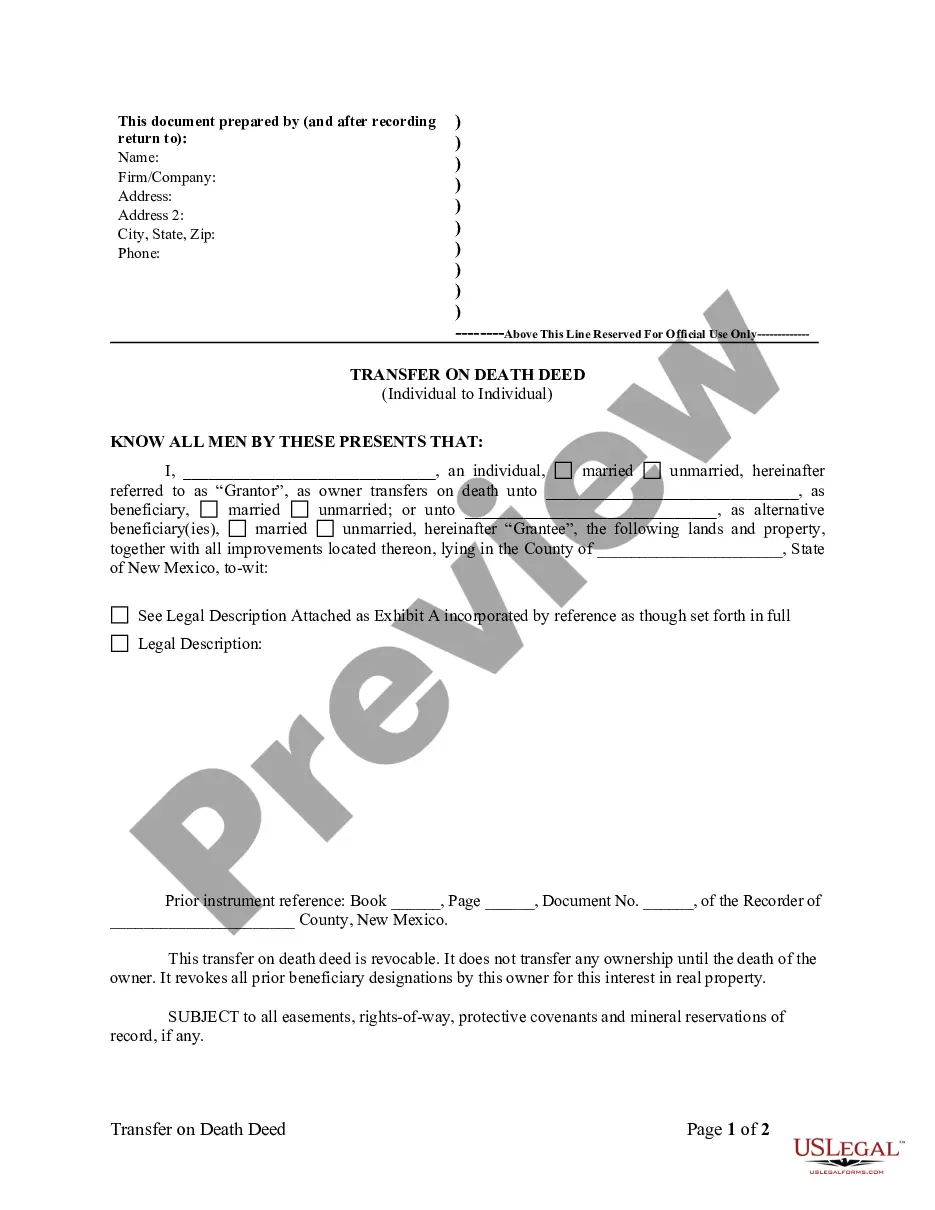
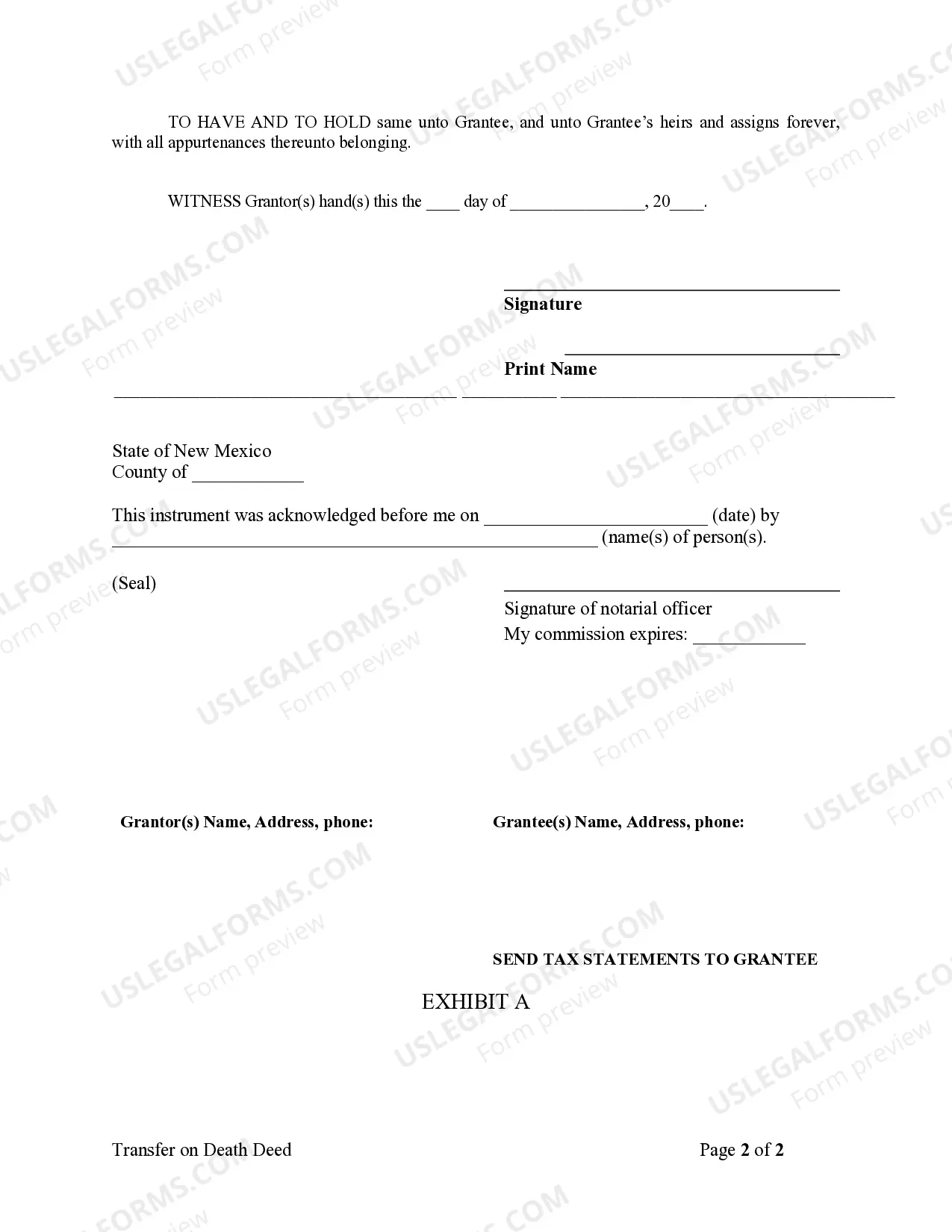


How to fill out New Mexico Transfer On Death Deed Or TOD - Beneficiary Deed For Individual To Individual?
Locating a reliable source for the most up-to-date and suitable legal forms is a significant part of navigating bureaucracy. Identifying the correct legal paperwork requires accuracy and careful consideration, which is why it's essential to obtain examples of the New Mexico Deed On Death Form For Property solely from reputable providers, such as US Legal Forms. An incorrect form can consume your time and delay your current situation. With US Legal Forms, you have minimal concerns. You can access and verify all the information regarding the document’s applicability and significance for your situation and within your state or locality.
Follow these steps to complete your New Mexico Deed On Death Form For Property.
Eliminate the complications associated with your legal paperwork. Explore the extensive US Legal Forms catalog to find legal templates, assess their relevance to your situation, and download them instantly.
- Utilize the catalog navigation or search bar to locate your form.
- Review the description of the form to determine if it meets the criteria of your state and county.
- Examine the form preview, if available, to confirm that the template is indeed the one you wish to use.
- Return to the search if the New Mexico Deed On Death Form For Property does not meet your needs.
- Once you are sure about the form’s applicability, download it.
- If you are a registered user, click Log in to verify and access your chosen forms in My documents.
- If you haven't created an account yet, click Buy now to purchase the template.
- Select the pricing option that aligns with your preferences.
- Proceed to the registration to complete your transaction.
- Finalize your purchase by choosing a payment method (credit card or PayPal).
- Select the file format for downloading the New Mexico Deed On Death Form For Property.
- Once you have the form on your device, you can modify it using the editor or print it for manual completion.
Form popularity
FAQ
The law in New Mexico allows an owner of real property (land or house) to transfer that property to another person (grantee beneficiary) through the use of a Transfer on Death Deed (TODD).
New MexicoTransfer on Death Deed (N.M. Stat. sections 45-6-401 through 45-6-417.) You must sign the deed and get your signature notarized, and then record (file) the deed with the county clerk's office before your death. Otherwise, it won't be valid.
New Mexico real estate in a TOD deed is transferred subject to all recorded transfers or debts, including a mortgage, during the property owner's lifetime. Thus, the beneficiary takes title to the property with any existing mortgage unless the mortgage debt is paid using other funds from the property owner's estate.
A New Mexico transfer on death deed is used to convey real property to one (1) or more beneficiaries upon the death of the owner (the grantor). The grantor in this deed retains ownership of their property until their passing and may revoke the form whenever necessary.
Real Estate and TOD in New Mexico Upon the owner's death, the property automatically transfers to the beneficiary without going through probate. To be valid, a TOD deed must be signed, notarized, and recorded in the county where the property is located before the owner's death.