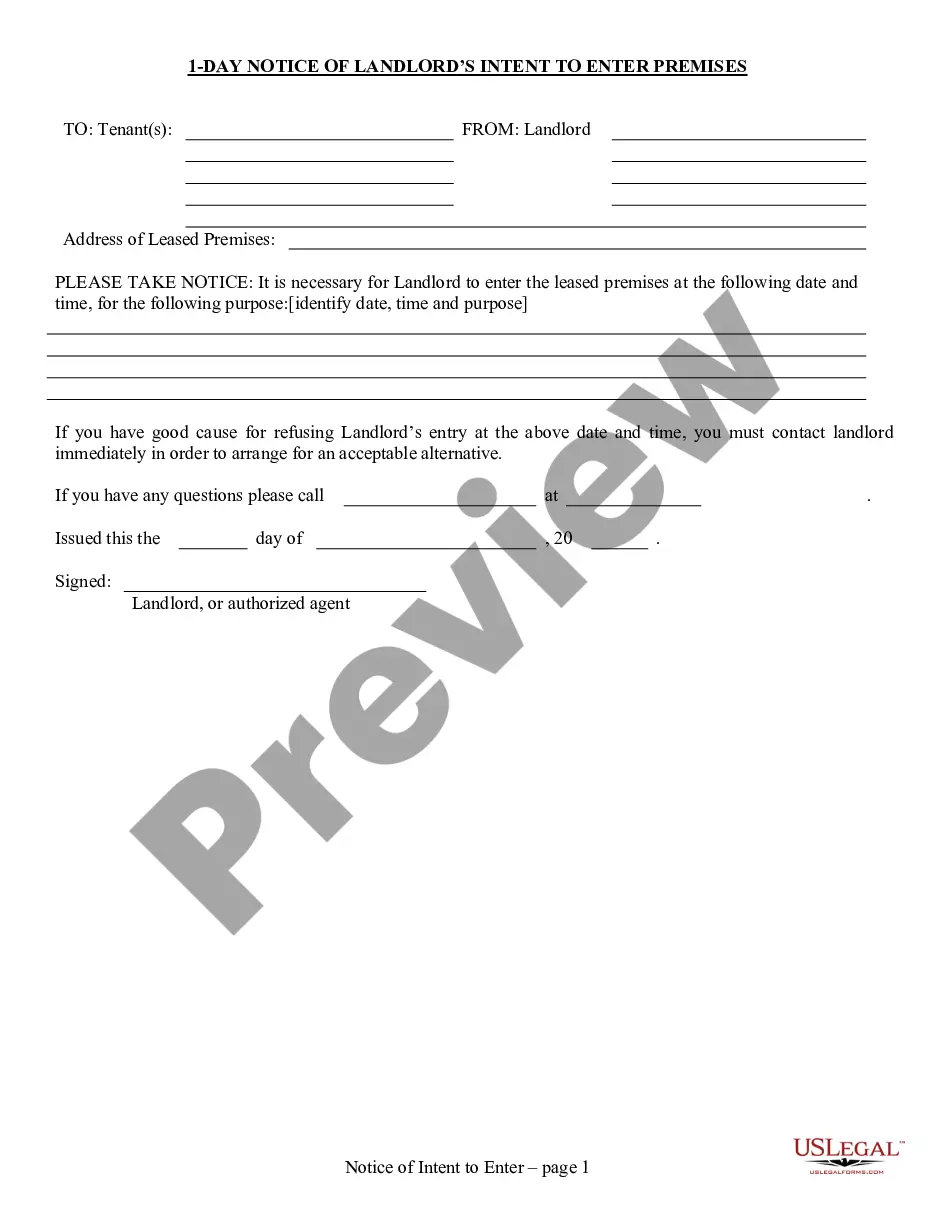
Notice Form For Tenant
Description

Get your form ready online
Our built-in tools help you complete, sign, share, and store your documents in one place.
Make edits, fill in missing information, and update formatting in US Legal Forms—just like you would in MS Word.
Download a copy, print it, send it by email, or mail it via USPS—whatever works best for your next step.
Sign and collect signatures with our SignNow integration. Send to multiple recipients, set reminders, and more. Go Premium to unlock E-Sign.
If this form requires notarization, complete it online through a secure video call—no need to meet a notary in person or wait for an appointment.
We protect your documents and personal data by following strict security and privacy standards.

Make edits, fill in missing information, and update formatting in US Legal Forms—just like you would in MS Word.

Download a copy, print it, send it by email, or mail it via USPS—whatever works best for your next step.

Sign and collect signatures with our SignNow integration. Send to multiple recipients, set reminders, and more. Go Premium to unlock E-Sign.

If this form requires notarization, complete it online through a secure video call—no need to meet a notary in person or wait for an appointment.

We protect your documents and personal data by following strict security and privacy standards.
Looking for another form?







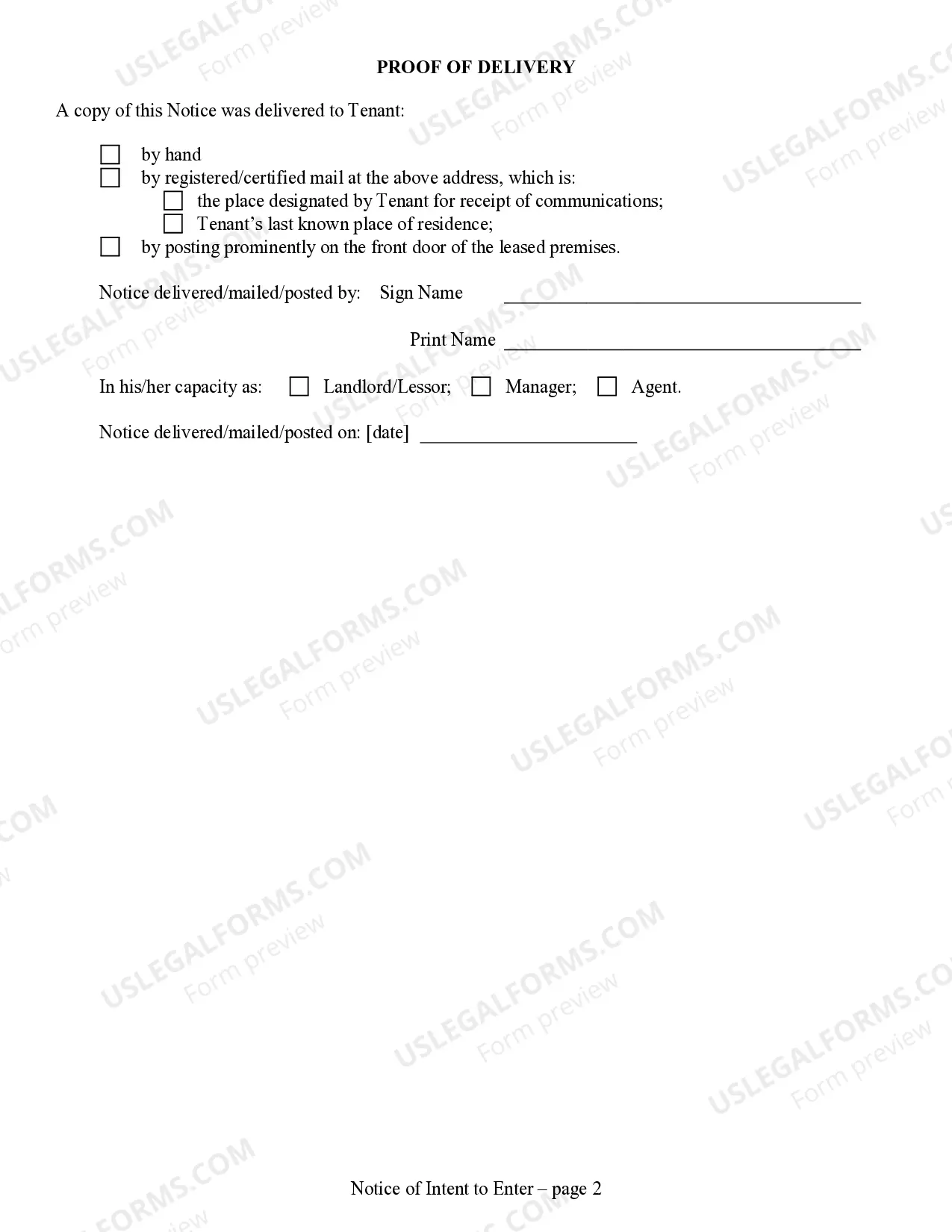
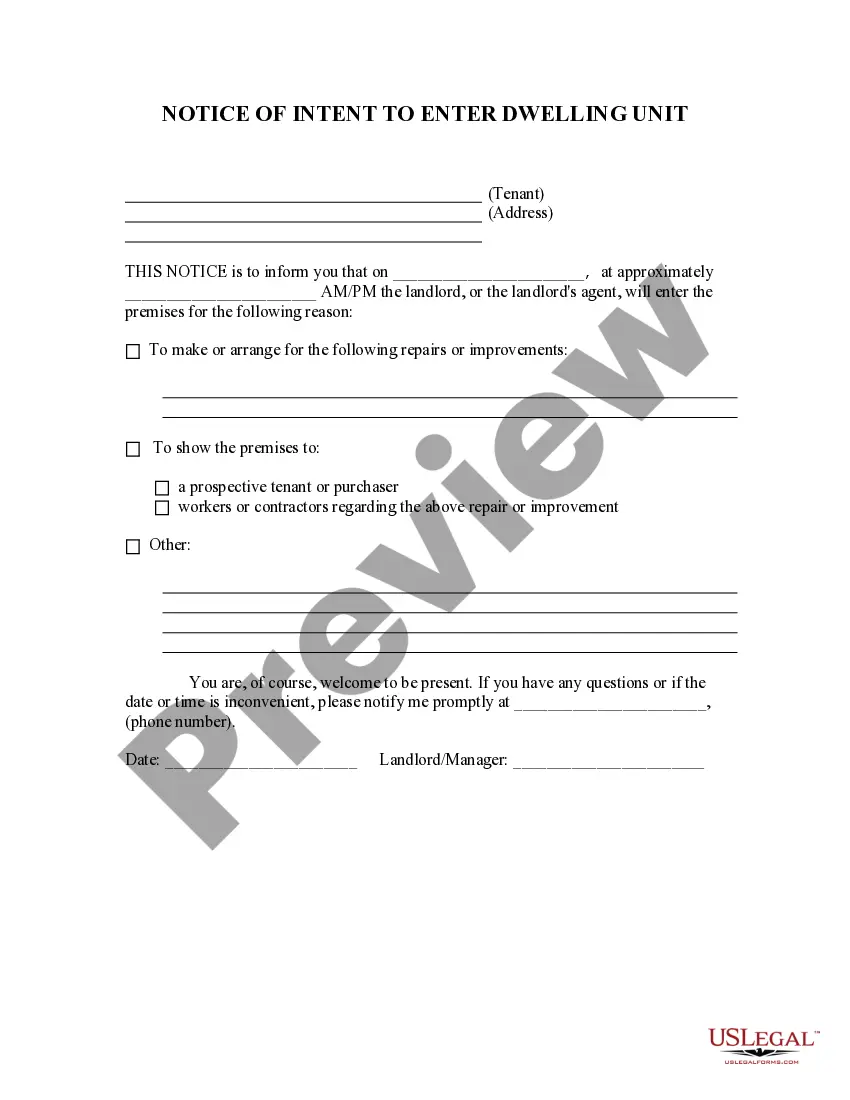
How to fill out Nebraska 1 Day Notice Of Intention To Enter Dwelling For Residential From Landlord To Tenant?
- If you’re already a US Legal Forms user, visit the login page, ensure your subscription is active, and quickly download the required form by hitting the Download button.
- For first-time users, start by checking the preview and description of the notice form for tenant to ensure it aligns with your local regulations.
- If necessary, locate alternative forms by using the Search tab to find more suitable options.
- Once you’ve found the correct template, click on the Buy Now button to select your ideal subscription plan and register for an account.
- Finalize your purchase by entering your payment information, either via credit card or PayPal.
- After completing the transaction, download your form directly to your device and access it later through the My Forms menu.
In conclusion, US Legal Forms not only provides a robust collection of over 85,000 forms but also connects you with premium experts to ensure your documents are filled out correctly and legally sound.
Get started today and simplify your legal experience with US Legal Forms!
Form popularity
FAQ
An early termination clause in Maryland allows a tenant to break their lease under specific conditions, often before the lease's end date. This clause outlines the terms, including any fees or notices that must be provided. Tenants should thoroughly review this clause in their lease agreement. If needed, using a notice form for tenant can clarify the official process to follow.
Writing a notice letter to your landlord involves a few clear steps. Begin by stating your intention to vacate, include the date you plan to leave, and ensure your letter is signed. You can also mention any details about your security deposit and request a final inspection. Using a notice form for tenant can simplify this process and ensure you cover all necessary elements.
Yes, if you are renting without a formal lease in Maryland, you typically need to give a 30-day notice to your landlord. This applies to month-to-month rental agreements as well. It's important to document this notice; a notice form for tenant can help ensure clarity and protect both parties' interests.
In Maryland, a landlord must provide at least 30 days' notice for a tenant to move out, unless the lease specifies a longer period. This requirement applies primarily to month-to-month leases. If a tenant has a fixed-term lease, they may not need to provide notice until the lease ends. Using a notice form for tenant can streamline this process and confirm compliance with local laws.
In Maryland, a 30-day notice serves to inform a tenant that they must vacate by the end of the notice period. This is typically initiated by a landlord for month-to-month tenancies. The landlord must provide written notice to the tenant, ensuring it is delivered properly. Utilizing a notice form for tenant makes this process clear and legally sound.
Writing a tenancy notice involves outlining the essential details, starting from your information to the tenant's. You should specify the intent, such as renewing the lease or terminating it, while explaining the conditions clearly. Using a Notice form for tenant can help standardize your notice, ensuring all key points are addressed efficiently.
To write a quick notice letter for a tenant, use a simple format including your name, the tenant's name, and the property address. Clearly express the purpose of the notice, whether it’s for rent issues or lease termination, and include a deadline. A pre-prepared Notice form for tenant can make this process quicker and more efficient.
The minimum notice a landlord can provide typically ranges from 30 to 60 days, depending on state laws and the terms of the lease. This notice period allows the tenant to prepare for their move and find a new place. Referencing a Notice form for tenant can help ensure that you comply with legal requirements and communicate effectively.
A quit notice for a tenant should start with your identification and the tenant's information. Clearly specify the reasons for the termination of the lease, including any obligations the tenant has failed to meet. It is essential to provide a deadline for the tenant to vacate the property, and you can utilize a Notice form for tenant to streamline this process.
To write a notice to a tenant, begin by clearly stating your name and contact information, followed by the tenant's name and address. Next, write the date and specify the reason for the notice, referring to any relevant agreements or laws. Use a clear and concise format, outlining specific actions the tenant needs to take, and always include a copy of the Notice form for tenant.