Notice Eviction
Description

Get your form ready online
Our built-in tools help you complete, sign, share, and store your documents in one place.
Make edits, fill in missing information, and update formatting in US Legal Forms—just like you would in MS Word.
Download a copy, print it, send it by email, or mail it via USPS—whatever works best for your next step.
Sign and collect signatures with our SignNow integration. Send to multiple recipients, set reminders, and more. Go Premium to unlock E-Sign.
If this form requires notarization, complete it online through a secure video call—no need to meet a notary in person or wait for an appointment.
We protect your documents and personal data by following strict security and privacy standards.

Make edits, fill in missing information, and update formatting in US Legal Forms—just like you would in MS Word.

Download a copy, print it, send it by email, or mail it via USPS—whatever works best for your next step.

Sign and collect signatures with our SignNow integration. Send to multiple recipients, set reminders, and more. Go Premium to unlock E-Sign.

If this form requires notarization, complete it online through a secure video call—no need to meet a notary in person or wait for an appointment.

We protect your documents and personal data by following strict security and privacy standards.
Looking for another form?








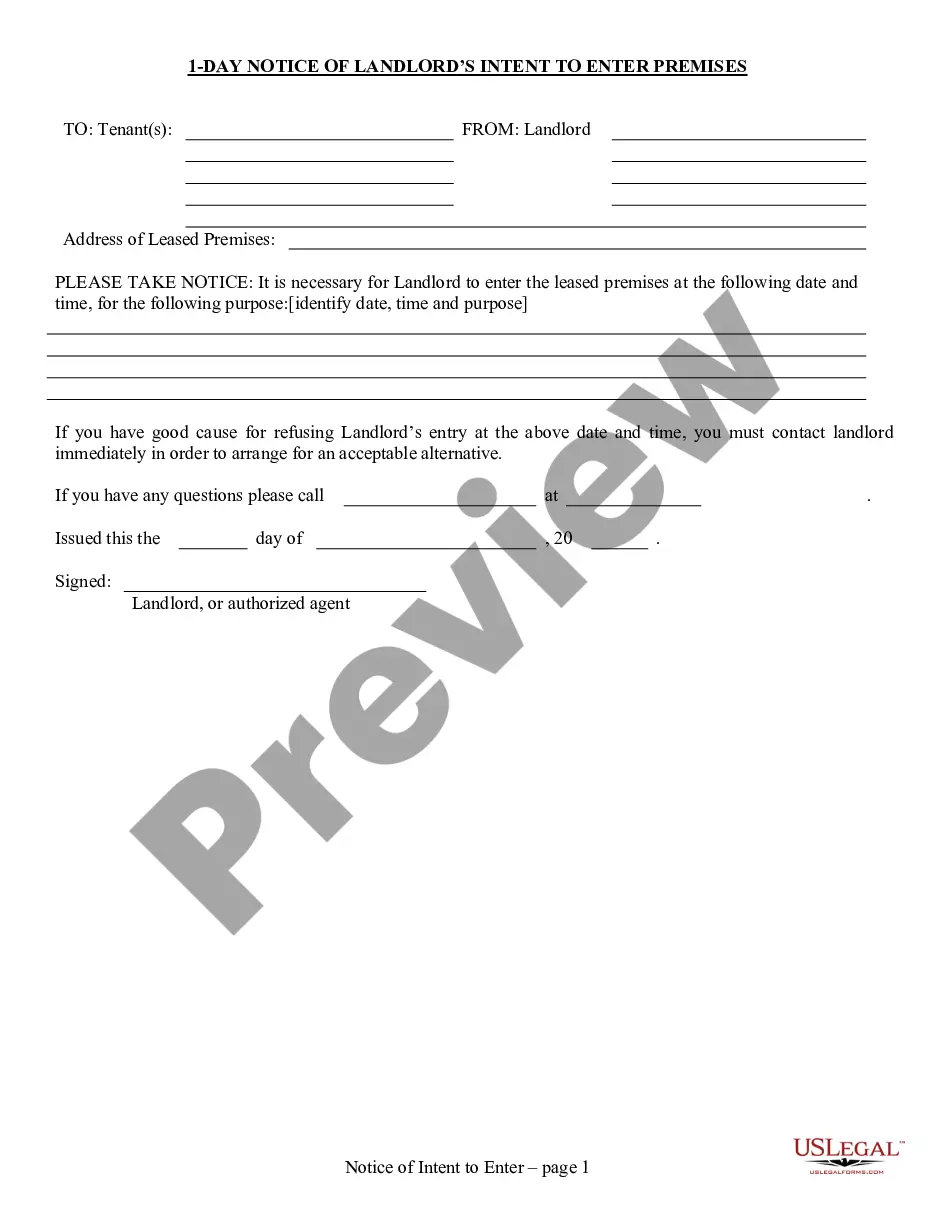
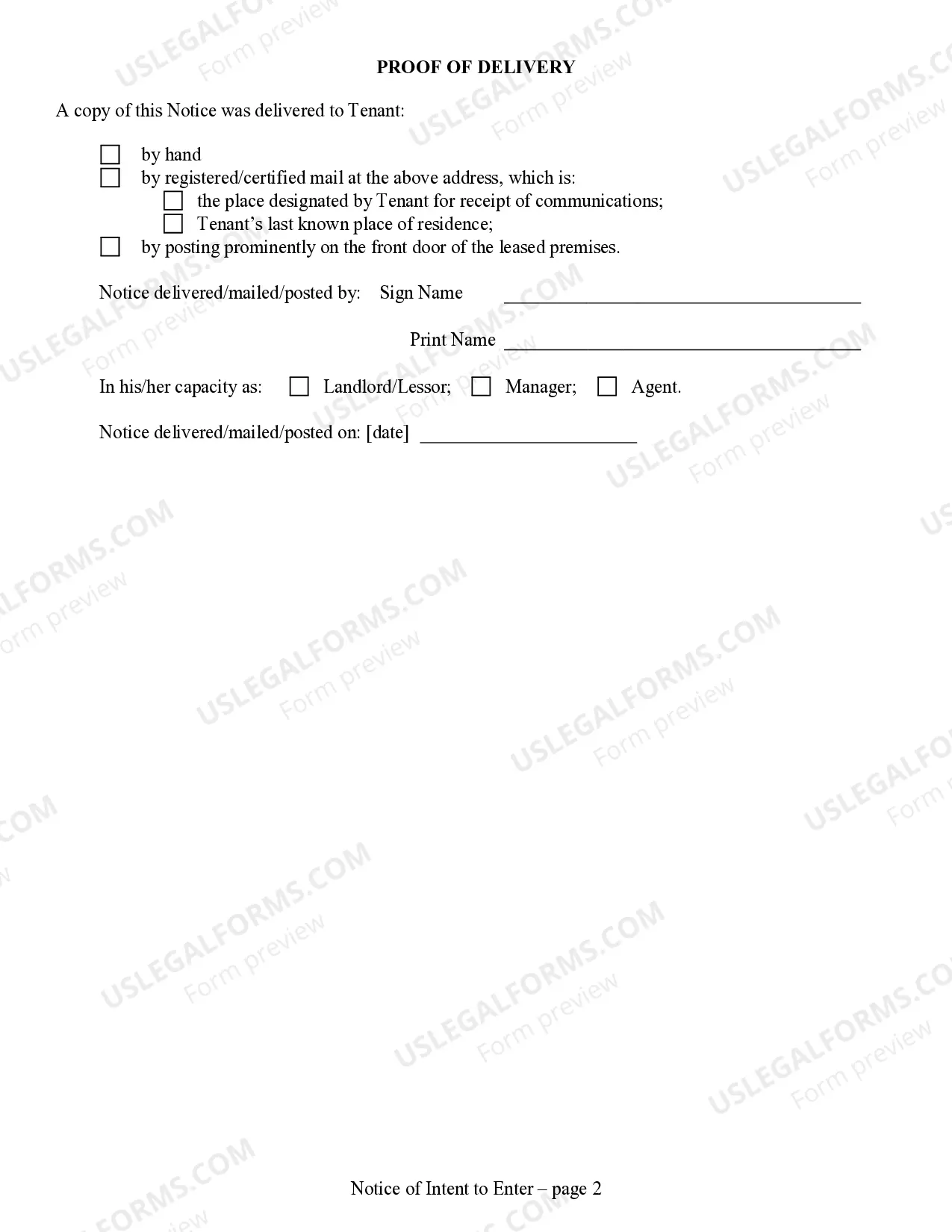
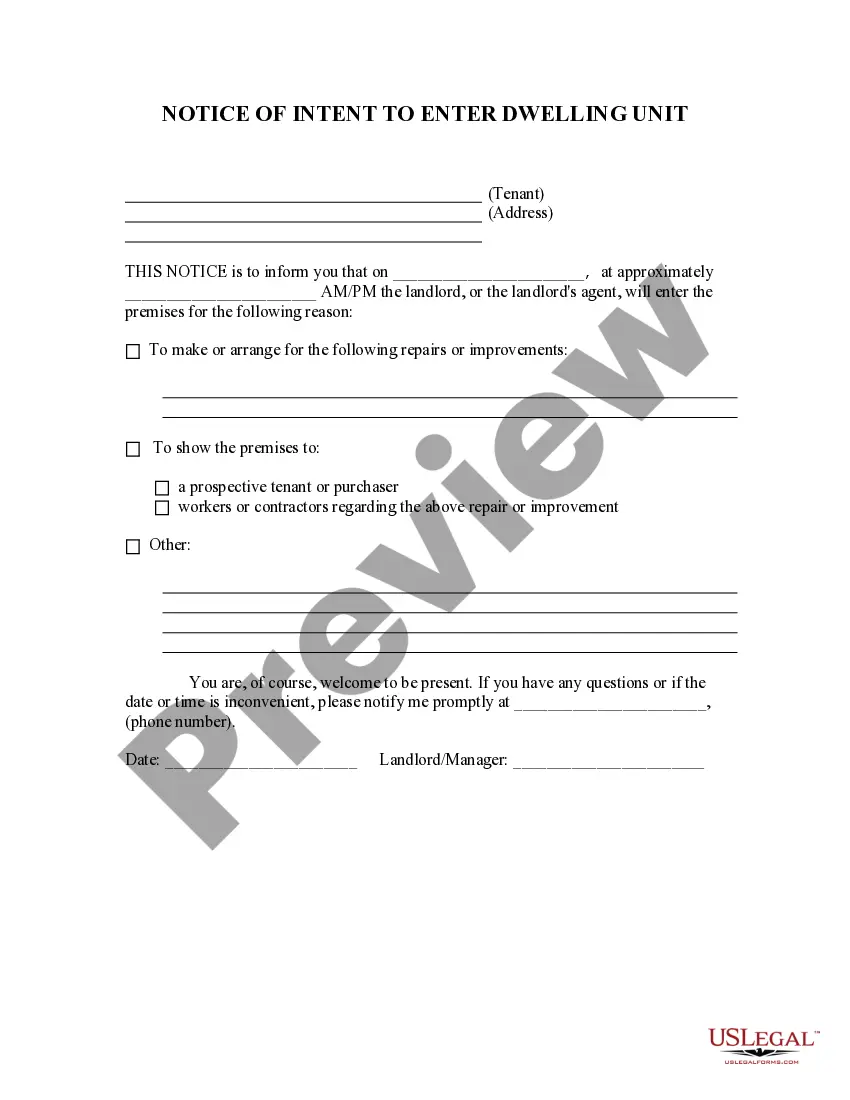
How to fill out Nebraska 1 Day Notice Of Intention To Enter Dwelling For Residential From Landlord To Tenant?
- Log in to your account to download the notice eviction form, ensuring your subscription is up to date.
- If you're new to US Legal Forms, browse the Preview mode and detailed descriptions to choose the notice eviction document that fits your needs and complies with local jurisdiction.
- If you require a different form, utilize the Search tab to find alternatives that meet your criteria.
- Purchase the document by clicking the Buy Now button and selecting your preferred subscription plan. Create an account to access the complete library.
- Complete the payment process using your credit card or PayPal to finalize your subscription.
- Download the completed notice eviction form, and retrieve it anytime from the My Forms section in your account.
With US Legal Forms, you gain access to a vast collection of over 85,000 fillable legal documents, empowering you to create legally sound forms quickly and accurately.
Don't hesitate—start your journey with US Legal Forms today and ensure you're equipped with the right legal documents for your needs!
Form popularity
FAQ
In Florida, you can potentially stop a 24-hour eviction notice if you act quickly and meet the requirements set forth by law. This usually involves addressing the reason for the eviction, such as paying overdue rent or complying with lease terms. However, timing is critical, and immediate action is necessary. For specific advice and legal documents, turn to US Legal Forms to guide you through resolving your situation.
The notice required for eviction in Florida varies depending on the reason for eviction. For non-payment of rent, a three-day notice is standard, while a fifteen-day notice applies for lease violations. Understanding the correct notice period is essential to avoid delays or complications in the eviction process. For comprehensive forms and information, check US Legal Forms to stay informed and compliant.
To legally evict a tenant in Florida, start with issuing the appropriate notice eviction based on the specific violation, such as non-payment or lease breaches. After the notice period expires without resolution, you will need to file an eviction lawsuit in your county's court. Following this, a judge will review your case, and if approved, a writ of possession will be issued to remove the tenant. US Legal Forms provides essential documents and guidelines for navigating this process.
In Florida, landlords are generally required to give a three-day notice eviction for non-payment of rent. If the eviction is based on a lease violation, a fifteen-day notice is typically necessary to allow the tenant a chance to correct the issue. Understanding the timeline and requirements is crucial, so consider consulting the resources available from US Legal Forms to ensure compliance. This way, you can handle the eviction process efficiently.
To evict a tenant in New Mexico, start by providing a legal notice eviction to inform them of the lease violation or overdue rent. The typical notice period is 3 to 30 days, depending on the nature of the issue. After the notice period, if the tenant hasn’t remedied the situation, you can file an eviction lawsuit. For detailed templates and processes, US Legal Forms can be an excellent resource.
An emergency eviction in Texas refers to a situation where a landlord seeks to expedite the eviction process due to urgent circumstances, such as rental property damage or illegal activity. This usually requires a specific court petition and supporting evidence. Emergency evictions still follow legal protocols, including a notice eviction. If you find yourself in such a situation, using services like UsLegalForms can guide you through.
The speed of an eviction in Texas can vary significantly, but it typically takes about three to four weeks after the notice eviction is filed, following the proper legal procedures. Landlords must allow for a notice period before pursuing court action. Being aware of this timeline can prepare you for what to expect. If you face an eviction, consider legal resources to help you navigate this process.
In Washington State, the eviction process begins when the landlord provides a notice eviction to the tenant, outlining any lease violations. If the issue is not resolved, the landlord can file for eviction in court. The process ensures the tenant has a chance to respond, making it essential to understand your rights. Resources available through UsLegalForms can clarify the process and your options.
After an eviction process concludes, it typically takes several days to several weeks for it to show up on public records in Texas. This time frame depends on various factors, including court processing times. When your landlord files a notice eviction, it leads to a court's record which can affect future housing opportunities. Staying informed on these timelines can help you plan your next steps.
No, a landlord cannot evict you immediately in Texas. They must issue a notice eviction and follow the legal procedures established by state law. This process includes giving you time to respond and to resolve the issue before the court steps in. Knowing these steps can help you navigate your situation effectively.