North Dakota Divorce Laws Property
Description
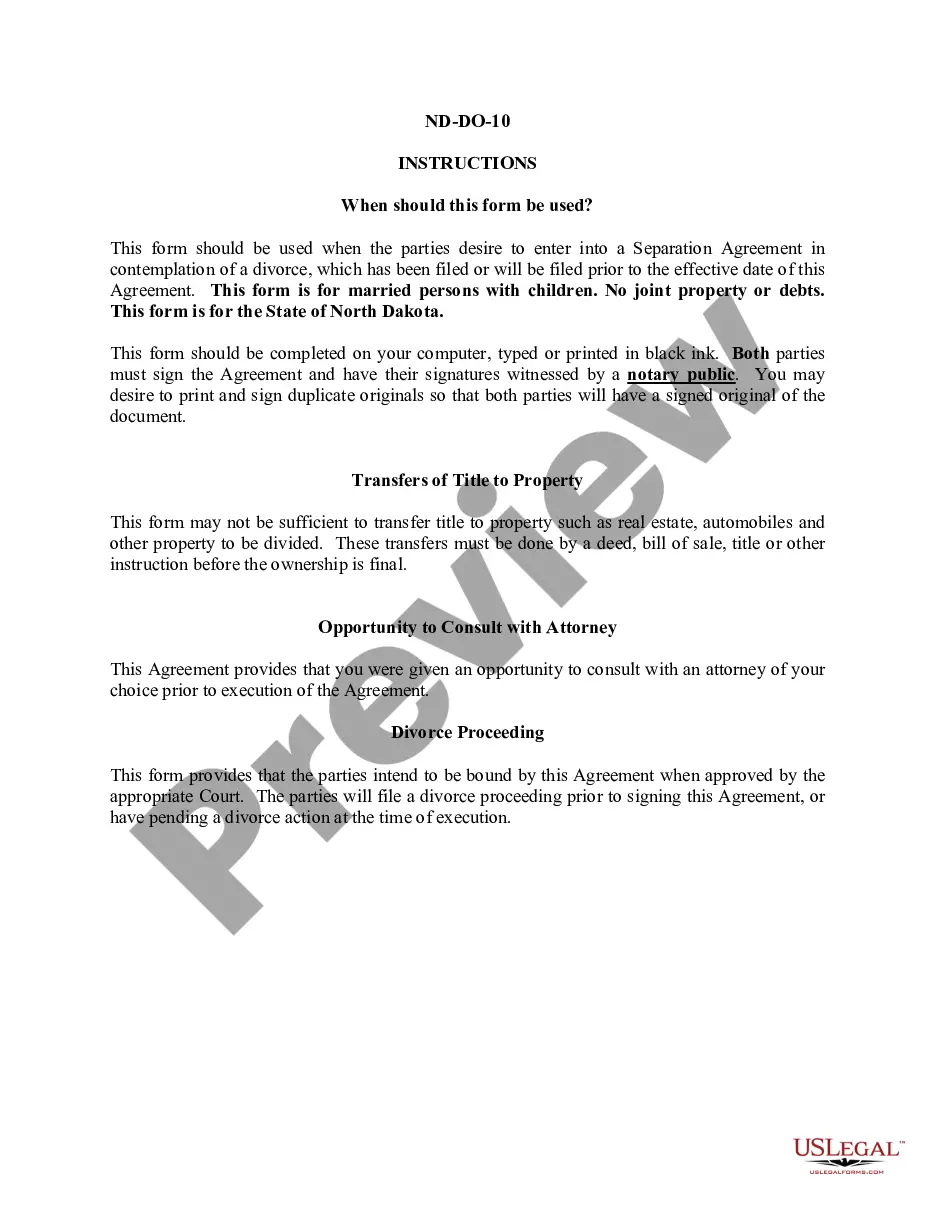
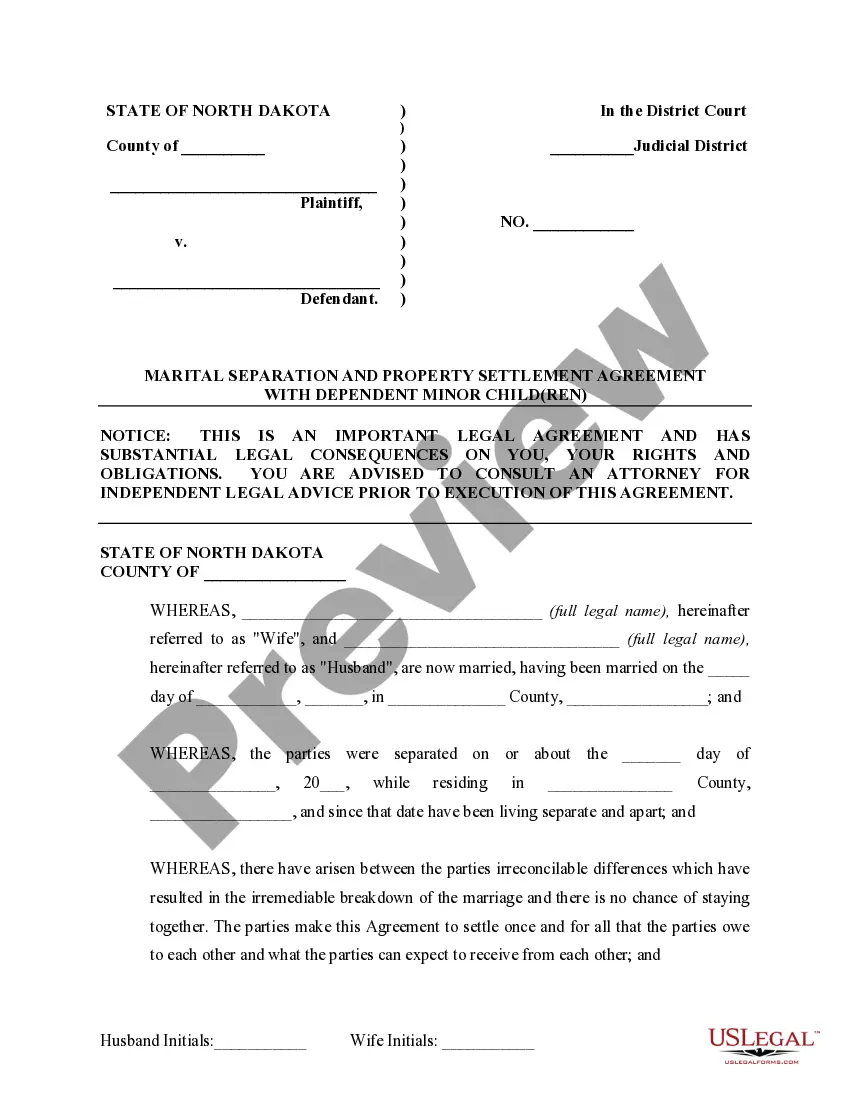
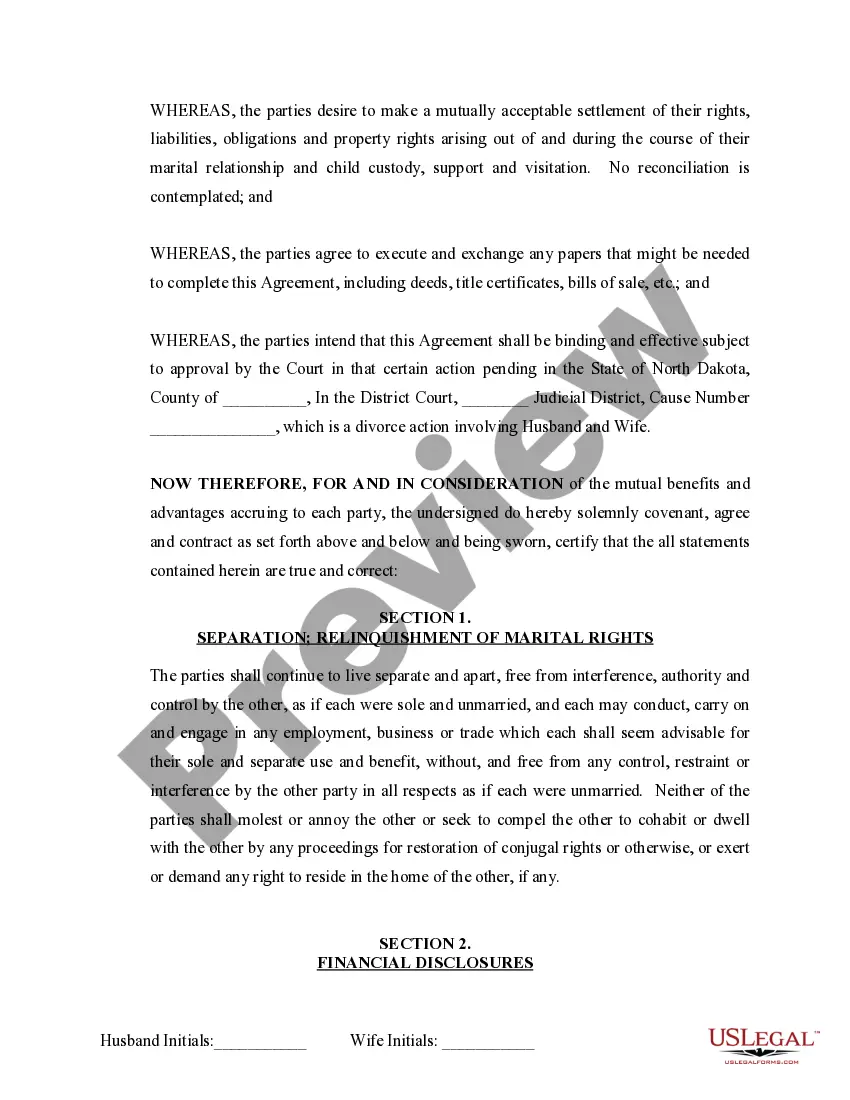
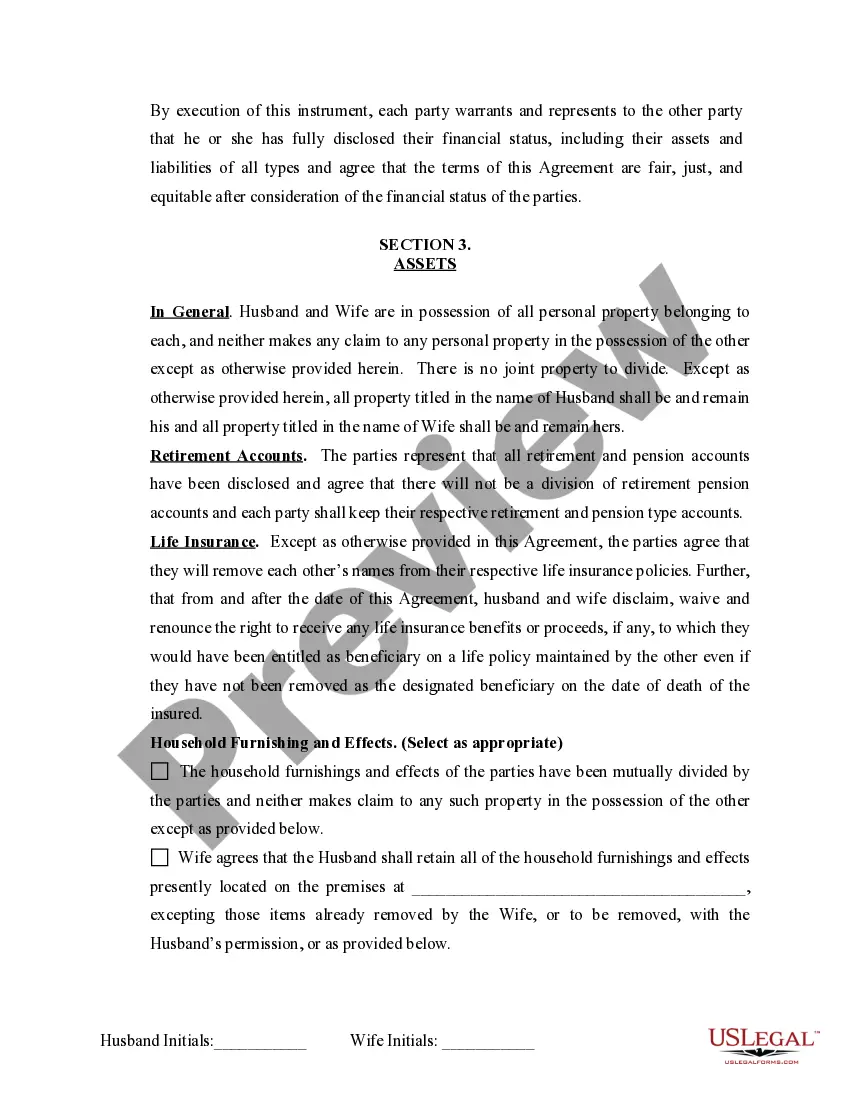

Get your form ready online
Our built-in tools help you complete, sign, share, and store your documents in one place.
Make edits, fill in missing information, and update formatting in US Legal Forms—just like you would in MS Word.
Download a copy, print it, send it by email, or mail it via USPS—whatever works best for your next step.
Sign and collect signatures with our SignNow integration. Send to multiple recipients, set reminders, and more. Go Premium to unlock E-Sign.
If this form requires notarization, complete it online through a secure video call—no need to meet a notary in person or wait for an appointment.
We protect your documents and personal data by following strict security and privacy standards.

Make edits, fill in missing information, and update formatting in US Legal Forms—just like you would in MS Word.

Download a copy, print it, send it by email, or mail it via USPS—whatever works best for your next step.

Sign and collect signatures with our SignNow integration. Send to multiple recipients, set reminders, and more. Go Premium to unlock E-Sign.

If this form requires notarization, complete it online through a secure video call—no need to meet a notary in person or wait for an appointment.

We protect your documents and personal data by following strict security and privacy standards.
Looking for another form?










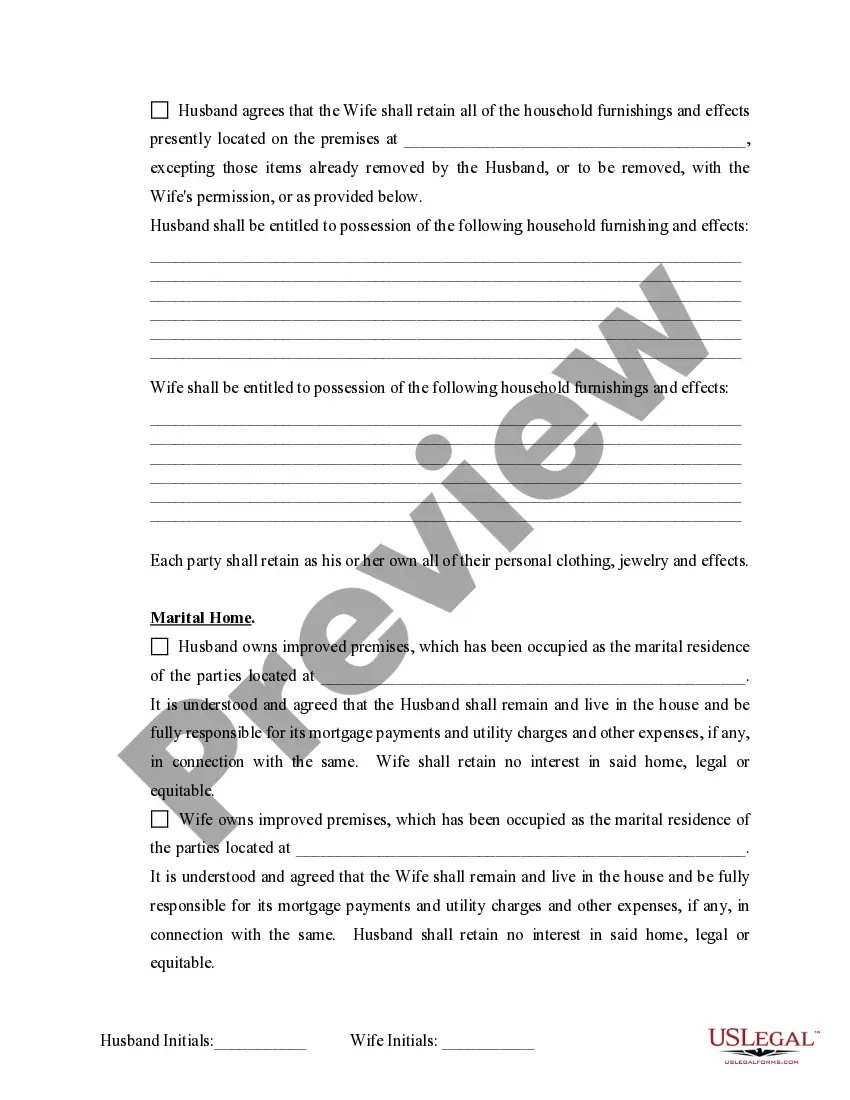
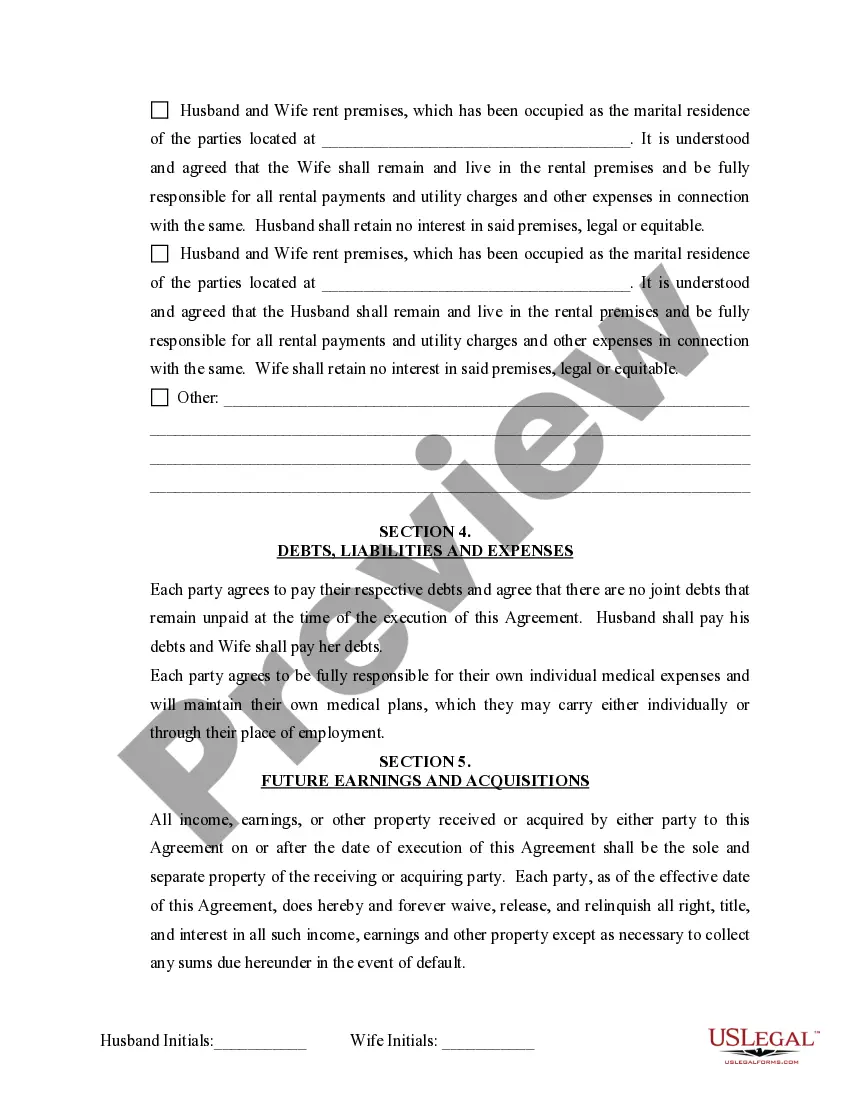
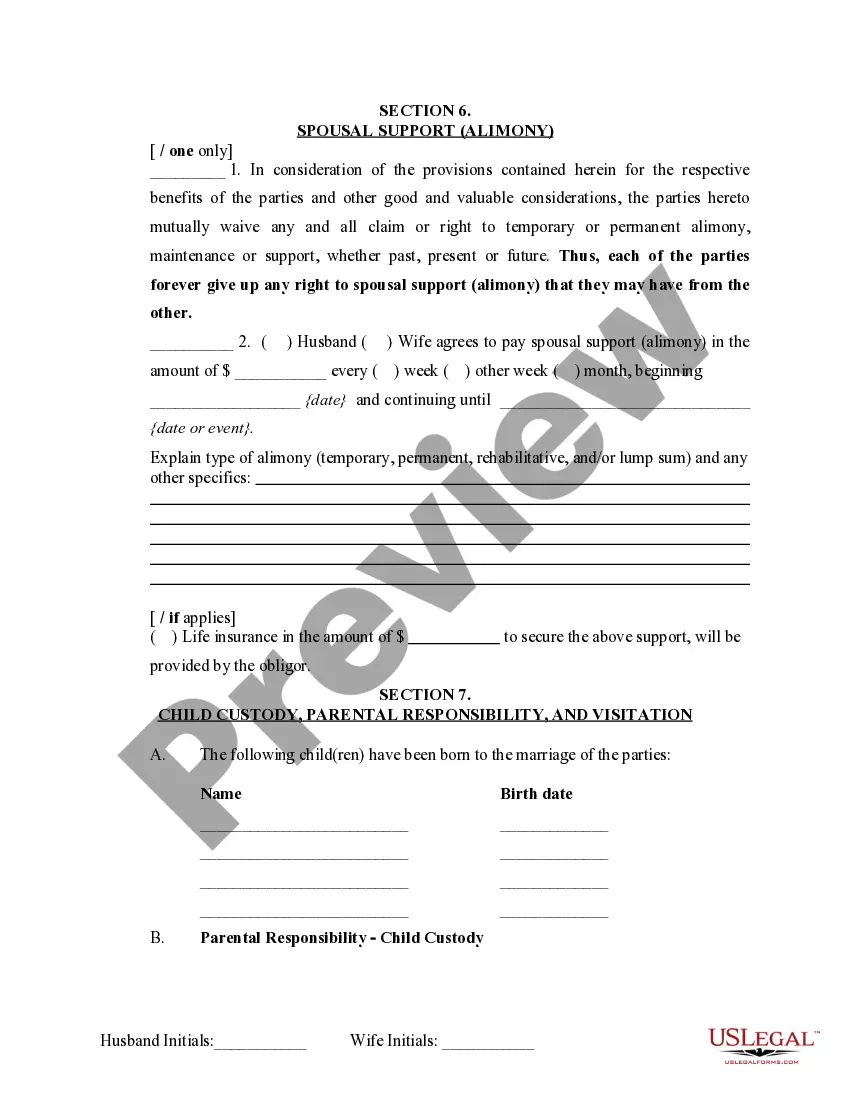
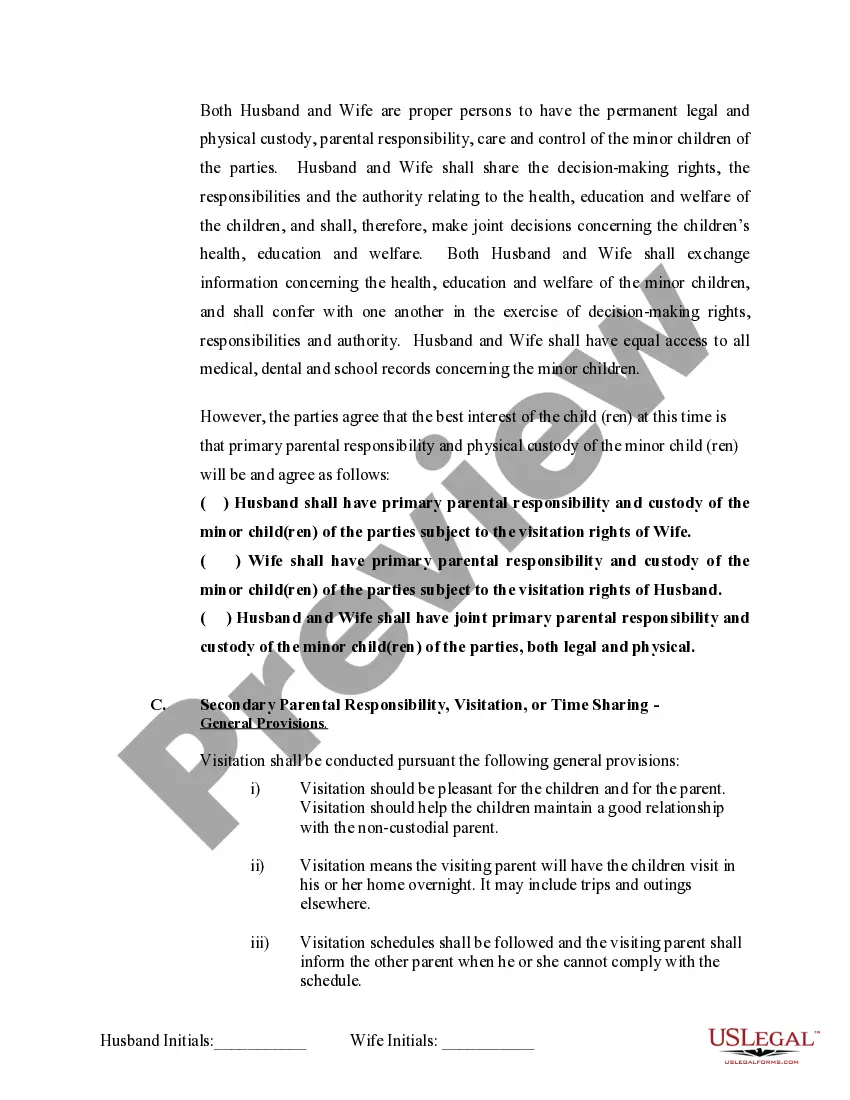
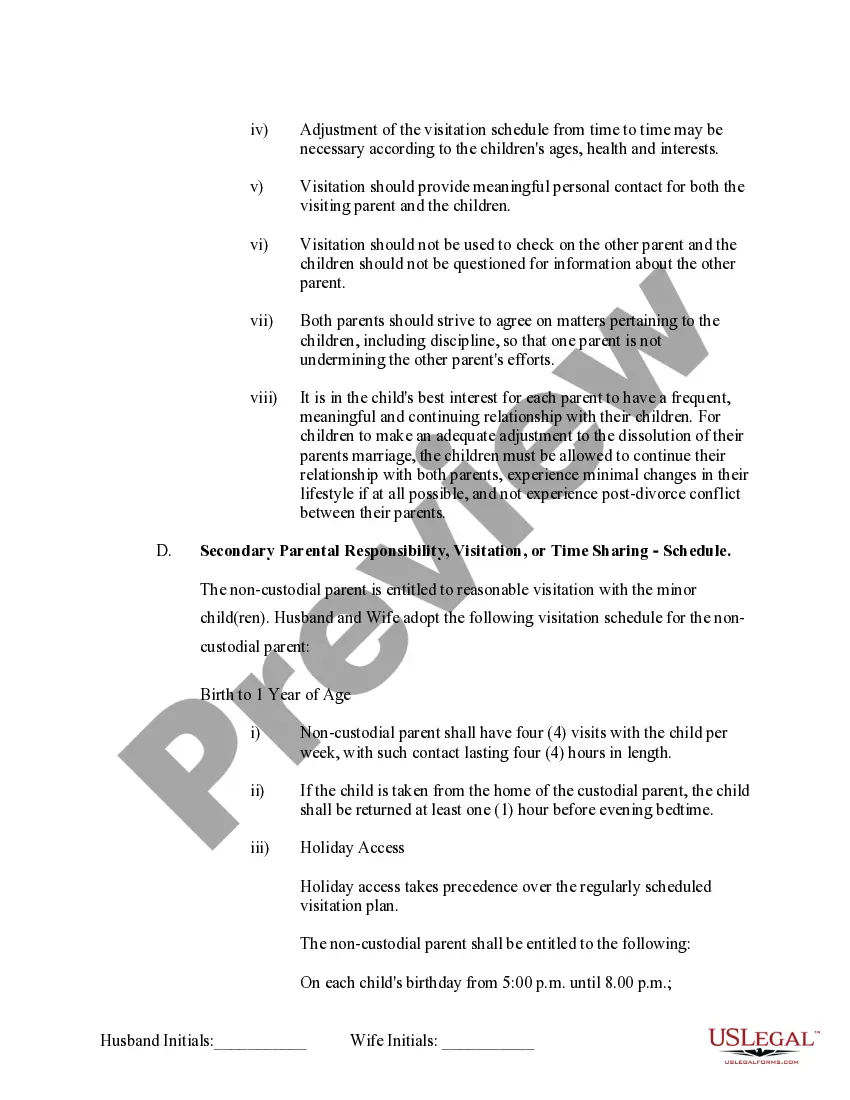
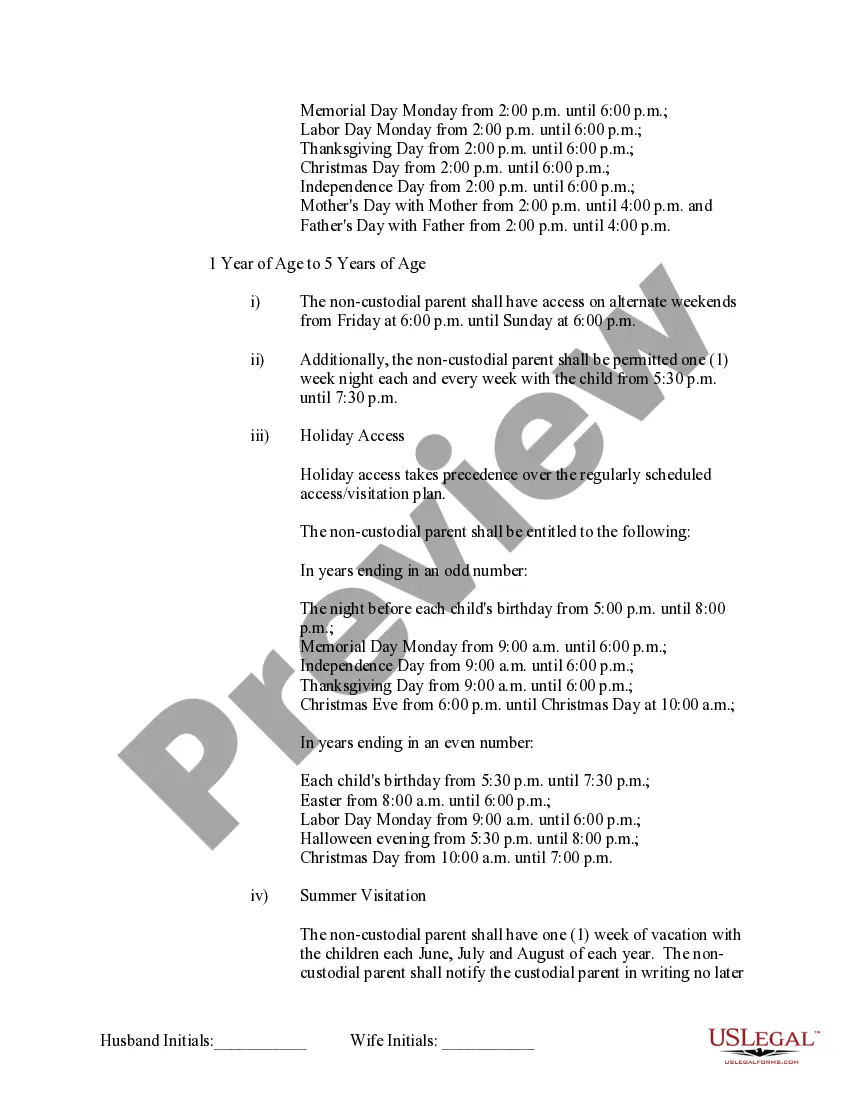
How to fill out North Dakota Marital Domestic Separation And Property Settlement Agreement Minor Children No Joint Property Or Debts Where Divorce Action Filed?
- Log in to your existing US Legal Forms account. Ensure your subscription is active before proceeding.
- For new users, browse the Preview mode to find the right document that aligns with North Dakota divorce laws property requirements.
- If you need a different template, utilize the Search feature to find the correct form.
- Purchase the document by selecting your subscription plan and creating an account for access.
- Complete your order by entering your payment information using either credit card or PayPal.
- Download the form to your device and access it anytime through the My Forms section of your account.
By following these steps, you can ensure you have the right documents that comply with North Dakota's legal standards, making your divorce process much smoother.
Take advantage of US Legal Forms' extensive resources and expert guidance to make the completion of your legal documents precise and efficient. Start today!
Form popularity
FAQ
Your husband cannot simply take your house in a divorce. The division of property is subject to North Dakota divorce laws property, which aim for fair distribution based on various factors. If the house is marital property, it may be subject to division, but there are options to negotiate or buy out the other spouse's interest. Consulting with legal professionals can help clarify your specific rights.
Marital property in North Dakota generally includes assets acquired during the marriage, regardless of whose name is on the title. This includes homes, vehicles, and joint bank accounts, guided by North Dakota divorce laws property. However, gifts or inheritances received by one spouse may be considered separate property if handled correctly. Ensuring proper classification of assets is crucial for a fair division.
No, the husband does not always lose the house in a divorce. North Dakota divorce laws property aim to equitably divide assets between both parties, considering contributions to the marriage and financial circumstances. Factors like ownership, mortgage responsibilities, and agreements made during mediation can influence the outcome. It's important to discuss your specific case with a legal advisor for tailored guidance.
One of the biggest mistakes during a divorce is failing to understand the implications of property division under North Dakota divorce laws property. Not seeking legal advice or not being transparent about financial assets can lead to unfavorable outcomes. It's important to approach property discussions with a clear understanding of your rights. Engaging with professionals can provide critical insights and help avoid these pitfalls.
North Dakota divorce laws cover aspects like property division, child custody, spousal support, and grounds for divorce. The state follows an equitable distribution model, meaning property is divided fairly but not necessarily equally. Understanding these laws helps you navigate the process more smoothly. Make sure to consult relevant guidelines or legal resources, like US Legal Forms, for assistance.
Financial outcomes of divorce can vary widely, but typically one spouse may end up with a greater financial loss. Factors such as income disparity, property division, and spousal support play significant roles, according to North Dakota divorce laws property. Generally, the spouse with a lower earning potential or fewer assets may feel the financial burden more acutely. Understanding your situation and possibly seeking professional help can make a difference.
In North Dakota, spousal support, also known as alimony, is calculated based on several factors outlined in North Dakota divorce laws property. Courts consider the length of the marriage, the financial needs of each spouse, and their ability to earn a living. Typically, the aim is to provide support that encourages fairness and stability in the transition after marriage. It is crucial to document all financial aspects to ensure a fair assessment.
Under North Dakota divorce laws property, a wife does not automatically receive half the house. Instead, property division is based on an equitable approach, which considers contributions and other factors. While equal share may occur in some cases, the court evaluates circumstances individually to achieve fairness. Utilizing legal resources can help clarify your rights regarding property division.
North Dakota does not strictly adhere to a 50/50 division of assets during a divorce, but rather follows equitable distribution guidelines. This means that while a fair division is the goal, it may not always equal halves. The court assesses various factors, including the financial and non-financial contributions of both spouses in the marriage. Being well-versed in these laws can lead to a more favorable outcome.
In many cases, both parties experience some form of loss during a divorce, whether financially or emotionally. However, North Dakota divorce laws property emphasize fair distribution, aiming to reduce individual losses. Commonly, the spouse who has been less financially stable may feel the effects more deeply. Engaging with a professional platform like UsLegalForms can provide guidance on how to protect your interests.