Motion To Intervene Federal Court
Description
Get your form ready online
Our built-in tools help you complete, sign, share, and store your documents in one place.
Make edits, fill in missing information, and update formatting in US Legal Forms—just like you would in MS Word.
Download a copy, print it, send it by email, or mail it via USPS—whatever works best for your next step.
Sign and collect signatures with our SignNow integration. Send to multiple recipients, set reminders, and more. Go Premium to unlock E-Sign.
If this form requires notarization, complete it online through a secure video call—no need to meet a notary in person or wait for an appointment.
We protect your documents and personal data by following strict security and privacy standards.

Make edits, fill in missing information, and update formatting in US Legal Forms—just like you would in MS Word.

Download a copy, print it, send it by email, or mail it via USPS—whatever works best for your next step.

Sign and collect signatures with our SignNow integration. Send to multiple recipients, set reminders, and more. Go Premium to unlock E-Sign.

If this form requires notarization, complete it online through a secure video call—no need to meet a notary in person or wait for an appointment.

We protect your documents and personal data by following strict security and privacy standards.
Looking for another form?
Form popularity
FAQ
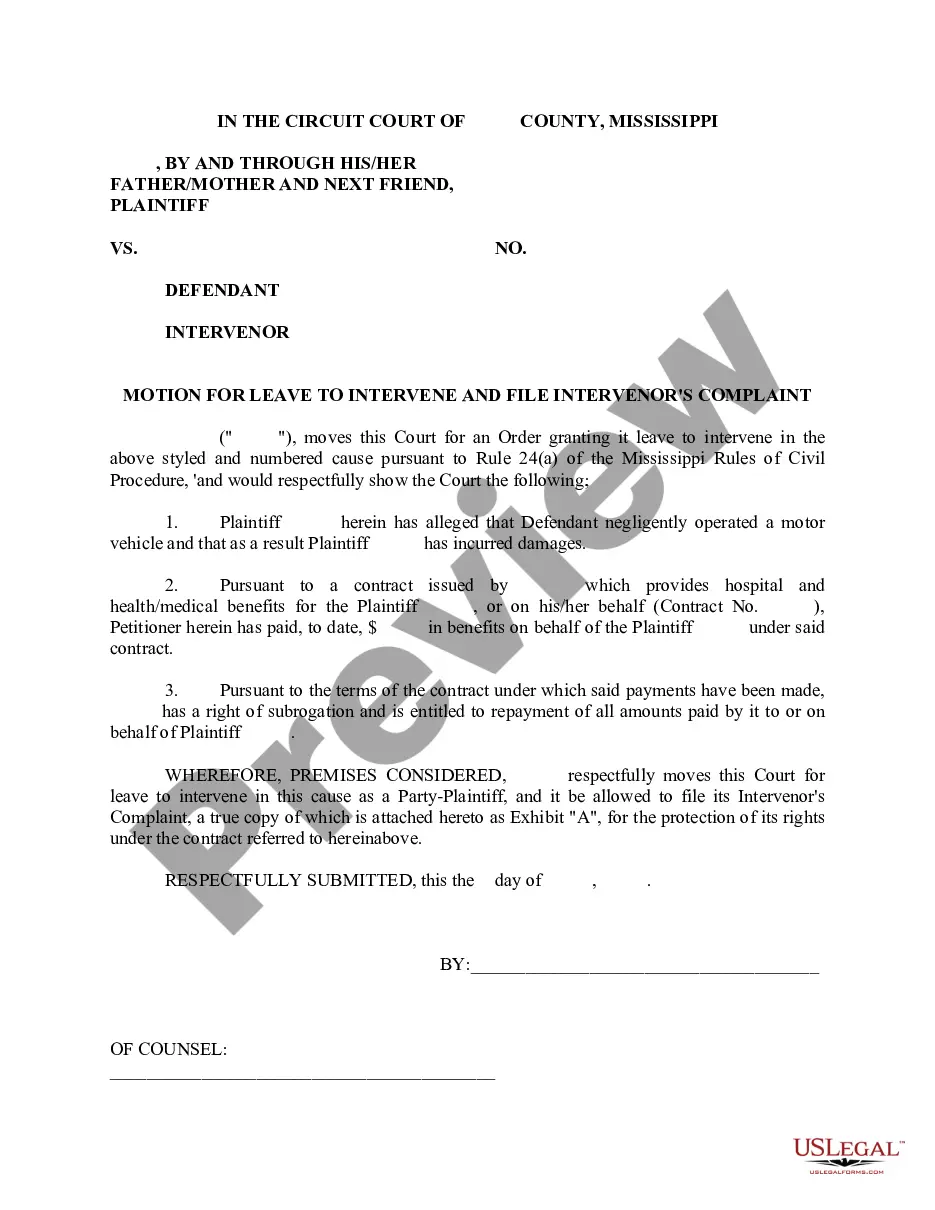
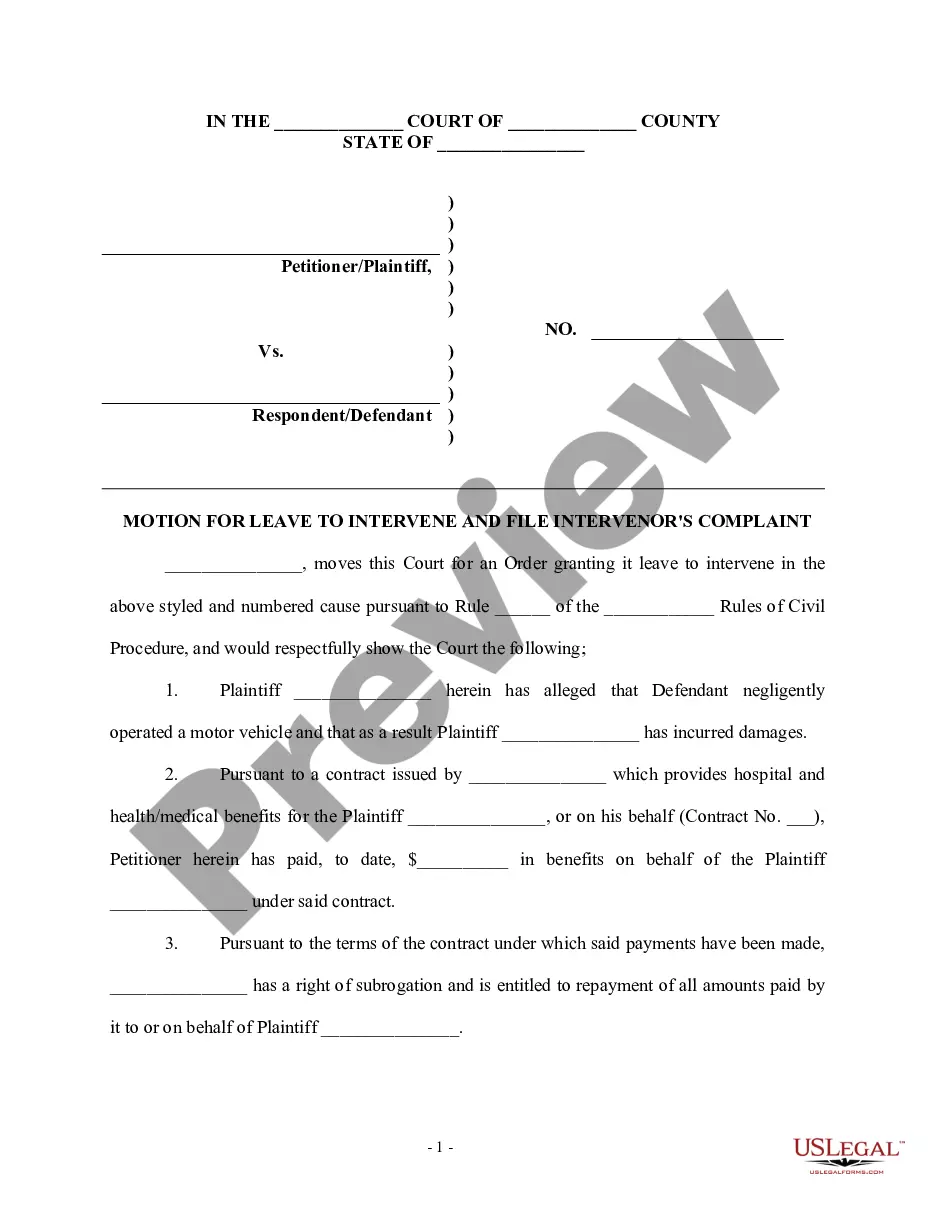
Permission to intervene refers to the formal request made by an individual or organization to join an ongoing legal proceeding. In the context of a Motion to intervene in federal court, this motion allows an outsider with a vested interest in the outcome to become a party to the case. The process typically requires demonstrating that the person's or group's rights may be affected by the court’s decision, thereby justifying their need to participate. For those considering this, using resources like US Legal Forms can simplify the preparation of necessary documents.
US Legal Forms provides valuable resources and templates for drafting a motion to intervene in federal court. Their platform simplifies the process, ensuring you have the right forms and guidance at your fingertips. By utilizing their services, you can confidently navigate the complexities of intervention and enhance your chances of a successful outcome.
Rule 24 specifically addresses the intervention process, while Rule 26 focuses on the disclosure and discovery phase of litigation. Understanding the difference between these rules is critical if you are filing a motion to intervene in federal court. By grasping both rules, you position yourself to navigate the legal landscape effectively and protect your interests.
Rule 27 allows parties to conduct discovery before a lawsuit is filed through depositions to perpetuate testimony. This can be crucial for those planning to file a motion to intervene in federal court, as it helps gather necessary evidence before official proceedings begin. By utilizing Rule 27, you can strengthen your position and build a compelling case for your intervention.
Rule 26 outlines the duty to disclose information and sets guidelines for discovery in federal court cases. It requires parties to share certain information with each other early in a case, promoting fairness and transparency. If you're considering a motion to intervene in federal court, familiarity with Rule 26 can help you understand your obligations to disclose information relevant to your intervention.
Rule 24 of the Federal Rules of Civil Procedure governs the process for a party to intervene in an ongoing legal matter. This rule allows individuals or entities with a vested interest in the outcome to join the case, provided they meet certain criteria. If you seek to file a motion to intervene in federal court, understanding this rule is essential to ensure your participation is valid and timely.