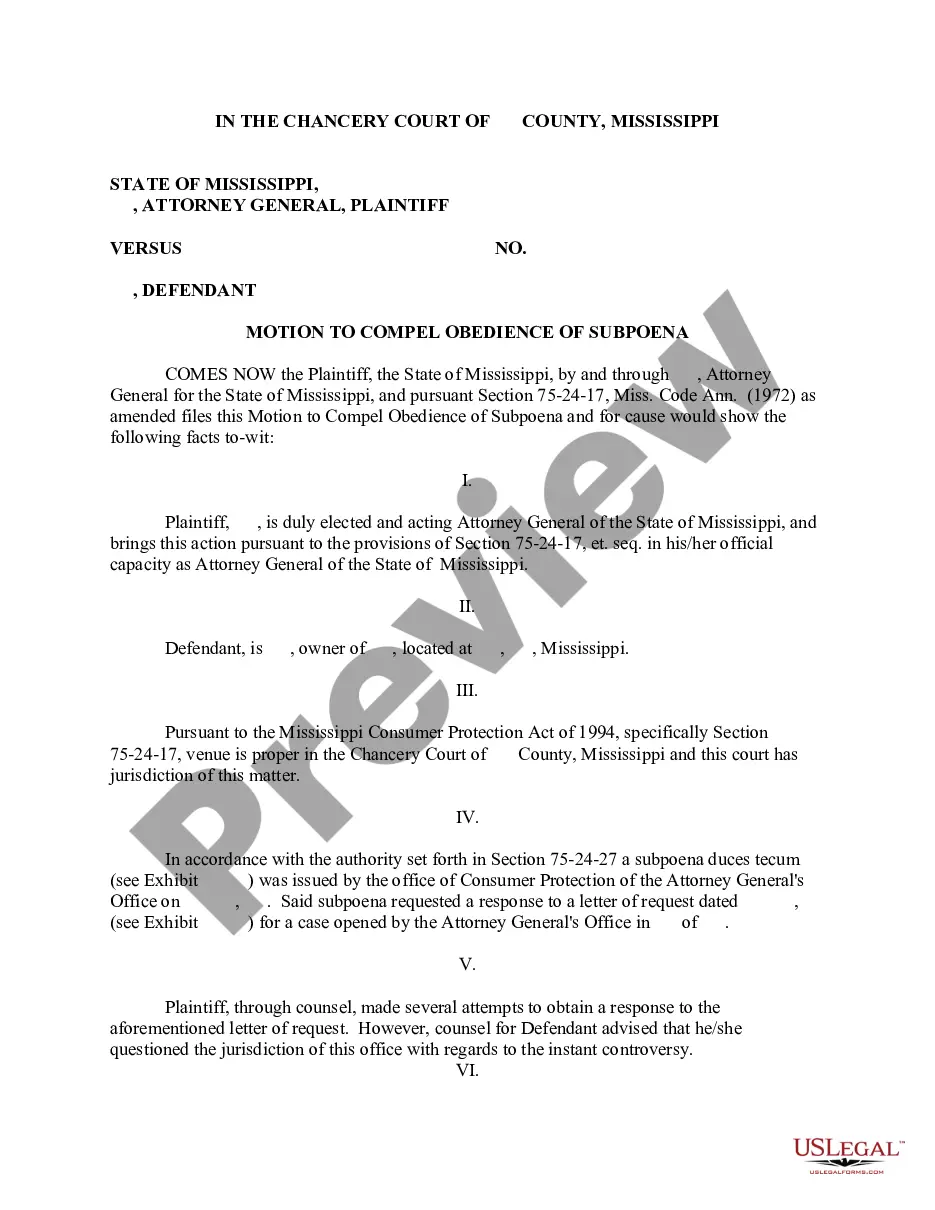
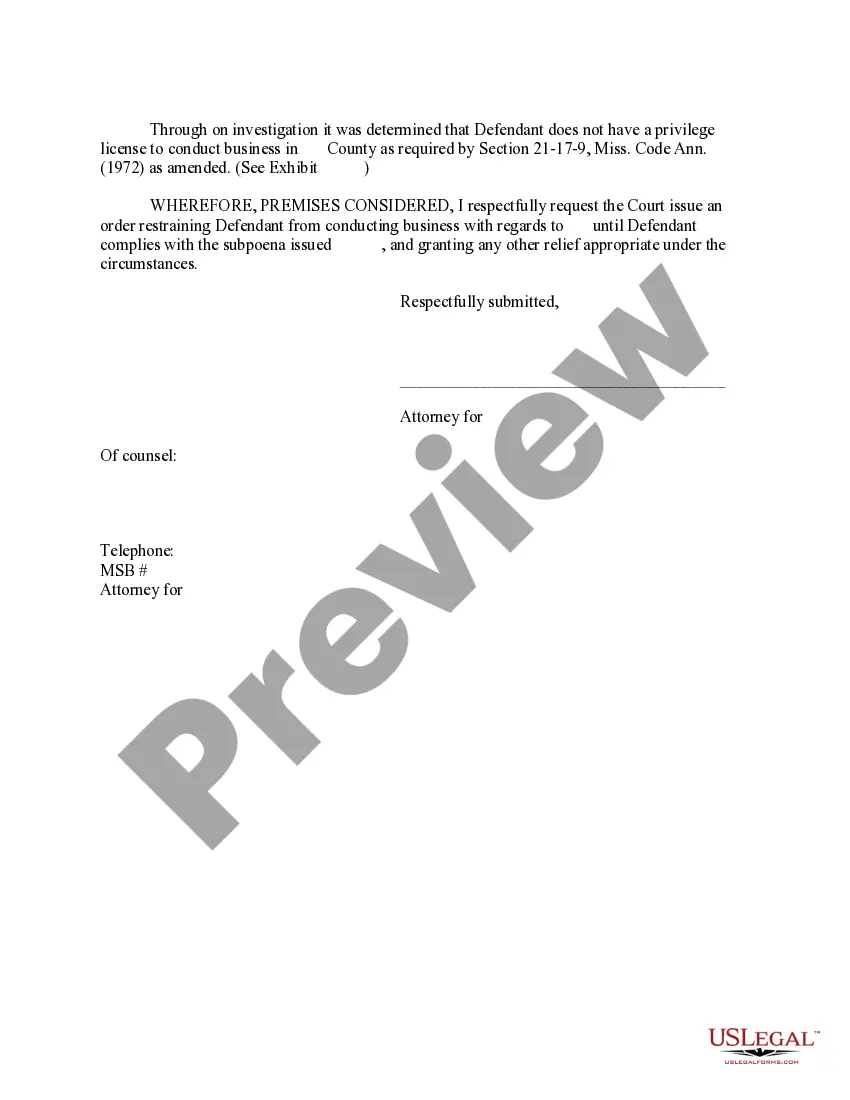
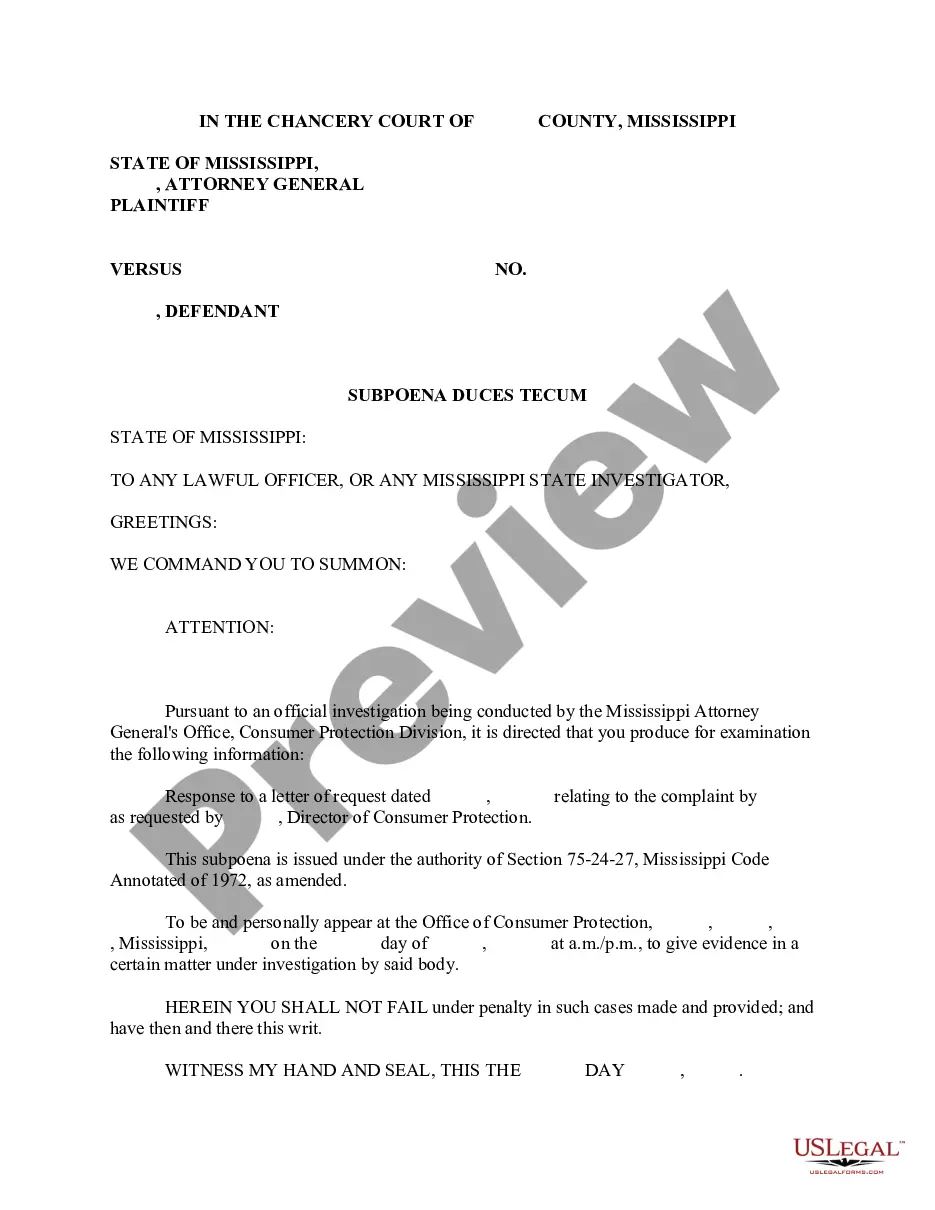
Motion To Compel Compliance With Subpoena
Description
Get your form ready online
Our built-in tools help you complete, sign, share, and store your documents in one place.
Make edits, fill in missing information, and update formatting in US Legal Forms—just like you would in MS Word.
Download a copy, print it, send it by email, or mail it via USPS—whatever works best for your next step.
Sign and collect signatures with our SignNow integration. Send to multiple recipients, set reminders, and more. Go Premium to unlock E-Sign.
If this form requires notarization, complete it online through a secure video call—no need to meet a notary in person or wait for an appointment.
We protect your documents and personal data by following strict security and privacy standards.

Make edits, fill in missing information, and update formatting in US Legal Forms—just like you would in MS Word.

Download a copy, print it, send it by email, or mail it via USPS—whatever works best for your next step.

Sign and collect signatures with our SignNow integration. Send to multiple recipients, set reminders, and more. Go Premium to unlock E-Sign.

If this form requires notarization, complete it online through a secure video call—no need to meet a notary in person or wait for an appointment.

We protect your documents and personal data by following strict security and privacy standards.
Looking for another form?


Form popularity
FAQ
A subpoena can be considered invalid in California for several reasons, such as lack of proper jurisdiction or failure to meet procedural requirements. Additionally, if the subpoena is not specific enough or overly broad, it may be challenged effectively. To address issues of validity, a motion to compel compliance with subpoena can clarify your rights and obligations. Resources from USLegalForms can help you understand these criteria.
To serve someone out of state in California, you typically need to follow the rules of the state where the person resides, along with California’s service laws. This might include filing a motion to compel compliance with subpoena if the service is related to a legal proceeding. USLegalForms offers resources that clarify these steps to ensure effective service.
Ignoring a subpoena in California can lead to legal consequences, including contempt of court. It is not advisable to disregard a subpoena, as doing so may result in the need for a motion to compel compliance with subpoena from the requesting party. It is best to seek legal advice if you have concerns about complying with a subpoena.
To enforce an out-of-state subpoena in California, you must first register the subpoena in the appropriate local court. This involves submitting the necessary documentation and possibly a motion to compel compliance with subpoena. The process can be complex, but USLegalForms provides guidance and templates that streamline this endeavor.
Yes, a party can object to a nonparty subpoena in California. However, it's important to follow specific procedures to raise the objection effectively. Typically, the party should file a motion to compel compliance with subpoena if they believe the subpoena is necessary. Utilizing resources like USLegalForms can help you navigate these procedural requirements.
A motion to compel is a formal request made to the court seeking to force a party to comply with a subpoena or other legal obligation. When facing non-compliance, this motion allows you to encourage cooperation and obtain necessary information. Utilizing a motion to compel compliance with subpoena can be crucial in securing evidence that supports your case. If you need assistance, US Legal Forms offers resources to help you draft this motion correctly.
In legal terms, to compel means to force someone to act in accordance with a request or command. When discussing a motion to compel compliance with subpoena, it means the court is required to order a party to produce documents or evidence. This legal action helps ensure that all parties fulfill their obligations during litigation. Understanding this term is essential for navigating legal processes effectively.