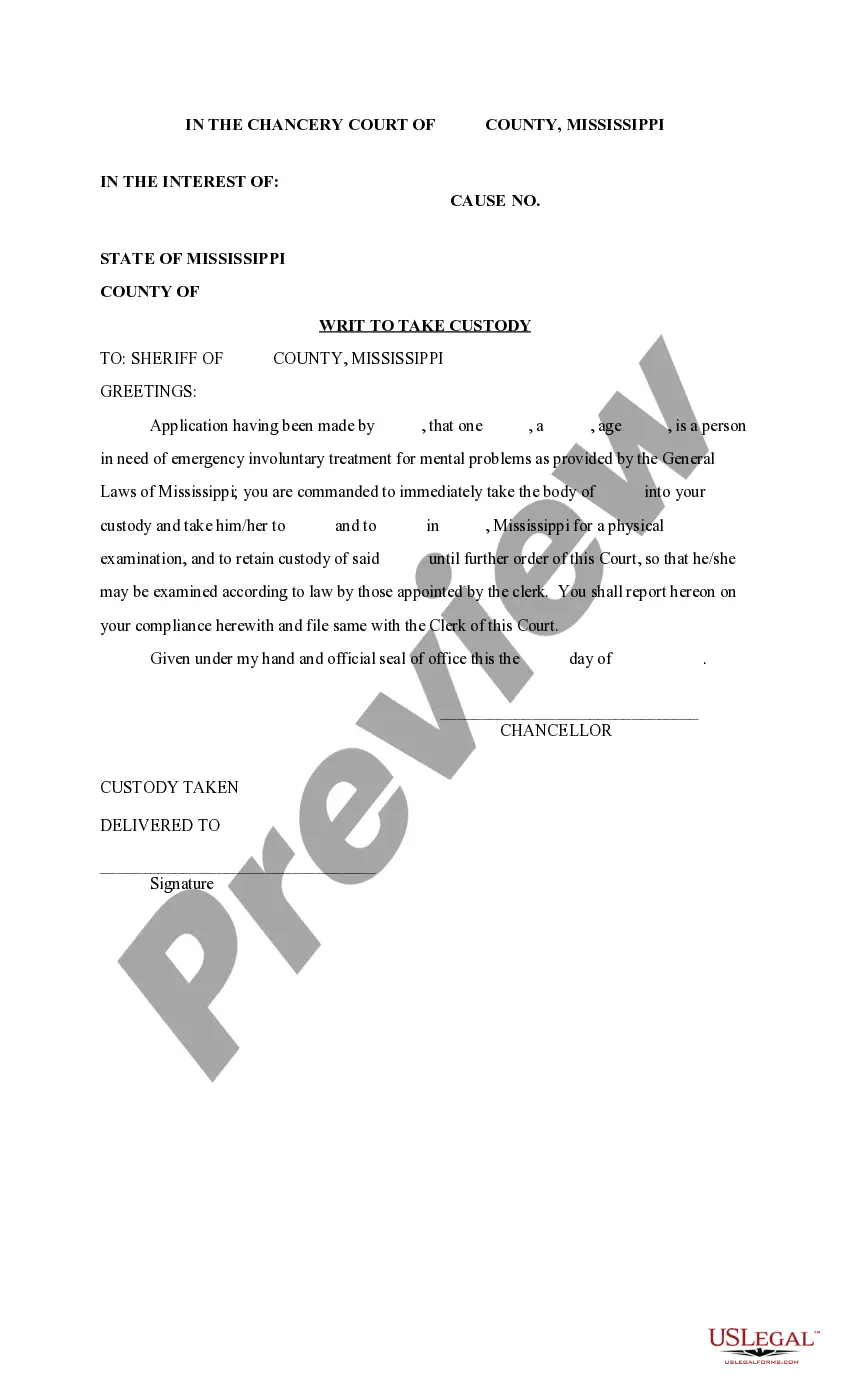
Mental Writ Within
Description
Get your form ready online
Our built-in tools help you complete, sign, share, and store your documents in one place.
Make edits, fill in missing information, and update formatting in US Legal Forms—just like you would in MS Word.
Download a copy, print it, send it by email, or mail it via USPS—whatever works best for your next step.
Sign and collect signatures with our SignNow integration. Send to multiple recipients, set reminders, and more. Go Premium to unlock E-Sign.
If this form requires notarization, complete it online through a secure video call—no need to meet a notary in person or wait for an appointment.
We protect your documents and personal data by following strict security and privacy standards.

Make edits, fill in missing information, and update formatting in US Legal Forms—just like you would in MS Word.

Download a copy, print it, send it by email, or mail it via USPS—whatever works best for your next step.

Sign and collect signatures with our SignNow integration. Send to multiple recipients, set reminders, and more. Go Premium to unlock E-Sign.

If this form requires notarization, complete it online through a secure video call—no need to meet a notary in person or wait for an appointment.

We protect your documents and personal data by following strict security and privacy standards.
Looking for another form?
How to fill out Mississippi Writ To Take Custody?
Acquiring legal forms that adhere to federal and state laws is crucial, and the internet provides a plethora of choices to select from.
However, what's the use of spending time searching for the appropriate Mental Writ Within sample online if the US Legal Forms digital library already compiles such templates in one location.
US Legal Forms features the largest online legal repository with over 85,000 fillable documents created by attorneys for any professional and personal circumstance. They are simple to navigate, as all files are categorized by state and intended use. Our specialists stay updated with legislative shifts, ensuring your documentation is current and compliant when obtaining a Mental Writ Within from our site.
All documents available through US Legal Forms are reusable. To re-download and complete previously obtained forms, navigate to the My documents section in your account. Take advantage of the most comprehensive and user-friendly legal documentation service!
- Review the template using the Preview feature or via the text outline to ensure it fulfills your needs.
- If needed, search for another example using the search bar at the top of the page.
- Once you find the appropriate form, click Buy Now and select a subscription plan.
- Create an account or Log In and make your payment through PayPal or a credit card.
- Select the appropriate format for your Mental Writ Within and download it.
Form popularity
FAQ
When you 5150 yourself, you initiate a process where you voluntarily seek mental health evaluation and treatment due to a perceived risk of harm to yourself or others. This legal term allows authorities to intervene and provide necessary care. It’s an important step for those experiencing crises, and understanding the mental writ within can be crucial for navigating the subsequent legal and treatment processes.
Proving someone is mentally unstable in court requires substantial evidence, including medical records, expert testimonies, and documented behavior patterns. It is essential to gather thorough assessments from qualified mental health professionals. Utilizing resources from platforms like uslegalforms can aid in obtaining the necessary legal documents and forms to support your case regarding a mental writ within.
Essentially, the 3 month rule assesses how a person’s mental health has evolved over a quarter of a year. This timeframe allows mental health professionals to evaluate trends in behavior and symptoms effectively. When addressing mental health concerns in legal scenarios, understanding this rule can help clarify the context of a mental writ within, guiding legal decisions and actions.
The three month rule in mental health often refers to the time frame used to assess the stability of a person’s mental condition. This rule is significant when considering the legal implications of a mental writ within. It helps determine whether an individual has experienced a substantial change in their mental health over a period of three months, which can influence court decisions and treatment plans.
On a 72-hour hold in a psychiatric ward, individuals receive immediate care focused on their mental health needs. They participate in assessments, therapy sessions, and medication evaluations to address their condition. The staff closely monitors their progress and safety throughout this period. If further intervention is required, a mental writ within can facilitate the legal process for extended treatment.
During a 72-hour psychiatric hold, mental health professionals evaluate the individual's condition to determine the need for treatment. This evaluation includes assessments of mental health status, safety risks, and immediate treatment options. The goal is to stabilize the individual and develop a care plan. If necessary, a mental writ within may be filed to extend the hold and ensure ongoing support.
In the United States, the duration for holding someone in a psychiatric ward varies by state laws. Generally, a person can be held for up to 72 hours for evaluation under an involuntary commitment. However, if professionals determine that further treatment is necessary, they may seek a mental writ within to extend that period. Understanding these legalities is essential, and resources like US Legal Forms can guide you through the process.
To write a mental status examination, outline the key areas you need to assess, such as appearance, mood, and cognitive function. Use a systematic approach to record your observations, ensuring each section is clear and concise. Incorporating the mental writ within will enhance the quality of your examination by providing a structured framework for your notes. Consider using platforms like US Legal Forms for templates and guidance to streamline the writing process.
To document a mental status examination (MSE), start by detailing the patient's appearance, behavior, and speech. Next, summarize findings related to their mood, thought processes, and cognitive abilities. Be sure to use clear and precise language, highlighting key observations that reflect the mental writ within. This documentation is crucial for ongoing assessment and treatment planning.
An example of a mental status exam includes assessing a patient’s orientation by asking them to identify their name, location, and date. You might also note their mood through direct questioning and observe their thought patterns during conversation. This structured approach helps in documenting the mental writ within, ensuring clarity and comprehensiveness.