Life Estate With Remainder Interest
Description


Get your form ready online
Our built-in tools help you complete, sign, share, and store your documents in one place.
Make edits, fill in missing information, and update formatting in US Legal Forms—just like you would in MS Word.
Download a copy, print it, send it by email, or mail it via USPS—whatever works best for your next step.
Sign and collect signatures with our SignNow integration. Send to multiple recipients, set reminders, and more. Go Premium to unlock E-Sign.
If this form requires notarization, complete it online through a secure video call—no need to meet a notary in person or wait for an appointment.
We protect your documents and personal data by following strict security and privacy standards.

Make edits, fill in missing information, and update formatting in US Legal Forms—just like you would in MS Word.

Download a copy, print it, send it by email, or mail it via USPS—whatever works best for your next step.

Sign and collect signatures with our SignNow integration. Send to multiple recipients, set reminders, and more. Go Premium to unlock E-Sign.

If this form requires notarization, complete it online through a secure video call—no need to meet a notary in person or wait for an appointment.

We protect your documents and personal data by following strict security and privacy standards.
Looking for another form?







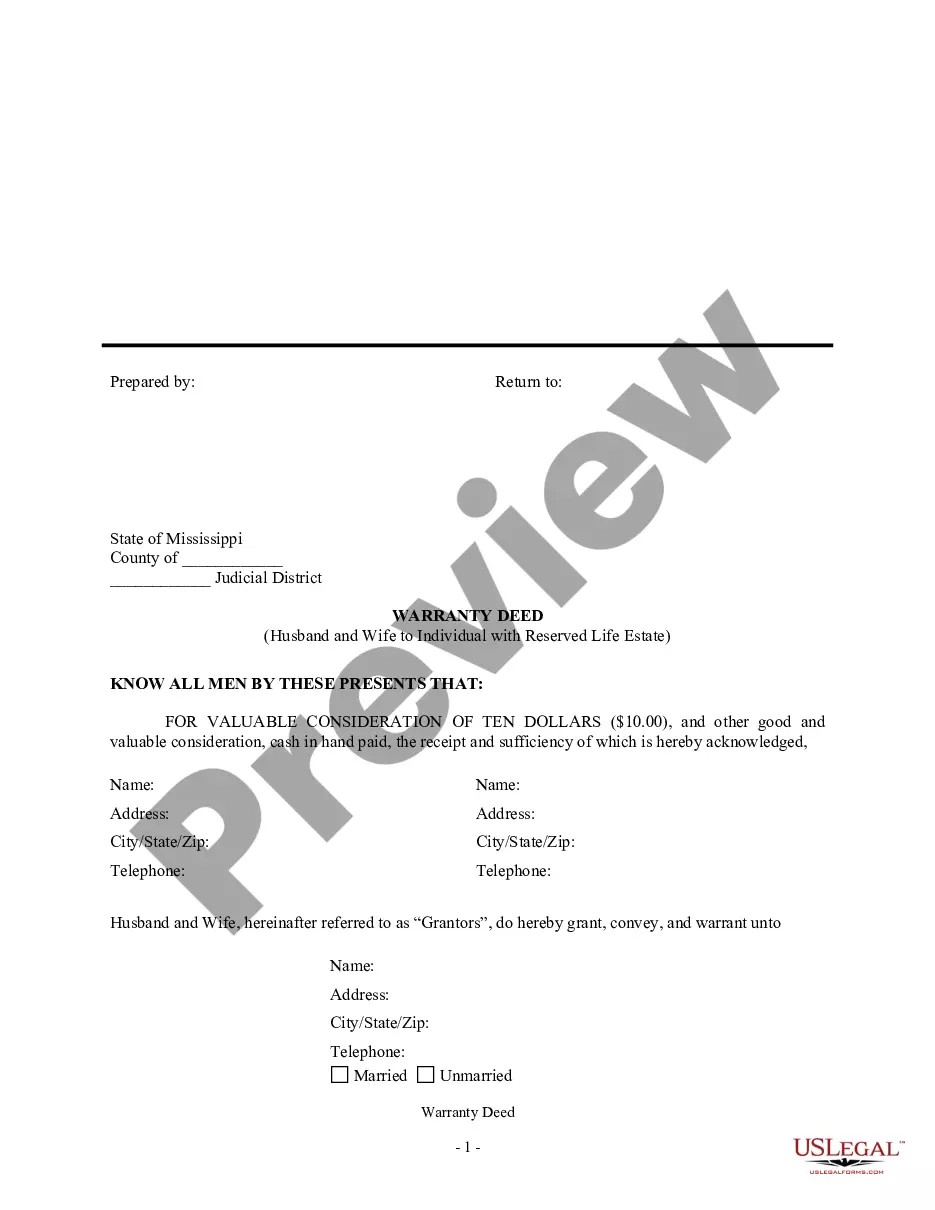
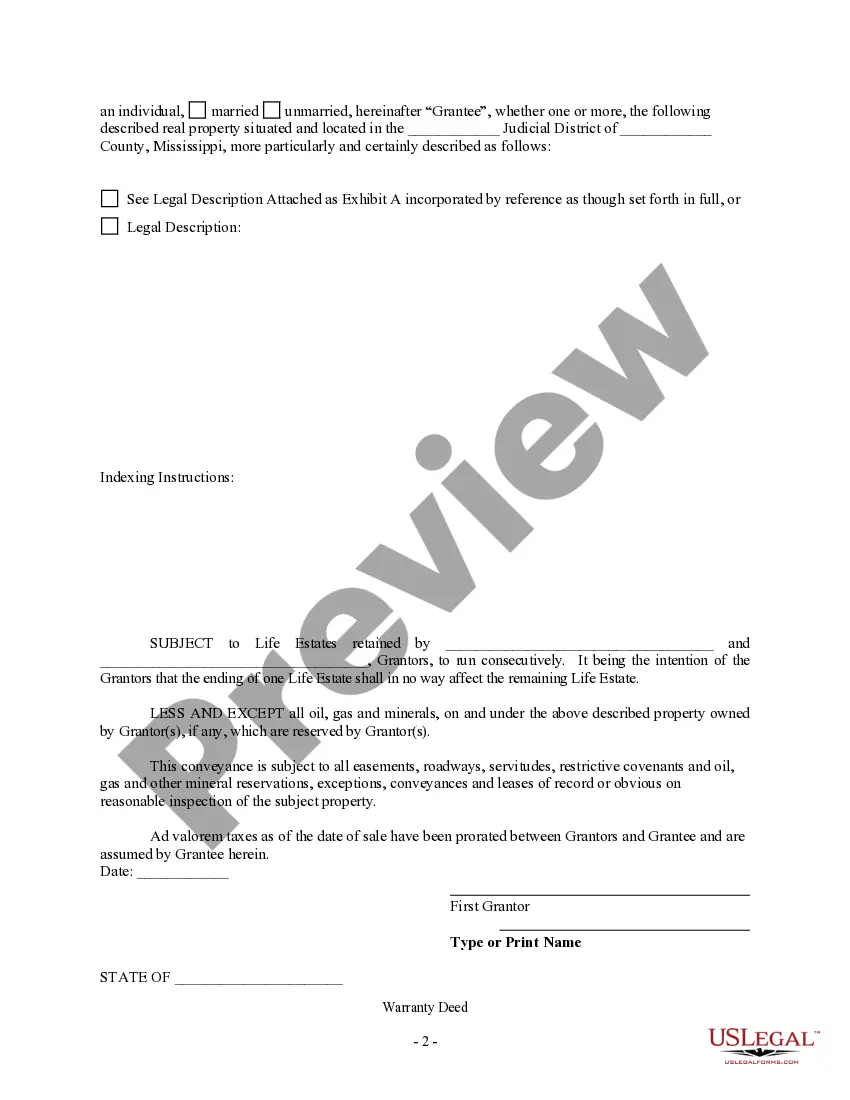
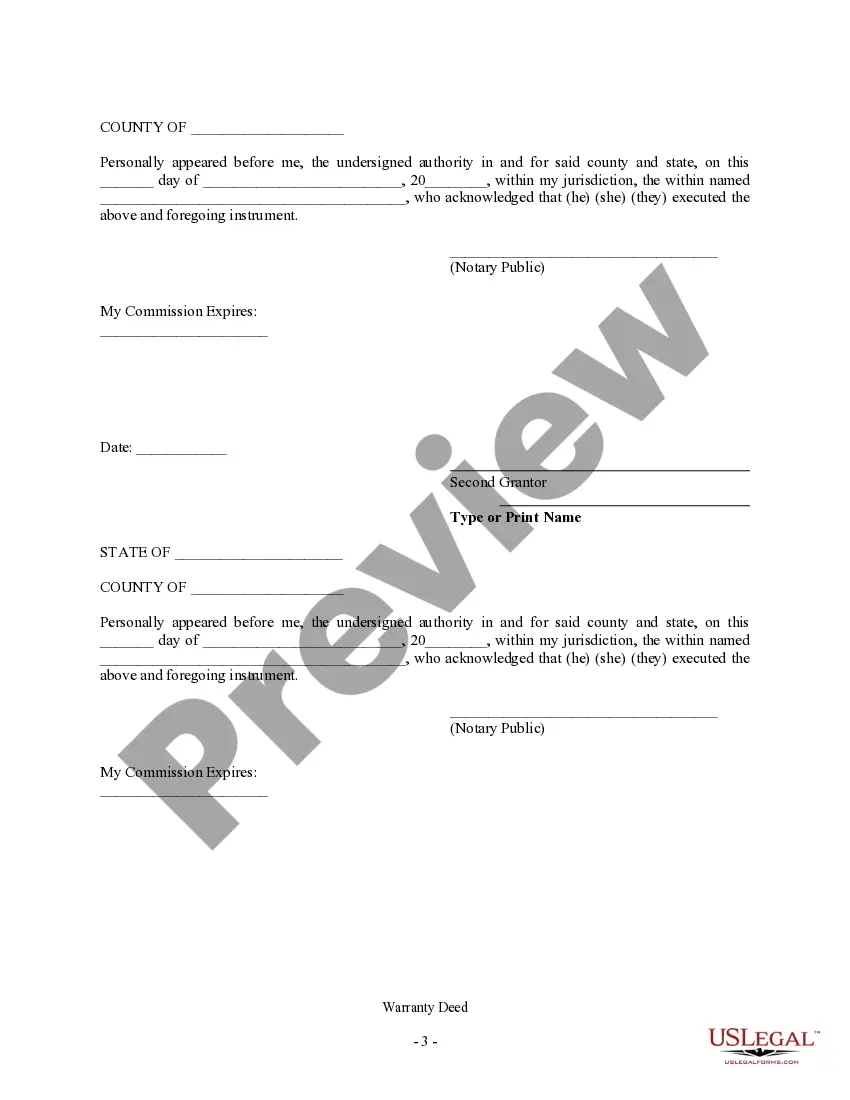
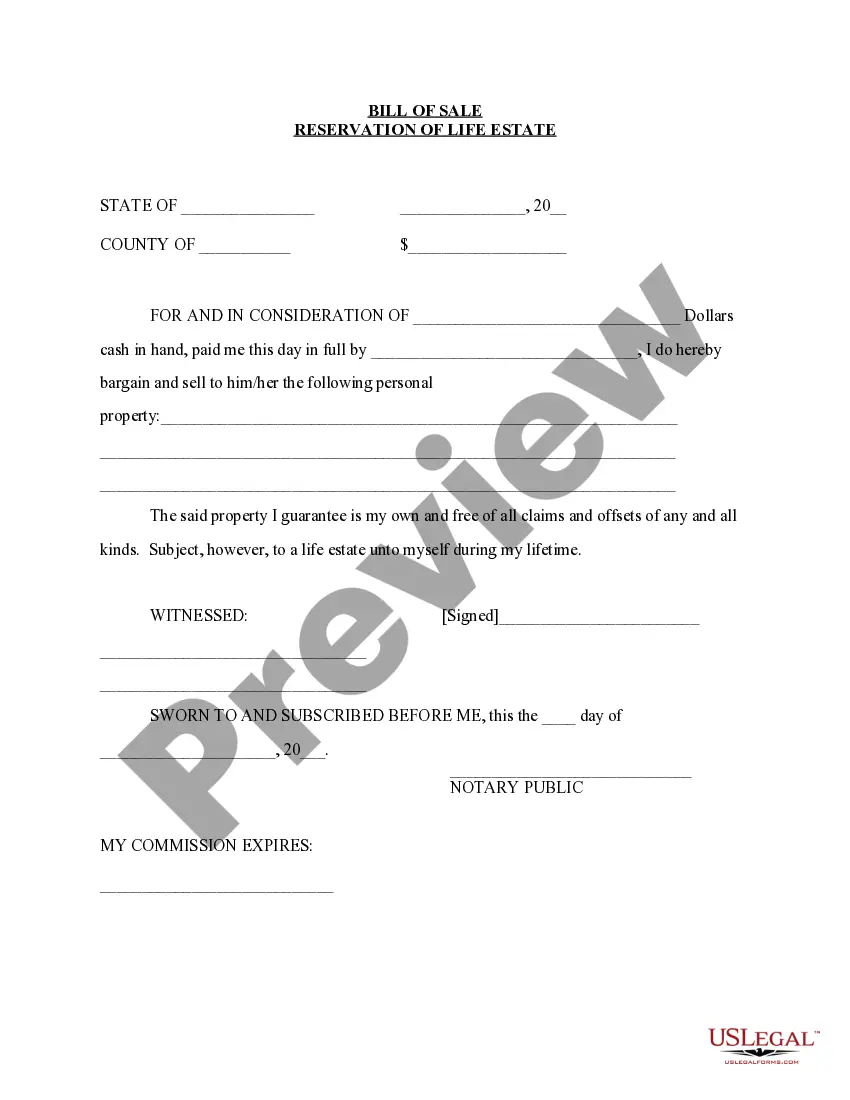
How to fill out Mississippi Warranty Deed To Child Reserving A Life Estate In The Parents?
- If you're a returning user, log in to your account at US Legal Forms and click the Download button for your required document. Ensure that your subscription is active, or renew it as necessary.
- For new users, begin by reviewing the Preview mode and description of the relevant form. Confirm that it aligns with your requirements and complies with local jurisdiction.
- If you do not find what you need, utilize the Search tab to look for alternate templates. Once you locate the suitable document, proceed to the next step.
- Select the document you wish to purchase by clicking the Buy Now button and choose a subscription plan that fits your needs. Registration for an account will be necessary for accessing the form library.
- Complete your purchase using credit card details or PayPal to activate your subscription.
- Download the form to your device, allowing you to work on it anytime. You can also find it later in the My Forms section of your profile.
In summary, US Legal Forms empowers you to efficiently manage your legal documentation with a vast selection of over 85,000 forms, ensuring you have access to precise and legally compliant documents tailored to your needs.
Start simplifying your legal processes today—visit US Legal Forms for all your form needs!
Form popularity
FAQ
A life estate deed with remainder interest is a legal arrangement that allows an individual to live in a property for the duration of their life. Once the person passes away, the property transfers automatically to a named beneficiary, known as the remainderman. This setup can simplify the transfer of property and help avoid probate, as the asset goes directly to the remainderman. If you are looking for guidance on creating a life estate with remainder interest, consider using US Legal Forms for easy access to necessary templates and resources.
A remainder interest is a future interest in property that becomes effective after a certain event, typically the death of the life tenant. This type of interest allows the remainder beneficiaries to claim ownership without any interruption. When you set up a life estate with remainder interest, you provide a clear pathway for property transfer, ensuring a seamless transition for your heirs.
A remainder interest in a life estate is the legal right granted to individuals who will receive the property once the life tenant dies. This interest ensures that ownership passes smoothly to the designated beneficiaries without additional legal proceedings. By establishing a life estate with remainder interest, you can clearly outline who will inherit the property.
A life interest grants you the right to use the property during your lifetime, while a remainder interest specifies who inherits the property after your death. Essentially, the life tenant can occupy the property, but the remainder beneficiaries gain ownership once the life tenant passes away. Understanding this distinction is crucial when establishing a life estate with remainder interest.
A life estate with remainder interest may limit your control over the property. Once you create a life estate, you cannot easily sell or transfer your interest without the consent of the remainder beneficiary. Additionally, if property taxes or liens accrue, the life tenant must manage these obligations, which can become a financial burden.
A remainder interest in real estate within a life estate with remainder interest signifies a future right to inherit property once the life tenant's interest ends. This legal framework allows for clear transition to the remainderman after the tenant's passing. Understanding this arrangement can simplify estate planning and property management.
A life estate with remainder interest generally does not receive a step-up in basis for the remainderman when the life tenant passes away. However, if the property is transferred as part of an estate, it might qualify for step-up in basis depending on various factors. Engaging with estate planning resources can help clarify these details.
To value a remainder interest in real estate within a life estate with remainder interest, calculate the present value based on the life tenant's age and life expectancy. This involves using tables provided by the IRS that outline mortality rates. Accurate valuation ensures that all parties have a clear understanding of worth.
A remainderman can borrow against a life estate with remainder interest, but lenders may be hesitant. Since the remainderman's interest only materializes after the life tenant's death, they may require additional assurances. Consulting with a financial advisor familiar with real estate laws can help navigate this situation.
Valuing partial interest in real estate, such as a life estate with remainder interest, requires assessing the total value of the property. It’s often determined by considering the income potential and market conditions. Engaging an appraiser or using reliable resources, like USLegalForms, can provide more accurate evaluations.