Life Estate Deed Mississippi Without
Description


Get your form ready online
Our built-in tools help you complete, sign, share, and store your documents in one place.
Make edits, fill in missing information, and update formatting in US Legal Forms—just like you would in MS Word.
Download a copy, print it, send it by email, or mail it via USPS—whatever works best for your next step.
Sign and collect signatures with our SignNow integration. Send to multiple recipients, set reminders, and more. Go Premium to unlock E-Sign.
If this form requires notarization, complete it online through a secure video call—no need to meet a notary in person or wait for an appointment.
We protect your documents and personal data by following strict security and privacy standards.

Make edits, fill in missing information, and update formatting in US Legal Forms—just like you would in MS Word.

Download a copy, print it, send it by email, or mail it via USPS—whatever works best for your next step.

Sign and collect signatures with our SignNow integration. Send to multiple recipients, set reminders, and more. Go Premium to unlock E-Sign.

If this form requires notarization, complete it online through a secure video call—no need to meet a notary in person or wait for an appointment.

We protect your documents and personal data by following strict security and privacy standards.
Looking for another form?


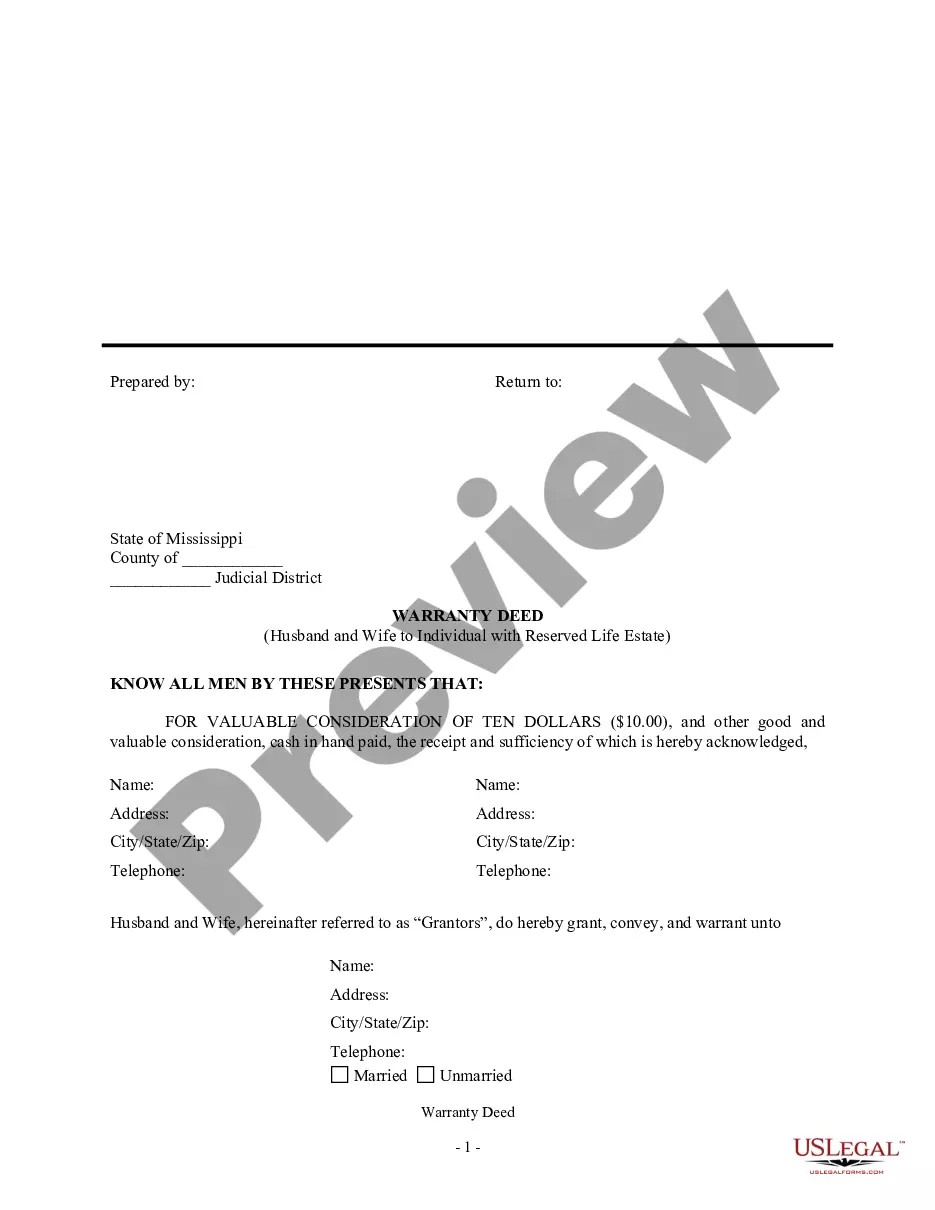
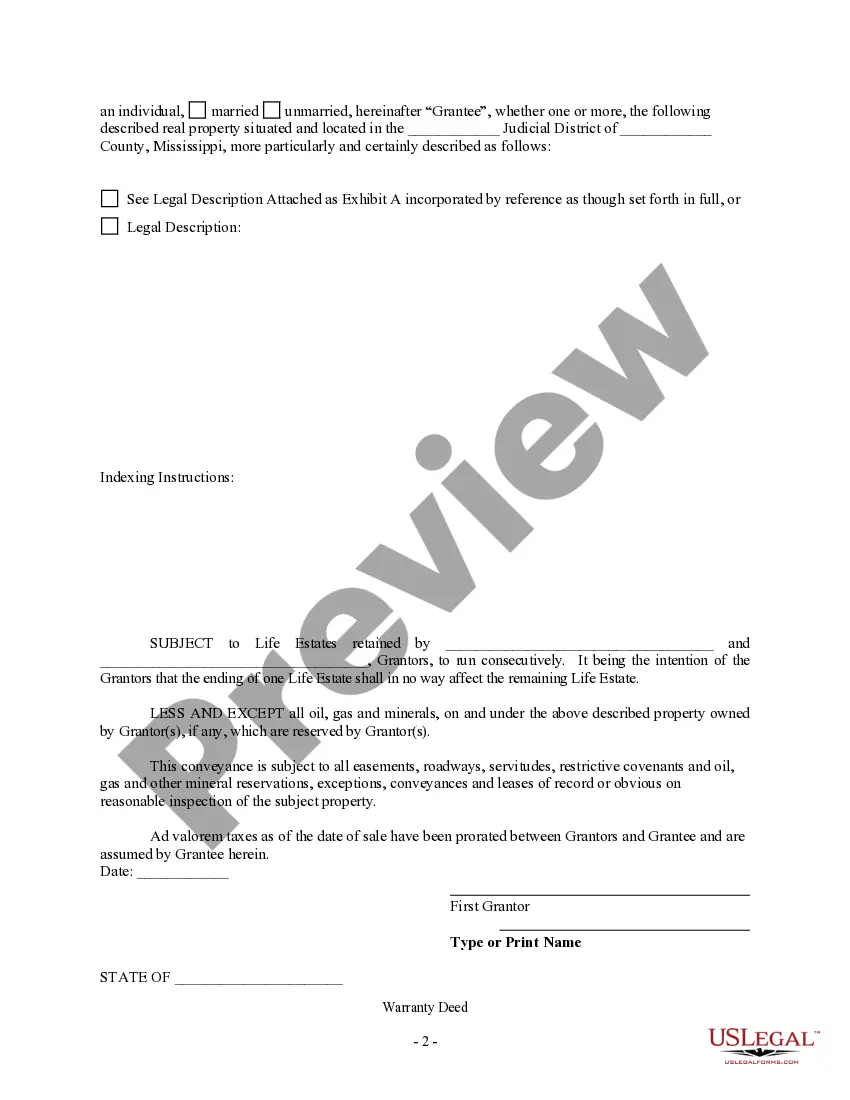
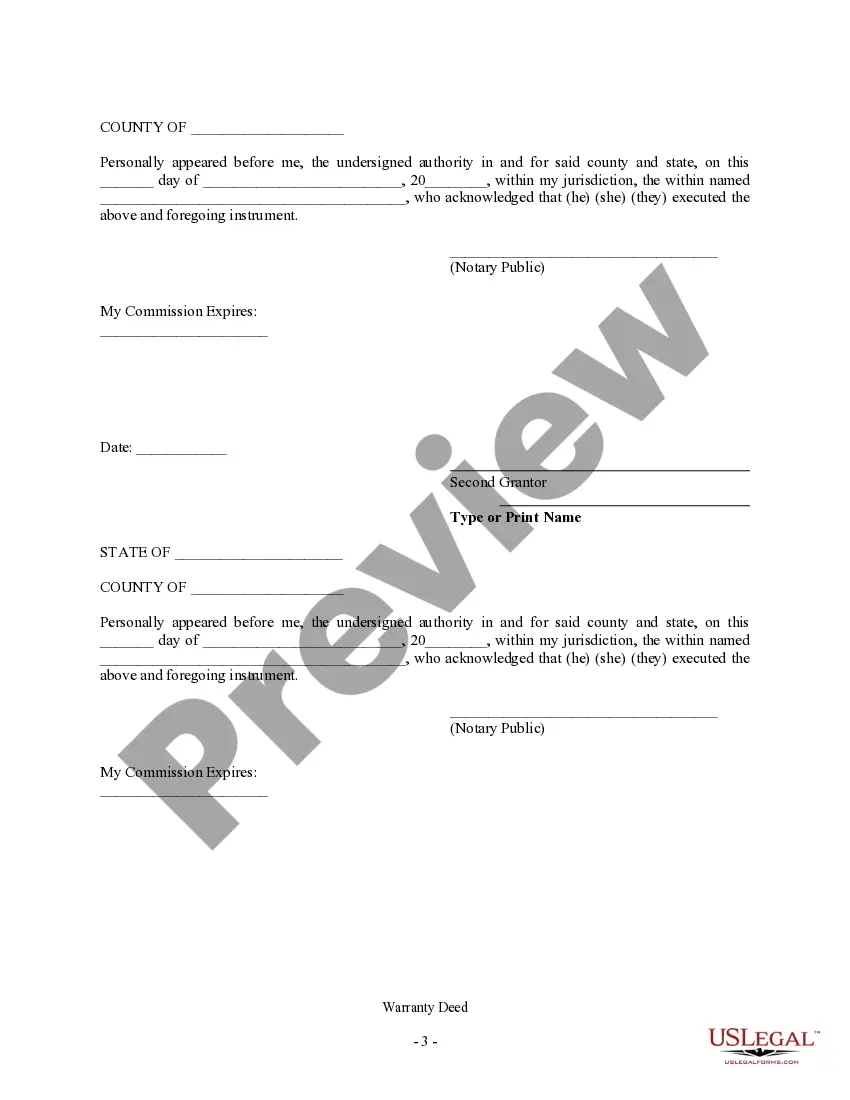
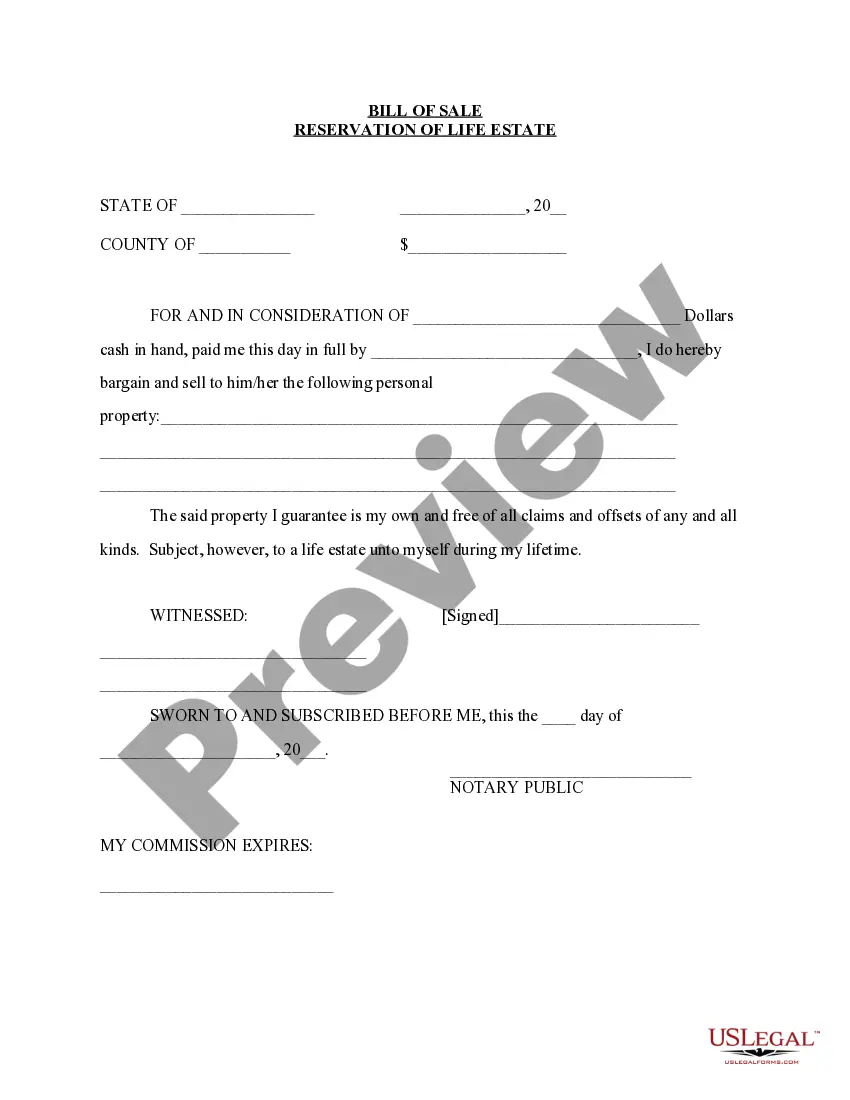
How to fill out Mississippi Warranty Deed To Child Reserving A Life Estate In The Parents?
It’s clear that you cannot instantly become a legal expert, nor can you swiftly learn how to draft a Life Estate Deed Mississippi Without without possessing a certain set of competencies.
Preparing legal documents is a lengthy undertaking that demands specific education and expertise.
So why not entrust the drafting of the Life Estate Deed Mississippi Without to the professionals.
You can revisit your documents from the My documents tab anytime. If you’re an existing user, you can simply Log In, and find and download the document from the same tab.
Regardless of the intention behind your documents—be it financial, legal, or personal—our platform has what you need. Experience US Legal Forms today!
- Explore the document you need by utilizing the search bar at the top of the page.
- View it (if this option is available) and examine the accompanying description to confirm if Life Estate Deed Mississippi Without is what you're seeking.
- Initiate your search again if you require a different document.
- Create a free account and select a subscription plan to purchase the document.
- Click Buy now. Once the payment is processed, you can download the Life Estate Deed Mississippi Without, fill it in, print it, and deliver or post it to the relevant parties or organizations.
Form popularity
FAQ
Writing a life estate requires clarity and attention to detail. Begin by outlining the grantor's intent, using the correct legal language such as ‘for the duration of the life of name.’ Utilizing a service like uslegalforms can simplify this process by providing templates and guidance tailored to Mississippi law, ensuring your life estate deed is correctly established without legal issues.
A life estate without powers limits the life tenant's ability to make significant changes to the property. In this arrangement, the life tenant can live on and maintain the property but cannot sell or lease it without approval from the remainder beneficiaries. Understanding this can help you make informed decisions about property management.
To file a life estate deed in Mississippi without hassle, you must first complete the deed, ensuring all legal requirements are met. After that, submit the document to the county clerk's office where the property is located. Filing properly will safeguard the life estate and confirm the rights of all involved parties.
In Mississippi, the life tenant owns the property during their lifetime, but they cannot sell or mortgage it without consent from the remainder beneficiaries. The remainder beneficiaries hold a future interest in the property, which becomes effective upon the life tenant's death. This unique arrangement ensures both the life tenant and remainder beneficiaries have defined rights.
The terms of a life estate generally allow the life tenant to possess and use the property while they are alive. Upon their death, the property transfers to designated remainder beneficiaries, as specified in the life estate deed. Thus, understanding these terms is vital to ensuring that your intentions are honored without legal confusion afterward.
Key phrases like 'for the life of' or 'life tenant' are essential when drafting a life estate deed in Mississippi without ambiguity. These terms clearly define the intention and limitations of the life estate. It's crucial to be precise in your wording to avoid future disputes regarding property rights.
To create a life estate deed in Mississippi without complications, you typically need specific language indicating the grantor's intentions. The deed should clearly state that the property is being conveyed for the lifetime of an individual, often referred to as the life tenant. This language ensures that the rights of the life tenant are established, allowing them to use the property until death.
A life estate in Mississippi allows a person to retain rights to a property for their lifetime, with ownership passing to the remainderman afterward. This arrangement enables the life tenant to enjoy the property while ensuring the future owner is designated. Such deeds can provide benefits in estate planning and avoiding probate. For guidance on creating and managing a life estate deed in Mississippi, consider using resources from US Legal Forms.
In Mississippi, the life tenant is responsible for paying property taxes on a life estate deed without exceptions. This responsibility arises because the life tenant retains the rights to use the property. However, costs associated with the property beyond taxes may fall to the remainderman after the life tenant's death. Knowing your tax obligations ensures smooth management of the estate.
A life estate deed in Mississippi without powers typically restricts the life tenant from making significant changes to the property unless permitted. This means the life tenant may live in or rent the property, but cannot sell it outright without remainderman approval. Understanding the specific type of life estate deed you hold is crucial for making informed decisions. Resources like US Legal Forms can provide templates to navigate this effectively.