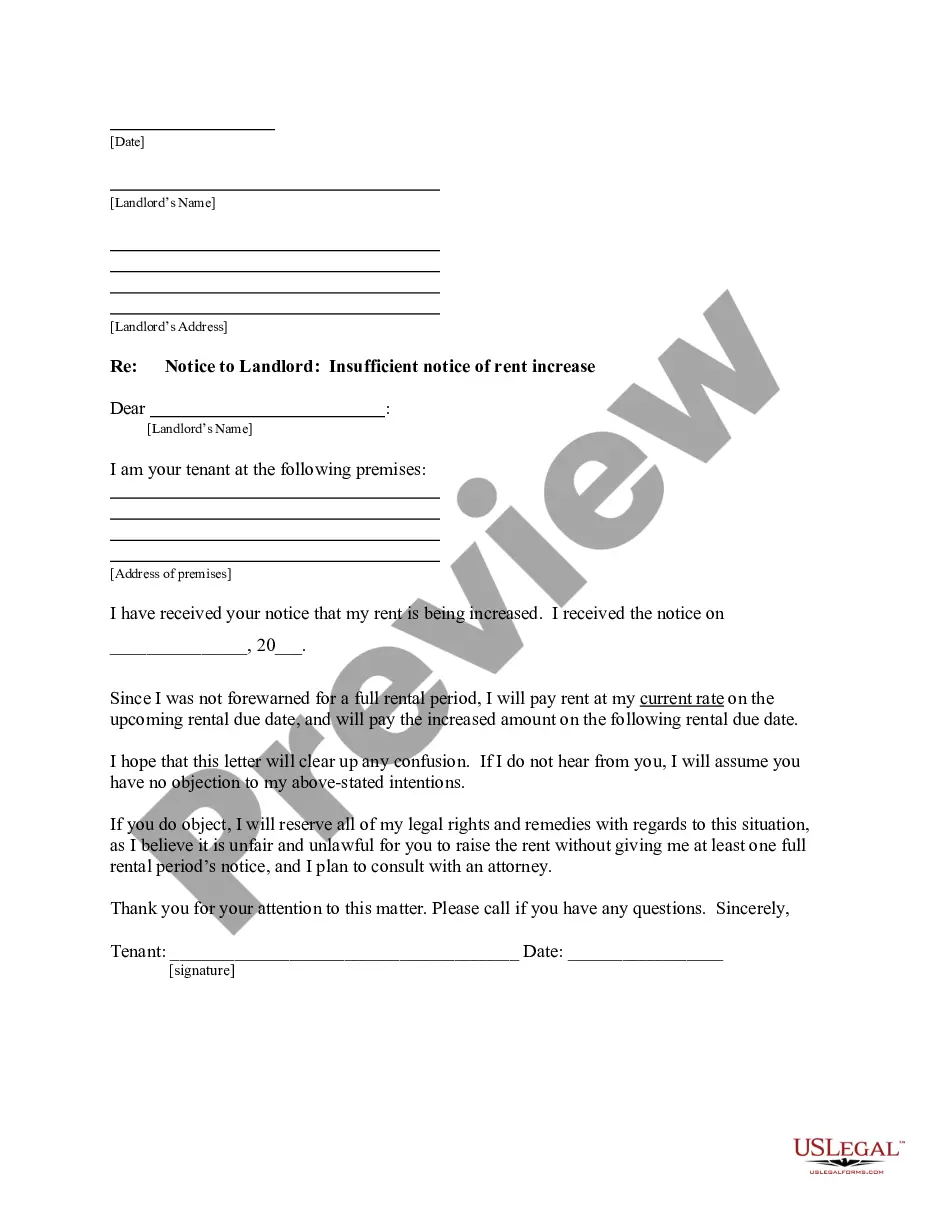
Letter Tenant Rent Increase Without Notice
Description
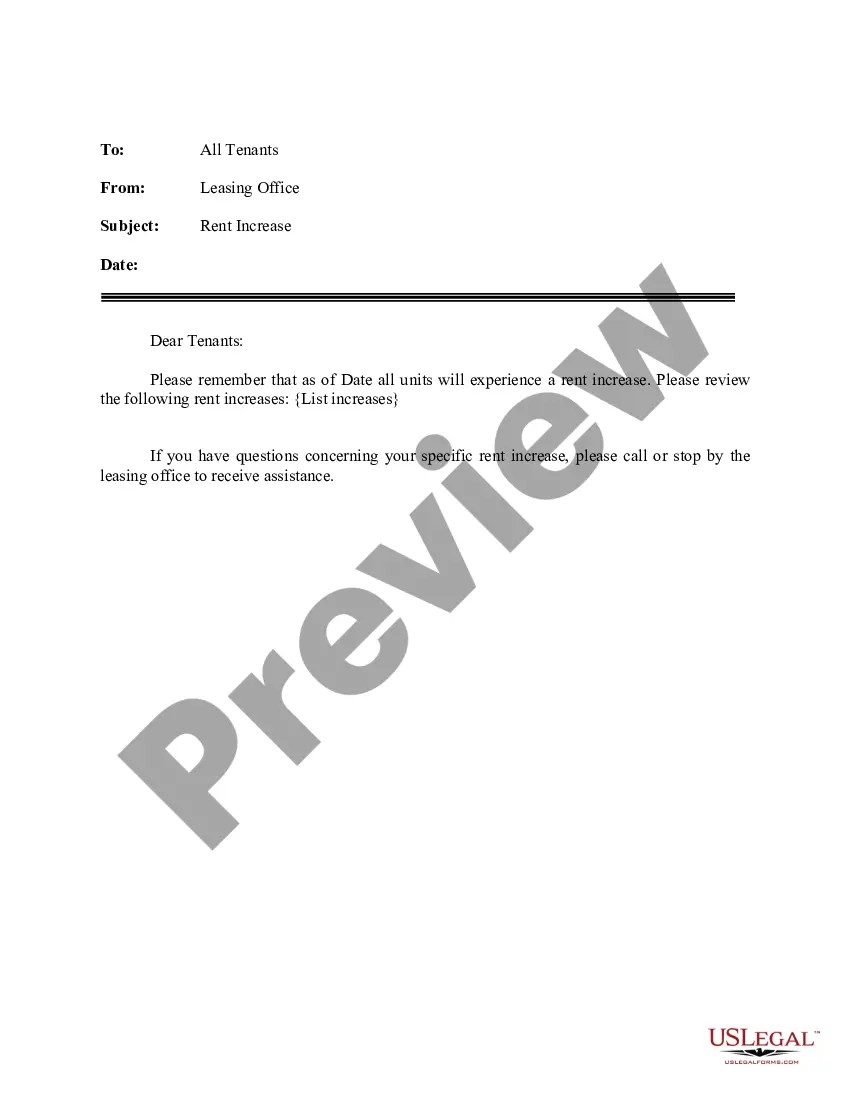

Get your form ready online
Our built-in tools help you complete, sign, share, and store your documents in one place.
Make edits, fill in missing information, and update formatting in US Legal Forms—just like you would in MS Word.
Download a copy, print it, send it by email, or mail it via USPS—whatever works best for your next step.
Sign and collect signatures with our SignNow integration. Send to multiple recipients, set reminders, and more. Go Premium to unlock E-Sign.
If this form requires notarization, complete it online through a secure video call—no need to meet a notary in person or wait for an appointment.
We protect your documents and personal data by following strict security and privacy standards.

Make edits, fill in missing information, and update formatting in US Legal Forms—just like you would in MS Word.

Download a copy, print it, send it by email, or mail it via USPS—whatever works best for your next step.

Sign and collect signatures with our SignNow integration. Send to multiple recipients, set reminders, and more. Go Premium to unlock E-Sign.

If this form requires notarization, complete it online through a secure video call—no need to meet a notary in person or wait for an appointment.

We protect your documents and personal data by following strict security and privacy standards.
Looking for another form?





Form popularity
FAQ
Landlords in Texas cannot retaliate against tenants who exercise their rights, such as reporting unsafe living conditions. They also can't lock out tenants or shut off utilities without proper procedures. Using a Letter tenant rent increase without notice could also be seen as unlawful if it circumvents legal requirements. Understanding renters' rights can protect you as a tenant and promote fair practices.
When discussing a rent increase with your landlord, it's helpful to be calm and respectful. Express your concerns and be open to discussion about the increase. Mention that a Letter tenant rent increase without notice can feel unexpected and unfair. This approach shows that you value the relationship and are willing to negotiate.
Yes, a landlord can raise rent without notice if the lease agreement allows it, or if the rental term is month-to-month. However, this practice can create friction between landlords and tenants. It's advisable to send a Letter tenant rent increase without notice to clarify intentions and avoid disputes. Clear communication can foster trust and understanding.
In Texas, landlords must typically provide written notice of a rent increase at least 30 days before the new rate takes effect. This notice is important to ensure tenants have time to adjust their budgets. A Letter tenant rent increase without notice can violate tenant rights. Always document changes formally and clearly.
In Texas, landlords generally must provide notice before entering a rental property. This notice usually needs to be at least 24 hours in advance, except in emergencies. A Letter tenant rent increase without notice can lead to misunderstandings, so it's best for landlords to follow the law. Maintaining open communication is crucial for a positive landlord-tenant relationship.
The average rent increase in Texas varies, but it typically ranges from 3% to 6% annually. This increase can depend on various factors, including location and market demand. However, a Letter tenant rent increase without notice can create confusion for tenants. It's always wise for landlords to communicate any changes clearly and legally.
To write a letter to your landlord regarding vacating, include your address, the date, and a statement of your intent to leave. Clearly mention the date by which you plan to vacate, adhering to any lease terms. Thank your landlord for their understanding, and ensure that the letter is concise yet formal. Templates from US Legal Forms can assist you in drafting a professional notice.
When writing a letter to request a rent reduction, start by stating your address and the date. Be sure to explain your reasons for requesting the decrease clearly and succinctly. It may help to mention any pertinent financial difficulties or recent changes in the housing market. Using a structured format from US Legal Forms can ensure you cover all necessary points.
To respond to a rent increase letter, begin by acknowledging receipt of the notice. Clearly express your concerns regarding the increase, especially if it came without notice. You can request a discussion to negotiate the terms or provide evidence of financial constraints. Utilize resources from US Legal Forms to find sample responses that can guide you in crafting a suitable reply.
To request a rent reduction, write a formal letter to your landlord. In the letter, clearly state your reasons for requesting a decrease, such as financial difficulties or comparable rents in your area. Be polite and professional, and provide any supporting documentation. Using a template like those from US Legal Forms can help you draft an effective letter.
