Trust Account With Fidelity
Description


Get your form ready online
Our built-in tools help you complete, sign, share, and store your documents in one place.
Make edits, fill in missing information, and update formatting in US Legal Forms—just like you would in MS Word.
Download a copy, print it, send it by email, or mail it via USPS—whatever works best for your next step.
Sign and collect signatures with our SignNow integration. Send to multiple recipients, set reminders, and more. Go Premium to unlock E-Sign.
If this form requires notarization, complete it online through a secure video call—no need to meet a notary in person or wait for an appointment.
We protect your documents and personal data by following strict security and privacy standards.

Make edits, fill in missing information, and update formatting in US Legal Forms—just like you would in MS Word.

Download a copy, print it, send it by email, or mail it via USPS—whatever works best for your next step.

Sign and collect signatures with our SignNow integration. Send to multiple recipients, set reminders, and more. Go Premium to unlock E-Sign.

If this form requires notarization, complete it online through a secure video call—no need to meet a notary in person or wait for an appointment.

We protect your documents and personal data by following strict security and privacy standards.
Looking for another form?


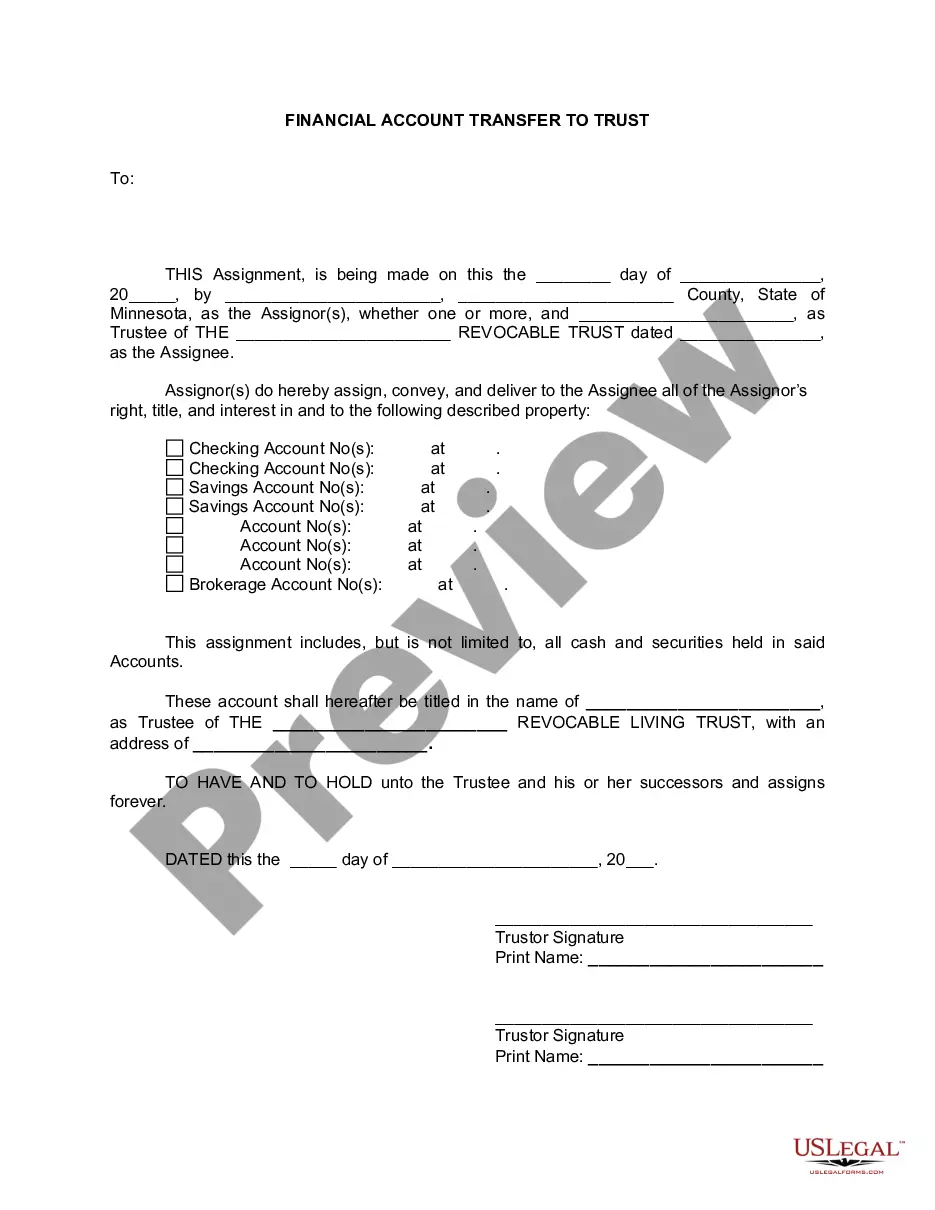
How to fill out Minnesota Financial Account Transfer To Living Trust?
- Visit the US Legal Forms website and log into your account if you are a returning user. Ensure your subscription is active; renew it if necessary.
- For new users, begin by exploring the extensive library. Use the 'Preview' and 'form description' to identify the template that aligns with your trust account needs.
- If needed, utilize the Search feature to find alternative forms that may better suit your situation.
- Purchase your selected document by clicking 'Buy Now,' and select your preferred subscription plan, creating an account for access.
- Complete your transaction by entering payment details via credit card or PayPal.
- After the payment is confirmed, download your form directly to your device. Access it anytime through the 'My Forms' section of your profile.
Utilizing US Legal Forms allows you to leverage a vast collection of over 85,000 legal forms, ensuring you find precisely what you need with convenience and efficiency.
Empower your legal documentation process today. Sign up with US Legal Forms and experience effortless form management for your trust account.
Form popularity
FAQ
When choosing a bank for your trust account with fidelity, consider factors like fees, interest rates, and customer service. Some banks offer specific features tailored to trust accounts, providing better management and access options. Look for institutions recognized for their experience in handling trust accounts, as they can help you navigate the complexities involved. Additionally, platforms like US Legal Forms can guide you in setting up your trust account with fidelity, ensuring compliance and ease in the process.
Filling out a trust fund application typically involves providing detailed information about the trust, including the names of beneficiaries, trustees, and specifics about the assets involved. Many financial institutions, including Fidelity, offer resources to assist in this process, ensuring all necessary details are accurately captured. Consider seeking guidance from a financial professional if you need assistance in completing the paperwork.
One significant mistake parents often make when setting up a trust fund is failing to clearly communicate their intentions with their heirs. Not outlining specific terms can lead to confusion and conflict among family members. It's essential to have open discussions and to involve your children in the planning process to foster understanding and acceptance.
Deciding if your parents should put their assets in a trust depends on various factors, including their financial situation and estate planning goals. A trust can offer benefits such as avoiding probate and protecting assets, but it also requires careful consideration and planning. Discussing this with a financial advisor may help clarify whether a trust account with Fidelity is the right choice for your family.
One downside of putting assets in a trust is the lack of direct control over those assets once they are transferred. This means you might find it difficult to access or utilize your assets without following the trust guidelines. It is crucial to evaluate your financial situation and goals to determine if a trust account with Fidelity aligns with your objectives.
A family trust can create complications in terms of management and distribution of assets. Disagreements among family members may arise, resulting in potential conflict when decisions need to be made. Additionally, there may be tax implications, which can vary depending on the structure of the trust.
To set up a trust account with Fidelity, you will first need to gather the necessary documentation, such as the trust agreement and identification for all trustees. Next, visit the Fidelity website or a local branch to start the application process. Fidelity’s online resources provide clear guidance on filling out forms and understanding account features.
Yes, Fidelity does offer trust accounts that provide flexible options for managing assets and investments. These accounts enable you to effectively manage investments on behalf of beneficiaries while enjoying the advantages of Fidelity's robust investment services. You can explore various trust options tailored to meet specific financial goals. Utilizing a trust account with fidelity ensures you have reliable support for your financial needs.
Some individuals may choose not to set up a trust account with fidelity due to the associated costs and ongoing maintenance responsibilities. Trusts require legal fees, tax returns, and sometimes annual reports. Additionally, some people might prefer simpler estate planning methods, such as a will, which can be easier and cheaper. Ultimately, understanding your specific needs and consulting with a professional is essential.
The best bank account for a trust generally depends on the specific needs and objectives of the trust. A trust account with Fidelity is often a strong choice due to its investment options and estate planning benefits. It's essential to consider factors like fees, required minimum balances, and investment opportunities when choosing the right account for your trust.