Attorney X Lawyer
Description
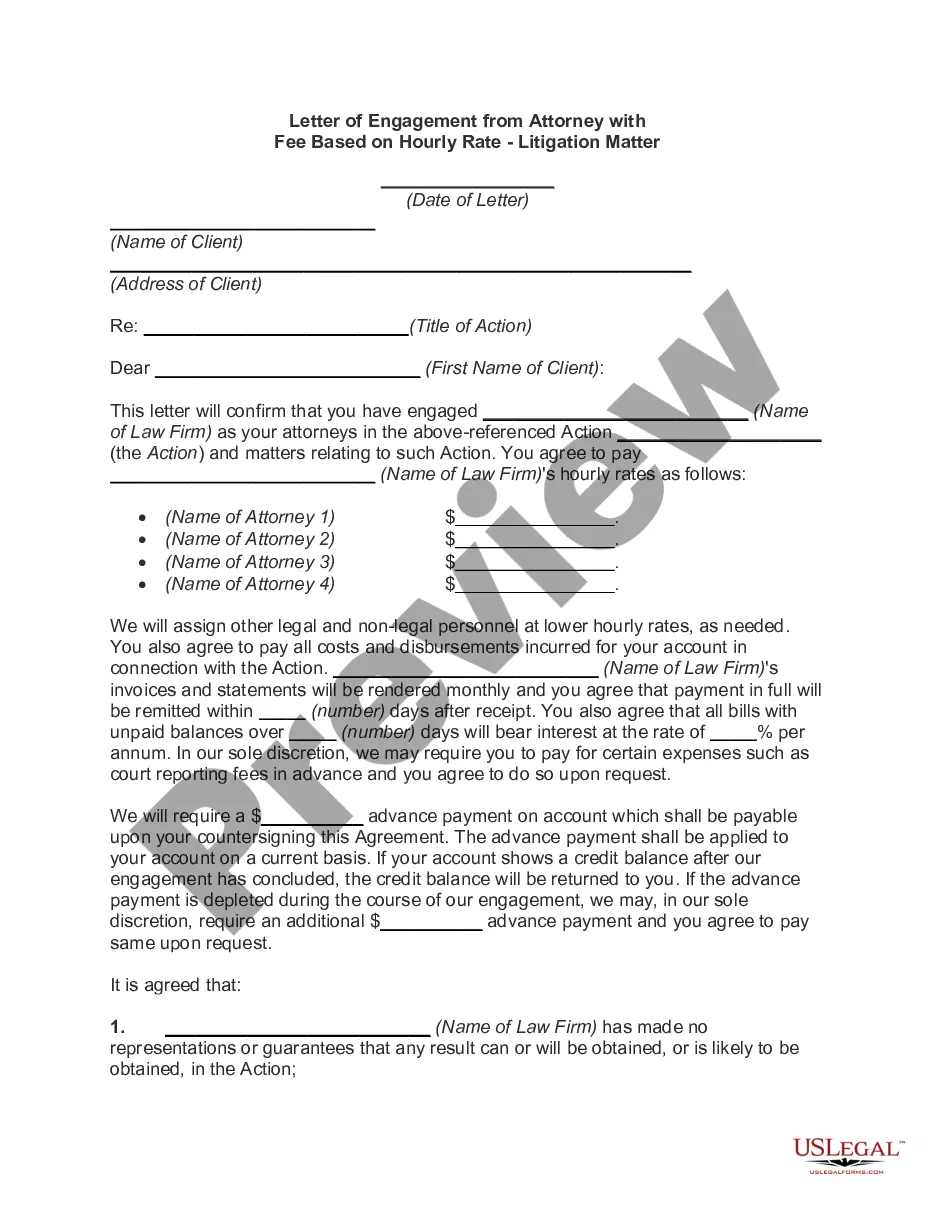
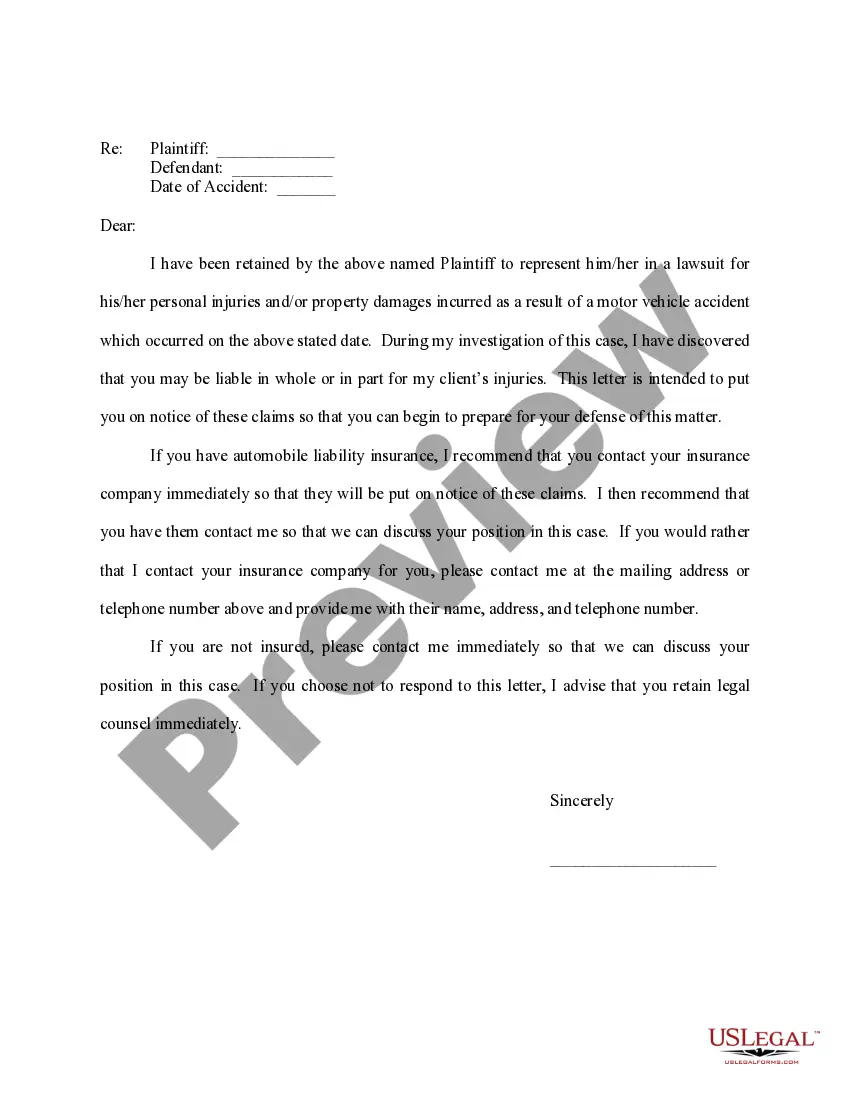
Get your form ready online
Our built-in tools help you complete, sign, share, and store your documents in one place.
Make edits, fill in missing information, and update formatting in US Legal Forms—just like you would in MS Word.
Download a copy, print it, send it by email, or mail it via USPS—whatever works best for your next step.
Sign and collect signatures with our SignNow integration. Send to multiple recipients, set reminders, and more. Go Premium to unlock E-Sign.
If this form requires notarization, complete it online through a secure video call—no need to meet a notary in person or wait for an appointment.
We protect your documents and personal data by following strict security and privacy standards.

Make edits, fill in missing information, and update formatting in US Legal Forms—just like you would in MS Word.

Download a copy, print it, send it by email, or mail it via USPS—whatever works best for your next step.

Sign and collect signatures with our SignNow integration. Send to multiple recipients, set reminders, and more. Go Premium to unlock E-Sign.

If this form requires notarization, complete it online through a secure video call—no need to meet a notary in person or wait for an appointment.

We protect your documents and personal data by following strict security and privacy standards.
Looking for another form?




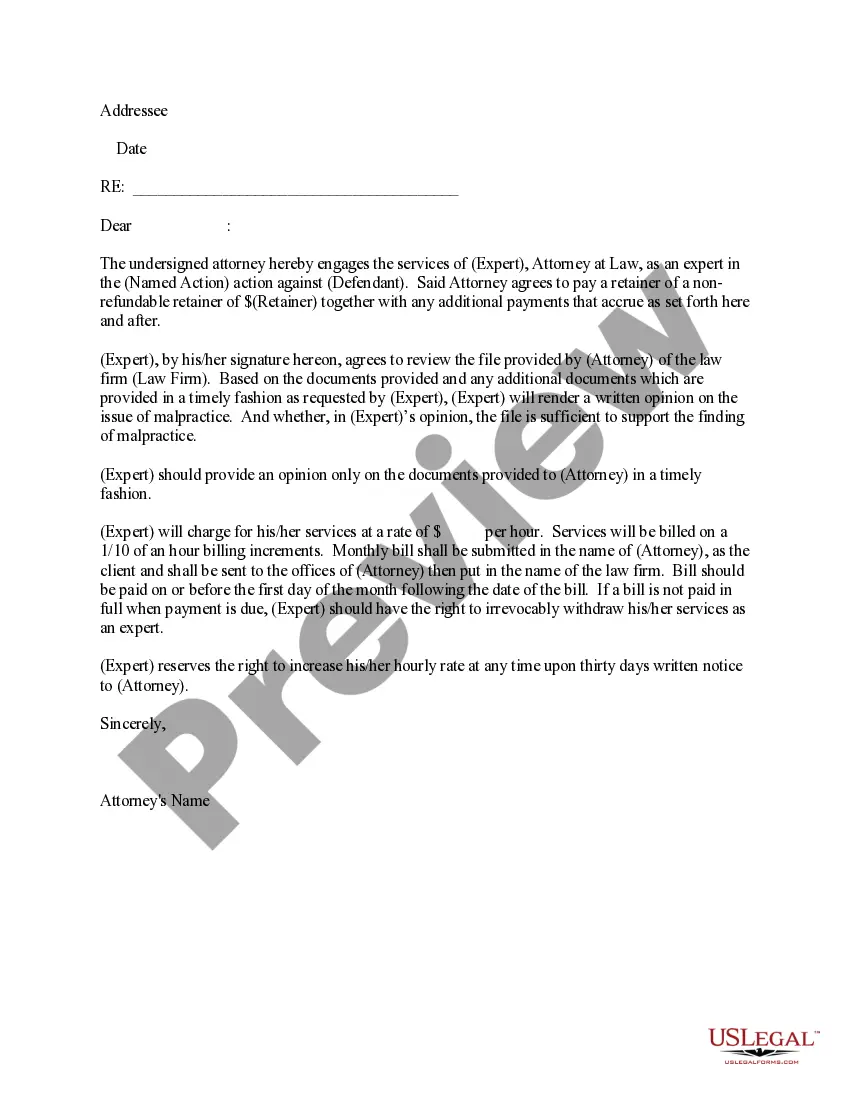
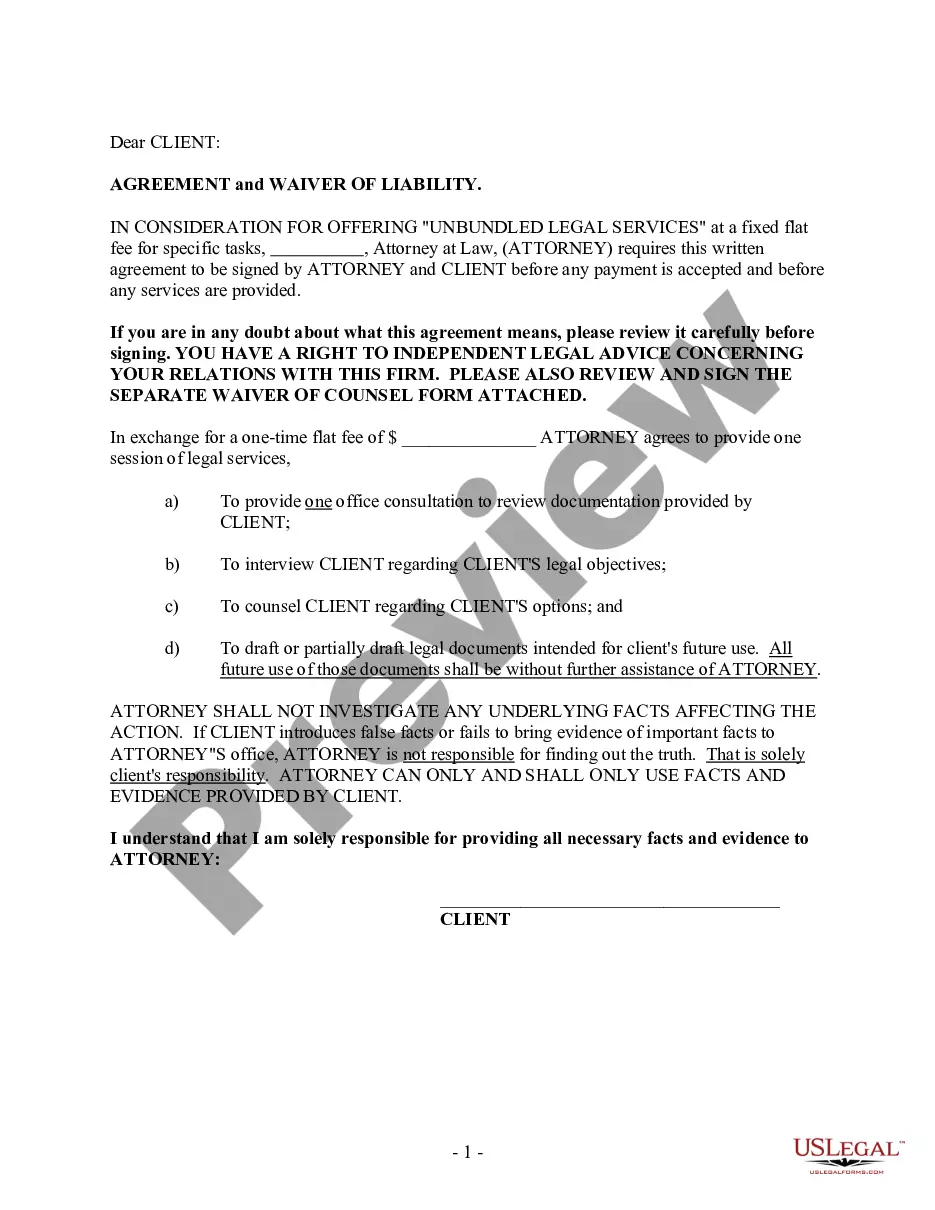
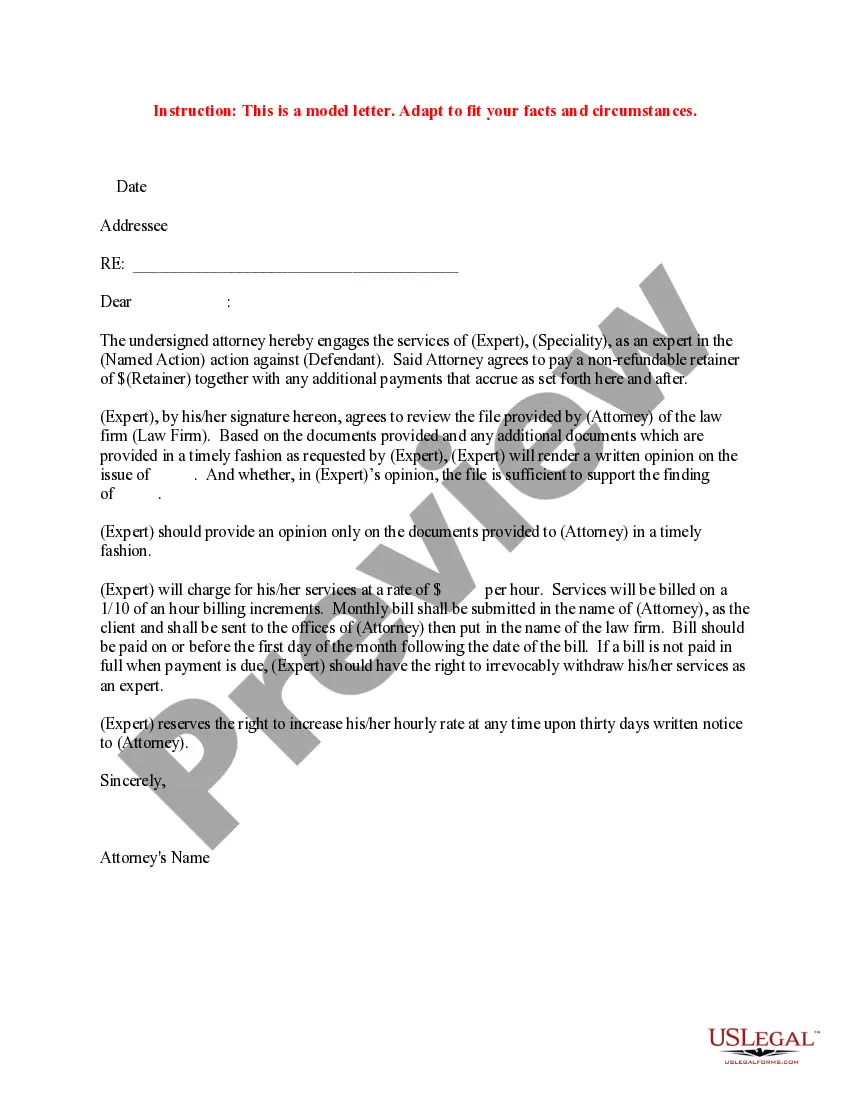
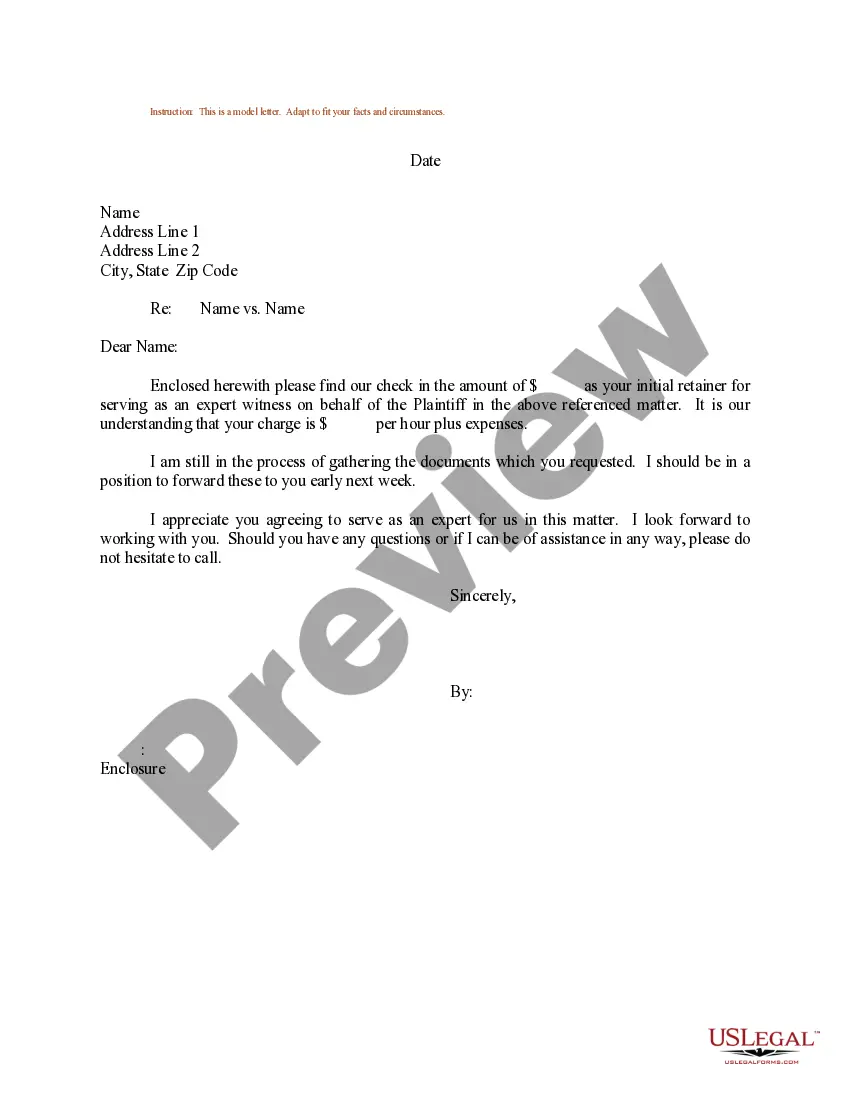
How to fill out Minnesota Letter Explaining Terms Of Engagement Of Attorney Expert Witness - Malpractice Opinion?
- If you're a returning user, log in to your account and select the form you need. Ensure your subscription is active; if it’s expired, renew it according to your payment plan.
- For first-time users, start by reviewing the Preview mode and form descriptions. Confirm that the selected document meets your specific requirements and adheres to local jurisdiction regulations.
- If you find that the form does not meet your expectations, utilize the Search tab to locate a more suitable template.
- Once you've identified the correct document, click on the Buy Now button and choose an appropriate subscription plan, ensuring you register for full access to the library.
- Proceed to checkout by providing your credit card details or opting for PayPal to complete your purchase.
- Finally, download your chosen form and save it on your device. You can access it anytime through the My Forms section in your account.
By choosing US Legal Forms, you gain access to an extensive collection of over 85,000 fillable and editable legal documents. Our platform stands out with more forms available than competitors, allowing you to find exactly what you need.
Additionally, our premium experts can assist you in completing your forms, ensuring accuracy and compliance. Start your journey to hassle-free legal document preparation today!
Form popularity
FAQ
Common initials that follow a lawyer's name include 'J.D.' which stands for Juris Doctor, indicating they have completed law school. Additionally, 'LL.M.' for Master of Laws may also appear if the lawyer has pursued further legal education. These initials signify their qualifications and expertise in the legal field.
When addressing multiple lawyers in an email, it's courteous to list their names using the appropriate titles. You can start your greeting with 'Dear Attorneys' followed by their last names or just 'Dear Attorneys' if you wish to keep it general. This method shows respect for their professional qualifications and keeps the communication clear.
While there is no specific prefix that applies universally to all lawyers, the title 'Esq.' is often used after the names of those who are licensed to practice law. This designation is recognized in many formal settings. You can also refer to them as 'Attorney' to signify their professional role in legal matters.
For most legal professionals, the prefix is 'Mr.', 'Ms.', or 'Mrs.' depending on their gender and marital status. When addressing a lawyer formally, you might also use 'Esq.' which stands for Esquire, indicating their status as a licensed attorney. If you prefer clarity, using just 'Attorney' can eliminate any confusion.
The term 'lawyer' is a general word used to describe someone who is trained in legal matters and represents clients in legal disputes. However, many people refer to these professionals as 'attorneys.' In the U.S., an attorney is a lawyer who has passed the bar exam and is legally allowed to practice law.
The power dynamic between an attorney and a lawyer does not imply superiority but rather functional differences. An attorney has the legal rights to represent clients in legal matters, whereas a lawyer may not. Therefore, when you need direct representation in court, an attorney is essential. Understanding who to approach based on your needs can streamline your legal journey.
While the terms attorney and lawyer are commonly interchangeable, differences exist in their roles. An attorney represents clients in legal proceedings, while a lawyer may offer legal advice without necessarily representing clients in court. Both professions are essential in the legal system. Recognizing these distinctions can help you make informed choices when seeking legal assistance.
Yes, the term attorney is frequently used as a synonym for lawyer. However, there is a distinction to note; an attorney has a specific role and duties, including representing clients in legal cases. Therefore, while they share similarities, using attorney or lawyer can depend on the specific legal context. Understanding these nuances can enhance your grasp of legal discussions.
The terms lawyer and attorney often confuse many people. Essentially, an attorney is a type of lawyer who is authorized to act on behalf of clients in legal matters. While all attorneys are lawyers, not all lawyers are attorneys. To clarify, a lawyer can provide legal advice and knowledge, but an attorney has the legal power to represent clients in court.
The concept of power can vary based on context. Generally, an attorney wields more authority in legal matters because they represent clients and argue cases in court. If you require someone to advocate for you and navigate legal complexities, engaging an attorney would likely be the best choice for asserting your rights.