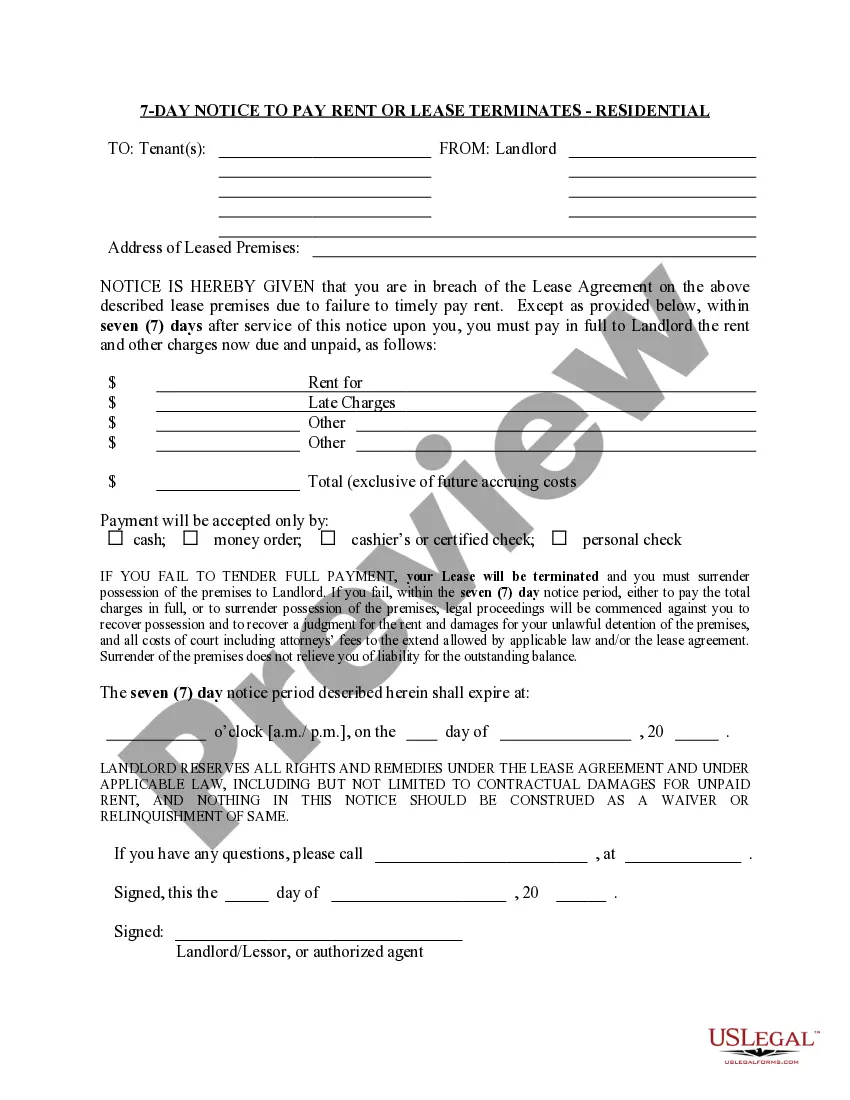
Michigan 7 Day Notice Form With Payment
Description

Get your form ready online
Our built-in tools help you complete, sign, share, and store your documents in one place.
Make edits, fill in missing information, and update formatting in US Legal Forms—just like you would in MS Word.
Download a copy, print it, send it by email, or mail it via USPS—whatever works best for your next step.
Sign and collect signatures with our SignNow integration. Send to multiple recipients, set reminders, and more. Go Premium to unlock E-Sign.
If this form requires notarization, complete it online through a secure video call—no need to meet a notary in person or wait for an appointment.
We protect your documents and personal data by following strict security and privacy standards.

Make edits, fill in missing information, and update formatting in US Legal Forms—just like you would in MS Word.

Download a copy, print it, send it by email, or mail it via USPS—whatever works best for your next step.

Sign and collect signatures with our SignNow integration. Send to multiple recipients, set reminders, and more. Go Premium to unlock E-Sign.

If this form requires notarization, complete it online through a secure video call—no need to meet a notary in person or wait for an appointment.

We protect your documents and personal data by following strict security and privacy standards.
Looking for another form?


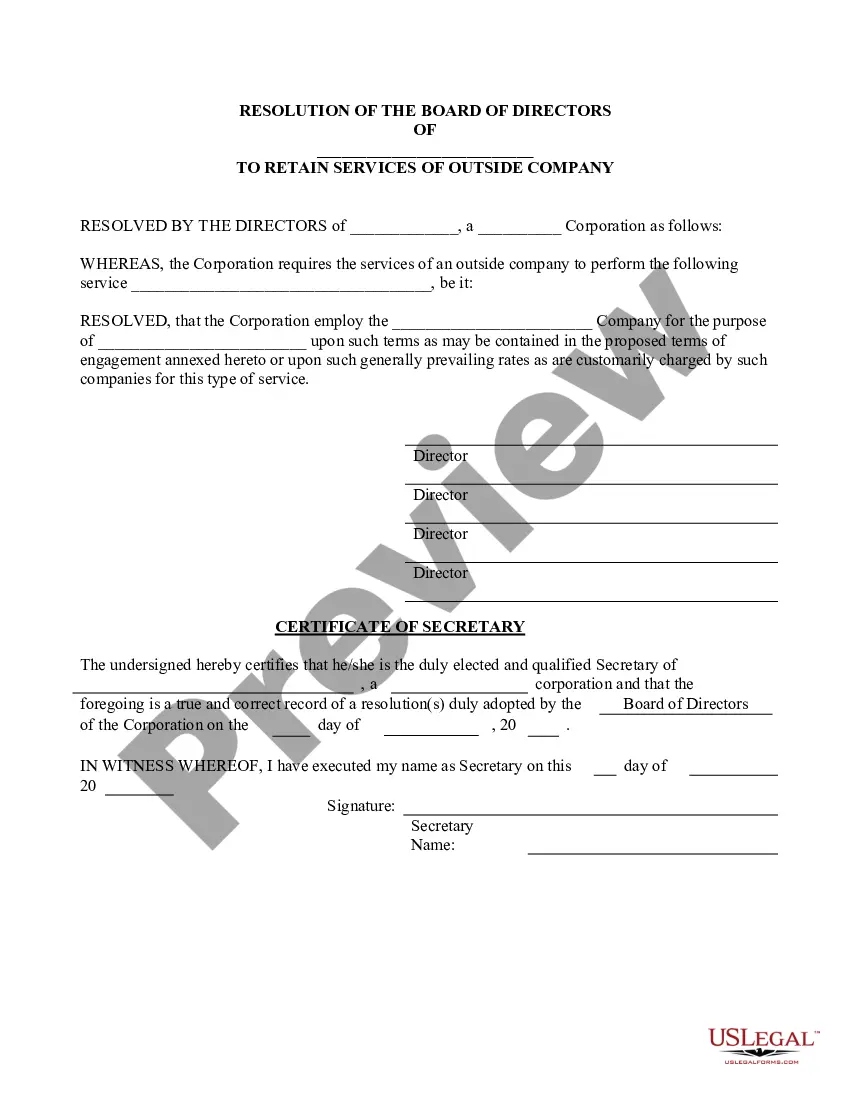


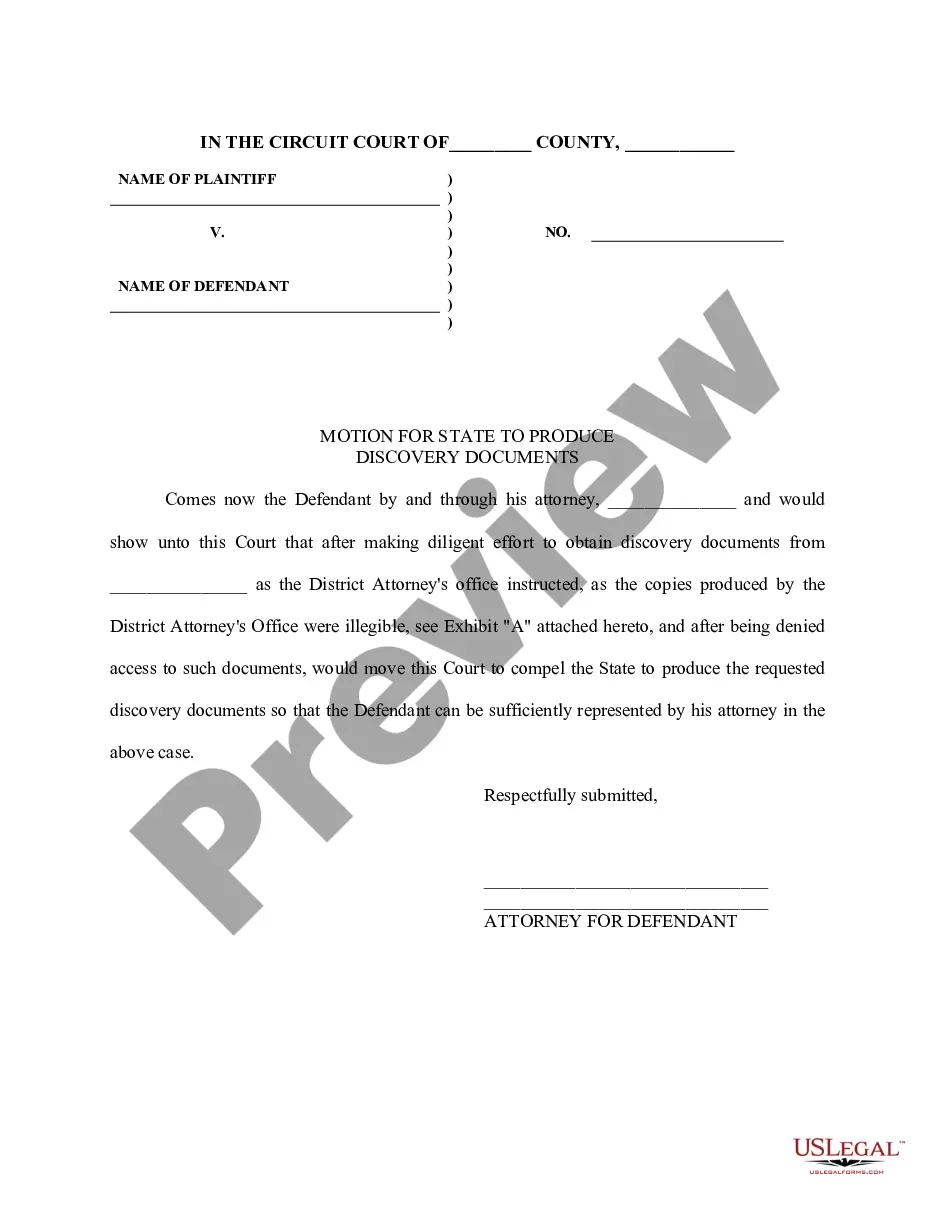


How to fill out Michigan 7 Day Notice To Pay Rent Or Lease Terminates?
Creating legal documents from the ground up can frequently be intimidating. Some situations may require extensive research and a significant financial investment.
If you seek a more straightforward and economical method of preparing the Michigan 7 Day Notice Form With Payment or any other forms without unnecessary complications, US Legal Forms is readily accessible.
Our online repository of over 85,000 current legal documents covers nearly every aspect of your financial, legal, and personal affairs. With just a few clicks, you can promptly obtain state- and county-specific forms carefully assembled for you by our legal professionals.
Utilize our platform whenever you require dependable and trustworthy services that allow you to swiftly find and download the Michigan 7 Day Notice Form With Payment. If you are already familiar with our services and have set up an account, simply Log In to your account, locate the template, and download it or re-download it anytime in the My documents section.
Verify if the form you select meets the criteria of your state and county. Choose the appropriate subscription plan to obtain the Michigan 7 Day Notice Form With Payment. Download the form, then fill it out, certify it, and print it. US Legal Forms prides itself on an impeccable reputation and over 25 years of expertise. Join us now and make document completion a simple and efficient process!
- If you don’t have an account, no worries.
- It only takes a few minutes to create one and explore the library.
- However, before downloading the Michigan 7 Day Notice Form With Payment, consider these tips.
- Review the document preview and descriptions to ensure you have the correct form.
Form popularity
FAQ
The landlord serves the tenant with the notice when they have not paid the appropriate rent. The tenant has 7 days to pay or vacate the property. If this does not happen then the landlord can file a lawsuit and a hearing will be scheduled. At this hearing, a ruling will be made on the case.
The notice must: Be in writing. Be addressed to the tenant. Describe the rental property, usually by giving the address. Give the reason for the eviction. State how much time the tenant has to fix the problem, if there is one. Include the landlord's address and the date of the notice.
Once you get a demand for possession, you have seven days to pay the rent or move out. If you don't do either one, your landlord can start an eviction case against you. A landlord starts an eviction case by filing a summons and complaint with your local district court.
A Motion to Stay (Delay) Order for Summary Eviction allows the tenant to ask the court to "stay" (pause) a summary eviction and grant the tenant up to ten more days to move. (NRS 70.010(2); JCRCP 110.) A tenant can file a motion to stay at any time after an eviction notice is served.
Once you get a demand for possession, you have seven days to pay the rent or move out. If you don't do either one, your landlord can start an eviction case against you.