Property Landlord Tenant Without Court Order
Description


Get your form ready online
Our built-in tools help you complete, sign, share, and store your documents in one place.
Make edits, fill in missing information, and update formatting in US Legal Forms—just like you would in MS Word.
Download a copy, print it, send it by email, or mail it via USPS—whatever works best for your next step.
Sign and collect signatures with our SignNow integration. Send to multiple recipients, set reminders, and more. Go Premium to unlock E-Sign.
If this form requires notarization, complete it online through a secure video call—no need to meet a notary in person or wait for an appointment.
We protect your documents and personal data by following strict security and privacy standards.

Make edits, fill in missing information, and update formatting in US Legal Forms—just like you would in MS Word.

Download a copy, print it, send it by email, or mail it via USPS—whatever works best for your next step.

Sign and collect signatures with our SignNow integration. Send to multiple recipients, set reminders, and more. Go Premium to unlock E-Sign.

If this form requires notarization, complete it online through a secure video call—no need to meet a notary in person or wait for an appointment.

We protect your documents and personal data by following strict security and privacy standards.
Looking for another form?


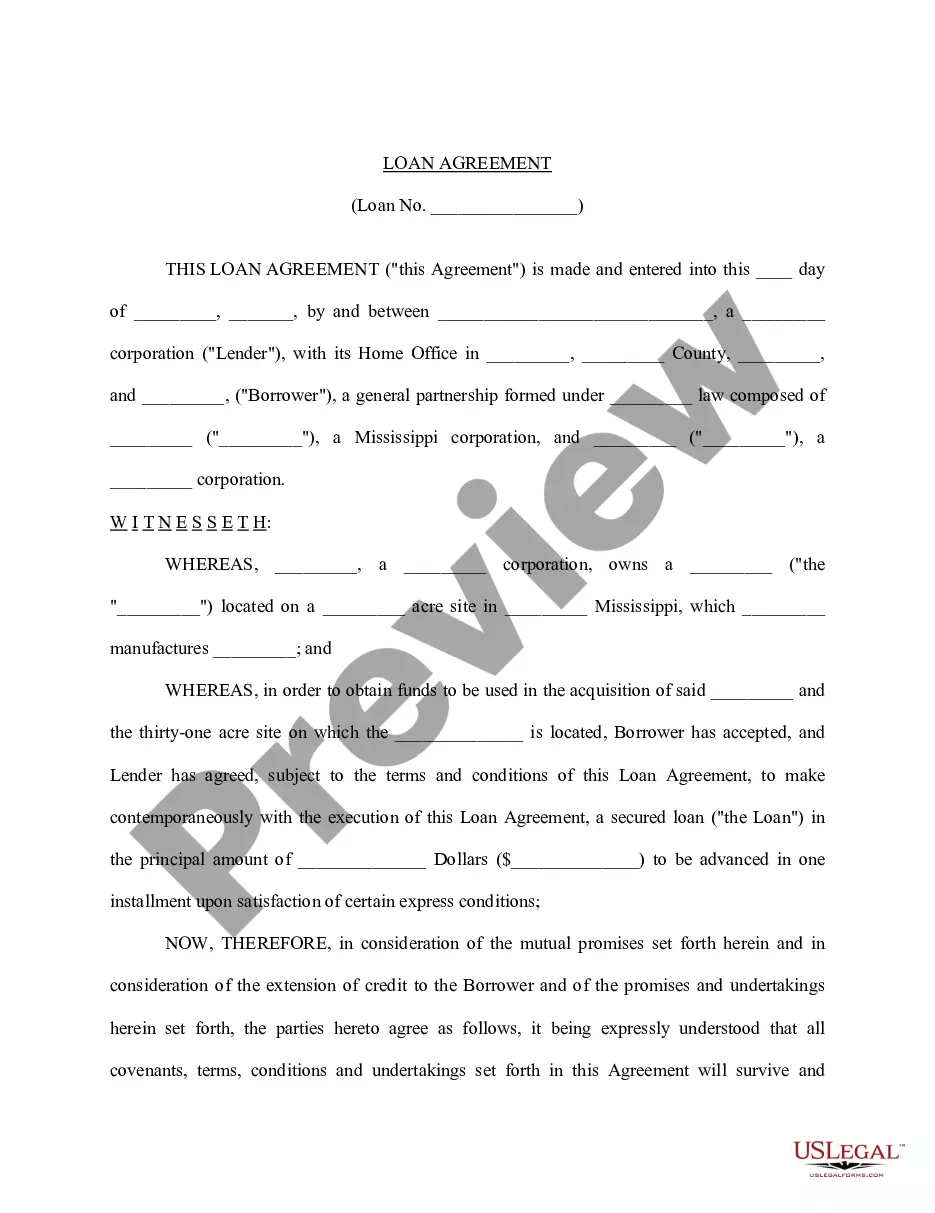




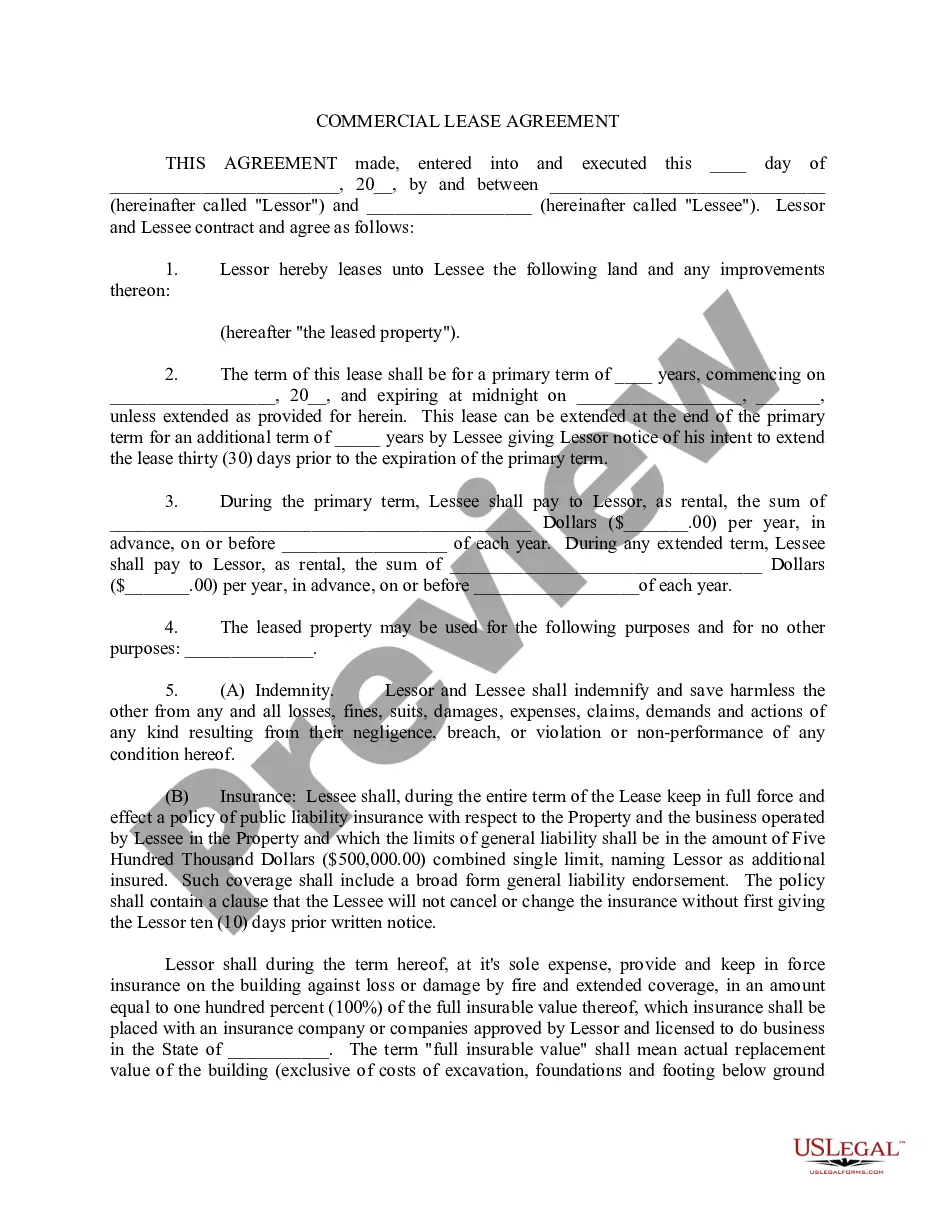
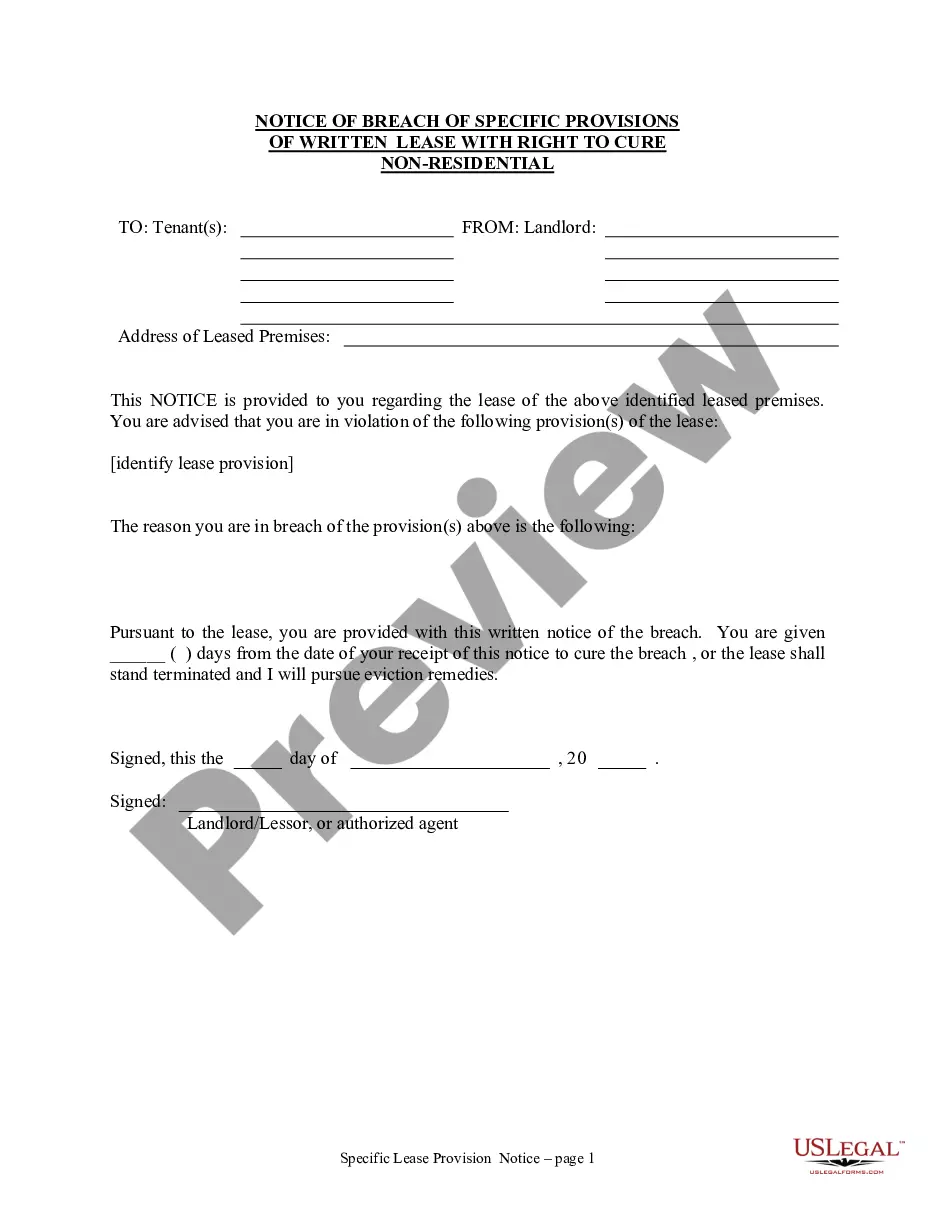
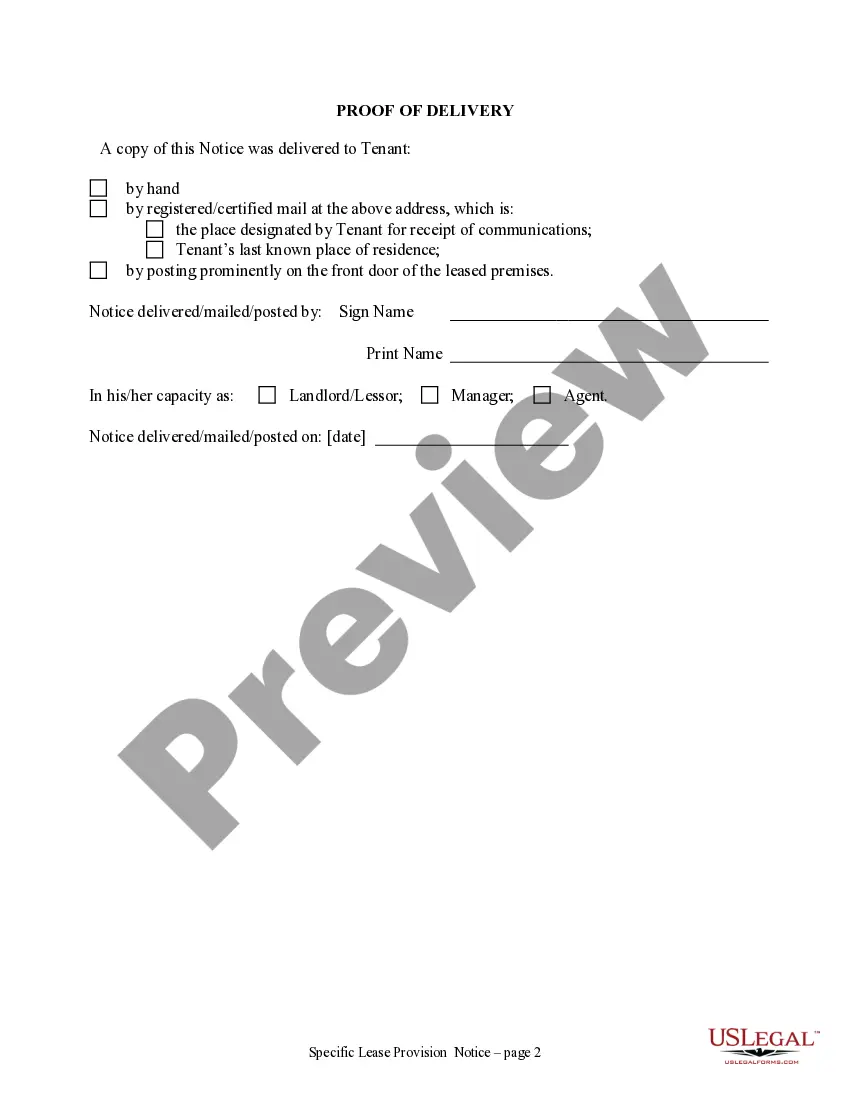
How to fill out Michigan Notice Of Breach Of Written Lease For Violating Specific Provisions Of Lease With Right To Cure For Nonresidential Property From Landlord To Tenant?
Individuals typically link legal documentation with something intricate that only an expert can manage.
In a sense, this is correct, as creating Property Landlord Tenant Without Court Order necessitates a thorough knowledge of subject criteria, which includes state and county laws.
However, with US Legal Forms, everything has become more straightforward: a collection of ready-to-use legal forms for any life and business situation, tailored to state laws, has been gathered in one online library, now accessible to all.
All templates in our collection are reusable: once purchased, they are saved in your profile. You can access them whenever necessary through the My documents tab. Discover all the advantages of using the US Legal Forms platform. Subscribe today!
- US Legal Forms provides over 85k updated forms organized by state and category of use, making the search for Property Landlord Tenant Without Court Order or any specific template quick and easy.
- Existing users with an active subscription must Log In to their account and select Download to retrieve the form.
- New users will need to register for an account and subscribe before they can access any documents.
- Follow these steps to acquire the Property Landlord Tenant Without Court Order.
- Review the page content carefully to confirm it meets your needs.
- Examine the form description or use the Preview feature to assess it.
- If the previous form doesn’t meet your requirements, search for another sample using the Search field above.
- When you find the appropriate Property Landlord Tenant Without Court Order, click Buy Now.
- Select a subscription plan that aligns with your needs and budget.
Form popularity
FAQ
During the COVID-19 state of emergency, landlords that issue a notice to quit for nonpayment of rent to a residential tenant, must also give the tenant, with the notice to quit, a completed form attesting (swearing) to certain facts. Court forms for use in Boston Municipal Court, District Court, and Housing Court.
Once a landlord wins the case, they may ask for a court order called a Writ of Possession to order a tenant to move out of the rental unit. A landlord cannot evict a tenant without one being issued to them.
Even after the moratorium lifts, low-income families in the Garden State who earn below 80% of the median income in their county can't be evicted from their homes for any rent payments they missed between March 1, 2020, and Dec. 31, 2021. But this doesn't happen automatically.
New Jersey's moratorium on evictions is scheduled to lift Saturday after the state prevented most families from being displaced for the past year and nine months with some of the strongest protections in the country as a public health measure to contain the spread of COVID-19.
If you live in a New Jersey household with income below 120% of your county's Area Median Income, you are permanently protected from eviction or removal at any time for nonpayment of rent, habitual late payment of rent, or failure to accept a rent increase that accrued from March 1, 2020 to August 31, 2021.