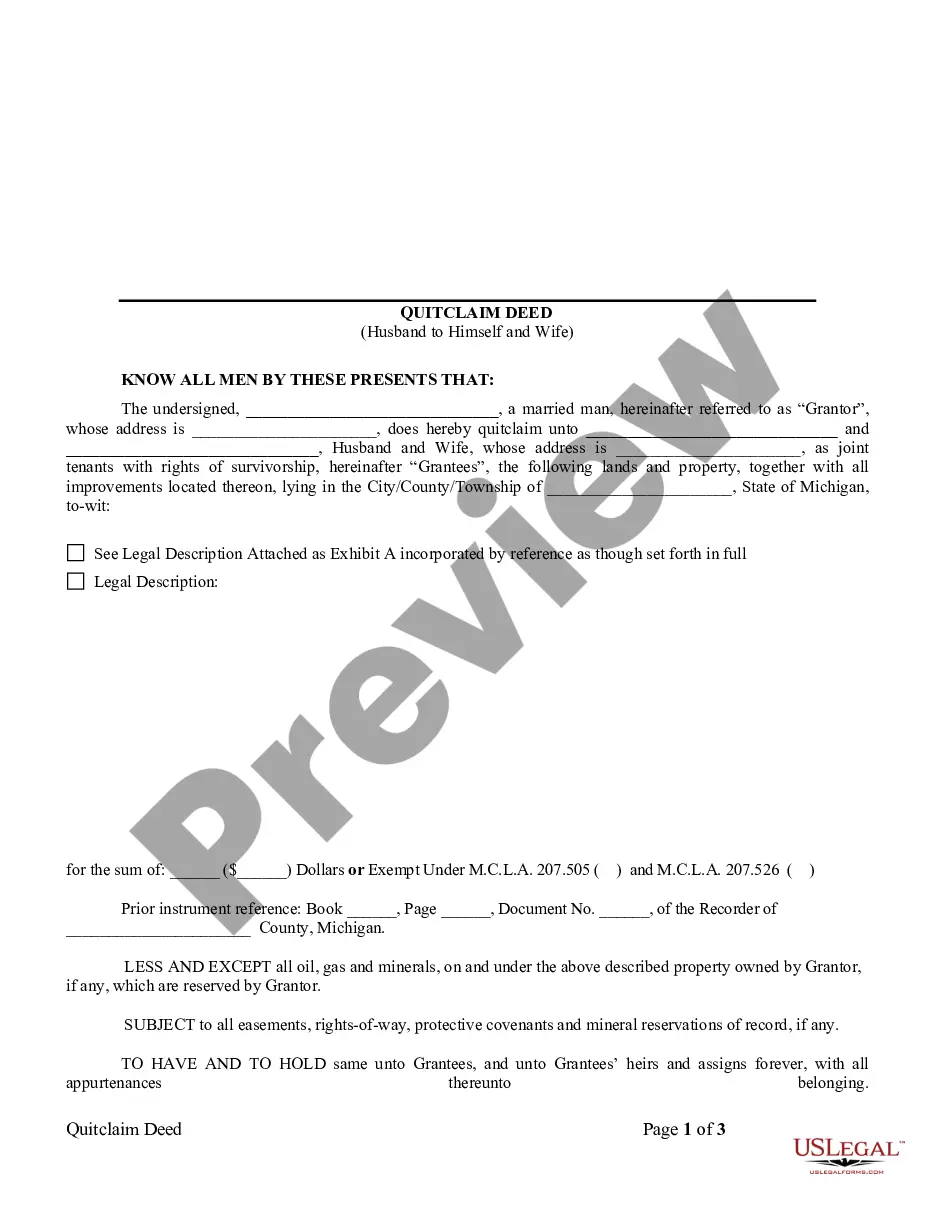
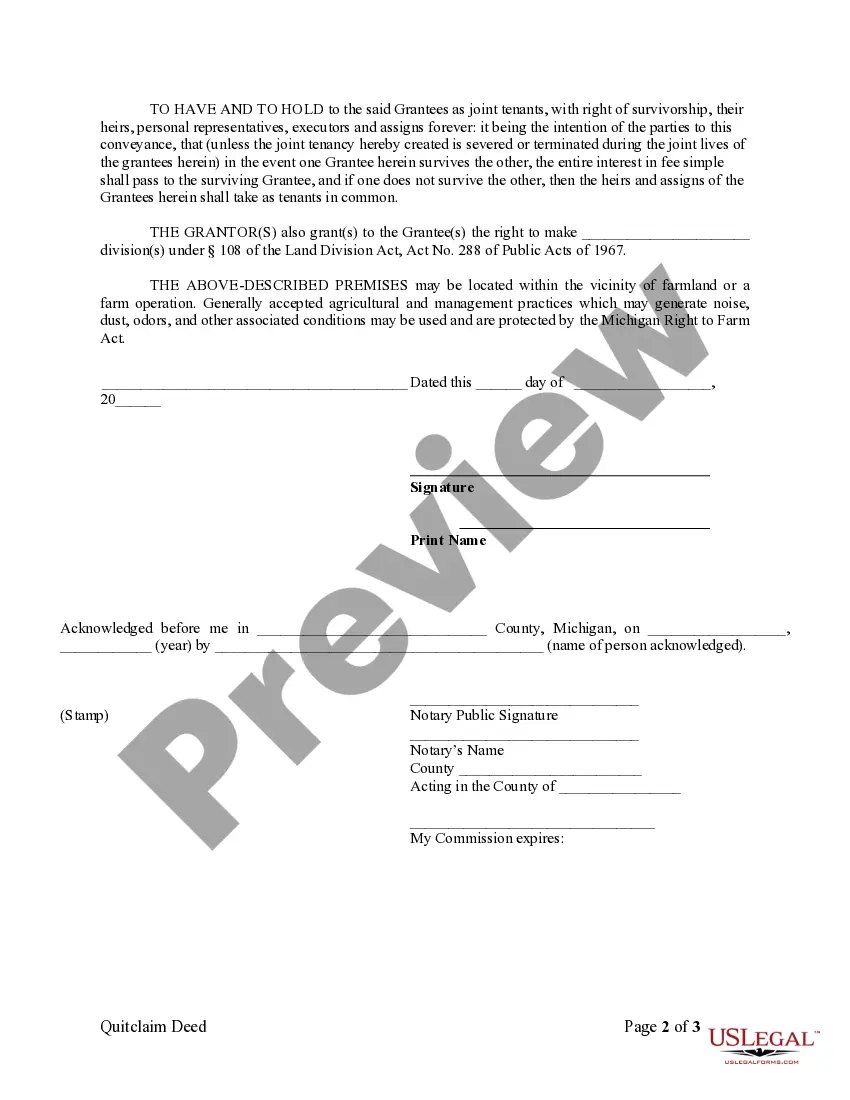
Michigan Quitclaim Deed With Life Estate Clause

Description


Get your form ready online
Our built-in tools help you complete, sign, share, and store your documents in one place.
Make edits, fill in missing information, and update formatting in US Legal Forms—just like you would in MS Word.
Download a copy, print it, send it by email, or mail it via USPS—whatever works best for your next step.
Sign and collect signatures with our SignNow integration. Send to multiple recipients, set reminders, and more. Go Premium to unlock E-Sign.
If this form requires notarization, complete it online through a secure video call—no need to meet a notary in person or wait for an appointment.
We protect your documents and personal data by following strict security and privacy standards.

Make edits, fill in missing information, and update formatting in US Legal Forms—just like you would in MS Word.

Download a copy, print it, send it by email, or mail it via USPS—whatever works best for your next step.

Sign and collect signatures with our SignNow integration. Send to multiple recipients, set reminders, and more. Go Premium to unlock E-Sign.

If this form requires notarization, complete it online through a secure video call—no need to meet a notary in person or wait for an appointment.

We protect your documents and personal data by following strict security and privacy standards.
Looking for another form?
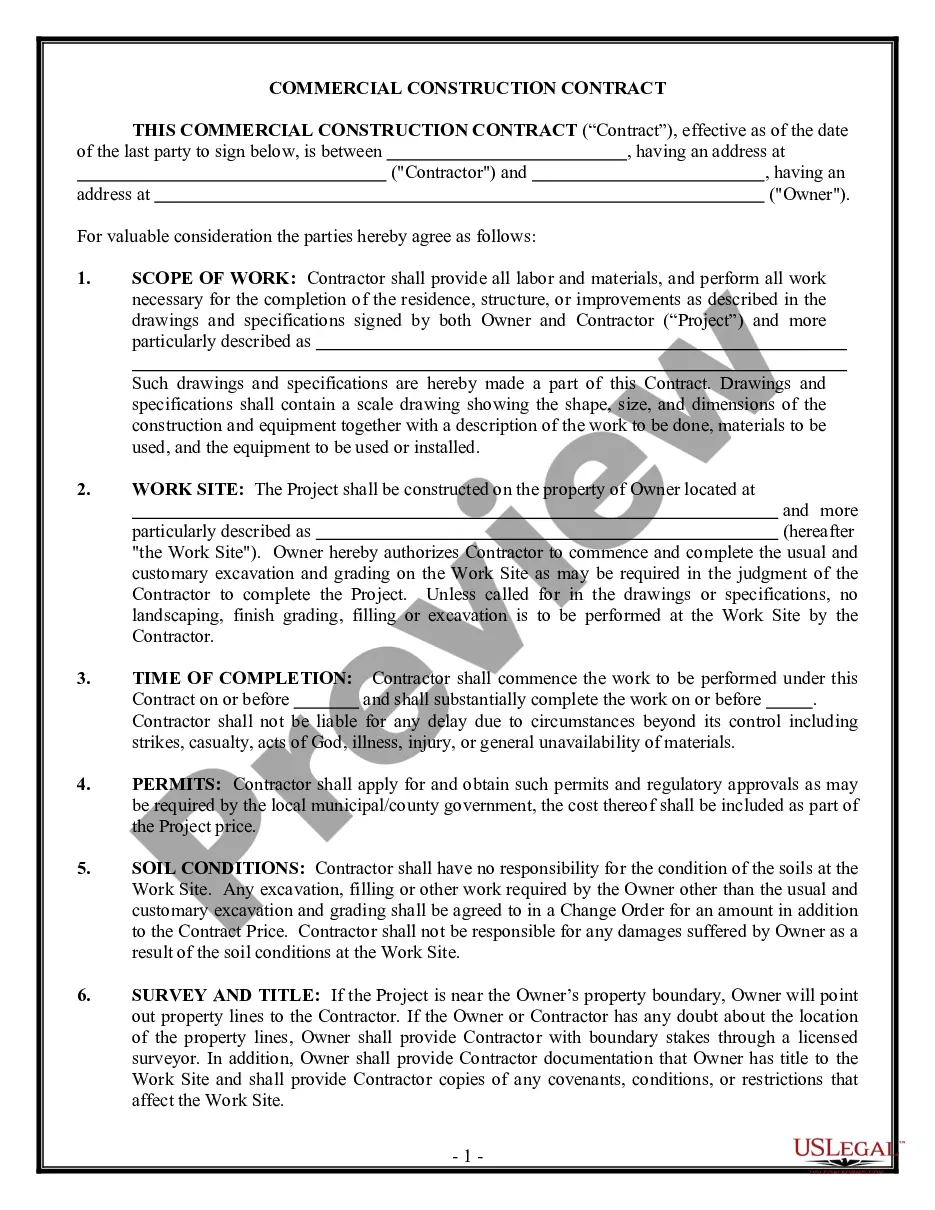
How to fill out Michigan Quitclaim Deed From Husband To Himself And Wife?
Bureaucracy necessitates precision and exactness.
If you do not manage filling out forms like the Michigan Quitclaim Deed With Life Estate Clause regularly, it may lead to some misconceptions.
Selecting the correct sample from the outset will ensure that your document submission proceeds smoothly and avert any hassles of re-submitting a file or repeating the same task from the start.
If you are not a subscribed user, locating the necessary sample would involve a few additional steps: Find the template using the search bar. Confirm that the Michigan Quitclaim Deed With Life Estate Clause you’ve found is suitable for your state or region. Open the preview or read the description that includes the details on the use of the sample. If the result meets your search, click the Buy Now button. Select the appropriate option among the available subscription plans. Log In to your account or create a new one. Complete the purchase using a credit card or PayPal payment method. Save the form in the file format of your choice. Obtaining the correct and current samples for your documentation takes just a few minutes with an account at US Legal Forms. Eliminate the bureaucratic uncertainties and simplify your work with forms.
- You can always locate the suitable sample for your documentation in US Legal Forms.
- US Legal Forms is the largest online forms repository that houses over 85 thousand samples across various fields.
- You can acquire the most current and relevant version of the Michigan Quitclaim Deed With Life Estate Clause by simply searching on the platform.
- Discover, store, and save templates in your account or verify with the description to ensure you possess the right one at your fingertips.
- With an account at US Legal Forms, it is straightforward to obtain, keep in one place, and browse through the templates you save for easy access.
- When on the website, click the Log In button to authenticate.
- Then, proceed to the My documents page, where your document list is kept.
- Review the description of the forms and save those you require at any moment.
Form popularity
FAQ
Yes, a Michigan quitclaim deed can effectively bypass probate if structured correctly. When you establish a quitclaim deed with a life estate, the property transfers to heirs upon death without going through probate court. This streamlining of the process can save time, reduce legal fees, and simplify asset distribution.
One disadvantage of a quitclaim deed is that it transfers property without any guarantee that the title is clear. This means potential heirs may face issues if there are undisclosed liens or claims against the property. It’s vital to conduct due diligence to avoid complications, especially if considering a Michigan quitclaim deed with a life estate clause.
To effectively avoid probate in Michigan, consider using a Michigan quitclaim deed with a life estate clause. This method allows you to transfer property ownership while ensuring the right to live in the home during your lifetime. Additionally, creating a revocable living trust can further shield assets from probate, providing peace of mind.
In Michigan, a quitclaim deed transfers ownership of property without any warranties. When you use a Michigan quitclaim deed with a life estate clause, you allow someone to live on the property for their lifetime while passing on ownership rights after their passing. This arrangement can help protect family assets and avoid disputes.
A Michigan quitclaim deed with a life estate clause is typically revocable, meaning you can change your mind about the arrangement during your lifetime. However, this depends on how the deed is structured. It’s essential to consult with a legal professional to understand the specifics of your situation and ensure the proper steps are taken.
Yes, you can prepare your own quitclaim deed in Michigan, including a Michigan quitclaim deed with life estate clause. However, it is crucial to ensure you meet all legal requirements to avoid future issues. Incorrectly drafted deeds can lead to complications during the transfer process. Consider using platforms like uslegalforms, which provide templates and guidance to help you create a valid deed efficiently.
To transfer a deed after death in Michigan, you typically need to follow a process involving the estate. If the deceased person included a Michigan quitclaim deed with life estate clause in their estate planning, the transfer can be more straightforward. You will need to file the appropriate documents in the local county clerk's office. It's wise to seek assistance from legal experts or use services like uslegalforms for a smooth process.
While a ladybird deed offers many advantages, such as avoiding probate, potential downsides include limited control over the property after the deed is executed. The original owner cannot sell or mortgage the property without the consent of the beneficiary. Additionally, changes in circumstances may require additional legal steps, so understanding these implications is key.
A quitclaim deed can transfer ownership of property in Michigan, but it depends on how the deed is executed and the existing ownership rights. Essentially, it conveys whatever interest the grantor has in the property, which means you could become the new owner. For a clear understanding and proper execution, utilizing a platform like USLegalForms can be beneficial.
When one person on a deed dies in Michigan, ownership typically transfers according to the terms of the deed. If the property is held jointly with rights of survivorship, the surviving owner automatically inherits the deceased's share. However, if the property is solely owned, it may enter the probate process unless a quitclaim deed with life estate clause or another form of deed specifies a beneficiary.