Life Estate Deed In Md
Description
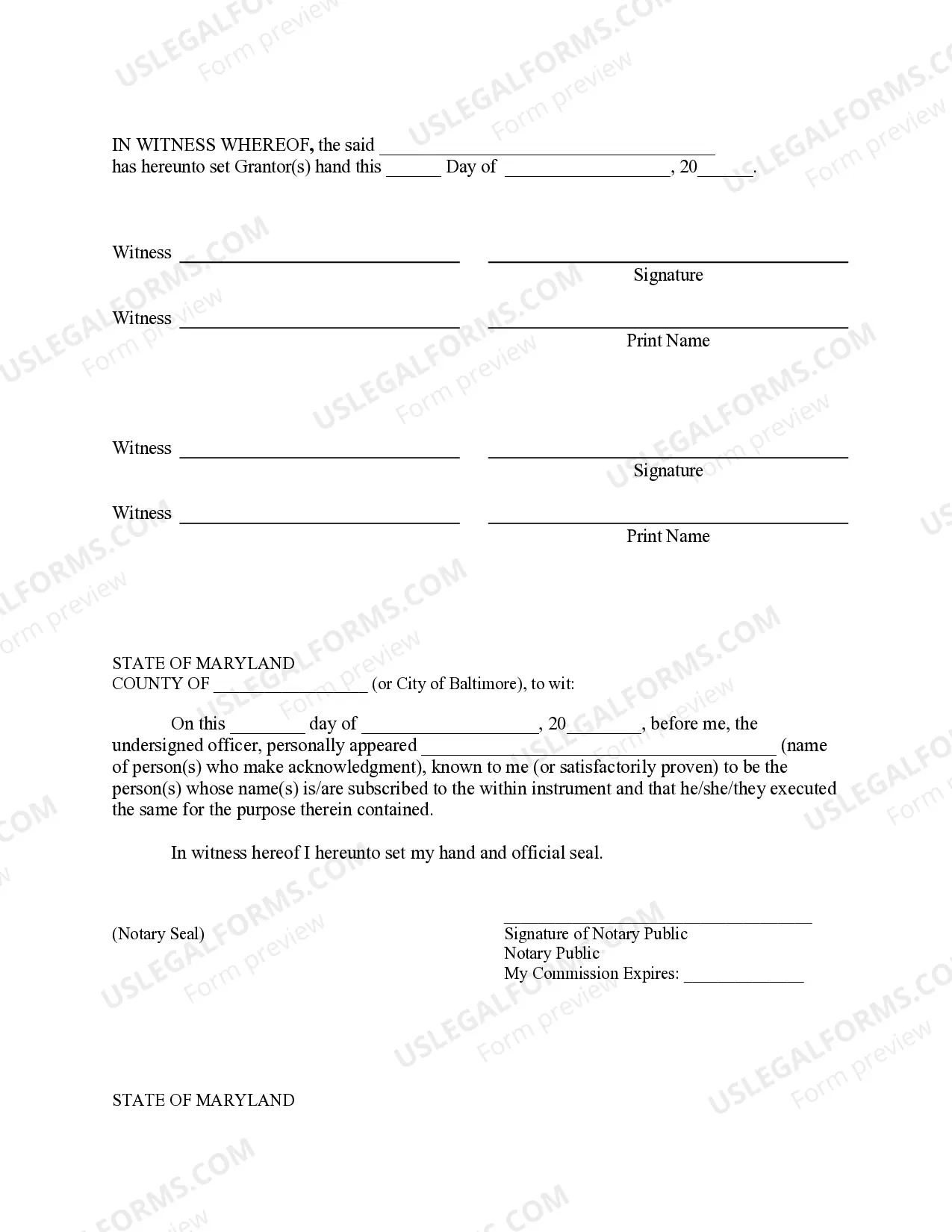
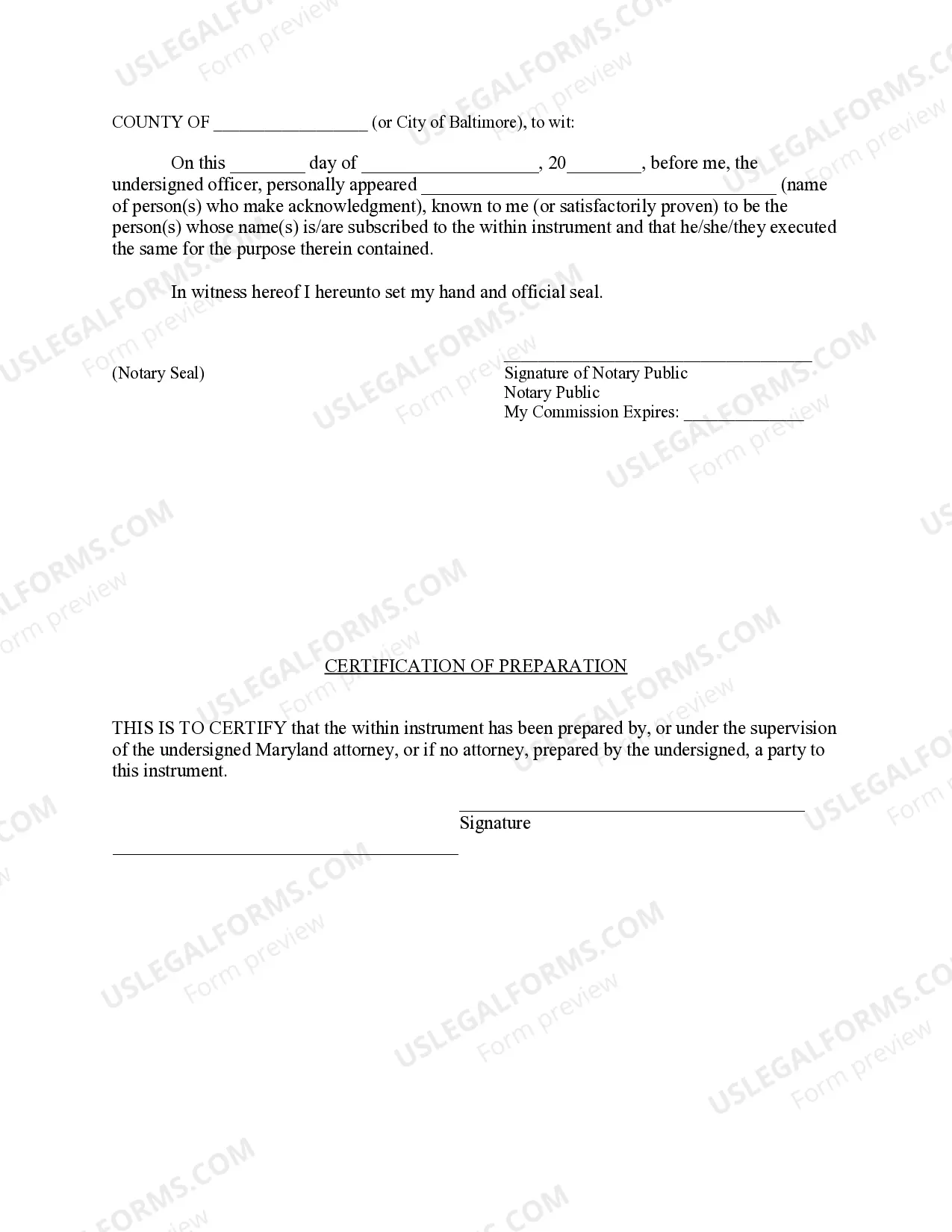
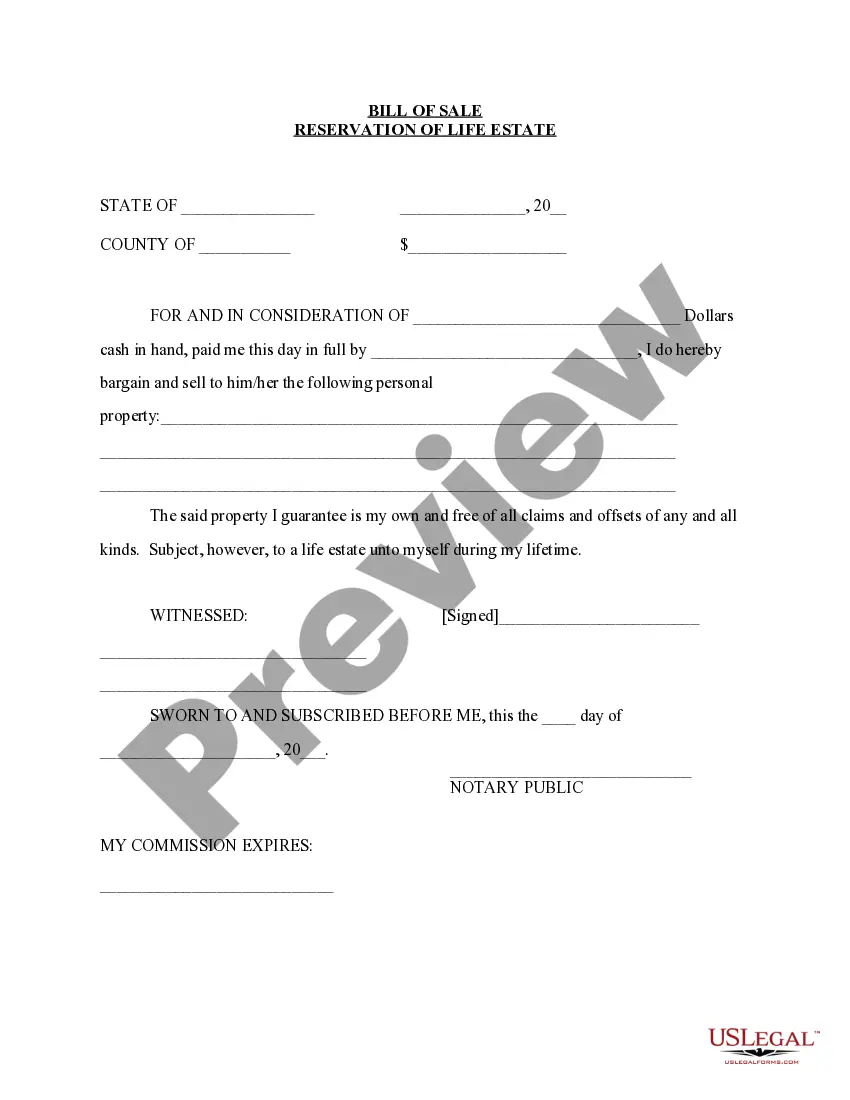

Get your form ready online
Our built-in tools help you complete, sign, share, and store your documents in one place.
Make edits, fill in missing information, and update formatting in US Legal Forms—just like you would in MS Word.
Download a copy, print it, send it by email, or mail it via USPS—whatever works best for your next step.
Sign and collect signatures with our SignNow integration. Send to multiple recipients, set reminders, and more. Go Premium to unlock E-Sign.
If this form requires notarization, complete it online through a secure video call—no need to meet a notary in person or wait for an appointment.
We protect your documents and personal data by following strict security and privacy standards.

Make edits, fill in missing information, and update formatting in US Legal Forms—just like you would in MS Word.

Download a copy, print it, send it by email, or mail it via USPS—whatever works best for your next step.

Sign and collect signatures with our SignNow integration. Send to multiple recipients, set reminders, and more. Go Premium to unlock E-Sign.

If this form requires notarization, complete it online through a secure video call—no need to meet a notary in person or wait for an appointment.

We protect your documents and personal data by following strict security and privacy standards.
Looking for another form?








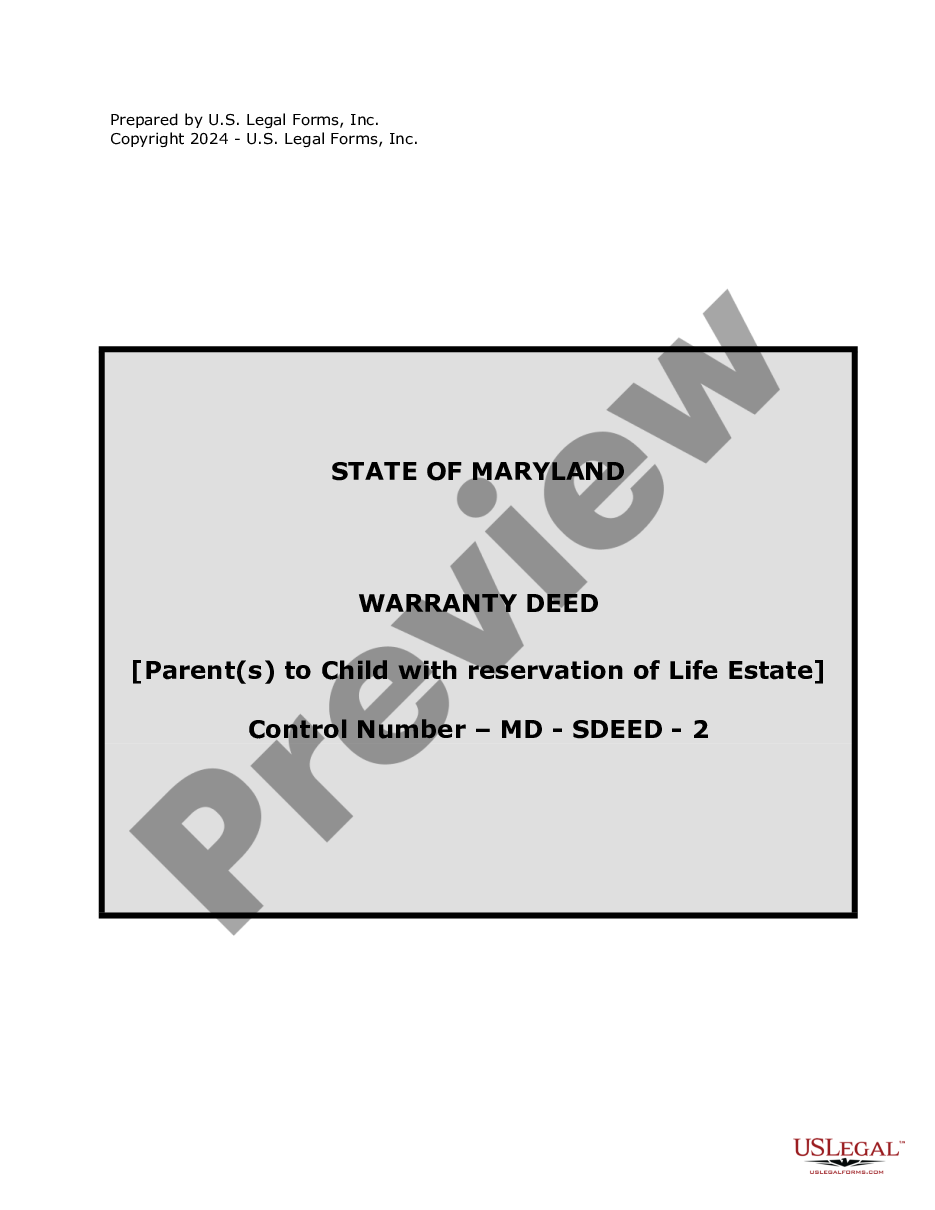
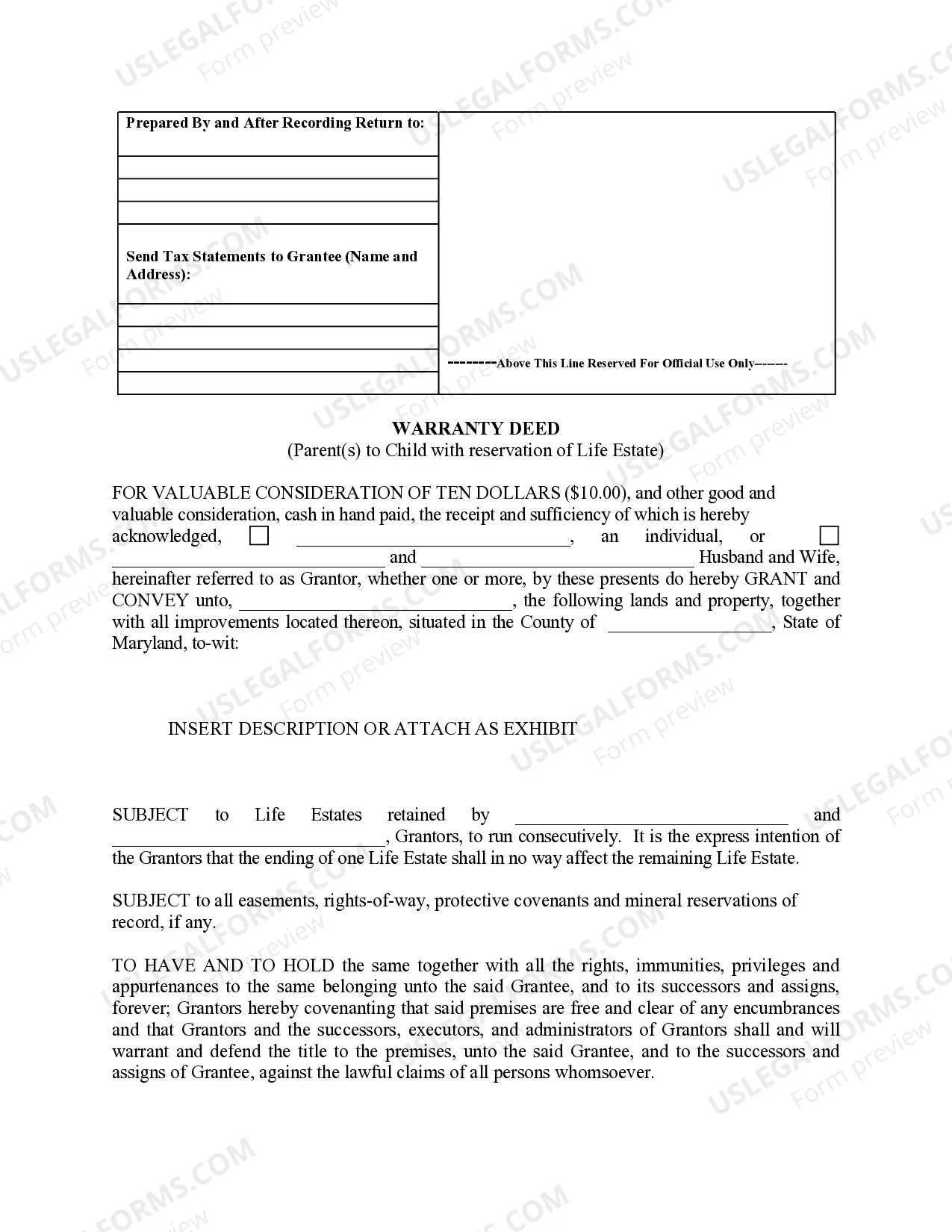
How to fill out Maryland Warranty Deed For Parents To Child With Reservation Of Life Estate?
Creating legal documents from the ground up can occasionally be daunting.
Certain situations may require extensive research and significant financial investment.
If you’re looking for a simpler and more cost-effective method of assembling Life Estate Deed In Md or other paperwork without hassle, US Legal Forms is readily accessible.
Our online library of more than 85,000 current legal templates covers nearly every facet of your financial, legal, and personal issues.
- With a few clicks, you can swiftly acquire state- and county-specific forms carefully prepared for you by our legal experts.
- Utilize our platform whenever you require a dependable service to quickly find and download the Life Estate Deed In Md.
- If you’re familiar with our website and have set up an account previously, just Log In, find the template, and download it or re-download it anytime in the My documents section.
- Don’t have an account? No problem. It only takes a few minutes to create one and browse the catalog.
Form popularity
FAQ
If you own real estate in Maryland, it is important to consider and make informed decisions about these types of assets. A life estate deed can be a valuable tool to help you legally pass your real property assets to your heirs and avoid the probate process, while also preserving tax benefits.
Life estate deeds with full power allow the grantor of the life estate the choice to change the deed, reclaim all rights to their home, or sell or mortgage the property. They do not need the consent of the remaining beneficiaries to do so. They can revoke the life estate for any reason they choose.
In Maryland, real estate can be transferred via a TOD deed, also known as a beneficiary deed. This deed allows a property owner to designate a beneficiary who will automatically inherit the property upon the owner's death, avoiding probate.
There is no simple way to reverse a life estate because a life estate deed is a legal transfer of the title of a property. This is legally binding and the transaction is complete when the life estate is executed. Essentially, in order to reverse a life estate both parties would need to agree to make it happen.
An additional potential problem with a Life Estate is that it does not offer creditor protection to the beneficiary, so if the heir has a debt or is sued, the creditor or court can come after the house. As you can see, a traditional Life Estate has the potential to create major conflict within a family.