Ma Attorney Real Force
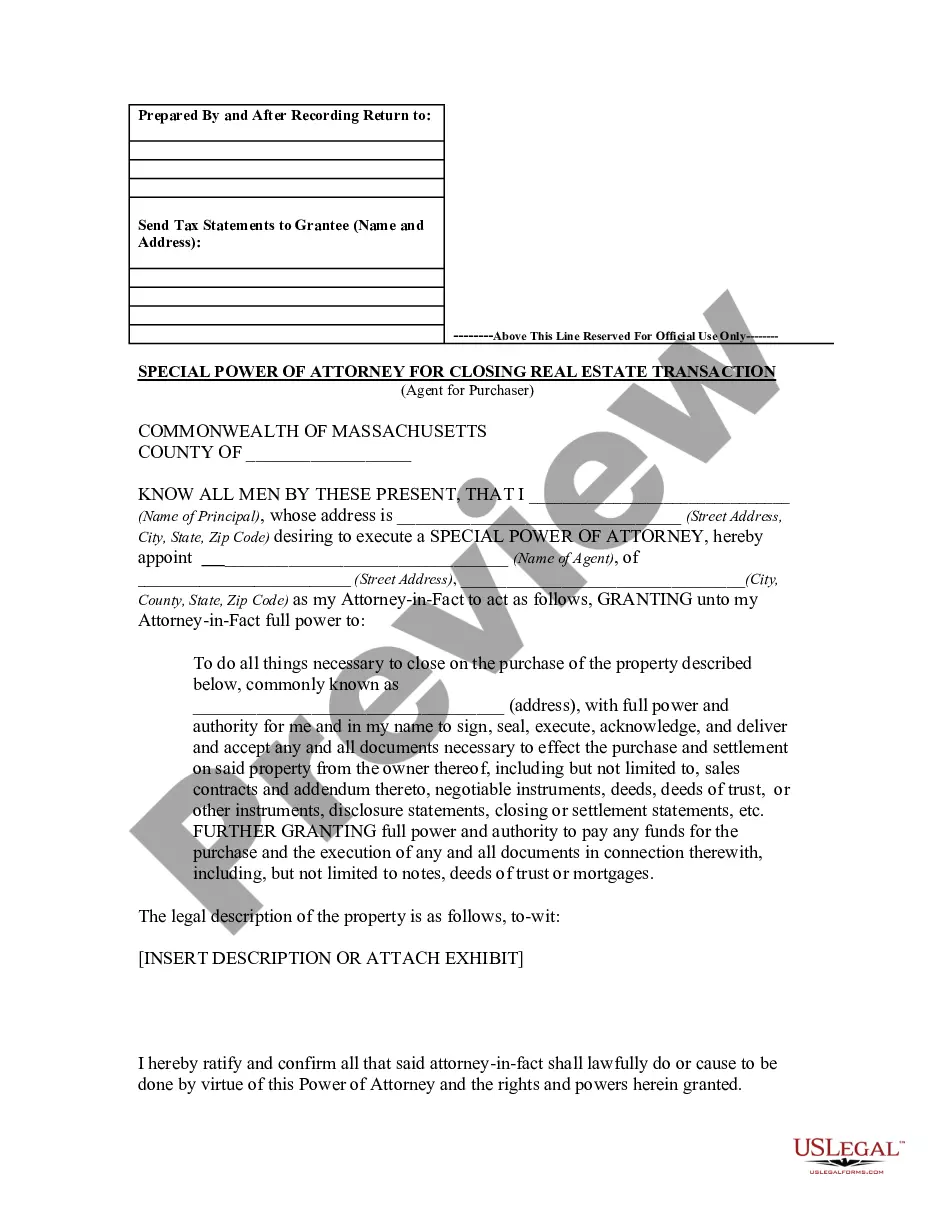
Description

Get your form ready online
Our built-in tools help you complete, sign, share, and store your documents in one place.
Make edits, fill in missing information, and update formatting in US Legal Forms—just like you would in MS Word.
Download a copy, print it, send it by email, or mail it via USPS—whatever works best for your next step.
Sign and collect signatures with our SignNow integration. Send to multiple recipients, set reminders, and more. Go Premium to unlock E-Sign.
If this form requires notarization, complete it online through a secure video call—no need to meet a notary in person or wait for an appointment.
We protect your documents and personal data by following strict security and privacy standards.

Make edits, fill in missing information, and update formatting in US Legal Forms—just like you would in MS Word.

Download a copy, print it, send it by email, or mail it via USPS—whatever works best for your next step.

Sign and collect signatures with our SignNow integration. Send to multiple recipients, set reminders, and more. Go Premium to unlock E-Sign.

If this form requires notarization, complete it online through a secure video call—no need to meet a notary in person or wait for an appointment.

We protect your documents and personal data by following strict security and privacy standards.
Looking for another form?








How to fill out Massachusetts Special Or Limited Power Of Attorney For Real Estate Purchase Transaction By Purchaser?
Creating legal documents from the ground up can occasionally be overwhelming.
Certain situations may require extensive research and significant financial investment.
If you’re looking for a simpler and more cost-effective method of preparing Ma Attorney Real Force or other forms without unnecessary obstacles, US Legal Forms is always readily available.
Our online repository of over 85,000 current legal forms covers nearly every aspect of your financial, legal, and personal affairs.
Examine the form preview and descriptions to ensure you’ve located the form you need. Verify if the form you choose adheres to the laws and regulations of your state and county. Select the appropriate subscription plan to acquire the Ma Attorney Real Force. Download the form, then complete, sign, and print it out. US Legal Forms prides itself on a flawless reputation and over 25 years of expertise. Join us now and transform form completion into a straightforward and efficient process!
- With just a few clicks, you can swiftly access state- and county-compliant forms meticulously prepared by our legal experts.
- Utilize our website whenever you require dependable and trustworthy services to easily find and download the Ma Attorney Real Force.
- If you’re already familiar with our site and have previously created an account, simply Log In to your account, select the template, and download it or re-download it at any time from the My documents section.
- Not registered yet? No worries. It takes minimal time to set it up and browse the catalog.
- But before proceeding to download Ma Attorney Real Force, adhere to these recommendations.
Form popularity
FAQ
How to File as a Pro Se Litigator. Pro se litigation follows the same procedural rules as other claims, without help from an attorney. The individual must first file an official complaint against the party he or she wants to sue. This occurs through the District Court Clerk's Office.
Pro se actually means ?for himself,? and in legal terms it means a person represents himself/herself in court when either filing an action or responding to an action without the assistance of an attorney.
You'll need an attorney to help you buy a home in Massachusetts -- but what tasks does the attorney handle, and which does the real estate agent handle? If you are buying a home in Massachusetts, having both a real estate agent and an attorney by your side will best protect your interests.
While Massachusetts law does not technically require a POA to be notarized, signing your POA in the presence of a notary public is very strongly recommended. Many financial institutions will not want to rely on a POA unless it has been notarized?a process that helps to authenticate the document.
The term ?pro per? is an abbreviation of the Latin phrase ?in propria persona,? meaning ?in their own person,? and it refers to a situation where a litigant represents themselves, without a lawyer. Pro per is synonymous with the more commonly used term pro se.