Living Will Form For Texas
Description
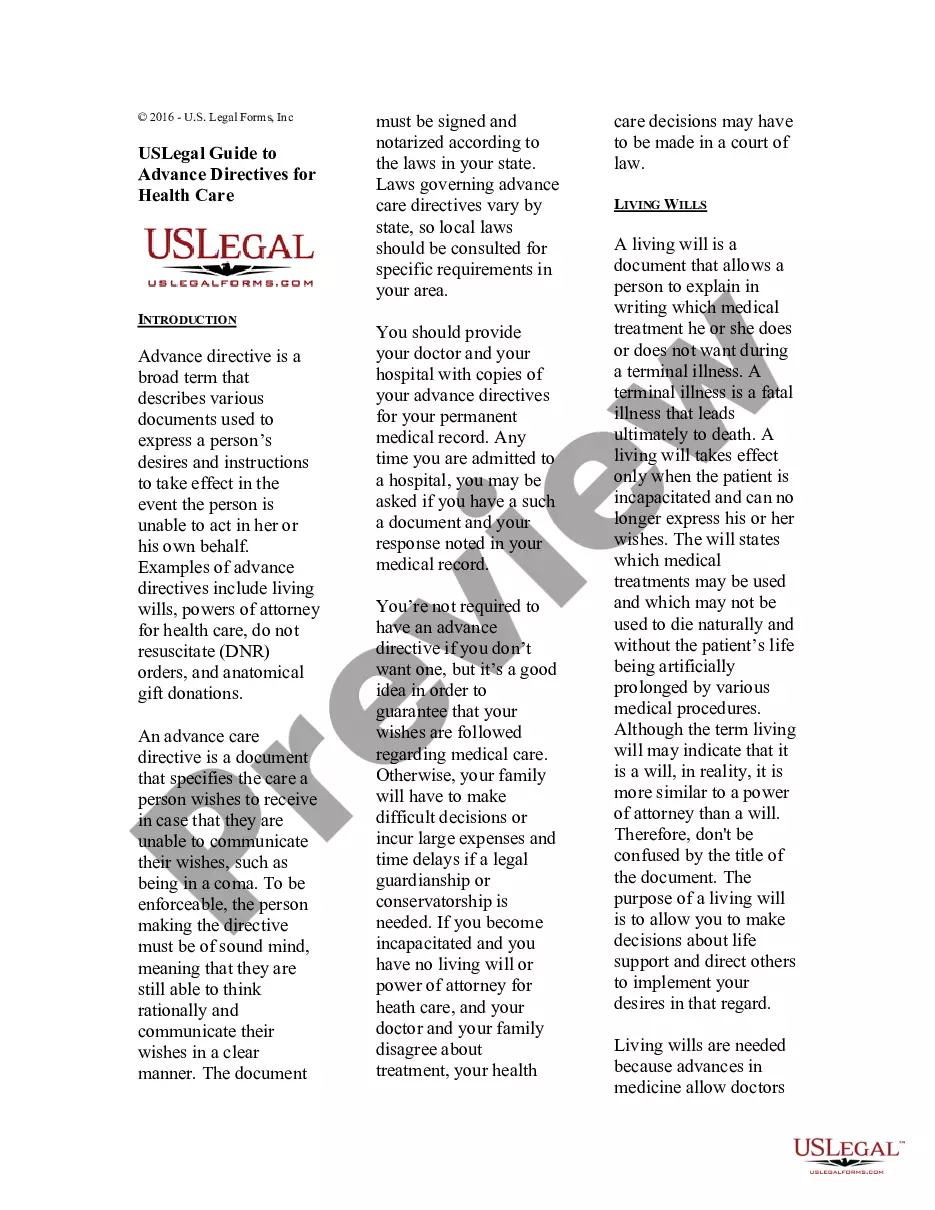
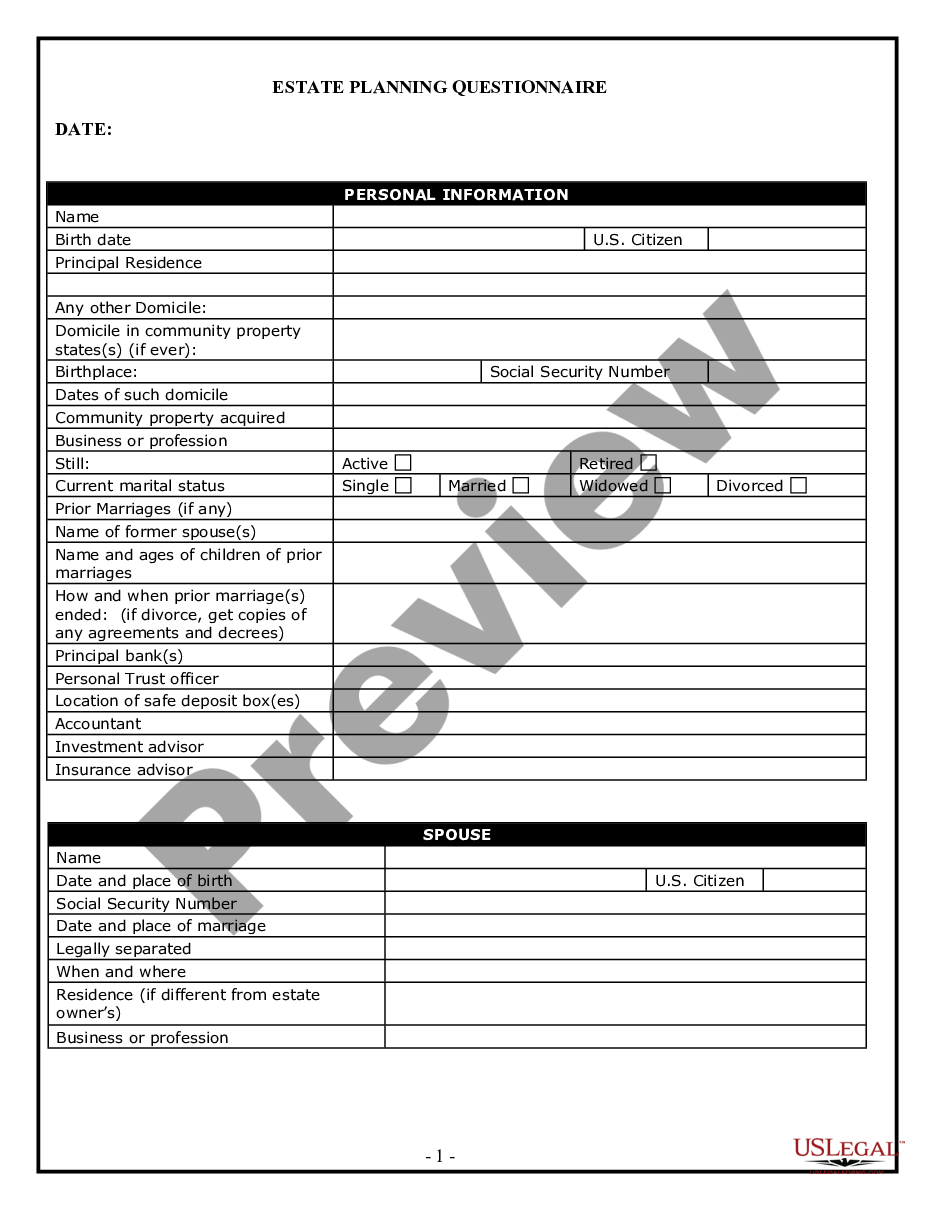
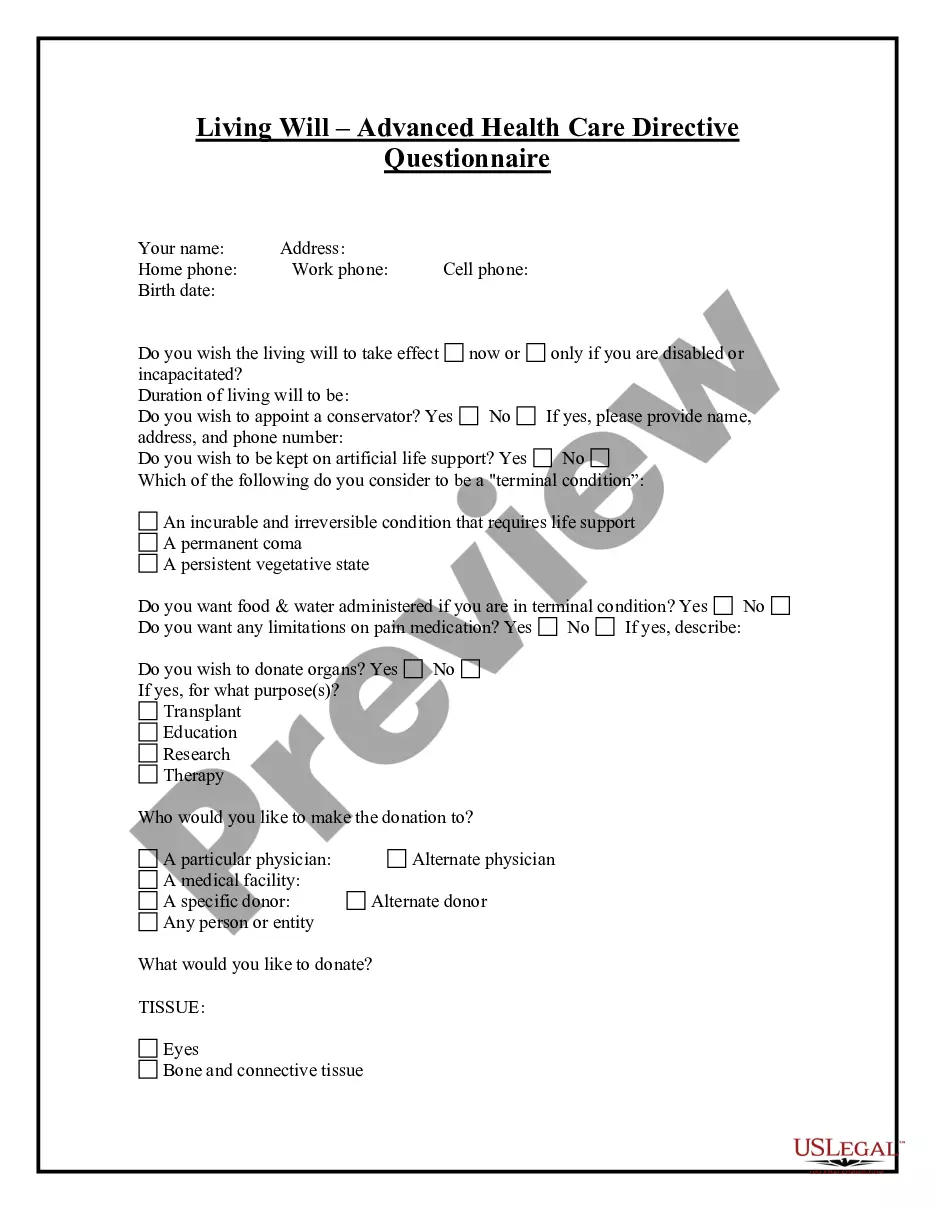
Get your form ready online
Our built-in tools help you complete, sign, share, and store your documents in one place.
Make edits, fill in missing information, and update formatting in US Legal Forms—just like you would in MS Word.
Download a copy, print it, send it by email, or mail it via USPS—whatever works best for your next step.
Sign and collect signatures with our SignNow integration. Send to multiple recipients, set reminders, and more. Go Premium to unlock E-Sign.
If this form requires notarization, complete it online through a secure video call—no need to meet a notary in person or wait for an appointment.
We protect your documents and personal data by following strict security and privacy standards.

Make edits, fill in missing information, and update formatting in US Legal Forms—just like you would in MS Word.

Download a copy, print it, send it by email, or mail it via USPS—whatever works best for your next step.

Sign and collect signatures with our SignNow integration. Send to multiple recipients, set reminders, and more. Go Premium to unlock E-Sign.

If this form requires notarization, complete it online through a secure video call—no need to meet a notary in person or wait for an appointment.

We protect your documents and personal data by following strict security and privacy standards.
Looking for another form?







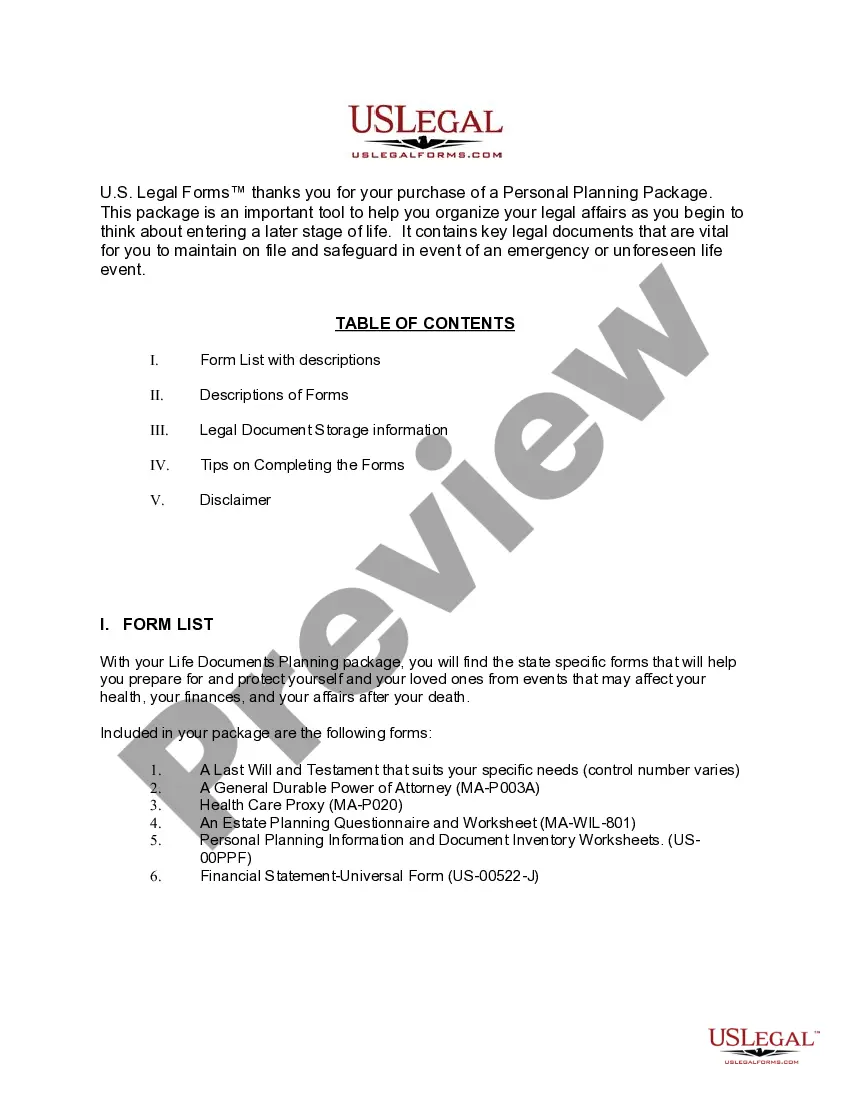
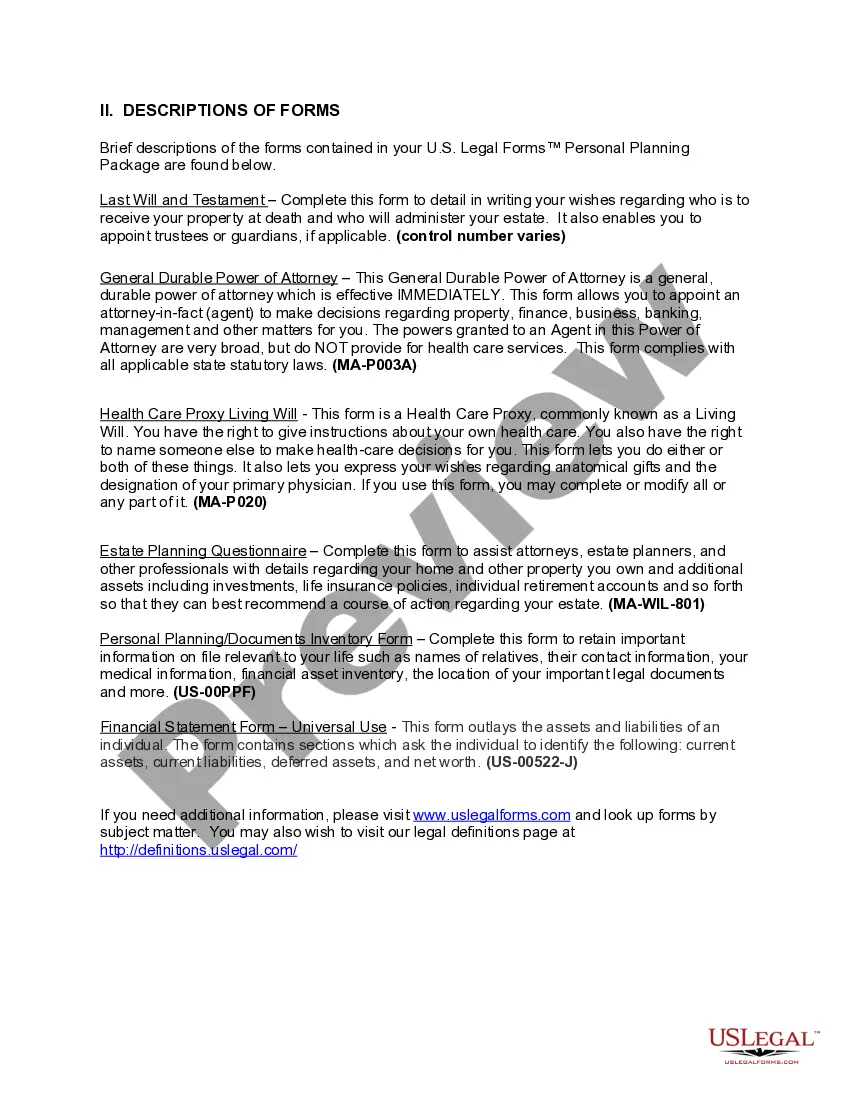
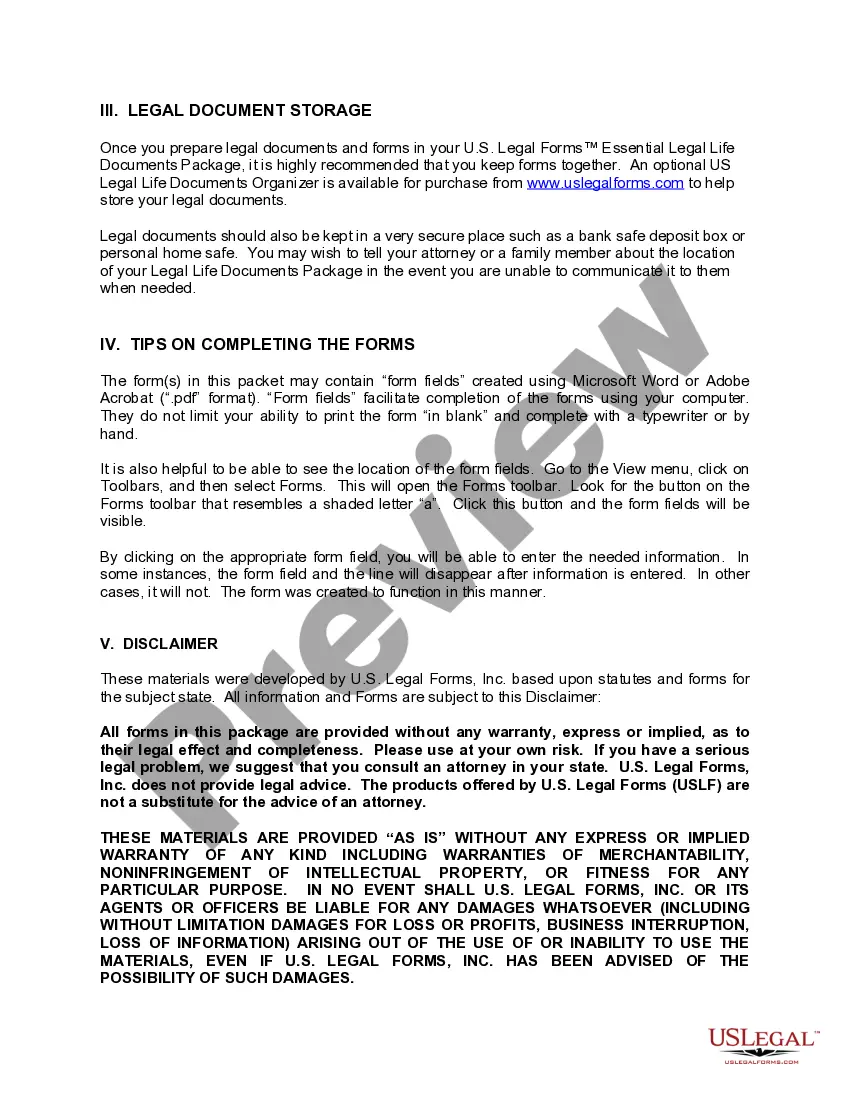
How to fill out Massachusetts Life Documents Planning Package, Including Will, Power Of Attorney And Living Will?
- If you're a returning user, log in to your US Legal Forms account and locate the living will form suitable for Texas. Ensure your subscription is active, or renew it as necessary.
- For first-time users, start by browsing the preview mode to review the form's description thoroughly. Make sure it aligns with your legal requirements in Texas.
- If you don't find what you need, use the search function to explore additional templates tailored to your specifications.
- Once you've selected your form, click the 'Buy Now' button, choose your desired subscription plan, and create an account to unlock access to a vast collection of legal documents.
- Complete your purchase by entering your payment details, either via credit card or PayPal.
- After confirmation, download your living will form and save it to your device. You can always access it later through the 'My Forms' section in your account.
By utilizing US Legal Forms, you gain access to a robust library with over 85,000 legal forms, ensuring you find precisely what you need. Moreover, their premium experts are available to assist you in filling out forms accurately, providing peace of mind.
Get started today by creating your living will to safeguard your healthcare choices in Texas. Visit US Legal Forms to take the first step!
Form popularity
FAQ
An example of a simple living will might include a statement like, 'If I am unable to communicate, I do not wish to receive artificial nutrition or hydration.' This straightforward approach ensures clarity regarding your end-of-life decisions. Crafting a living will form for Texas can be as simple as that, as long as it contains your clear wishes. Using a trusted platform can help you create this important document effectively.
A living will is a legal document that communicates your healthcare wishes if you become unable to make decisions. It is essential for expressing your preferences regarding medical treatments and interventions. Through a living will form for Texas, you empower yourself by ensuring your voice is heard, even when you cannot express it. This clarity can help alleviate the emotional burden on your family during difficult times.
In a living will, you outline your preferences regarding medical treatment in emergencies. You should clearly state your wishes about life-sustaining treatments, resuscitation, and other medical interventions. By specifying these preferences, your living will form for Texas can guide your healthcare providers and loved ones when you can't speak for yourself. It's crucial to be direct and clear to prevent any confusion later.
Yes, you can write a will yourself in Texas, but there are specific legal requirements you must meet. It’s essential to ensure the document is valid under Texas law, which may involve proper signing and witnessing. While creating a living will form for Texas might seem straightforward, seeking guidance or using a trusted platform can help avoid mistakes. Legal assistance can provide peace of mind that your wishes will be honored.
A living will statement typically includes your preferences concerning specific medical treatments. For example, you might state that you do not wish to receive life-sustaining measures if you are diagnosed with a terminal illness. This clarity in your living will form for Texas helps ensure your healthcare providers understand your choices. Using clear language can help family members and doctors respect your wishes.
One significant drawback of a living will is its inflexibility. Once you document your wishes regarding life-sustaining treatment, changing those decisions can be challenging. Additionally, if your situation changes, the original living will form for Texas may not reflect your current desires. Therefore, it is crucial to consider all aspects before finalizing your living will.
In Texas, a living will does not require notarization, but having a notarized document can help ensure its validity and can streamline its acceptance in legal situations. When you create a living will form for Texas, it is important to follow the specific guidelines outlined by the state to safeguard your wishes. While notarization is not mandatory, it adds an extra layer of protection and can diminish disputes over the document's authenticity. Using the US Legal Forms platform allows you to easily access a living will form for Texas that meets all requirements and helps clarify your healthcare decisions.
In Texas, you do not have to file a living will with the court. Living wills are used to communicate your healthcare preferences and can remain private. However, after a person passes away, a traditional will must be filed for probate. To avoid complications, utilize a living will form for Texas to help clarify your wishes.
No, a living will does not have to be notarized in Texas. Although notarization adds an extra layer of validation, it's not necessary for the living will to be legally binding. Make sure the form you use meets all Texas requirements. A living will form for Texas can guide you through this process effectively.
In Texas, witnesses for a living will must be at least 18 years old and cannot be beneficiaries of the will. It’s crucial that the witnesses sign in the presence of the person creating the living will. This is to confirm that the document reflects your wishes. Using a verified living will form for Texas can simplify obtaining the required witness signatures.