Louisiana Living Trust With Two Trustees
Description
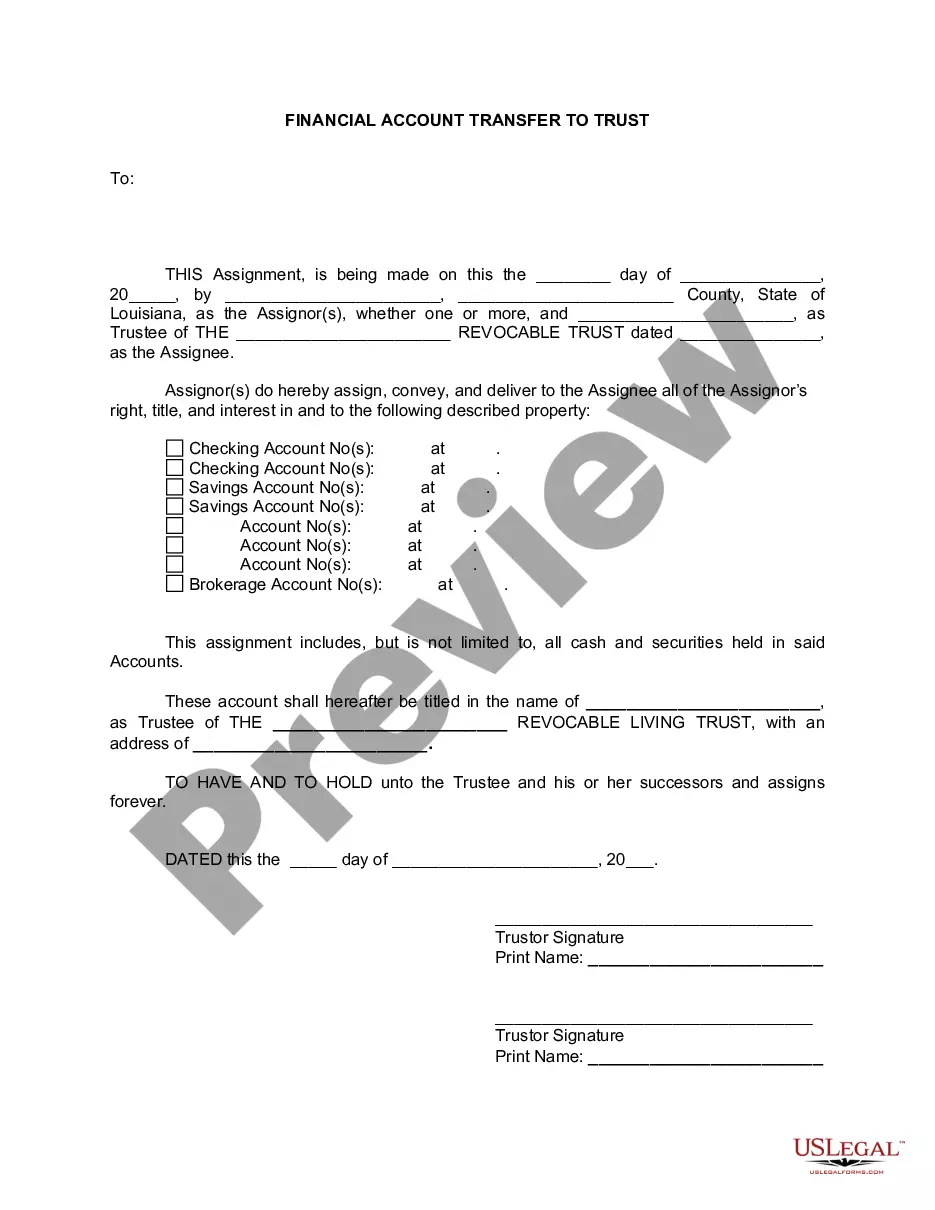
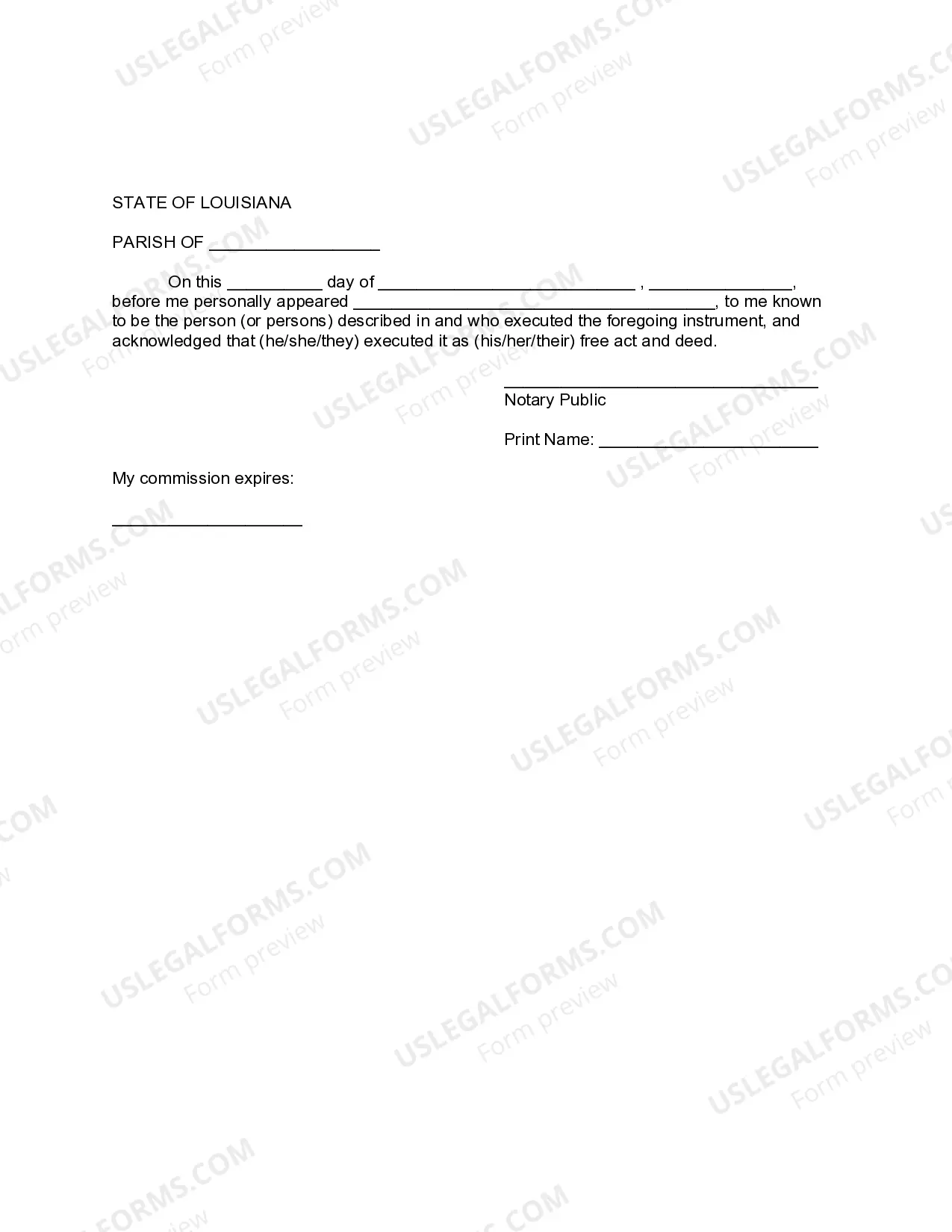

Get your form ready online
Our built-in tools help you complete, sign, share, and store your documents in one place.
Make edits, fill in missing information, and update formatting in US Legal Forms—just like you would in MS Word.
Download a copy, print it, send it by email, or mail it via USPS—whatever works best for your next step.
Sign and collect signatures with our SignNow integration. Send to multiple recipients, set reminders, and more. Go Premium to unlock E-Sign.
If this form requires notarization, complete it online through a secure video call—no need to meet a notary in person or wait for an appointment.
We protect your documents and personal data by following strict security and privacy standards.

Make edits, fill in missing information, and update formatting in US Legal Forms—just like you would in MS Word.

Download a copy, print it, send it by email, or mail it via USPS—whatever works best for your next step.

Sign and collect signatures with our SignNow integration. Send to multiple recipients, set reminders, and more. Go Premium to unlock E-Sign.

If this form requires notarization, complete it online through a secure video call—no need to meet a notary in person or wait for an appointment.

We protect your documents and personal data by following strict security and privacy standards.
Looking for another form?










Form popularity
FAQ
While having co-trustees in a Louisiana living trust with two trustees offers benefits, it also comes with some disadvantages. Co-trustees may face challenges if they disagree on decisions, leading to potential conflicts that can delay actions or create confusion. Additionally, each co-trustee must communicate well and cooperate, which can be difficult if their visions for managing the trust differ.
Yes, a living trust, including a Louisiana living trust with two trustees, can have co-trustees. This arrangement allows for shared management of the trust’s assets and responsibilities, which can foster collaboration and accountability. Having co-trustees means that both can work together to make decisions, ensuring that the trust operates smoothly and in the best interests of the beneficiaries.
To add a co-trustee to your Louisiana living trust with two trustees, you need to amend the trust document. This process involves drafting an amendment that includes the name of the new co-trustee and specifying their powers and responsibilities. Once you have the amendment, you must sign and notarize it, and then provide copies to all trustees and beneficiaries to keep everyone informed.
If two trustees disagree on a decision pertaining to a Louisiana living trust with two trustees, it is important to have a clear process in place for conflict resolution. Often, the trust document will outline how to handle such disagreements. In some cases, seeking mediation or legal advice may be necessary to reach a conclusion. Establishing open communication from the start can help minimize conflicts and ensure efficient management of the trust.
Co-trustees can be a great idea, especially with a Louisiana living trust with two trustees, as they ensure that multiple viewpoints influence the management of assets. This arrangement can lead to more thorough decision-making, as both trustees must agree on actions taken. However, clear communication and trust between co-trustees are essential to avoid potential conflicts. Overall, co-trustees can enhance the effectiveness of trust administration.
Two trustees can offer diverse perspectives and skills, which can enhance the management of your Louisiana living trust. By having different individuals involved, you benefit from a range of experiences and insights, helping to avoid potential pitfalls. This collaborative approach can also help to prevent conflicts of interest, making the administration of the trust more transparent. With a Louisiana living trust with two trustees, you establish a solid foundation for effective oversight.
Having two trustees for your Louisiana living trust can provide a layer of security and stability. With two people managing the trust, tasks can be divided, ensuring that responsibilities are shared. This arrangement can also build trust among family members, as decisions are made collaboratively. Ultimately, a Louisiana living trust with two trustees fosters a more balanced approach to managing your estate.
Typically, a Louisiana living trust with two trustees can have as many trustees as you wish, but practicality usually dictates the number. Many people choose to have one or two trustees to ensure streamlined management and decision-making. It’s crucial to consider the trust's complexity and the ability of trustees to work together. Consulting with legal professionals can help clarify the best structure for your needs.
Co-trustees can bring various strengths to managing a Louisiana living trust. By having multiple people involved, you can leverage different skills and knowledge for better decision-making. However, trust documents should specify how decisions are made to prevent stalemates. Clear communication and defined roles are key to a successful partnership.
Having co-trustees can be advantageous for a Louisiana living trust with two trustees. This approach allows for a blending of skills, perspectives, and experiences in managing the trust. However, it’s crucial that the co-trustees communicate effectively to avoid potential conflicts. A successful partnership can lead to better outcomes for the beneficiaries.
