Grandparents Rights With Cps
Description
Get your form ready online
Our built-in tools help you complete, sign, share, and store your documents in one place.
Make edits, fill in missing information, and update formatting in US Legal Forms—just like you would in MS Word.
Download a copy, print it, send it by email, or mail it via USPS—whatever works best for your next step.
Sign and collect signatures with our SignNow integration. Send to multiple recipients, set reminders, and more. Go Premium to unlock E-Sign.
If this form requires notarization, complete it online through a secure video call—no need to meet a notary in person or wait for an appointment.
We protect your documents and personal data by following strict security and privacy standards.

Make edits, fill in missing information, and update formatting in US Legal Forms—just like you would in MS Word.

Download a copy, print it, send it by email, or mail it via USPS—whatever works best for your next step.

Sign and collect signatures with our SignNow integration. Send to multiple recipients, set reminders, and more. Go Premium to unlock E-Sign.

If this form requires notarization, complete it online through a secure video call—no need to meet a notary in person or wait for an appointment.

We protect your documents and personal data by following strict security and privacy standards.
Looking for another form?





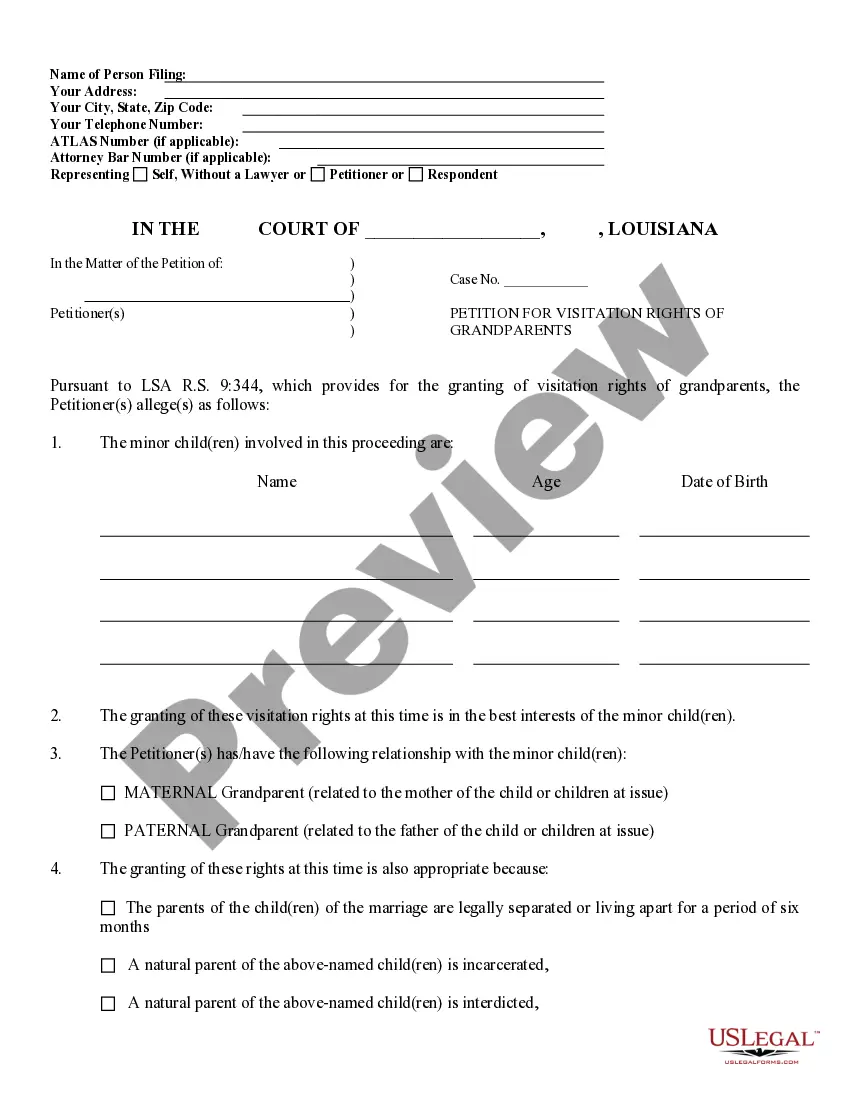
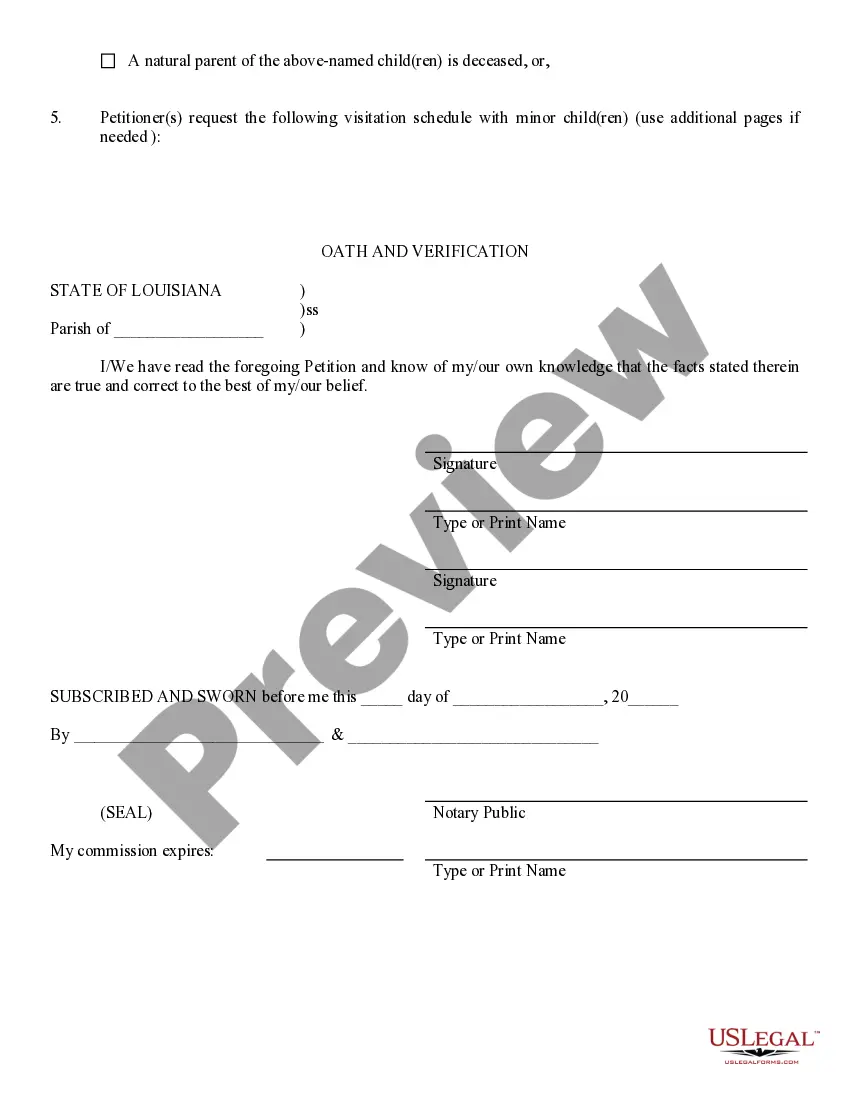
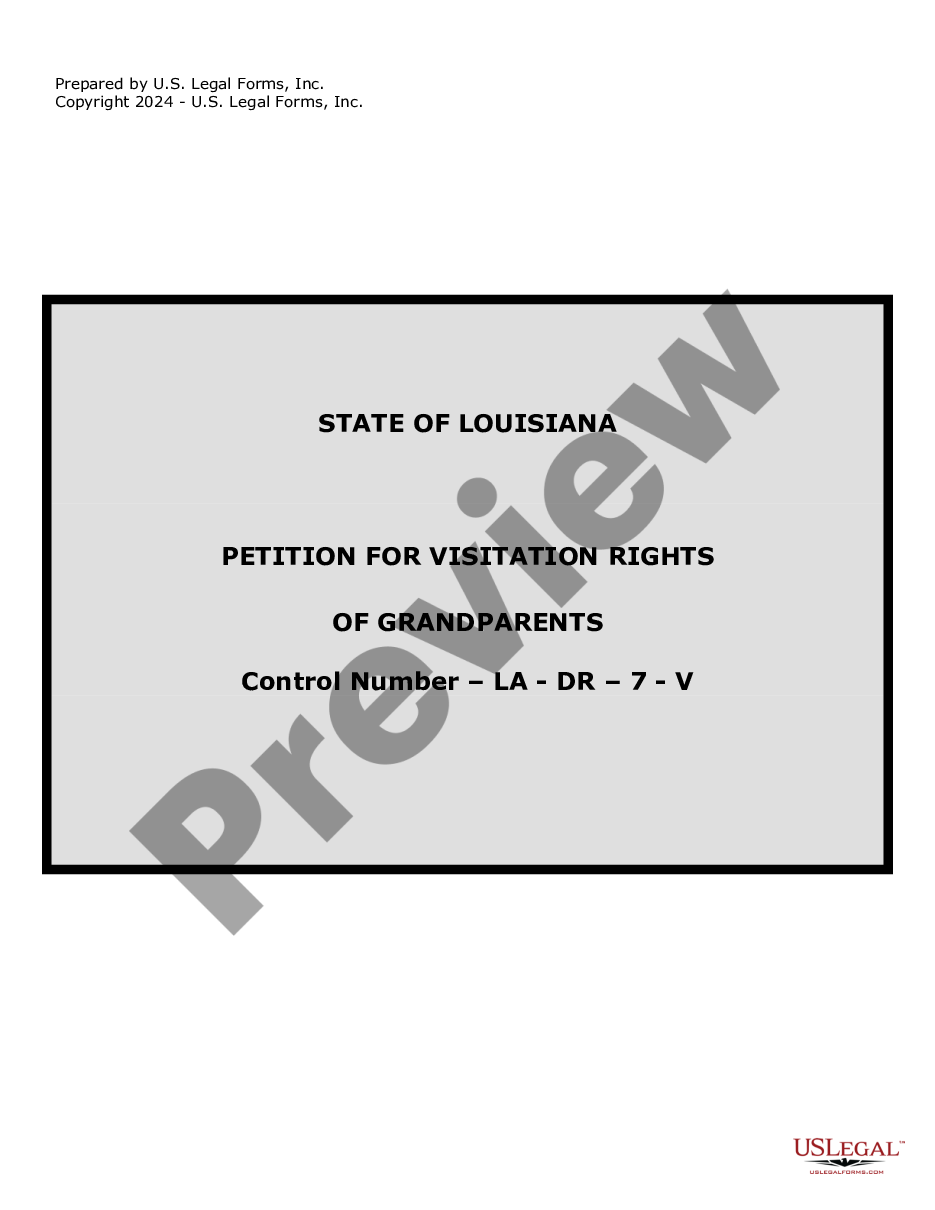
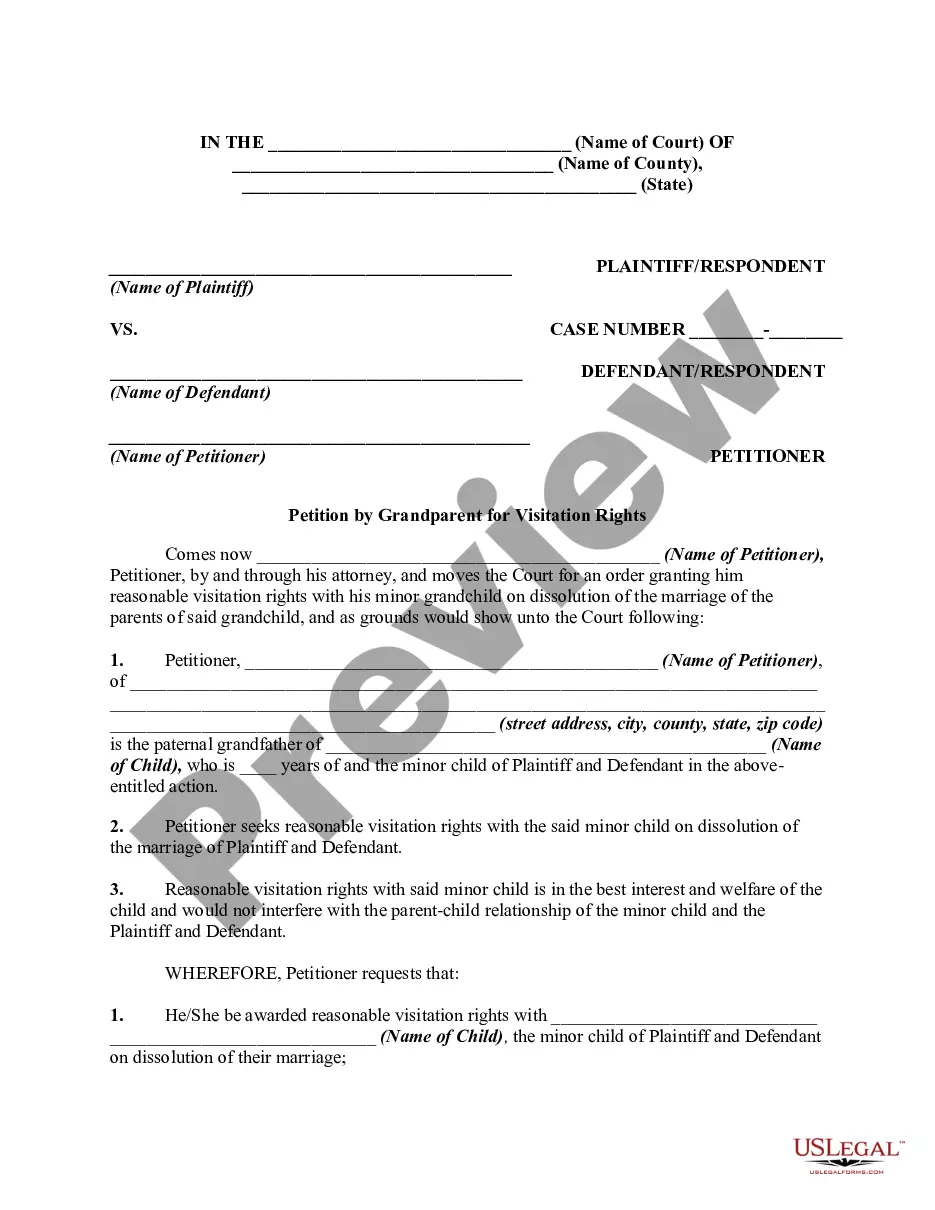
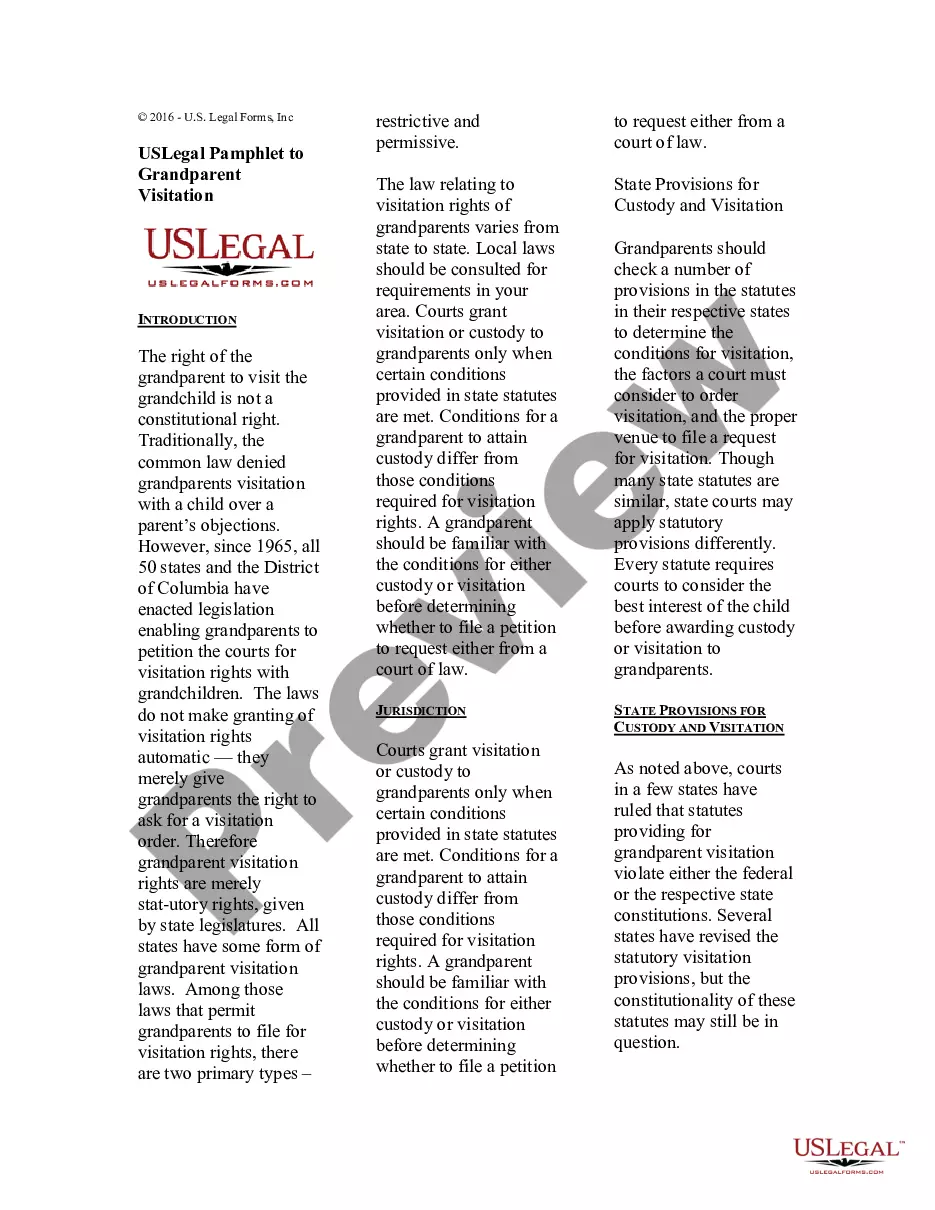
How to fill out Louisiana Petition For Visitation Rights Of Grandparents?
- If you are a returning user of US Legal Forms, log into your account and download the necessary form by clicking the Download button. Ensure your subscription is current; if it isn’t, renew it according to your payment plan.
- For first-time users, start by checking the Preview mode and form descriptions to confirm you've selected the correct document that fits your local jurisdiction.
- If you notice that the document does not meet your needs, utilize the Search tab above to find alternative templates.
- Once you find the right form, click on the Buy Now button and select your preferred subscription plan. Registration is required for access to the library.
- Complete your transaction by entering your credit card information or using your PayPal account to finalize the purchase.
- Download the form onto your device. You can access it anytime from the My Forms section in your profile.
US Legal Forms grants you the power to access a vast library of over 85,000 easily fillable legal forms, ensuring you have the necessary tools for your legal needs.
Leverage their resources to create legally sound documents with confidence. Start your journey today!
Form popularity
FAQ
To protect your child from toxic grandparents, establish clear boundaries regarding their involvement in your child's life. Document any inappropriate behavior and, if necessary, limit contact to safeguard emotional well-being. It may also help to seek legal guidance to understand your rights and options regarding grandparents' rights with CPS. Open communication with your child about their feelings can also empower them to express their needs.
Yes, grandparents can seek custody from CPS if they can demonstrate that they can provide a safe and nurturing environment. In fact, courts often view relatives, including grandparents, as preferable placements for children in foster care. You must navigate the legal requirements and prove your ability to meet the child's needs while effectively exercising your grandparents' rights with CPS. Utilizing platforms like uslegalforms can simplify the legal process and provide necessary forms to support your application.
Regaining custody from grandparents can be challenging, particularly if they have established a significant role in the child's life. The court tends to favor maintaining the existing family structure if it serves the child's welfare. To enhance your chances, it is vital to present a compelling case that highlights your fitness as a parent, including addressing any concerns raised by CPS. Consulting with legal experts familiar with grandparents' rights with CPS can provide valuable insights.
Yes, grandparents can potentially obtain 50/50 custody under certain circumstances. Courts typically prioritize the child's best interests, and if a grandparent demonstrates a stable environment and a strong bond with the child, they may have a favorable chance. Additionally, understanding grandparents' rights with CPS is crucial, as this often influences custody decisions. It’s recommended to seek legal advice to navigate this process effectively.
Yes, Wisconsin provides legal avenues for grandparents to seek visitation rights under specific circumstances. The state recognizes the importance of maintaining relationships between children and their grandparents, especially during challenging family situations. If you need assistance navigating these rights, the US Legal Forms platform offers valuable resources to help clarify your options about grandparents' rights with CPS.
The amount of time reasonable for grandparents to see their grandchildren can vary significantly based on individual family dynamics and court decisions. Courts generally assess what is in the child's best interest, which can influence visitation schedules. Staying in touch with CPS and advocating for a reasonable amount of time can help establish a meaningful relationship.
CPS may consider placing children with grandparents when parents are deemed unfit or unable to care for them properly. This is part of their mission to ensure a safe and loving environment for children, often prioritizing family connections when possible. If you're navigating this situation, understanding grandparents' rights with CPS is crucial to protecting your family's future.
Grandparents possess civil rights that can include the ability to seek visitation or custody through the court system, especially if parents are unable or unwilling to provide a healthy environment. These rights can help secure legal recognition of their roles in their grandchildren's lives, promoting family connections across generations. Engaging with CPS can also illuminate further opportunities available to protect these civil rights.
Many states across the US have implemented laws that grant grandparents visitation rights, particularly when a parent is unfit or absent. States like California, Florida, and New York allow grandparents to petition for visitation through their family courts. If you're facing a situation involving CPS, checking your state's laws can help clarify your legal options.
The frequency of visitation rights for grandparents depends on specific court rulings and the circumstances surrounding each case. Generally, courts evaluate the best interests of the child while considering the grandparents' relationship with them. In many cases, grandparents may receive regular visits, but consistent communication with CPS can help facilitate a stable arrangement.