Business Judgment Rule Cvm
Description


Get your form ready online
Our built-in tools help you complete, sign, share, and store your documents in one place.
Make edits, fill in missing information, and update formatting in US Legal Forms—just like you would in MS Word.
Download a copy, print it, send it by email, or mail it via USPS—whatever works best for your next step.
Sign and collect signatures with our SignNow integration. Send to multiple recipients, set reminders, and more. Go Premium to unlock E-Sign.
If this form requires notarization, complete it online through a secure video call—no need to meet a notary in person or wait for an appointment.
We protect your documents and personal data by following strict security and privacy standards.

Make edits, fill in missing information, and update formatting in US Legal Forms—just like you would in MS Word.

Download a copy, print it, send it by email, or mail it via USPS—whatever works best for your next step.

Sign and collect signatures with our SignNow integration. Send to multiple recipients, set reminders, and more. Go Premium to unlock E-Sign.

If this form requires notarization, complete it online through a secure video call—no need to meet a notary in person or wait for an appointment.

We protect your documents and personal data by following strict security and privacy standards.
Looking for another form?

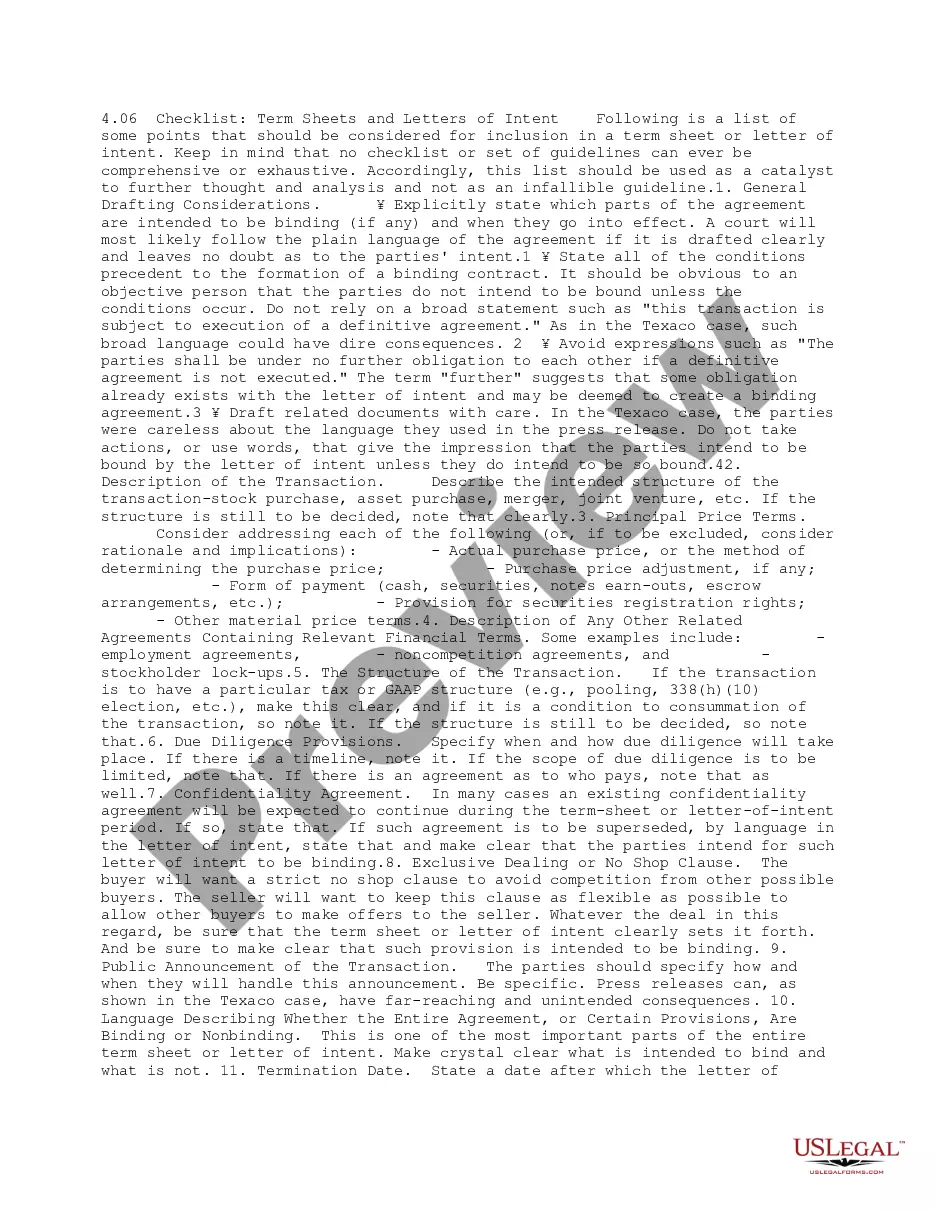





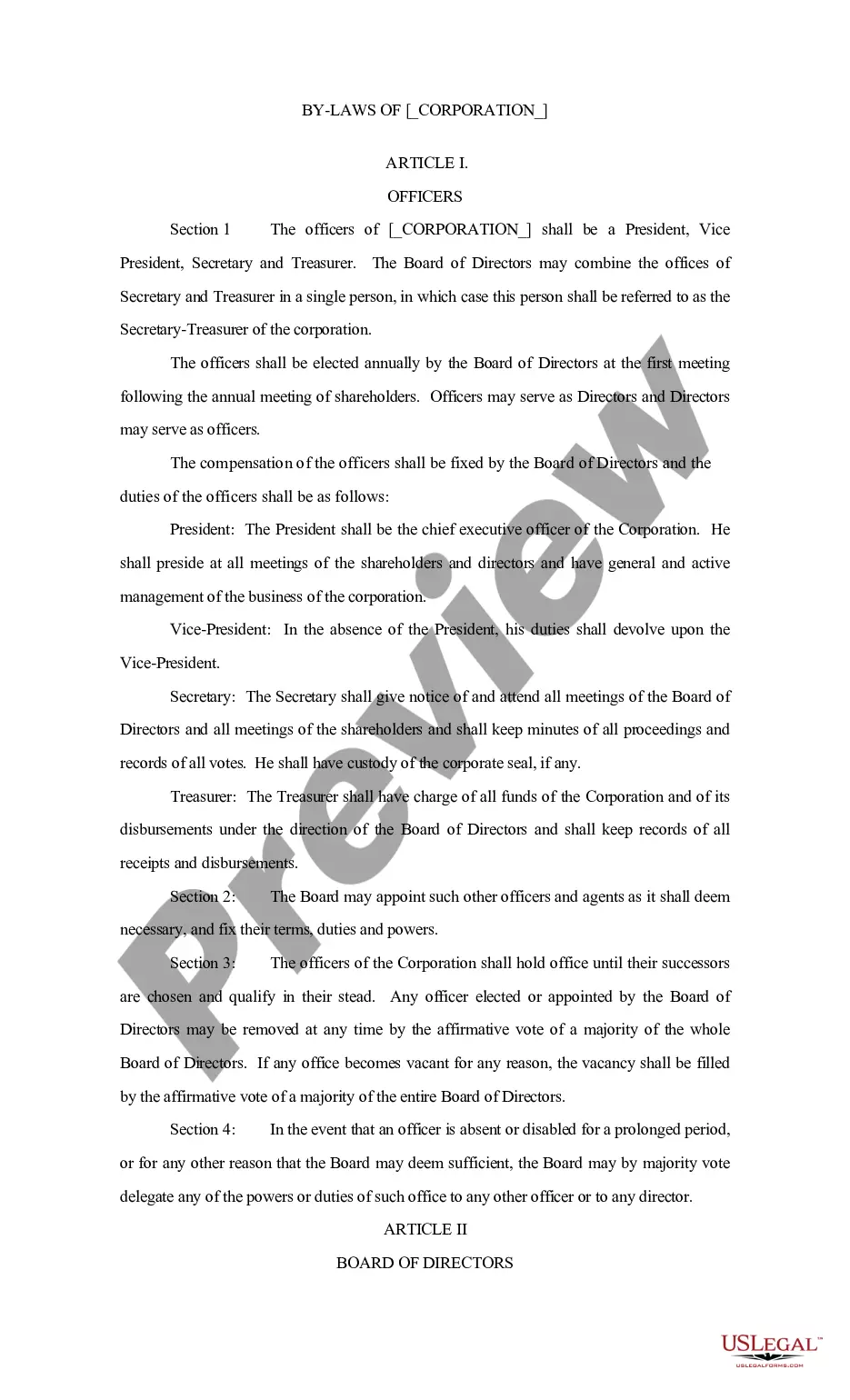
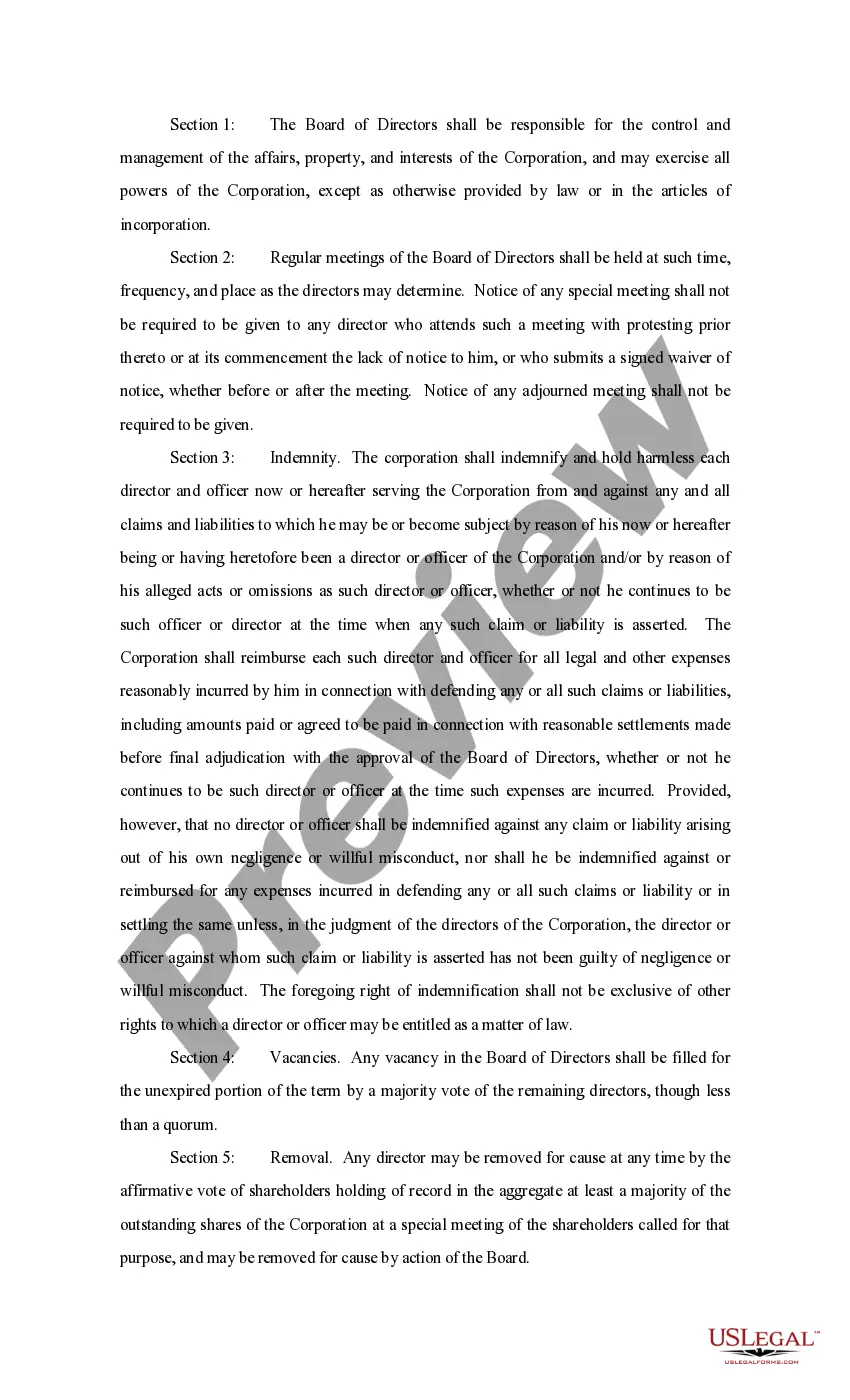
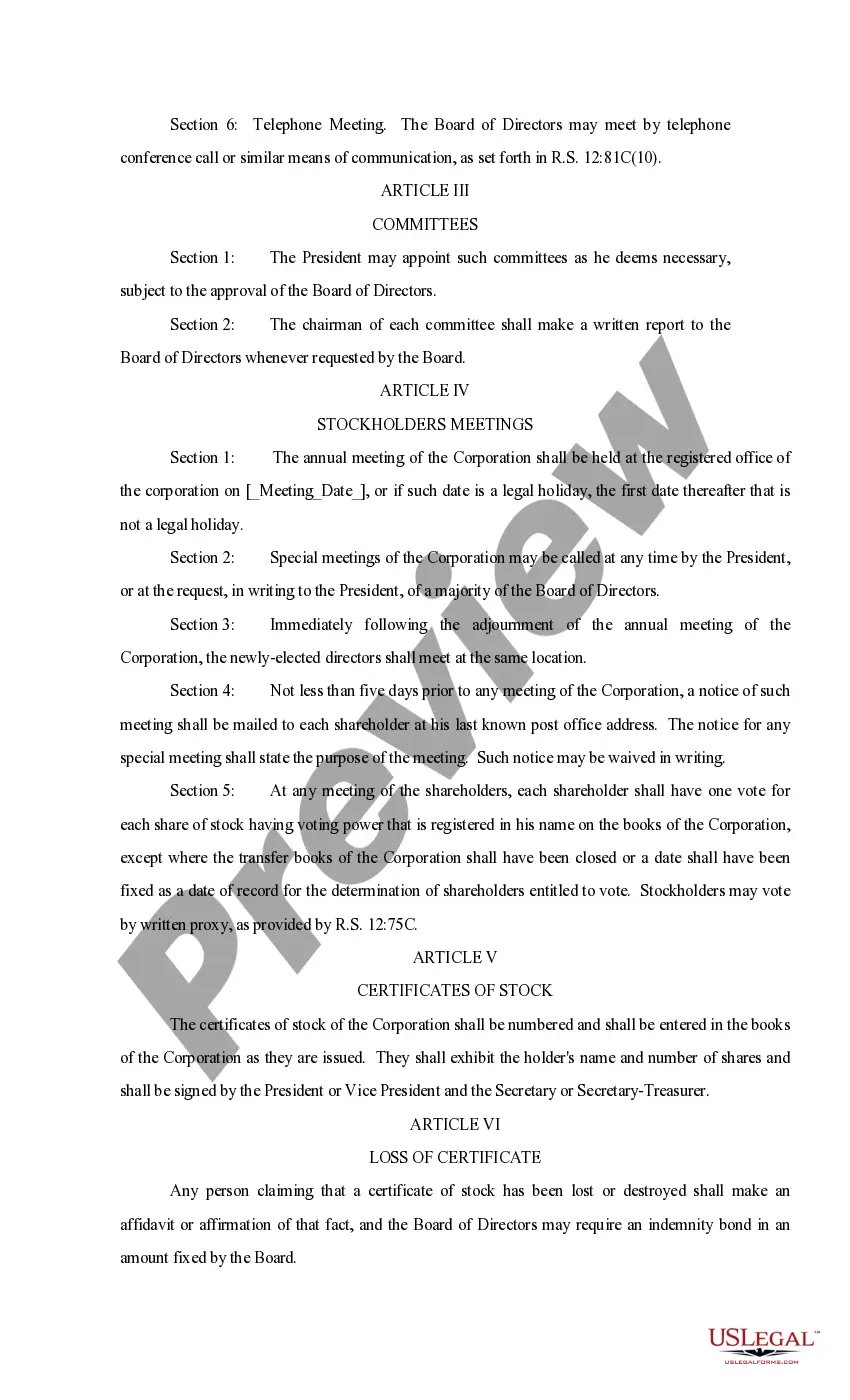
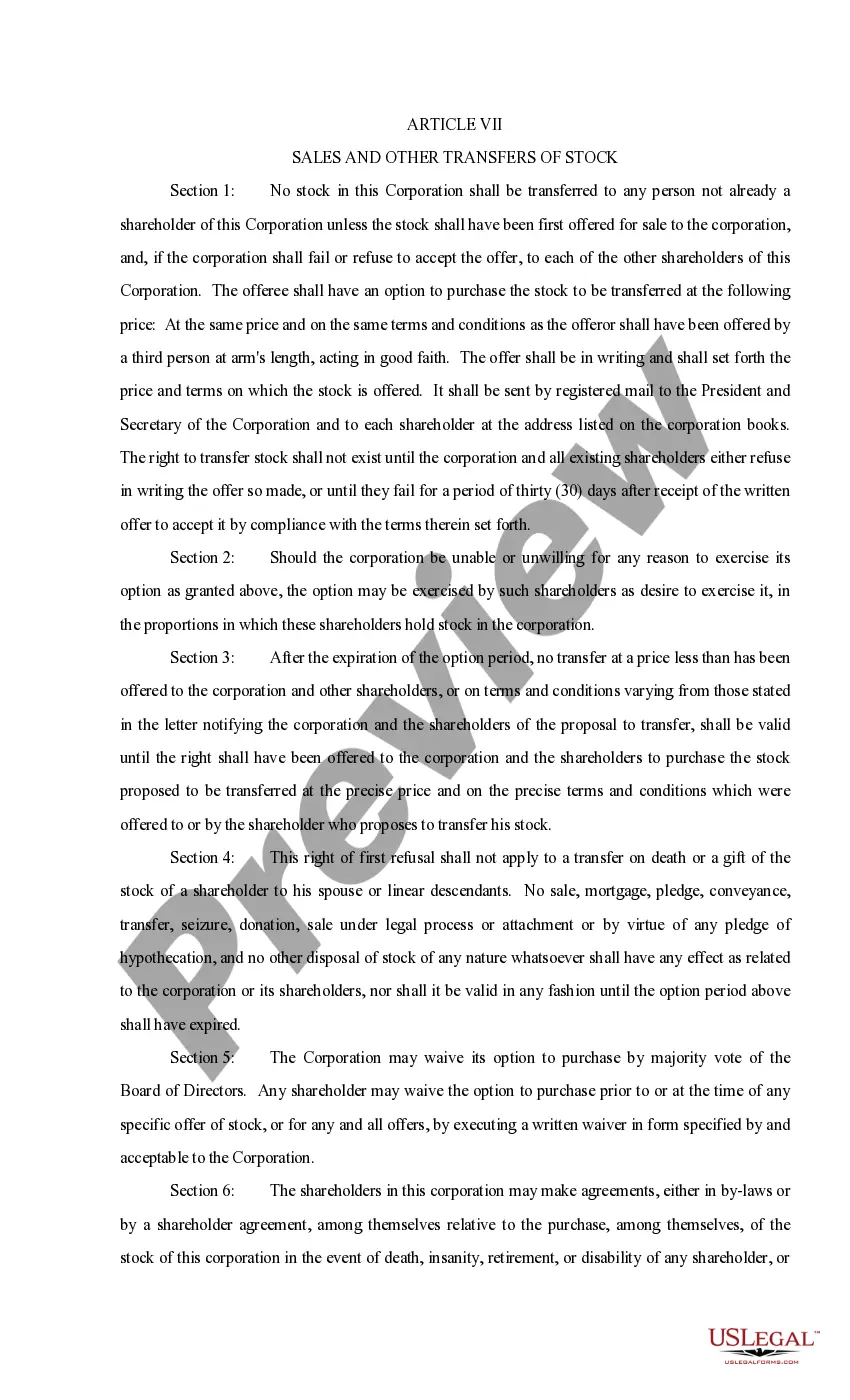
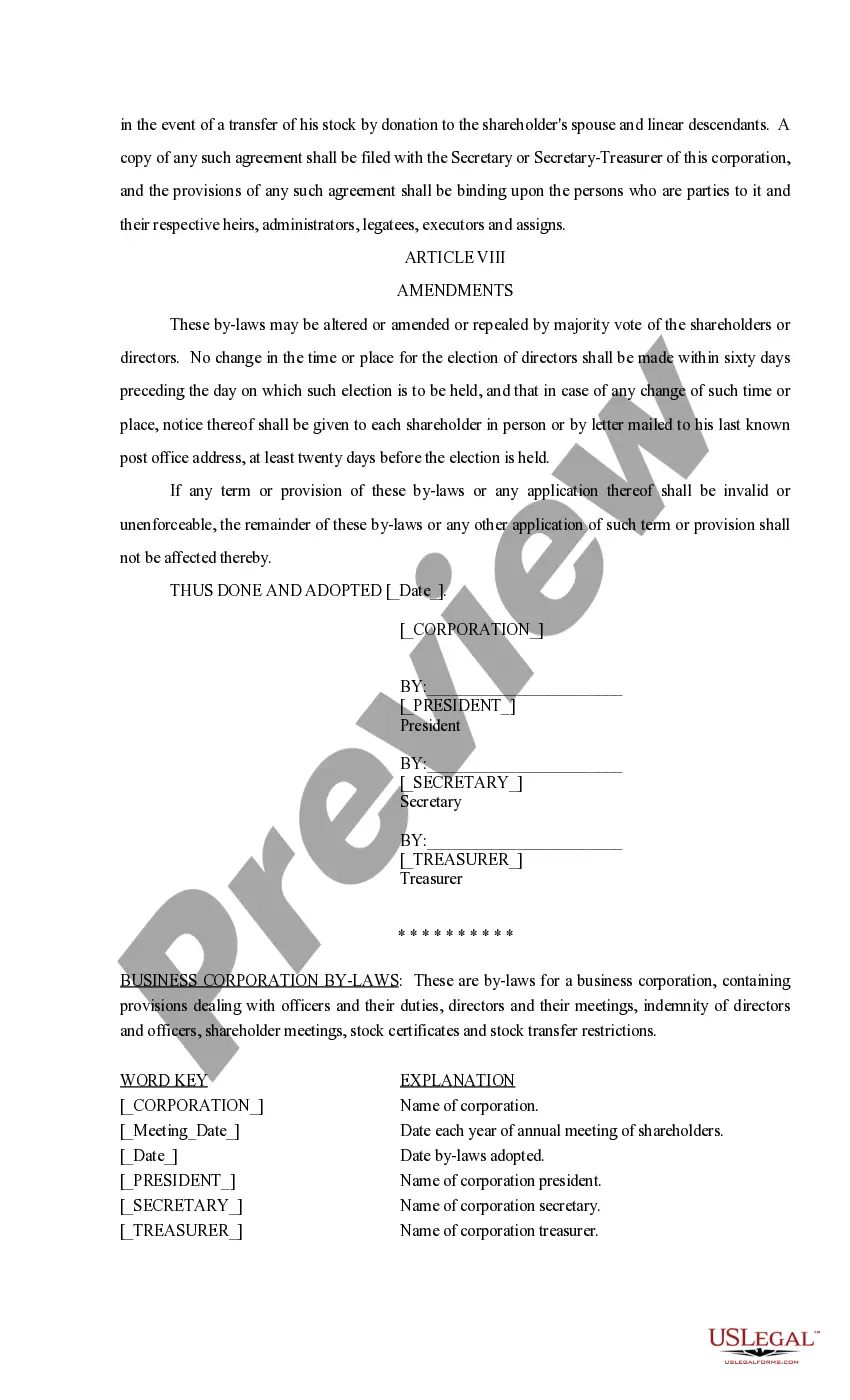
How to fill out Louisiana Bylaws Of Corporation?
- If you're a returning user, log in to your account and download the necessary form template directly by clicking the Download button, ensuring your subscription is up-to-date.
- For first-time users, begin by reviewing the form description and preview mode to confirm you select one that aligns with your specific needs and local jurisdiction regulations.
- Search for alternative templates if necessary. If you discover any discrepancies, use the search function to find a suitable document before proceeding.
- Purchase the chosen document by clicking the Buy Now button and selecting your preferred subscription plan. Registration is required to access the extensive library.
- Complete your purchase by entering payment details via credit card or your PayPal account.
- Download your selected form and save it to your device. You can access it later through the My Forms section of your profile.
In conclusion, US Legal Forms provides a robust solution for anyone seeking to execute legal documents, thanks to its vast collection of forms and expert assistance.
Start navigating your legal needs with confidence by visiting US Legal Forms today!
Form popularity
FAQ
While the business judgment rule cvm and fiduciary duty are related, they are not the same. Fiduciary duty pertains to the legal obligation of directors and officers to act in the best interest of the company and its shareholders. The business judgment rule serves to protect those who fulfill their fiduciary obligations, allowing them to make decisions without fear of liability when they adhere to the established standards.
The business judgment rule cvm quizlet provides a helpful resource for understanding this legal principle. On platforms like Quizlet, users can access flashcards and study materials that clarify key concepts, essential criteria, and real-world applications. Engaging with such resources can deepen your comprehension and help you apply these ideas practically.
The business judgment rule cvm is significant because it encourages directors and officers to make bold decisions that drive business growth. By providing protection from personal liability, it fosters an environment where corporate leaders can innovate and take prudent risks. Ultimately, this rule supports a healthy corporate governance framework that benefits stakeholders and promotes economic vitality.
Yes, the business judgment rule cvm does apply to Limited Liability Companies (LLCs). Similar to corporations, LLC managers and members can utilize this rule to shield themselves from liability when making business decisions. However, the specific application may vary based on the LLC's operating agreement and state law, so it is crucial to consult legal guidance.
The criteria for the business judgment rule cvm include acting in good faith, making informed decisions, and ensuring that decisions align with the company’s overall interests. These criteria ensure that directors and officers have a clear framework for making business choices without fear of personal consequences. By adhering to these standards, they can confidently focus on guiding the company forward.
Overcoming the business judgment rule cvm requires establishing that the decision in question did not meet the rule's standards. This can involve proving that a decision was made in bad faith, lacked proper deliberation, or was made under a conflict of interest. By demonstrating these failings, claimants may challenge the protections offered by the business judgment rule.
For the business judgment rule cvm to apply, certain requirements must be met. First, the decision-maker must act without self-interest; second, they must gather sufficient information before making a decision; and third, they must make the decision in good faith, believing it to be in the best interest of the company. Meeting these criteria helps ensure that directors and officers can act without undue fear of personal liability.
The business judgment rule cvm serves as a legal principle that protects directors and officers when making decisions on behalf of a company. It allows them the freedom to make decisions without the fear of being held personally liable, as long as those decisions are made in good faith, with care, and in the best interest of the company. Essentially, it acknowledges that business decisions often involve risk and uncertainty.
The three critical elements of the business judgment rule include good faith, informed decision-making, and a rational basis for the decision. To adhere to the business judgment rule cvm, corporate officers and directors must demonstrate that they acted honestly, considered all necessary information, and made choices that a reasonable person might make under similar circumstances. This framework not only protects individuals but also fosters a culture of effective governance within organizations.
The s180 2 business judgment rule refers to a specific provision in corporate law that provides a safe harbor for directors against claims of negligence in decision-making. This rule requires directors to act in good faith, for a proper purpose, and with the belief that their decisions are in the best interest of the company. Under the framework of the business judgment rule cvm, it allows directors to pursue innovative strategies with less fear of litigation. This provision ultimately encourages responsible decision-making in dynamic business environments.